Ian Acheson

Ian Acheson

Professor Ian Acheson is a former prison governor. He was also Director of Community Safety at the Home Office. His book ‘Screwed: Britain’s prison crisis and how to escape it’ is out now.

Can Sinn Fein win the UK’s most marginal constituency again?

From our UK edition

It’s Monday afternoon and I’m walking through the estate where I was born on the outskirts of Enniskillen in Northern Ireland. Here in the United Kingdom’s most westerly and most marginal constituency, politics continues to be war by other means. The Unionist marching season beckons and as well as the usual red white and blue bunting, there are a sea of Israeli flags fluttering in the drizzle. Across town, in nationalist estates, Palestinian flags abound. These adopted tribal identities epitomise the immutable sectarian character of the competition for the seat in Fermanagh and South Tyrone. While Northern Ireland is slowly becoming a more homogenous society and progressive politics makes progress in the urban east, out here on the rural edge of the union, it’s different.

Tougher sentences won’t stop women being killed

From our UK edition

Manifestos come and go but women continue to be murdered by men they know in grotesquely high numbers. According to the Times, the Conservatives are set to crack down on femicide in their manifesto, with the minimum sentence for murders that take place in the home raised from 15 to 25 years. Will this make any difference? Of the 590 recorded homicides in England and Wales alone in 2022-23, 174 of these were women – with a significant proportion murdered by their partners in their homes. There is something undeniably horrifying about these deaths. The women, often killed by knives, die in a familiar surrounding where they should expect to be safest, at the hands of men who might have loved them once, but who are now consumed with murderous rage.

Tommy Robinson and the truth about two-tier policing

From our UK edition

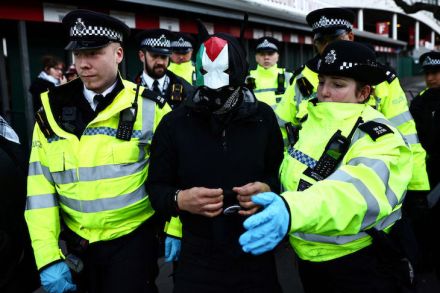
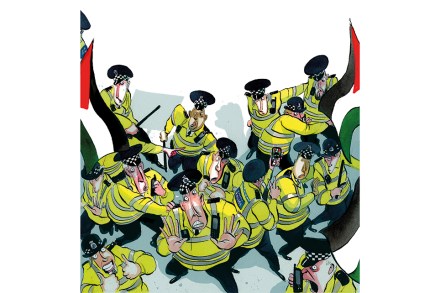
Tommy Robinson, a self-invented English ‘patriot’, was free to attend yesterday’s St George’s Day event in central London which descended into ugly clashes between participants and police. Earlier in the day, he had been released from court after successfully arguing that a police dispersal order that resulted in his arrest and charge in November last year was unlawfully applied to him due to a paperwork blunder. He says he will now sue the Metropolitan police. Robinson has nearly half a million followers on social media. They have, by now, fully absorbed the narrative that when it comes to protest, Britain has a two-tier system of policing. This is a dangerous accusation that is gaining traction, whatever the criminal justice boss class decide we should think.

Prisons have lost the war on drugs

From our UK edition

Aldous Huxley’s dystopian best seller Brave New World, published back in 1934, envisaged a society where stability was enforced by a numbing drug called 'soma'. Constant consumption of soma, mandated by the state, dulled the senses, vanished despair and discouraged rebellion. I was reminded of this by comments made by some of the Times' new crime commissioners as they launch a year-long project to fix our broken criminal justice system. They were speculating as to why we weren’t seeing a national jail insurrection similar to what happened here in the spring of 1990 when multiple prisons across the country exploded in violent disorder.

Suella Braverman is wrong to call for Mark Rowley to go

From our UK edition

Why did Gideon Falter cross the road? Or try to? That is a question that went viral this weekend. A video emerged of Falter, who leads the Campaign Against Antisemitism, being threatened by police for trying to cross a pro-Palestinian protest in central London. He was wearing a kippah and carrying a prayer shawl bag, and had reportedly just emerged from a synagogue with some friends and was trying to get home. Police officers had spotted him leaving the pavement on a collision course with protestors and intervened. A tense standoff unfolded, with an officer telling him in that his ‘openly Jewish’ appearance was ‘antagonising’ the crowd.

Who will take responsibility for our appalling prisons?

From our UK edition

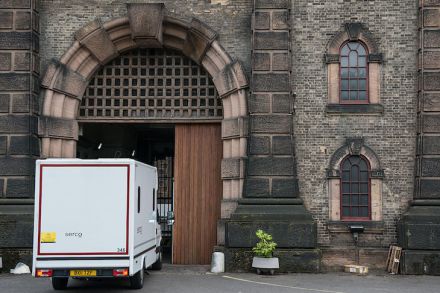
We know our prison system is awash with drugs but just what are they smoking at the Ministry of Justice? A shocking story in the Times yesterday revealed what a desperate state Britain’s jails are in. Paul Morgan-Bentley, an undercover reporter, was hired at breakneck speed to work as a uniformed Operational Support Grade (OSG) escort at beleaguered HMP Bedford. He lifted the lid on a security nightmare. Drugs were being smoked openly in front of officers A catalogue of errors and incompetence emerged. He wasn’t security cleared before starting his sensitive post. He had access to prisoners in this Category B jail after a day’s training where even his tutor complained of a ‘pandemic’ of unlocked security gates.

Only radical reform will save our overcrowded prisons

From our UK edition

What should we do when there’s no cell space left in our disordered jails? The prison population figures published yesterday show a small drop compared to last week, with nearly 87,900 currently incarcerated. There's precious little room for manoeuvre. We are perilously close to a time I can remember back in the mid-90s when governors refused to take convicted prisoners from court because there was no cell space left in their establishments. While numbers at the top fluctuate week by week, the trend only ever goes up, driven by courts getting rid of their backlogs and our tendency to sentence more offenders to longer spells in custody that only make prisoners worse.

Have the Tories finally woken up to the extremism problem?

From our UK edition

Michael Gove has a reliable track record for sounding the alarm on ideological hatred, so are his latest proposals on redefining extremism a cure for what ails us? The communities secretary has unveiled a plan to broaden the definition of extremism. The new official meaning aims to ban those with a ‘violent or intolerant’ ideology from government links and funds. Gove named several organisations that could fall foul of the new definition: the Muslim Association of Britain, Mend and Cage were groups, he told the Commons, that could be held to account. Predictably enough, critics have taken to the air to condemn this crackdown, seeing it variously as unnecessary, unwieldy or a downright descent into authoritarian bigotry. So who is right?

Does France hold the key to cracking down on Islamist extremism?

From our UK edition

Are we being ‘poisoned’ by extremism? The Prime Minister seems to think so. His speech on the steps of Downing Street following the Rochdale by-election described a country where values of tolerance and civility were being deliberately undermined by Islamists and the far right. 'Islamist extremists and the far right feed off and embolden each other,' he warned. But in conflating those two threats, the Prime Minister made the same mistake as his predecessors. Jews, with no connection to what is happening in Gaza, are terrified by the uptick in hatred against them Sunak followed the script, endorsed by too many institutions in Britain, that the big threat to our way of life comes in two equal halves.

Why Prevent is still failing to tackle Islamist extremism

From our UK edition

What is the core mission of the Government’s ‘Prevent’ strategy? When William Shawcross presented his review of our flagship counter extremism programme last year, he was clear: it was to stop people turning into tomorrow’s terrorists. The Home Office agreed, at least politically. How’s that going? A year after Shawcross reported on Prevent’s departure from counter terror watchdog into a lop sided safeguarding creche for every sort of ‘vulnerability’ under the sun, the Government has reported mission accomplished. Shawcross has now disagreed publicly. The Home Office had, he said, ‘ignored’ key recommendations to beef up Prevent’s performance and the glass remained only ‘half full.

Should Brianna Ghey’s killers ever be released?

From our UK edition

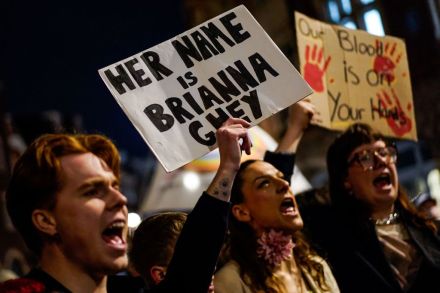
In the wicked murder of poor Brianna Ghey, it’s not hyperbole to say the Devil is in the details. Thousands of text messages sent between her two teenage killers were divulged in a court case that describe a moral void in their lives that veers between the banal and the satanic. It is clear that Brianna was not the first target for these would-be spree killers, obsessed with torture and death. Four other boys were targeted by her male and female assailants, both 15, prior to her murder. The girl, perpetrator ‘X’ in the court case, to protect her identity messaged the boy accomplice ‘Y’ when they were discussing ways of killing one of them: ‘If we kill (him) can I keep some things, a couple of teeth and an eye?

What will fix Britain’s prisons?

From our UK edition

19 min listen

HMP Bedford was issued with an urgent notification yesterday, meaning it must immediately make reforms to improve. It’s the fifth prison to receive such a notification this year. What’s going wrong in Britain’s prisons, and what will fix them? Max Jeffery speaks to former prison governor Ian Acheson and former prisoner David Shipley.

Keeping the peace: the politics of policing protest

From our UK edition

41 min listen

On the podcast: In his cover piece for The Spectator Ian Acheson discusses the potential disruption to Armistice Day proceedings in London this weekend. He says that Metropolitan Police Chief Mark Rowley is right to let the pro-Palestine protests go ahead, if his officers can assertively enforce the law. He joins the podcast alongside Baroness Claire Fox to discuss the problems of policing protest.  Next: are smartphones making us care less about humanity?  This is the question that Mary Wakefield grapples with in her column in The Spectator. She says it’s no wonder that Gen Z lack empathy when they spend most of their lives on social media. She is joined by Gaia Bernstein, author of Unwired: Gaining Control over Addictive Technologies.

Keeping the peace: the politics of policing protest

From our UK edition

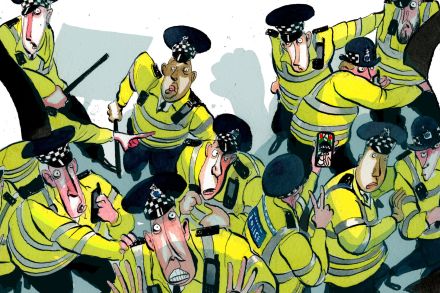
Armistice Day is meant to be a moment of solemn national unity. Yet this year it is expected to coincide with the rather less harmonious ‘Million March for Palestine’, as hundreds of thousands gather in central London on Saturday to protest against Israel’s war on Gaza. Are these events compatible? Should the protest be banned? The Prime Minister says holding the protest on Armistice Day is ‘disrespectful’ but insists that only Sir Mark Rowley, the Commissioner of the Metropolitan Police, can act to stop it. So Rishi Sunak is, in effect, saying his government cannot be blamed if there’s trouble at what Suella Braverman, his Home Secretary, calls a ‘hate march’. It’s all on Sir Mark. ‘My job is to hold him accountable,’ says Sunak. We don’t need more laws.

Why hasn’t the UK outlawed the IRGC?

From our UK edition

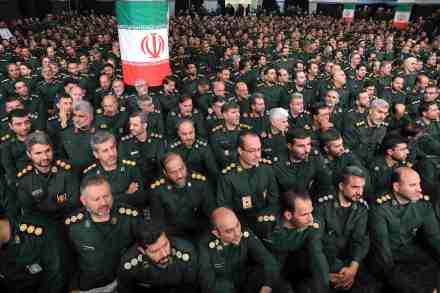
As the scale and barbarity of the Hamas terrorist assault on Israel begins to unfold, to no-one’s surprise Iran has leant its formal support to the insurgents. While thousands of rockets rain down on Israeli civilians and and Iran’s proxies pull men women and children out of their homes — murdering them in the streets — it’s worth remembering that the United Kingdom still has not proscribed that regime's state terror exporters, the Islamic Revolutionary Guards Corps.   Whether it is terror funding and training to Hamas in Gaza, Hezbollah in Lebanon or Palestinian Islamic Jihad in the occupied territories, the IRGC is inextricably linked to today’s butchery.

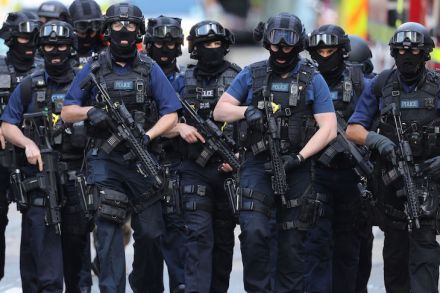
Who can blame armed police officers for handing back their guns?

From our UK edition

The Metropolitan Police has, for now, staved off a crisis. The force says that enough armed officers have returned to work that they don't need to draft in the army. Officers walked out following the decision by the Crown Prosecution Service (CPS) to charge a serving officer with the murder of Chris Kaba, a black Londoner who was shot and fatally injured during a planned police operation in September 2023. But while Londoners won't be seeing soldiers on the streets today, this row is far from over. It's been a over a year since Kaba, a 24-year-old, was hit and killed by a gunshot fired by an officer into a vehicle in Streatham, south London. That incident on 5 September 2022 lasted just a few minutes.

Who’s really to blame for the Wandsworth jailbreak?

From our UK edition

There’s fevered speculation about inside jobs or state actors involved in the HMP Wandsworth prison break by terror suspect Daniel Khalife. But as police close in on Richmond park, whether he’s found cowering in a ditch or at a press conference in Tehran, this dramatic escape reveals just how close we are to a full blown crisis across our prison system. Wandsworth has been failing in plain sight in front of helpless officials at the Ministry of Justice for years. Repeated inspections have revealed squalor, overcrowding and chronic staff retention problems with young, inexperienced officers out of their depth.

Why Northern Ireland’s Chief Constable had to go

From our UK edition

Simon Byrne, the Chief Constable of Northern Ireland’s beleaguered police force, has stepped down. It's about time. The country's police service, created to oversee a changing society in the aftermath of the Good Friday agreement, has been reeling from a succession of scandals. These stories – not least involving the leak of details about 10,000 police officers and staff on the internet – have had a catastrophic impact on trust inside and outside the organisation. Byrne's decision to quit looked inevitable. On Friday, the Democratic Unionist Party (DUP) submitted a motion of no confidence in the Chief Constable.

How Sinn Fein captured Northern Ireland’s police force

From our UK edition

Policing any part of the United Kingdom is a difficult enough task these days. Policing the part of it where the national security threat is highest and the personal details of all officers and staff are now likely in the hands of terrorists after an embarrassing data breach is a whole other story.  We are talking about Northern Ireland, where this week the Chief Constable inexplicably flip-flopped over a court decision that said the PSNI unlawfully disciplined two junior officers. At first Simon Byrne said he would accept the court's decision, only to later this week say he would launch an appeal. But his volte face is merely the culmination of a series of preventable calamities that in any other jurisdiction would see senior leaders picking up their P45s.

The importance of remembering the Omagh bombing

From our UK edition

On this day, 25 years ago, not long after the ink had dried on the Good Friday Agreement, a car bomb exploded in the market town of Omagh in Country Tyrone, Northern Ireland. The bomb had been set in the town’s busy main shopping area by dissident republican terrorists styling themselves as the ‘Real IRA’. The group had rejected the acceptance by Sinn Fein, the Provisional IRA’s political mouthpiece, that Irish unification could not be achieved by violence, and instead bathed a community in blood. Twenty nine people were killed that day. It was a busy and sunny Saturday and the town, nestled in the foothills of the Sperrin mountains, was packed with shoppers and tourists.