Iain Macwhirter

Iain Macwhirter

Iain Macwhirter is a former BBC TV presenter and was political commentator for The Herald between 1999 and 2022. He is an author of Road to Referendum and Disunited Kingdom: How Westminster Won a Referendum but Lost Scotland.

Will John Swinney do a deal with Scotland’s Greens?

The Scottish National party (SNP) has failed to win an overall majority in the Scottish parliament. With an expected 58 MSPs, it has fallen short of the 65 target which John Swinney said would have been a mandate for an independence referendum – not that Westminster would have authorised one any time soon. However, this is still a good result for Mr Swinney after a pretty lacklustre campaign in which many of his party’s policies – like a price cap on supermarket goods – did not land well. Many forecasters, including Ipsos in the Times, thought he would return fewer than sixty MSPs.

The Scottish Greens want everything to be free

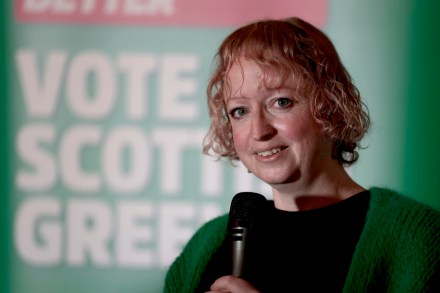
The Scottish Green party can usually be relied upon to provide some light relief at election time. But this year, in their manifesto for the Scottish Parliament elections on 7 May, they have outdone themselves in fantasy policy-making. The Greens want to ban everything from horse racing to homework; from nuclear power to wood-burning stoves. Candidates such as Kate Nevens, who is almost certain to be elected as a list MSP for Edinburgh and the Lothians, say they want to  abolish prisons, presumably so that murderers and rapists can be free to express themselves. The Greens also want to legalise hard drugs, the distribution of which would likely offer attractive job opportunities to the thousands of criminals released from Scotland’s jails.

How Scotland turned against assisted dying

When the Scottish Liberal Democrat MSP, Liam McArthur, first tabled his Assisted Dying for Terminally Ill Adults (Scotland) Bill two years ago, the result seemed almost a foregone conclusion. Nearly all of the party leaders supported it, at least in principle, along with a clear majority their elected members. Around 80 per cent of Scottish voters approved the principle of ‘dignity in dying’. They still do. By no means all jurisdictions which passed ‘right to die’ laws have progressed down the infamous slippery slope to perdition, but enough have But as the day of decision drew near, MSPs of all parties began to reassess the simplistic argument for individual choice.

The SNP’s useless land revolution

Few would argue that Scotland’s present pattern of land tenure is ideal. Around half of private land is owned by fewer than 500 individuals, corporates or pension funds. The vast estates date from two centuries ago when landlords, often clan chiefs, expelled the Scottish peasantry from their villages in the interests of ‘improvement’ – mainly to create sheep walks, deer-hunting estates or, latterly, forestry. Had we had a French Revolution, landed estates might have been broken up. But we didn’t, and they weren’t.

Badenoch’s Tories have seen sense on North Sea Oil. Will Starmer?

Kemi Badenoch’s rediscovery of the North Sea oil and gas industry would be more convincing had it not been successive Conservative governments that promoted its decline in the first place. In a speech in Aberdeen today, she will call for “every last drop” of oil to be extracted from our waters. Contrary to popular belief, there is still a lot of the black stuff lying there: up to 15 billion barrels, or enough to fuel the UK for 30 years. Norway has been drilling in the Arctic. “Bor ja Bor” (“Drill, baby, drill”), as they say in the Storting No one really knows how much is left because, while the North Sea may be in long-term decline, new deposits are constantly being discovered.

What is the point of Nicola Sturgeon’s memoir?

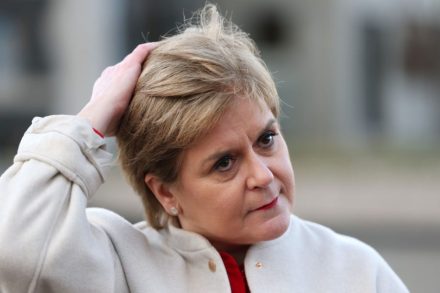
Nicola Sturgeon’s memoir Frankly, finally published today, is already looking like the most ill-advised autobiography since Prince Harry’s Spare. Her attempts to denigrate her former mentor, the late Alex Salmond, have rebounded disastrously. Her teasing about her ‘non-binary’ sexuality sounded contrived. Her complaints of victimhood ring hollow coming from a politician who had a relatively easy ride during her time in office, not least because the metropolitan left and much of the media chose to idolise her as a Caledonian Jacinda Ardern and scourge of Boris Johnson. She even picked a pointless new fight with J.K. Rowling.

Why is Nicola Sturgeon fighting the ghost of Alex Salmond?

What was Nicola Sturgeon thinking, reopening the war with Alex Salmond, her former mentor, who died last year, in her forthcoming book, Frankly? What did she hope to gain by raking over the darkest episode in Scottish nationalist history, claiming that it was all an attempt by Salmond to ‘destroy’ her politically? Poor me, wronged by the big bad man. What point was served by claiming that Salmond had ‘privately’ admitted to the ‘substance’ of the allegations of sexual misconduct levelled against him nearly a decade ago? These are allegations that Salmond always strenuously denied and of which he was acquitted in March 2020 by a woman-majority jury before a female judge, Lady Dorrian, in the High Court. Does Sturgeon now expect us to believe that she knows better?

Kate Forbes’s exit is proof the SNP has lost its way

In little over a week, the Scottish National Party (SNP) has lost two of its greatest political stars. Mhairi Black, the left-wing MP for Paisley and Renfrewshire South, threw in the towel last week, citing the 'toxicity' of politics and the party’s lack of support for transgender rights. Now, the deputy leader of the SNP, Kate Forbes – regarded as a social conservative – has stepped down to spend more time with her family. The trickle of nationalist departures risks turning into a flood. Forbes’s departure is the greater shock. Many regarded the 35-year-old MSP for Skye, Lochaber and Badenoch as the leading leadership challenger from the right of the party.

The ridiculous fantasy of a Scottish universal basic income

One of the first casualties of the Covid pandemic was the millennial left’s defining project of a Universal Basic Income. Once it became clear just how expensive it is for the state to pay people not to work, as in Rishi Sunak’s lockdown income guarantee, this quasi-socialist project died a well-deserved death. But not everyone is prepared to let it lie. I’m afraid this betrays the fundamental problem with SNP economics The former Scottish First Minister, Nicola Sturgeon, had been a supporter of UBI and commissioned an ‘expert’ group in 2021 to revive it under a new name: the Minimum Income Guarantee, or MIG. That group was largely composed of charities and academics. Unsurprisingly, their report today calls for a MIG that is marginally less barking than UBI.

Scotland’s Ecocide Bill is pure moral posturing

Here we go again. The Scottish parliament risks embarking on yet another exercise in legislative virtue signalling: the Labour MSP Monica Lennon’s emotively titled Ecocide Bill. The Scottish government is reportedly looking favourably on this legislation, which would make destroying the environment a criminal offence punishable by up to 20 years in prison. Does this Bill open the door to criminal proceedings against operators in the North Sea? Needless to say, destroying the environment – intentionally or recklessly – is already illegal under numerous statutes: the Environmental Protection Act, the Wildlife and Countryside Act, and the Climate Change Act, to name but three.

Why is Scottish Labour giving Farage free publicity?

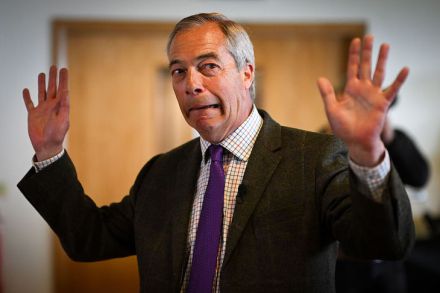
If the Scottish Labour leader Anas Sarwar is sincere in wishing to deprive Nigel Farage of the 'oxygen of publicity', he’s got a funny way of going about it. In a vituperative interview on the BBC's Good Morning Scotland today, he gave the Reform leader another blast of oxygen by offering a public debate on the eve of his visit to next week’s Hamilton, Larkhall and Stonehouse by-election. This is publicity Reform couldn’t buy with any of the money it has so far devoted to a blitz on social media. Sarwar is incensed at a mischievous attack ad last week in which Reform doctored a quote to suggest that the Scottish Labour leader intended to 'prioritise' the Pakistani community.

The SNP is remembering its populist roots

John Swinney will unveil his second programme for government in Holyrood today – the first minister of Scotland’s equivalent of the King’s Speech. He will promise measures to cut hospital waiting lists, address climate change, eliminate child poverty and, above all, promote economic growth. But what is more interesting than what is in today’s programme is what has been left out of it. John Swinney has been quietly burying his predecessors’ progressive policies. He would never use the word, but the First Minister is waving farewell to woke. He has already made it clear he will not resurrect Nicola Sturgeon’s disastrous Gender Recognition Bill.

The closure of Grangemouth’s refinery sums up Labour’s Net Zero muddle

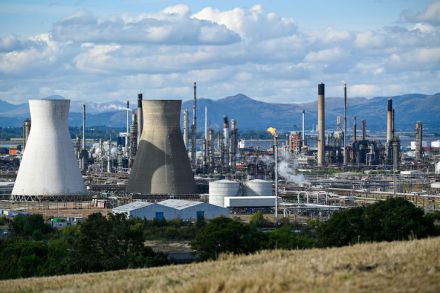
Another grim milestone in Britain’s elective deindustrialisation was reached today: Scotland’s only remaining petrochemical plant, Grangemouth in Fife, ceased refining crude oil after more than half a century of processing output from the Forties field in the North Sea. It was hardly a surprise. PetroIneos, the part-Chinese-owned company, announced last year that Grangemouth was to become a terminal for Liquefied Natural Gas (LNG) imported from abroad. But today's news is significant because nothing better exposes the contradictory state of British energy policy.

Reform and the SNP have much in common

“Storm clouds are gathering. We can all see them.” No, not Winston Churchill on the rise of the Nazis in Europe, but John Swinney on the march of the “far right” in Scotland. Today, the First Minister will host a “mobilisation of mainstream Scotland” against Reform and its “racist” leader, Nigel Farage, who he says, in all seriousness, could be “the next Prime Minister.” The man the Scottish left loves to hate will no doubt be at a bar toasting Swinney’s prediction Swinney’s breathless scaremongering is because Reform is making progress in his own backyard. A Survation poll places them at 17 per cent in the constituency vote for the 2026 Scottish parliament elections, 5 per cent ahead of the Scottish Conservatives.

The sorry fate of Nicola Sturgeon

The first thing to say is that Nicola Sturgeon has been cleared in an investigation into the SNP's funding and finances, with no case to answer, scot-free. That may seem a statement of the bleedin’ obvious, but there are many in and out of the independence movement who do not and never will believe that she is wholly innocent. No smoke without fire. Who was it that set up the £600,000 fund in 2017 for a referendum campaign that never happened? Are you trying to tell me that this micromanaging, control-freak politician was ignorant of what has been alleged to have gone on in her party under her very nose? Salmond and Sturgeon were, in different ways, casualties of the times in which we live Yes, people will inevitably cling to their suspicions.

Nicola Sturgeon’s dismal legacy

The departure of the former Scottish First Minister, Nicola Sturgeon, from active politics draws a line under the Scottish National Party’s greatest generation. Her former mentor, Alex Salmond, died suddenly of a heart attack in October. Now, Sturgeon has told her supporters that “the time is right for me to embrace different opportunities and to allow you to select a new standard-bearer”. Sturgeon, of course, relinquished her hold on the standard of government in February 2023 when she resigned suddenly and plunged her party into chaos from which it has yet to recover. When she departed Bute House, in the wake of the scandal over her flagship Gender Recognition Reform (Scotland) Bill, the SNP was still leading the Scottish opinion polls, and her personal popularity remained high.

How independent are Britain’s nukes?

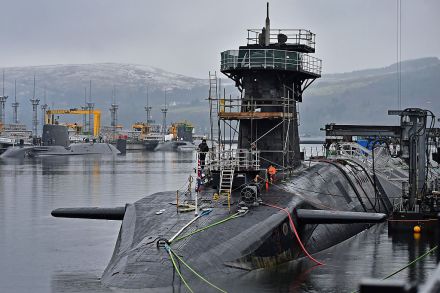
Keir Starmer has sought to get into Donald Trump’s good books by boosting defence expenditure – and doing it in a very Maga way: slashing the UK aid budget to pay for it. That has no doubt caught the eye of the US president, as has the Prime Minister’s promise to put British boots on the ground in Ukraine as part of a European peacekeeping force after a deal is struck. Mind you, that assumes that Vladimir Putin will keep to any deal to end the war. What if he doesn’t? Who guards the peacekeepers? Trump has made clear that European nations will have to look to their own security in future against an expansionist Russia.

It’s time to reform the Gender Recognition Act

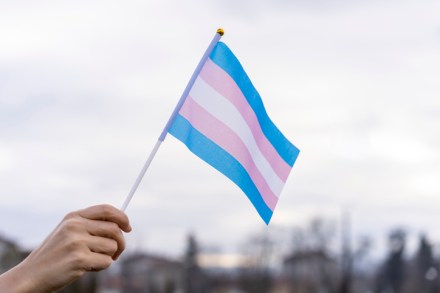
What were they thinking? When Tony Blair agreed, in 2004, to legislation allowing transsexuals – as they were then called – to change their legal sex, he probably thought Labour was merely ‘being kind’ to a tiny number of people with the medical condition of gender dysphoria. He never expected thousands of young people to start asking for gender reassignment, puberty blockers, and genital surgery. Yet here we are. Nor, I’m sure, did the Labour MPs who voted for the 2004 Gender Recognition Act (GRA) expect women to be forced to undress in front of natal men in changing rooms, or that male-bodied transgender athletes would be competing in women’s sporting events, or transgender sex offenders would be housed in women’s prisons.

Elon Musk is America’s Trotsky

I never imagined that I would see a real revolution, at least not in the West. Sure, when I was a student, I fantasised, along with a number of my Edinburgh University lecturers, about a socialist revolution in the UK. Expropriate the expropriators! Ban the bosses! Nationalise everything and abolish money. But, of course, nothing so dramatic ever happens in mature liberal democracies. Except that it just has. Okay, the Trump takeover of the US government is hardly a communist revolution, and Elon Musk is not immediately obvious as a reincarnation of Leon Trotsky, but what is happening right now is revolutionary – just not quite in the way my student self would have wished.