Iain Macwhirter

Iain Macwhirter

Iain Macwhirter is a former BBC TV presenter and was political commentator for The Herald between 1999 and 2022. He is an author of Road to Referendum and Disunited Kingdom: How Westminster Won a Referendum but Lost Scotland.

Is ‘Operation stop Kate Forbes’ working?

From our UK edition

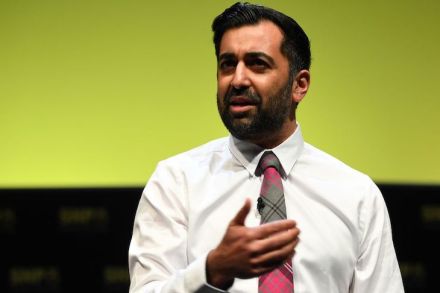
The SNP establishment – the Sturgeonites – are trying to give the SNP membership an offer they can’t refuse. Swallow your doubts and just vote as you are told: that is, for Humza Yousaf. If you don’t, beware the consequences: a split in the party, the collapse of the Green coalition, the departure of key figures and even the loss of government itself. A number of ministers, including Nicola Sturgeon’s closest ally, social justice secretary, Shona Robison, are saying they would have trouble serving in a government led by Kate Forbes. In other words, if Humza loses they’ll take their support away.  Nationalists like the former SNP minister, Marco Biagi, have been ramping up the warnings about a split on social media.

Whoever wins the SNP leadership race, independence has already lost

From our UK edition

‘Now is not the time,’ successive Tory prime ministers told Nicola Sturgeon following her persistent calls for another independence referendum. It’s simply too soon after the last one, they said. In August, the Scottish secretary, Alister Jack, caused fury in nationalist circles after he stated there would need to be at least 60 per cent support for independence in opinion polls before the UK government would respond to further Section 30 referendum requests. Strange, then, that this Tory message appears to be exactly what the SNP leadership candidates were parroting in Tuesday night’s now infamous STV debate.

The SNP is living in a fantasy land

From our UK edition

Scotland has the worst drug death rate in Europe. More than half a million Scots are on hospital waiting lists. The NHS is being privatised by stealth as more and more Scots go private. We don’t hear much about this in the endless SNP leadership hustings. Instead there is an air of self-congratulation that things aren’t worse. Candidates have distanced themselves from the Scottish government’s chaotic deposit return scheme for bottles and cans. But that isn’t the only environmental disaster waiting to happen. Sales of petrol and diesel cars in Scotland are to be banned in seven years, yet the electric charging infrastructure is so bad people are turning away from electric vehicles.

Is Humza Yousaf’s campaign starting to sink?

From our UK edition

The SNP leadership has turned into open civil war. Alex Salmond has shafted the frontrunner Humza Yousaf who tried to shaft Kate Forbes, who was, in turn, shafted by Nicola Sturgeon. No wonder long-suffering deputy First Minister, John Swinney, has resigned.  Swinney’s departure came on the day Salmond torpedoed Yousaf, Sturgeon’s chosen successor, by claiming he had skipped Holyrood's landmark gay marriage vote in 2014 due to 'religious pressure'. Yousaf says his ‘recollection is different’, but his position is now untenable. His account is contradicted by the minister who was in charge of the 2014 equal marriage vote, Alex Neil, and now the then first minister, Salmond.

The Windsor Framework isn’t the blessing Scottish nationalists think it is

From our UK edition

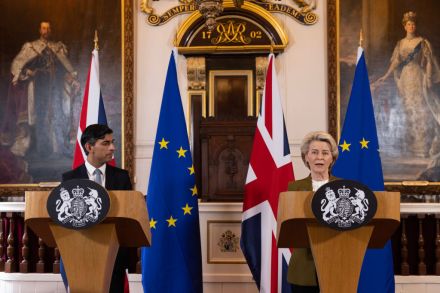
Is the Windsor Framework a get-out-of-jail card for Scottish nationalists? The excitement expressed in SNP circles at Rishi Sunak’s Protocol breakthrough yesterday was palpable. For if remaining in the EU single market while staying in the UK is good for Northern Ireland, surely this could be the case too for an independent Scotland? Isn’t this the ‘best of both worlds’ scenario that Nicola Sturgeon always asked for: borderless trade with the UK after Scotland joins the EU single market? A bonanza for Scottish businesses, who would be able to access markets in Europe free from Brexit red tape? Perhaps even a ‘Holyrood Brake’ to ensure that the Scottish Parliament can axe EU laws it doesn’t like? Unfortunately, it does not work quite like that.

Is Scotland ready for the return of Alex Salmond?

From our UK edition

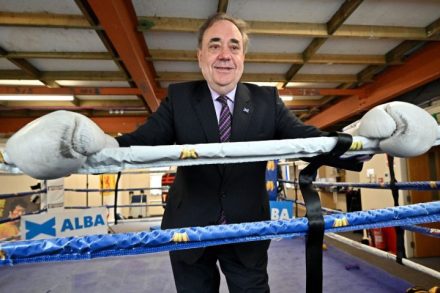
There’s a fourth person in this SNP leadership race, only he’s not on the ticket and he can’t be elected as leader. The former SNP leader and First Minister, Alex Salmond is using this chaotic leadership election to engineer his rehabilitation.  Ash Regan, the former community safety minister, who launched her leadership campaign on Friday is a Salmond protege. She echoed his call for an 'independence convention' to bring all independence parties together, including Mr Salmond’s breakaway Alba party. This would propel Alex Salmond back into the centre stage of Scottish politics. He would be a big presence in such a body, given his experience and history – not to mention his ego. It would be the Salmond show redux. Ash Regan is her own woman, of course.

The SNP leadership race has turned into the mother of all culture wars

From our UK edition

Bring back Nicola Sturgeon. The race to replace her as SNP leader and first minister has turned into the mother of all culture wars. Who would have thought that the party of independence would start tearing itself apart over a law on same sex marriage that was passed nearly a decade ago? The early front runner, Kate Forbes, provoked fury among ‘progressive’ SNP supporters on Twitter by saying she opposes gay marriage – something everyone who knows her knew perfectly well. She is an evangelical Christian for heaven’s sake, a member of the Free Church of Scotland. Of course she opposes gay marriage. That along with having children out of wedlock and working on the sabbath.

The SNP-Green coalition is unlikely to last the week

From our UK edition

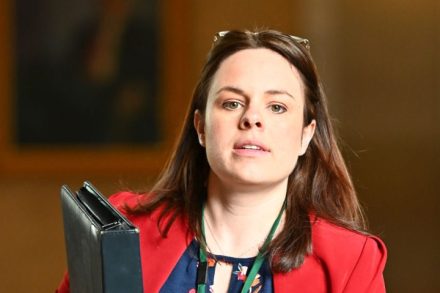
Scottish nationalists are shell-shocked after their leader did a bunk on Wednesday. And with good reason. Nicola Sturgeon left the SNP leaderless, directionless, failing on almost every policy front – from the NHS to bottle recycling – and with a legislative time bomb in the Gender Recognition Reform Bill, which is due to go off just as their new leader is installed at the end of March. It will probably destroy the Scottish coalition well before then. Indeed, the 18-month-old union with the Scottish Greens, another of Sturgeon’s personal initiatives, is unlikely to last the week.  Attempts by pro-GRR Bill loyalists to keep the finance secretary, Kate Forbes, out of the leadership race by demonising her as a bigot on social media, have failed.

Without Sturgeon, is the SNP still the party of independence?

From our UK edition

Dazed and confused by their leader’s sudden departure, Scottish nationalists are now deeply worried that Nicola Sturgeon has taken the independence dream with her. She hasn’t of course. Independence is a long game and there remain many true believers. However the chances of transforming the Scottish National party’s immense electoral success into a referendum on independence in the near term seem remote.    Some in the movement are wondering if the referendum route is still viable since it has been driven into a legal cul de sac by Nicola Sturgeon’s discredited idea of turning the next general election into a 'de facto' referendum on independence. That ploy is now surely dead.

After Sturgeon

From our UK edition

40 min listen

This week: What next after Sturgeon? In her cover piece for the magazine, The Spectator's political editor Katy Balls considers what Sturgeon's exit means for the future of Scotland – and the Union. She is joined by Iain Macwhirter, author of Disunited Kingdom, to discuss whether Scottish independence can survive after Sturgeon (01:09). Also this week: Elif Shafak writes a moving diary in The Spectator, reflecting on the terrible earthquakes that hit her homeland Turkey, and neighbouring Syria. She is joined by Turkey correspondent at the Financial Times Adam Samson, to assess President Erdogan's reaction to the disaster (15:03).

Nicola Sturgeon is a hard act to follow

From our UK edition

Nicola Sturgeon insisted last month she had 'plenty in the tank', but apparently the First Minister was already running on empty. Announcing her resignation this morning, Sturgeon said she finally decided to step down only yesterday at the funeral of a long-serving SNP activist. However she also made clear she had begun to realise over the past year she no longer had the energy to give '100 per cent' to the job. In an emotional press conference at Bute House in Edinburgh, Sturgeon insisted she could have 'led the party to independence'. But she conceded that her personality was becoming a liability: 'Fixed opinions about me are becoming a barrier to reasoned debate,' she said. It was time to hand over the reins to someone, she implied, with a lesser personality.

Why Nicola Sturgeon had to go

From our UK edition

Nothing in life or politics lasts forever, not even Nicola Sturgeon’s legendary popularity. In a recent poll, 42 per cent of Scots said the First Minister should step down immediately. It seems she has taken the hint: this morning Sturgeon announced that she would be resigning after eight years as head of the Scottish government. 'The nature and form of modern political discourse means there is a much greater intensity – dare I say it brutality – to life as a politician than in years gone by,' she said in a press conference at Bute House in Edinburgh. As Sturgeon prepares to hand over to her successor, there is no doubt that the SNP still dominates Scottish politics. But every dog in the street, as they say here, knew that Sturgeon’s time was coming to an end.

Sturgeon’s de facto referendum plan is dividing the SNP

From our UK edition

It is vanishingly rare for the SNP-supporting paper The National – a publication that makes Pravda look like the Washington Post – to place anything remotely critical of Nicola Sturgeon on its front page. Yet on Wednesday it warned that the Dear Leader’s ploy to turn the 2024 general election into a ‘de facto referendum’ could ‘Blow It For Indy’. It is right. The idea looks like being about as popular as placing rapists in a woman’s jail. The plan, unveiled by the First Minister in high dudgeon last November, after the Supreme Court rejected her bill to hold an ‘advisory’ referendum on independence, was to present Scottish voters with a one line manifesto before the next Westminster vote in or around 2024.

Time is running out for Nicola Sturgeon

From our UK edition

Scotland’s First Minister, Nicola Sturgeon, has led a charmed life. Even her sternest critics agree that she is immensely talented, one of the UK’s most successful politicians, a master of detail and an effective communicator. She has been at the pinnacle of public life for two decades. But all things must pass. Nearly ten years after she took over as leader from Alex Salmond just about everything is going wrong at once. Hospital waiting lists lengthen, teacher strikes roll on, council service cuts deepen, the ambitious plan for a Social Care Commission has stalled. Across the board the SNP government appears to have made a right royal mess of just about every policy for which it has responsibility.

Nicola Sturgeon’s trans prison saga continues

From our UK edition

Could the extraordinary scandal of transgender sex offenders being sent to women’s prisons come at any worse a time for Nicola Sturgeon? Only days after her flagship Gender Recognition Reform (GRR) Bill was stalled by Westminster’s government on the grounds that it might have an 'adverse impact' on women's safety, it emerged that women have already been endangered by the Scottish Prison Service (SPS). In their anticipation of this very legislation, Scottish prisons have been allowing male sex offenders to routinely self-identify as women for almost a decade. How was this allowed to happen? How did the First Minister not know until last week that rapists, such as Isla Bryson (formerly Adam Graham), were being housed in women’s prisons?

Gender wars: the Union’s new battle line

From our UK edition

39 min listen

On the podcast this week:  In his cover piece for the magazine Iain Macwhirter writes in the aftermath of the government’s decision to block the Scottish Gender Recognition Reform Bill from gaining Royal Assent. He joins the podcast with Observer columnist Sonia Sodha to discuss the Union’s new battle line (01:03).  Also this week: why are our prisons still in lockdown?  Charlie Taylor, HM’s Chief Inspector of Prisons writes about some of his recent observations visiting institutions around the country. He says that control measures are failing both inmates and the taxpayer. He is joined by journalist David James Smith to examine this post-Covid inertia in UK prisons (16:48).

Gender wars: the Union’s new battle line

From our UK edition

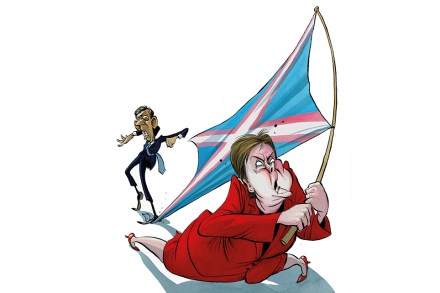
When Rishi Sunak had dinner with Nicola Sturgeon last week, the idea was to show he was interested in a friendly relationship: a ‘constructive dialogue’. Liz Truss had dismissed Sturgeon as an ‘attention seeker’ who was ‘best ignored’, but Sunak preferred a more positive approach. He was keen to pose for pictures afterwards. This new friendship lasted four days. Sturgeon is now accusing Sunak of ‘a full-frontal attack on the democratically elected Scottish parliament’ because he has become the first Prime Minister in history to veto a bill passed there – the Gender Recognition Reform (Scotland) Bill. Sturgeon has put on a virtuoso performance of grievance.

Why we should take the Twitter Files seriously

From our UK edition

‘Shadowbanning’, ‘visibility filtering’, ‘de-amplification’ – the Twitter Files released since Elon Musk took over have given us a new and sinister language of digital censorship. I am no fan of Musk’s capricious self-promotion. His vanity appals me and his vindictive attacks on former Twitter employees are gross. However, I credit him with telling us more about the inner workings of social media in two weeks than we learned in the last two decades. As in a palace coup, there is often a moment of transparency before the next dictator takes over. Of course, the Twitter Files have to be taken with a high degree of scepticism. They are partisan to the extent that Elon Musk sees himself as a crusader against what he calls the ‘woke mind virus’.

The SNP’s tax hikes won’t work 

From our UK edition

Two self delusions have sustained the SNP through the past couple of decades of devolution. The first is the perennial grievance that deteriorating public services are the result of Westminster austerity. The second is that Scotland’s social problems can be solved through redistribution – by taxing the rich. Both have now collapsed in the face of harsh reality. Low-growth Scotland generates less wealth each year, there are precious free rich left to tax and the public sector remains utterly dependent on financial life-support from the UK exchequer. This is an economy of almost colonial dependency, far removed from the image of independence propaganda. Deputy first minister John Swinney’s latest Scottish Budget remains very firmly in the land of delusion.

Is the SNP falling apart?

From our UK edition

The SNP should be basking in its recent formidable polling success. Not only does support for independence appear to be on the rise – with 56 per cent in favour, according to the latest Ipsos Mori poll – but there is evidence too that the SNP could win an outright majority in the next Scottish parliament elections. So why does the party appear to be falling apart? Three front bench resignations in as many days doesn’t look like a party at peace with itself.   The Westminster group of SNP MPs is roiled by divisions and rancour. The palace coup by the 34-year-old Stephen Flynn against veteran Westminster leader Ian Blackford has caused a whole lot of upset.