Hugo Rifkind

Hugo Rifkind

Hugo Rifkind is a writer for the Times.

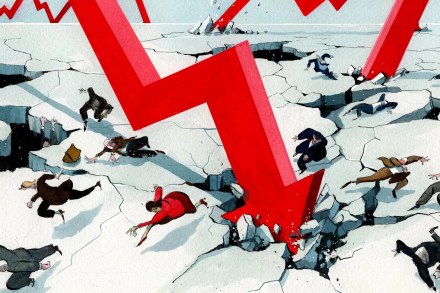
Crash test: the new era of economic uncertainty

From our UK edition

40 min listen

On the podcast: The Spectator's economics editor Kate Andrews looks back on a week of economic turbulence and asks whether we should be worried, for her cover piece in the magazine. She is joined by the economist – and former 'Trussketeer' – Julian Jessop, to discuss whether we are entering a new era of economic uncertainty (01:06). Also this week: In the magazine, The Spectator’s deputy features editor Gus Carter says that the culture of toxic masculinity has gone too far, and that young men are being marginalised in schools and online as they are repeatedly told that they are a danger to women. He is joined by the Times columnist Hugo Rifkind, to explore how today's sexual politics is impacting young men (13:21).
What it means to be descended from Holocaust survivors

From our UK edition

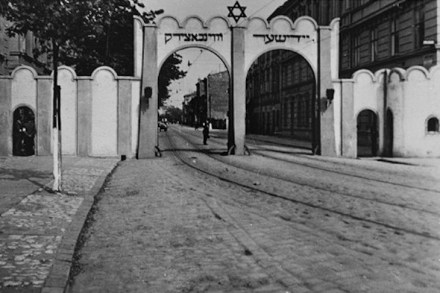
This is a short piece on Holocaust Memorial Day, and what it means to be descended from Holocaust survivors. Many, many people could write a story like this, but this one is mine. All parts of my family lost people in the war. My grandfather, though, lost pretty much his whole family. They were in Krakow, in Poland, and only he and one brother survived. His first wife, his baby daughter, his parents, aunts, uncles, nieces, nephews all died. To understand the immediacy, that’s my mum’s half-sister, grandparents, her whole extended family. All gone before she was even born. Recently, I’ve been trying to find out about them. It’s really hard. My grandpa died when I was three, and I gather he didn’t like to talk about the past much.

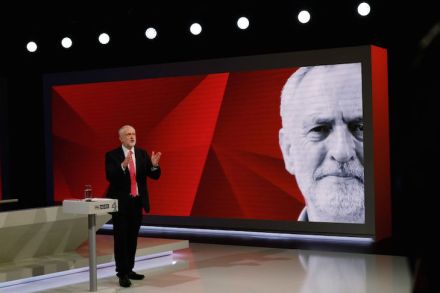
Corbyn’s problem was not that the media hated him – but that he hated the media

From our UK edition

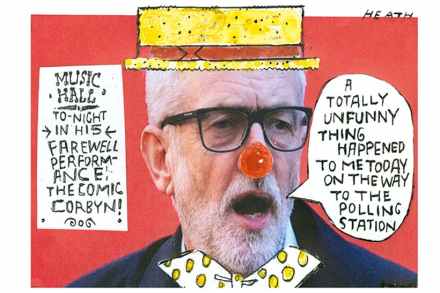
On the morning of the election, we buried my lovely mum. I write this 24 hours later, now on a flight to the States, with the mud from her graveside still all over my shoes. This was just the ashes, because we had the funeral six weeks ago, but it was oddly fitting. The 1970 election was called a week before she married my father, who would go on to spend the bulk of his working life as a Tory MP, which meant they had to postpone their honeymoon and spend it canvassing the streets of Edinburgh instead. Four years later, the sudden second 1974 poll was held two days before the birth of my older sister. And there we were, right at the end, doing it to her yet again. She hadn’t talked much for the past few years, because multiple sclerosis can be savage like that.

The real reason Nigel Farage hates Douglas Carswell

From our UK edition

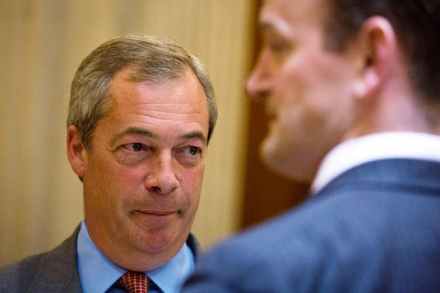
We’re closing 2017 by republishing our twelve most-read articles of the year. Here’s No. 10: Hugo Rifkind on spotting the difference between a real anti-establishment man and a fake one: If the British establishment really wants to troll Ukip, then I suppose it ought to give Douglas Carswell a knighthood for blocking Nigel Farage’s knighthood. He says he didn’t, of course, and I don’t see how he could have done. Farage, though, clearly thinks he did, and his wrath about this is the most fun thing to have happened in British politics for ages. He’s furious. His little demons are furious. Too furious, really. ‘This must be about something else,’ I kept thinking. ‘Deep down, it must be. But what?

What’s Labour going to do with the middle classes?

From our UK edition

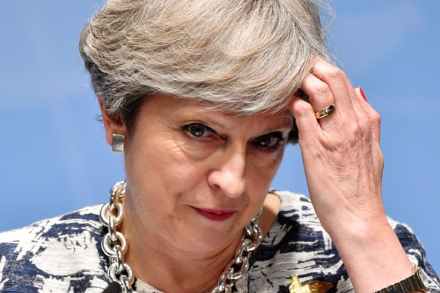
Be fair. Theresa May’s plan actually half-worked. No, there was a plan. I know the consensus now seems to be that the entire election was motivated by little more a succession of senior Tories saying ‘Gosh yes, everybody loves you!’ to the Prime Minister while Fiona Hill and Nick Timothy stood behind her chair, slapping truncheons into their palms. Only that’s not how it was. Once, there was philosophy here. There was a plan to cut loose the liberal, urban, Remainiac middle classes, and draw in a new working-class Tory vote instead. And, like I said, it half-worked. As in, the working classes might not have got the message that the Tories were now a party for them, but the urban middle classes surely got the glaring hint that it now was not for them.

Labour’s middle-class problem

From our UK edition

Be fair. Theresa May’s plan actually half-worked. No, there was a plan. I know the consensus now seems to be that the entire election was motivated by little more a succession of senior Tories saying ‘Gosh yes, everybody loves you!’ to the Prime Minister while Fiona Hill and Nick Timothy stood behind her chair, slapping truncheons into their palms. Only that’s not how it was. Once, there was philosophy here. There was a plan to cut loose the liberal, urban, Remainiac middle classes, and draw in a new working-class Tory vote instead. And, like I said, it half-worked. As in, the working classes might not have got the message that the Tories were now a party for them, but the urban middle classes surely got the glaring hint that it now was not for them.

Did Glastonbury love Corbyn as much as it loved pirates in 2007?

From our UK edition

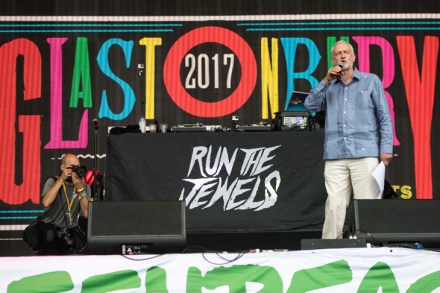
I saw him — the loneliest man at Glastonbury. He was wearing a neon-green Hawaiian shirt, and he was next to a stall selling baguettes, and he was standing on a path facing a stage, and he was screaming that Jeremy Corbyn was a cunt. This was not, actually, a stage that had Corbyn on it. His speech was being shown on the giant screens, yes, but only as a prelude to the Kaiser Chiefs. Possibly the man in the Hawaiian shirt didn’t know this. ‘You lost the election, you wanker!’ he shouted, and ‘Get the fuck out my life!’ and ‘IRA sympathiser!’ and ‘Hezbollah lover!’ and so on. He seemed, I thought, rather well informed. Despite being in the wrong place. Most people pretended he wasn’t there.

The Conservatives’ real problem? It’s that the electorate now sees them as reckless

From our UK edition

The opposition wants to raze your house to the ground. No, bear with me. Analogy. They say they’ll pull it down, and build a new one with, I don’t know, walls of gold, and hot and cold running unicorns. ‘You can’t trust them,’ says the government, ‘because they want to knock your house down!’ And normally, normally, this would be quite an effective message. Only this time it is delivered from inside the cab of a JCB by a government that also wants to knock down your house, and has already demolished your garden wall. ‘Honk honk!’ they’re going, on that pull-down-horn thing, with eyes gleaming like those of actual maniacs. ‘Those guys are crazy!’ they’re saying, with foam frothing from their own lips.

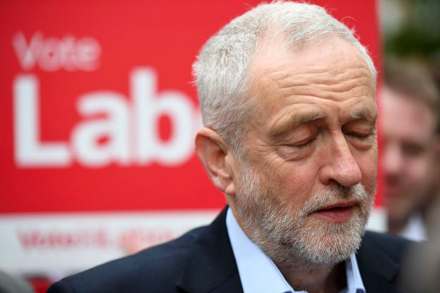
Jeremy Corbyn’s one true virtue | 3 June 2017

From our UK edition

Enough of all these vital, apocalyptic, existential elections. They don’t half wear you out. The Scottish referendum was vital and apocalyptic, so they said, because the wrong decision would have seen Britain crack like a plate, and Scotland spiral off into insane debt, and residual Britain fade in geopolitical importance. Or, on other side, Tory rule for a millennium, which no Scot could ever want. Hmmm. Then the 2015 election was vital and apocalyptic, too, because Ed Miliband… Ed Miliband… Hang on. What was the big problem with Ed Miliband? There definitely was one. Ah yes, his dad hated Britain. Also he was incompetent. Didn’t even know how many kitchens he had. Couldn’t eat a sandwich. Or hold a banana. Unless that was somebody else.

Jeremy Corbyn’s one true virtue

From our UK edition

Enough of all these vital, apocalyptic, existential elections. They don’t half wear you out. The Scottish referendum was vital and apocalyptic, so they said, because the wrong decision would have seen Britain crack like a plate, and Scotland spiral off into insane debt, and residual Britain fade in geopolitical importance. Or, on other side, Tory rule for a millennium, which no Scot could ever want. Hmmm. Then the 2015 election was vital and apocalyptic, too, because Ed Miliband… Ed Miliband… Hang on. What was the big problem with Ed Miliband? There definitely was one. Ah yes, his dad hated Britain. Also he was incompetent. Didn’t even know how many kitchens he had. Couldn’t eat a sandwich. Or hold a banana. Unless that was somebody else.

Big money, big data and the dead cat strategy

From our UK edition

In his new book Move Fast and Break Things, the American academic Jonathan Taplin makes a decent case that, democratically speaking, the internet has gone awry. Tools and freedoms which originally promised to allow individuals to challenge the powerful, he argues, are instead exploited by the powerful to dodge the demands of society. He’s writing about copy-right and tax, mainly. But he could have been writing about political advertising. On the radio last weekend, my friend and colleague Lord Finkelstein (I don’t actually call him Lord Finkelstein) was talking about the skills of Sir Lynton Crosby, the Tory election mastermind. ‘Lots of election campaigns are taking place where you can’t see them.

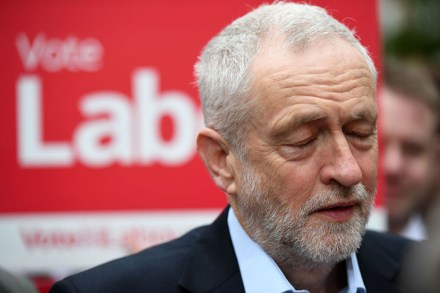
Labour’s election strategy – vote for us and watch us lose | 6 May 2017

From our UK edition

The crapness of Corbyn’s Labour is a phenomenon. It fascinates me. Frankly, it does my head in. For there is a theory, you see, that Corbyn’s Labour isn’t really crap at all. That it is all a conspiracy. That journalists such as me, who I suspect are ‘neoliberal’ or something, merely construct a narrative demonising it as such. Where politicians match our prejudices, this theory goes, we give them enormous leeway and spring to their defence. When they don’t, we supposedly deem them ‘mad’ or ‘radical’ or, yes, ‘crap’, in a spirit of sheer defensiveness. It’s a neat theory, this, and very occasionally I even find myself wondering if it might be true.

Labour’s election strategy – vote for us and watch us lose

From our UK edition

The crapness of Corbyn’s Labour is a phenomenon. It fascinates me. Frankly, it does my head in. For there is a theory, you see, that Corbyn’s Labour isn’t really crap at all. That it is all a conspiracy. That journalists such as me, who I suspect are ‘neoliberal’ or something, merely construct a narrative demonising it as such. Where politicians match our prejudices, this theory goes, we give them enormous leeway and spring to their defence. When they don’t, we supposedly deem them ‘mad’ or ‘radical’ or, yes, ‘crap’, in a spirit of sheer defensiveness. It’s a neat theory, this, and very occasionally I even find myself wondering if it might be true.

What can May say to the Tory Remainers?

From our UK edition

I don’t see it. I do not see the anatomy of how it all pans out. Theresa May will be the next Prime Minister because, jeez, who else is going to be? What I cannot see, though, is what she says, and to whom, along the way. Most of all, I cannot see what she says to Remainers. ‘Who cares?’ you may be thinking, and ‘get over it’ and ‘you lost’ and so on. Yet these arguments, while powerful, only get us so far. The fact is, quite a lot of people who formerly voted Conservative also voted Remain. In Mrs May’s own constituency, indeed, she may have a majority of a smidge over 29,000, but she also faces an electorate who, by a margin of almost 8 per cent, voted against leaving the European Union.

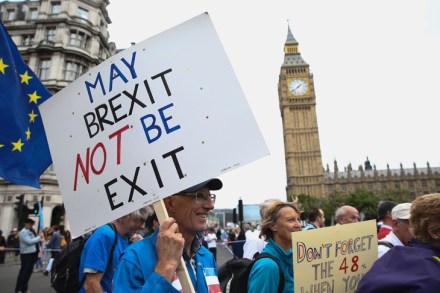
Let’s rein in Brexiteer triumphalism before we all go mad

From our UK edition

According to archaeologists and all the papers last week, the 11th-century villagers of Wharram Percy, North Yorkshire, used to mutilate their dead, chopping off their heads and breaking their legs to minimise the danger of zombie resurrection. ‘Imagine being afraid,’ I chortled while reading this, ‘that the undead might put you in mortal danger!’ Whereupon I flicked forward a couple of pages and came across Michael Howard’s plan to defend Gibraltar by sending a gunboat. Personally, I’m against the idea of war with Spain. Although I say that cautiously, because we Remoaners must not hold back the will of the people.

Let’s rein in Brexiteer triumphalism before we all go mad

From our UK edition

According to archaeologists and all the papers last week, the 11th-century villagers of Wharram Percy, North Yorkshire, used to mutilate their dead, chopping off their heads and breaking their legs to minimise the danger of zombie resurrection. ‘Imagine being afraid,’ I chortled while reading this, ‘that the undead might put you in mortal danger!’ Whereupon I flicked forward a couple of pages and came across Michael Howard’s plan to defend Gibraltar by sending a gunboat. Personally, I’m against the idea of war with Spain. Although I say that cautiously, because we Remoaners must not hold back the will of the people.

The best thing about Brexit? None of it is my fault

From our UK edition

Brexit Britain fills me with calm. Six weeks on, there’s no point pretending otherwise. Losing is far better than winning. I am filled with enormous serenity at the thought of this terrible, terrible idea being not my fault at all. I didn’t expect to feel this way. Although there were signs, now I think back, on the night of the vote. I was at Glastonbury, obviously. (‘Of course you were!’ cried Rod Liddle, when I saw him a few weeks later.) Of course I was. There, with the rest of the metropolitan, liberal, bien-pensant yadda yadda. I found out at about 2 a.m., after a pleasant evening doing pleasant Glastonbury things. I’d wandered backstage, to meet a journalist friend who had secured access to Wi-Fi and a television.

Why is Nicola Sturgeon so cagey about Scotland’s EU future?

From our UK edition

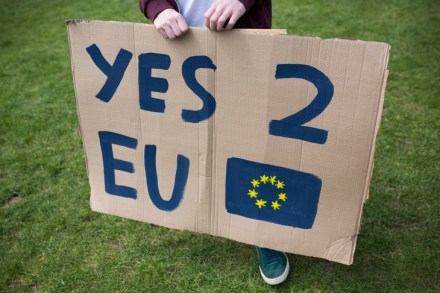
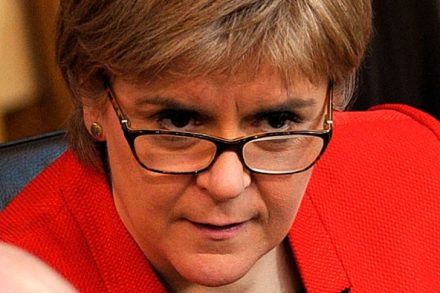
It's important to keep an ear out for the rhetoric of Britain’s remaining Remain parties, because they are changing, too. Having announced plans for a second Scottish referendum entirely because of Brexit, Nicola Sturgeon is now incredibly cagey about whether her independent nation would even be part of the EU, or perhaps more like Norway. The same is true of the Lib Dems. Last weekend, Tim Farron managed to give a whole speech to his party’s spring conference railing against only a ‘hard Brexit’ and thus never quite saying whether a Lib Dem government (humour me) would leave the EU or not. These people need to get off the fence. Mind you, so do I.

Jean-Claude Juncker is the worst thing about being a Remainer

From our UK edition

The best thing about being a Remainer is obviously the dinner parties, where we all sit around being incredibly well-heeled in leafy Islington. Bloody love a good heel, I do. And a leaf. Honestly, you haven’t lived until you’ve heard Eddie Izzard and Nick Clegg crack jokes at each other in French, as Lily Allen and Matthew Parris do impressions of old people from Northumberland, while in the background Bob Geldof and Professor Brian Cox duet on the piano. It’s almost literally how I spend almost all of my time. Whereas Leaver dinner parties, so I’m told, are just IDS and a Scotch egg. The worst thing about being a Remainer, though, is Jean-Claude Juncker. Indeed, I’d go further and say that he’s the worst thing about the European Union altogether.

Juncker is now the hardest Brexiter there is

From our UK edition

The best thing about being a Remainer is obviously the dinner parties, where we all sit around being incredibly well-heeled in leafy Islington. Bloody love a good heel, I do. And a leaf. Honestly, you haven’t lived until you’ve heard Eddie Izzard and Nick Clegg crack jokes at each other in French, as Lily Allen and Matthew Parris do impressions of old people from Northumberland, while in the background Bob Geldof and Professor Brian Cox duet on the piano. It’s almost literally how I spend almost all of my time. Whereas Leaver dinner parties, so I’m told, are just IDS and a Scotch egg. The worst thing about being a Remainer, though, is Jean-Claude Juncker. Indeed, I’d go further and say that he’s the worst thing about the European Union altogether.