Hugo Rifkind

Hugo Rifkind

Hugo Rifkind is a writer for the Times.

Corbynglish as a second language: a political dictionary of terms

From our UK edition

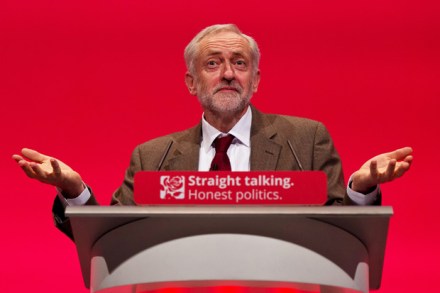
Corbynterpretation [n]: The inevitable process of debate, after Jeremy Corbyn is interviewed, over what he actually meant. Does the Labour leader believe the killing of Osama bin Laden was a tragedy, or not believe this? Would he like Britain to negotiate with Daesh or would he be opposed to that happening? Would he, or would he not, abandon the Falkland Islands? As in, ‘Well, that’s a matter of Corbynterpretation’ or, ‘No, no, those remarks have been totally misCorbynterpreted.’ In order to Corbynterpret [v] one must first consider 1. Whether the Labour leader brought up the disputed view himself (invariably not) 2. Whether the Labour leader clearly said ‘yes’ after somebody asked him whether he held this view (invariably not) and 3.
What a spankingly splendid scandal

From our UK edition

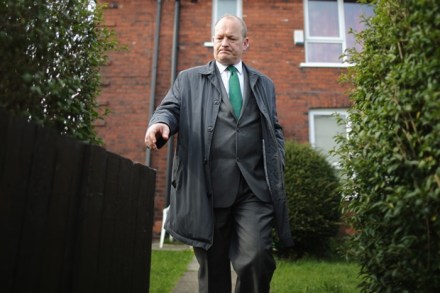
Apparently, according to a variety of relatively reliable sources that include the man himself, the Labour MP for Rochdale, Simon Danczuk, is in the habit of accepting money from a paparazzi agency in exchange for advising them how they might best snap pap pictures of the Labour MP for Rochdale, Simon Danczuk. Is this not one of the most amazing facts you have ever learned? Every bit of it — that tabloids want these photographs; that photo-graphers will pay for them; that an MP can earn a tidy sum by secretly facilitating them — simply boggles me. Are they all at it? Maybe that’s why we keep seeing those vile pictures of David Cameron fatly jogging, or Jeremy Corbyn dressed like Tony Soprano taking the bins out. You never know.

If you believe the internet, I was the Israeli army’s answer to Jason Bourne

From our UK edition

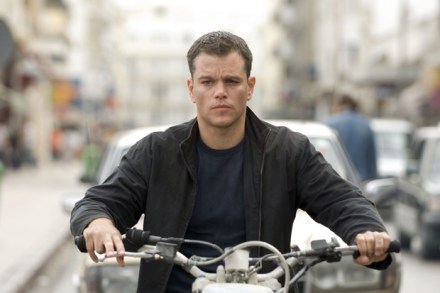
One of the strangest and, in a weird way, best things to have happened to me in the past year was the emergence of a firm conviction among a quite large collection of internet weirdos that I spent my youth fighting for an elite unit of the Israeli army. It started after a boozy pre-Christmas lunch almost exactly a year ago, when a woman tweeted me. I vaguely recalled that she had tweeted me before, probably about Jews or bankers or Palestine or Dolphin Square or Jimmy Savile, all of which I get quite a lot and normally ignore. This time, though, she had a question. She wanted to know about my Twitter profile picture, and whether the olive-green shirt I’m wearing in it was my uniform from my time in the IDF. This amused me.

Get ready: these climate change talks might actually do something

From our UK edition

The Prince of Wales is right, and I appreciate that this isn’t something people say very often. Now and again, certainly, Prince Charles does turn out to be right about things, such as the need for interfaith dialogue or the horrors of some modern architecture, but the manner in which he tends to be right about them does rather have the feel of happy coincidence. In the future, as Warhol didn’t quite say, we will all be right for 15 minutes. Unless it’s about homeopathy. This week, you see, the Prince told Sky News that the war in Syria may be linked to climate change. Not, please note, that it was caused by climate change, let alone man-made climate change. His view is very much not that, if more of us drove electric cars, Raqqa would be at peace.

The answer for sensible, moderate Labour folk is simple. Just leave

From our UK edition

What a useless shower the Labour party is right now. What a snivelling dance of fools. And I don’t just mean the new lot, under Jeremy Corbyn, although his ongoing decision to surround himself with a team of people who seem to have each been tasked, individually, with emphasising a different bad thing about him does take some beating. I mean the whole train set, radicals and moderates alike. This is a party, right now, reaping what it has sown, which is piety, tribalism and a sort of over-weening preachiness. And now, to mix my metaphors, it is getting bitten by all of them. Last week, Labour suspended a man called Andrew Fisher, who was, and remains, Jeremy Corbyn’s head of policy. It might sound odd, that ‘and remains’ bit, but don’t blame me.

Are we all potential cyberterrorists now?

From our UK edition

Hollywood got there first, of course. Back in 1983, before most of us even learned — then forgot again — what a modem was, Matthew Broderick starred in the seminal and brilliant WarGames. He played a computer hacker; a teenager who goes hunting for games on the global computer network that isn’t quite called the internet, yet. Unwittingly, he instead hacks into Norad, the North American Aerospace Defense Command and, via a convoluted series of events we need not go into here, very nearly sparks World War Three. Various angry generals assume, first of all, that he is the Russians. Then they assume he must at least be working for the Russians. But he isn’t. He’s just some kid who isn’t even Ferris Bueller yet.

Can the Great British public be made to care passionately about the EU referendum?

From our UK edition

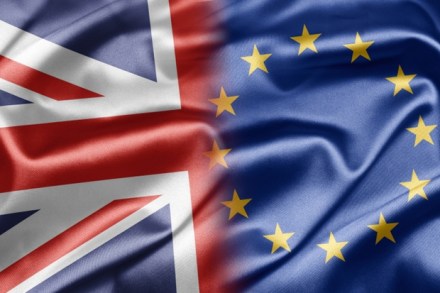
It’s early days, I know, but the Outers have convinced me. Britain will not collapse into chaos and penury if we leave the European Union. The Inners, meanwhile, have convinced me, too: there is no great, looming danger if we stay. Thus I have a question. What are we going to spend the next 18 months talking about? I don’t see it. I may be wrong, and often am. Here and now, though, I do not see the looming spark which will ignite the dry tinder of the Great British public into giving a toss. Which I think is something that people who are passionate about this argument, on either side, do not quite see. They think it will be fiery. Apocalyptic. Four Horsemen, Eurogog and Euromagog, and a beast crawling out of the sea with a € or a £ on its forehead, depending.

Maybe Playboy should stop publishing articles, too

From our UK edition

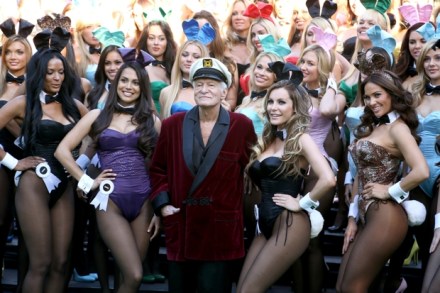
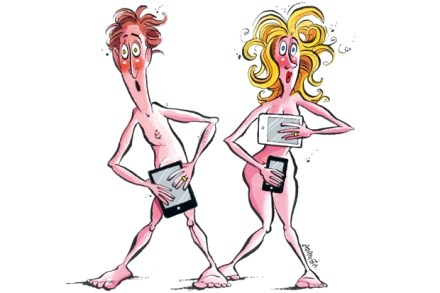
I’m enchanted by the news that Playboy magazine is to stop publishing pictures of naked women, because it can’t compete with the internet. 'You’re now one click away from every sex act imaginable for free,' said the CEO, Scott Flanders. 'And so it’s just passé at this juncture.' By that logic, though, shouldn’t they also ditch the famous articles? It’s just, I’m pretty sure you get stuff like that on the internet, too. More to the point, who on Earth knew there was a still a Playboy magazine?

Does Jeremy Corbyn believe in compromise, or just in compromise for other people?

From our UK edition

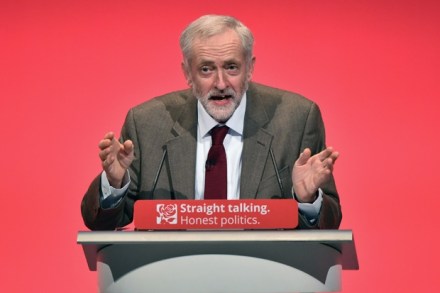
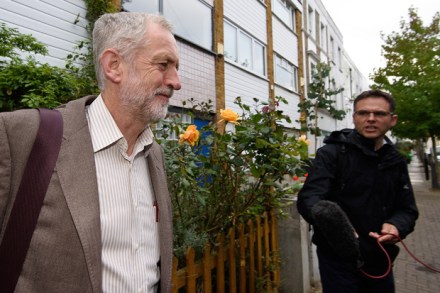
One of my favourite things about Jeremy Corbyn, beyond the beard (I do like beards) and the way he was photographed in the Times the other day unabashedly wearing sandals with socks (spunky; no quarter given) is his embrace of dissent as a virtue. Which is a virtue born of necessity, obviously, on account of the way that there are only about six people in the Parliamentary Labour Party who don’t disagree with him on everything, and they’re not safe on telly, either. Still, though. I like it. The doctrine of collective ministerial responsibility — the notion that everybody in a government thinks the same thing, and if one of them should ever admit that they don’t, then they have to go — doesn’t attract nearly the ridicule that it ought.

The problem with Corbyn’s hatred of the media

From our UK edition

The new leader walks across a bridge, in the dark, while the journalist asks him questions. He’s not shouting, this journalist; not like Michael Crick would be, all smug of face while shrieking ‘Isn’t it true you’re a terrible dickhead?’ None of that. Even so, the leader says not a word. He stares ahead, face stony, furious and fixed. Clip-clop go his feet. For two minutes. There’s a video. For two actual minutes. WATCH: This is what happened when I tried to ask #Corbyn about shadow cabinet. He accuses me of "bothering" him. pic.twitter.com/uyqQdwXYu3 — Darren McCaffrey (@DMcCaffreySKY) September 14, 2015 This was Jeremy Corbyn, being trailed across Westminster Bridge by Sky News in the small hours of Monday morning.

What we learned from the much-anticipated Clinton emails

From our UK edition

‘Gefilte fish,’ emailed Hillary Clinton to a pair of aides in March 2010, ‘where are we on this?’ That was it. Two words in the subject line, five more in the body. Nobody really knows what she was on about. Maybe it was code, maybe it was a reference to a new Israeli import duty slapped upon carp fillets from Illinois. Either way, in a 4,368-strong trove of emails sent and received by the former US Secretary of State, and just released by the State Department, this is the interesting bit. This was as good as it gets. OK, so I exaggerate. Or rather, under-exaggerate.

Bisexuality is now everywhere (and nowhere)

From our UK edition

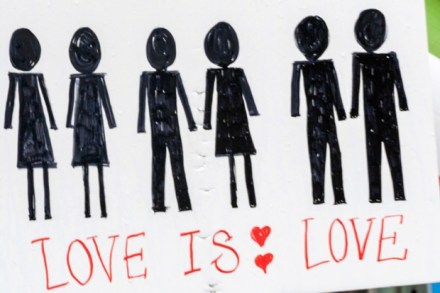
I’m not aware of knowing many bisexual people. Or indeed, off the top of my head, any bisexual people. Which is odd, really, because back in my student days you couldn’t move for them. Being bisexual was quite the thing. Or, at least, claiming to be was. The girls really dug it. This was back in the mid-1990s, not long after the lead singer of a band called Suede, who is a man called Brett Anderson (married to a lady now; two kids) had declared himself ‘a bisexual man who has never had a homosexual experience’. That, at the time, was very much the sort of sexual identity that a trendy, bohemian young chap, of the sort I very much wanted to be, was supposed to be aspiring towards.

Jeremy Corbyn is not an anti-Semite but he is reaping what he sowed

From our UK edition

People keep asking me if I think Jeremy Corbyn is anti-Semitic. I don’t. Or at least I think it’s vanishingly unlikely. Why would he be? For all his political unorthodoxy in various directions, his antipathy towards bigotry seems wholly genuine. Indeed, it seems the whole point. I don’t see how it could have such a big blind spot. If the question gets asked, however, and angrily, I don’t think he’s blameless. My own political awakening came with the pending Iraq war in 2003. I was against it, noisily. I remember quite clearly the first anti-war march I attended, probably in late 2002. Everybody had the same placard, handed out by the organisers. ‘Don’t Attack Iraq’, it said. And then underneath: ‘Justice For Palestine.

Caught on the net

From our UK edition

What, if anything, should a moral, liberal-minded person think about the hacking of the infidelity website Ashley Madison? And by ‘liberal-minded’, please note, I do not mean ‘Liberal Democrat-minded’, for such a person would perhaps merely think ‘Can I still join?’ and ‘I wonder if my wife is already a member, though?’ and ‘But will I find anybody prepared to do that thing I like with the pillow and the chicken?’ Rather, I mean somebody who believes in the sometimes jarring moral precepts that ‘People should be free’ and ‘People should not be a bit of a scumbag’. Ashley Madison, you see, is a website claiming 37 million users worldwide that exists to facilitate marital infidelity.

Remember when Britain could build stuff?

From our UK edition

Heathrow. The whole British story is there. Reading up around that debacle last week, I came across the eye-watering — and I think true — claim that, over the course of the second world war, Britain built 444 airfields. Four hundred and forty four. Although not all in the United Kingdom, probably. Some will have been in far-off lands, where Johnny Foreigner could be bought off in exchange for a pretty goat, or just shouted at, at gunpoint, until he went away. Hundreds, though, will have been here, on British soil — where it has now taken us over half an actual century to not quite build a new runway at Heathrow. 444. This is what we use to be able to do. So also trains.

How Taylor Swift socked it to Apple over a weekend

From our UK edition

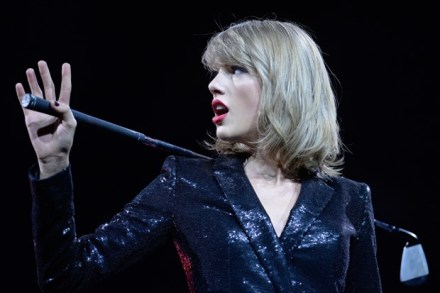
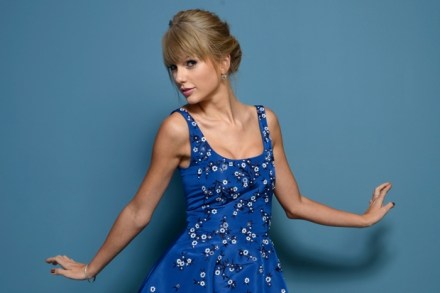
All hail Taylor Swift. How she must give baby boomers the fear. Not just baby boomers. Also those who came next, the Generation Xers, who seemed to define themselves culturally mainly via goatees, apathy and heroin. And my own rather listless, half-generation thereafter, with our bigger beards and binge-drinking. Taylor Swift makes us all look old. Because we are old and the world will be hers. You will have heard about her victory over Apple this week — you must have heard about it, because an opportunity to put Taylor Swift on the front of a newspaper is an opportunity not to be missed, particularly now that Elizabeth Hurley is getting on a bit and Princess Kate isn’t getting out much.

The world belongs to Taylor Swift now. There will be no free-trial period

From our UK edition

All hail Taylor Swift. How she must give baby boomers the fear. Not just baby boomers. Also those who came next, the Generation Xers, who seemed to define themselves culturally mainly via goatees, apathy and heroin. And my own rather listless, half-generation thereafter, with our bigger beards and binge-drinking. Taylor Swift makes us all look old. Because we are old and the world will be hers. You will have heard about her victory over Apple this week — you must have heard about it, because an opportunity to put Taylor Swift on the front of a newspaper is an opportunity not to be missed, particularly now that Elizabeth Hurley is getting on a bit and Princess Kate isn’t getting out much.

Why does no one blame Cameron for Libya?

From our UK edition

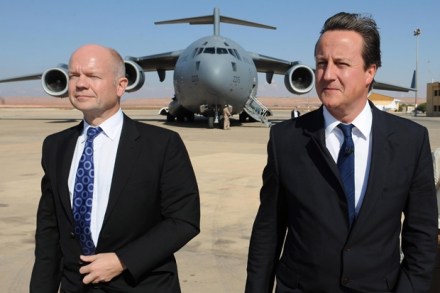
Call me petulant, but I’m not sure Britain is getting enough credit for our fine, fine work in Libya. The Islamic State, so recently present only in the semi-mythical lands of Syria and Iraq — places you see on the news, but don’t really have to believe in — has now set up residence a short hop away from Italy, in the Libyan town of Sirte. Which is, just to be clear, a hell of a lot closer to Italy than we are. Maybe one-and-a-half times the stretch of a Hull– Zeebrugge ferry. We did that. Well done everybody. Top marks all around. Also, Derna. That’s another town they’ve got. I’d never heard of Derna before, but apparently, Isis has held it since last October.

Does anyone really expect the EU referendum to resolve anything?

From our UK edition

I suppose, if you could look deep into the mind of somebody who was passionately keen that Britain should leave the European Union then, in among things like old episodes of Dad’s Army and unassailable convictions that Cornwall produces some perfectly good vintages, and so on, you might also spot a vision of the future. In this vision, our referendum will have been and gone and Britain will have seen the light and left the EU. Everybody will have been convinced. Even Nick Clegg. The question will have been settled for a generation at least, and there will be no need to talk about it anymore and we’ll be able to get on with doing all the things that those blasted Europeans have been preventing us from doing for the past four decades. Whatever they were.

Trying to ban legal highs? Expect a bad trip

From our UK edition

Keep an eye on the government’s ban on legal highs. The Conservative ­manifesto pledged to outlaw all the horrible chemicals kids smoke and snort for fun these days, on account of them being easier to get hold of than the straightforward, honest illegal narcotics we had when I were a lad. Certainly they’re worth banning, but I’m on tenterhooks to see how they’ll go about it. Chemical compositions are easily tweaked, meaning there’s no point in specifically banning a substance, because another not-quite-identical one springs up days later. Banning substances intended for human consumption won’t work, either, because these things all claim on the packaging that they aren’t.