Henry Jeffreys

Deathly prose

‘Reading makes the world better. It is how humans merge. How minds connect... Reading is love in action.’ Those are the words of the bestselling author Matt Haig and though I wouldn’t put it quite like that, I too feel that there is something inherently good about reading. Daniel Kalder has no such illusions. His latest book Dictator Literature (published in the US as The Infernal Library) looks at the dark side of the written word. It’s a study of what the great and not so great dictators of modern times read and wrote. In lesser hands this would be a romp (romp isn’t quite the right word, is it?) through Mein Kampf, Lenin’s What is to be Done? and Mao’s Little Red Book, but Kalder is nothing if not thorough.

University Challenge

One programme that still shines out as a beacon of intellectual rigour among the sea of dross on television is University Challenge. As always, teams of four students from Britain’s best universities battle it out for the series championship. Rather than assuming the viewer is an idiot, like most factual programmes, it works on the basis that we have a shared culture. There are always questions on kings and queens of England, Shakespeare and classical music. Even if the viewer doesn’t know the answer — and the questions are often fiendishly hard — the producers expect us to understand the question, except when it’s about quantum physics. The top teams are usually spectacularly good on high culture but struggle with more contemporary arts.

In vino veritas

Taste has a well-noted ability to evoke memory, so it is curious how infrequently most wine writers mine their pasts for inspiration. You wouldn’t think that some had ever fallen in love, read a novel or even got drunk. Instead they obsess over scores, sulphur and diurnal temperature variation. Thank heavens for Nina Caplan, who brings a bit of hinterland to this often dry subject in her weekly New Statesman column. Characteristically, The Wandering Vine, her first book, is about much more than wine. It’s a heady blend of travel, literature, memoir, history and what I can only describe as psychogeography, though don’t let that put you off. The publishers have given the book a whimsical cover, which is misleading, because this is not a lightweight read.

Smoked salmon

I’m just about old enough to remember when smoked salmon was a rare treat. Then, around 1986 or 1987, suddenly it was everywhere. There were smoked salmon sandwiches at M&S, it was stuffed into lurid-looking canapés with cream cheese, and Christmas became a riot of salty fish. For me, smoked salmon is as emblematic of the 1980s as red Porsches, huge mobile phones and the Pet Shop Boys. But it’s almost always a disappointment, that acrid taste only palatable with lots of lemon juice and butter. I’d much rather have potted shrimp. It’s a far cry from how Scottish smoked salmon is supposed to be. It was first produced, not in Scotland but in London by Jewish immigrants in the late 19th century.

Soho drinking clubs

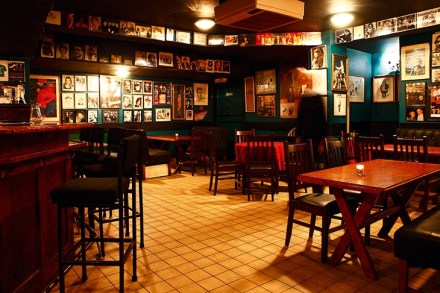
When someone says ‘Let’s go for a drink at my club’, what do you imagine? A grand St James’s establishment like Boodle’s or White’s, or perhaps a media hangout such as the Groucho or Soho House? What you probably don’t think of is an unmarked door and a flight of rickety stairs. Yet through unpromising-looking doorways in and around Soho are little clubs where you can take a break from the 21st century. Places such as the Phoenix beneath the Phoenix theatre on Charing Cross Road, Gerry’s on Dean Street and the Academy on Lexington Street are relics of a time (Gerry’s has been going since 1955) when pubs had to close after lunch and not open again until the evening. People needed somewhere to drink in the afternoon and after 11 p.m.

Kentish wine

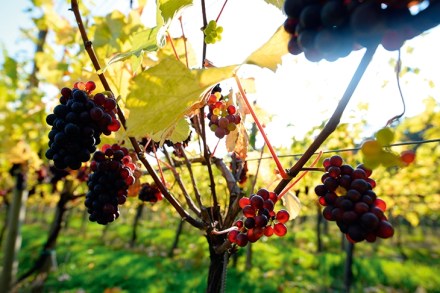
As a wine bore, holidays abroad are a battle with the family to cram in as many vineyard visits as possible when all they want to do is go to the beach. But it’s only recently that I have begun to take advantage of the riches on my doorstep. I wonder how many Londoners realise that half an hour from St Pancras is one of the world’s most dynamic wine regions — Kent. My previous reluctance might have something to do with the weather. As you leave London on the M20, there always seems to be a moment of sunshine that lights up the countryside before it starts to rain again. No matter. While many wine regions can be ugly — the Médoc is a drained swamp — Kent is lovely, even in the drizzle.

Until the election is over, anti-social media is best avoided

On Tuesday morning I was thinking to myself how oddly pleasant social media seemed. Then Theresa May dropped her election bomb. Immediately the posts started appearing: ‘Tory scum’ and ‘Tories launch coup’, then came the memes and I thought: I can’t take another two months of this. I’d only just tentatively returned to Twitter and Facebook following Brexit and Trump; now I find myself wanting to suspend my accounts again. I think back nostalgically to general elections of yesteryear. I vaguely remember some fellow students being pleased about Blair winning in 1997 but most of us were more excited about seeing Teenage Fanclub at Leeds Metropolitan University. The polls of 2001 and 2005 passed by without me noticing.

Anti-social media

On Tuesday morning I was thinking to myself how oddly pleasant social media seemed. Then Theresa May dropped her election bomb. Immediately the posts started appearing: ‘Tory scum’ and ‘Tories launch coup’, then came the memes and I thought: I can’t take another two months of this. I’d only just tentatively returned to Twitter and Facebook following Brexit and Trump; now I find myself wanting to suspend my accounts again. I think back nostalgically to general elections of yesteryear. I vaguely remember some fellow students being pleased about Blair winning in 1997 but most of us were more excited about seeing Teenage Fanclub at Leeds Metropolitan University. The polls of 2001 and 2005 passed by without me noticing.

Flunking the interview

I still get a hot flush of embarrassment when I recall my first interview. It was for a summer job at Selfridges in London when I was 17. The lady from personnel asked me how my friends would describe me. Maybe it was the heat or nerves but all I could think of was the funeral oration by John Hannah’s character in Four Weddings and a Funeral where he describes his deceased partner, played by Simon Callow, as ‘so very fat and very rude’. So I did something you should never ever do in an interview: I tried to be funny. ‘Rude — my friends would describe me as rude,’ I replied. I didn’t get the job. People from my background are meant to sail through such interviews.

Wetherspoons

Of all the stories I’ve heard about the fallout from Brexit — families divided, work jeopardised, friendships ended — the saddest was someone on Facebook who declared that he would never again visit a Wetherspoons because the proprietor, Tim Martin, pushed for a Leave vote. This seemed to me the definition of cutting your nose off to spite your face; imagine turning down cheap beer because of the EU! But it also disrupts one of the fundamentals of a liberal society: that you do business even with those whom you disagree. Voltaire marvelled at this concept on his visit to the London Stock Exchange: ‘Here Jew, Mohammedan and Christian deal with each other as though they were all of the same faith, and only apply the word infidel to people who go bankrupt.

Notes on… Champagne

The British are notoriously cheap when it comes to wine; the average bottle price is around £6. On one wine, however, we’re happy to spend five times that: champagne. We love champagne, and champagne producers love us: Britain is their biggest export market and it’s only getting bigger: up by 4.5 per cent last year. In fact, champagne as a dry sparkling wine was created specifically for us. Until the mid-19th century, most production from the Champagne region was still red wine. French connoisseurs thought the fizzy stuff rather vulgar. Bertin du Rocheret, a wine merchant, compared it to ‘beer, chocolate and whipped cream’. It would have been a rich yellow wine fortified with brandy; a sort of sparkling sweet sherry, beloved by Russians in particular.

Downwardly mobile

Last year, I found a pair of trainers in our communal recycling bin: Nike Air Max in black and grey size 10, very smart and hardly worn. I’d been wearing them a week when the teenager who lives in the flat below pointed at them and laughed. He told me that he’d discarded them because they were scuffed. This is where I’ve got to, I thought: wearing trainers that I found in a bin on a council estate. Such foraging isn’t un-usual for us. The sideboard in our kitchen, the bookshelf in the hall and the big mirror in our bedroom were all found on our street. I worry that we might be dropping out of the middle class entirely. Our daughter, who goes to the local primary school, now has a strong south London accent.

The Tour de France

On Saturday at Mont St Michel, the 103rd edition of the Tour de France begins, and the favourite to win is again British. As a long-term cycling fan, even typing those words gives me a frisson. When I started watching in the 1980s there were few British riders to cheer on — and none challenging for overall victory. Bradley Wiggins became the first Briton to win in 2012. He was followed by Chris Froome in 2013 and 2015. The French haven’t won since 1985. Britain is now a cycling superpower and cycling has become a popular sport. So why aren’t I celebrating? The problem is the lingering doubt that none of this is real. There’s no reason to question Froome’s performances, except that there are few champions who we can confidently say never took drugs.

Is Lewisham really so ’orrible?

When we said we were thinking of moving to Lewisham four years ago, the locals in our pub in Bethnal Green thought we were mad. ‘It’s fuckin’ ’orrible,’ one of them said. Coming from people who’d lived all their lives in the East End, this was worrying. Nevertheless, swayed by a cheap ex-council flat, we moved to a hill that runs between Blackheath and Lewisham station. A good way to imagine Lewisham town centre is as the village in Asterix, surrounded on all sides by the forces of gentrification. Hither Green, Ladywell, Forest Hill and Brockley have delicatessens and artisan bakeries. Deptford has hipsters whereas Blackheath is proper posh, the Hampstead of the south. Even grimy old Catford has a gastropub. But Lewisham central resists.

Beware the Lycra louts

Spring is here and the air is alive with the sound of sweaty manmade materials rubbing together, as middle-aged cyclists fill every road, dressed head to toe in Lycra. They whizz along, jumping red lights, weaving in and out of the path of trucks, screaming at pedestrians and taxi drivers; barely evading death three times a morning. Lycra isn’t just a fabric; it’s a state of mind. At work, these often portly, always angry, red-faced individuals might be mild-mannered middle managers who work in marketing. But in their cycling kit they are superheroes who happen to swear a lot. The double Olympic champion Laura Trott was once asked to help with a safety campaign which involved riding around the capital to highlight the dangers cyclists face on the roads.

The horse from hell

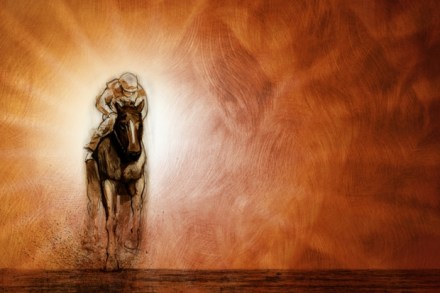
There were moments while reading this sprawling, ambitious novel when I thought I was reading a masterpiece. But at other times, it felt as if the author was convinced that she was writing one. The Sport of Kings is the story of the Forge family of Kentucky. They’re a brutal lot. In the opening scene, John Henry Forge ties his son Henry to a post and whips him. A black employee, Filip, caught with John Henry’s wife, is lynched. As well as violence, John Henry instils a fierce sense of destiny in his son. Against his father’s wishes, Henry turns the family farm over to raising racehorses. Through some severe inbreeding, Henry creates the horse from hell, the aptly named Hellsmouth, an immensely strong but fragile filly.

Downtown Los Angeles

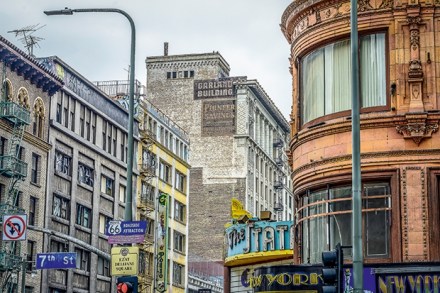
There’s a certain kind of Englishman who falls hard for Los Angeles. Men such as Graham Nash, who swapped the Hollies and rainy Manchester for Joni Mitchell, David Crosby and Laurel Canyon. The LA of beaches, semi-rural hills and freeways can work wonders on an English heart. But the city has another side — a place most Angelenos never venture. Downtown. The old heart of the city is a vision of how LA might have turned out. It has skyscrapers, art deco buildings and even an underground railway. It feels like Chicago, except that even on a Saturday afternoon, many streets are deserted. Some of those gorgeous pre-war buildings are dilapidated or boarded up. The shops sell cheap jewellery and Mexican food. There’s destitution on every corner.

The moths are coming!

Last month a friend invited me to lunch at the Garrick Club. As an impoverished writer, I don’t get many offers like this, so the week before, in a state of anticipation, I took my good suit out of the cupboard to check it wasn’t too rumpled. To my horror there were two holes the size of a five-pence piece in the trousers. Moths! I tore through my wardrobe and found web-like trails all over my coats, suits and sweaters. ‘No!’ I cried and shook my fist at the heavens. This year we’ve enjoyed the warmest winter since the 17th century, so you may not have been snuggled up in your woollens. But something else almost certainly has been. Mild weather is perfect for Tineola bisselliella, the clothes moth. Insect experts are warning of an unprecedented epidemic.

Assorted Christmas crackers

There’s a moment in a child’s life where Christmas begins to lose its magic. Once lost it cannot be regained, but as adults we can catch glimpses of that wonder through our own children, through booze, and most of all through songs, films and stories. Christmas is the one time of the year when it’s not only acceptable to cry over such sentimental things, it’s almost compulsory. The wonder ceases at around eight or nine years old. Andrew Szlachetko (who publishes this book, £5.99) addresses this in The Age of Not Believing. The hero, Thomas, on his way to Santa’s grotto, is mocked by some other boys for his belief in Father Christmas. Later, full of rage and shame, he hits one of them because ‘the magic has simply disappeared’.

Allan Massie’s Bordeaux Quartet is truer to Occupied France than any history

In a recent book review, the historian Norman Stone wrote: ‘Maybe the second world war can now be left to novelists.’ Perhaps he was thinking of Allan Massie’s 1989 masterpiece A Question of Loyalties, an utterly convincing portrayal of a man making all the wrong choices for the noblest reasons in Vichy France. It’s such fertile territory that Massie has returned to it for a quartet of detective novels set in Occupied Bordeaux. The final part, End Games in Bordeaux, sees Superintendent Lannes suspended at the wishes of his German overlords. He is politically suspect but there isn’t much to do anyway: ‘Nobody’s been murdering anybody, except what they will call war-work,’ one character says.