Henry Hill

Henry Hill is the deputy editor of ConservativeHome.

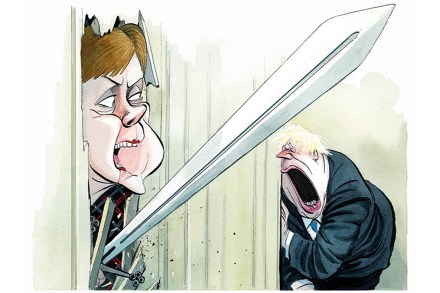
Why the SNP fraud allegations matter

From our UK edition

A common refrain from opponents of the Scottish National party is that ‘the SNP is not Scotland’. But it often seems they haven’t got the message, especially when Nationalist activists take it on themselves to stand guard on the border against the plague-ridden English. This week, the people who may really wish they’d done more to police the borders between themselves and the SNP are none other than grassroots separatists in the ‘Yes movement’. If you missed this story, the long and short of it is that a few years ago the SNP went on a fundraising drive. They secured hundreds of thousands of pounds in donations on the basis that the cash would go into a ring-fenced fighting fund to wage the next independence referendum.
The hollowing out of the Belfast Agreement

From our UK edition

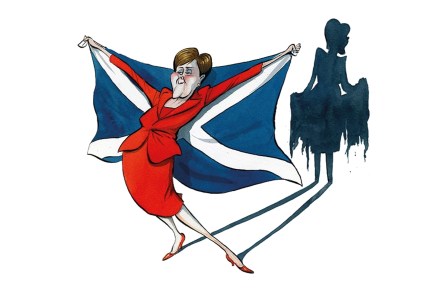
There is a lot to unpack in Sir Keir Starmer’s suggestion that he would campaign for the Union in the event of a future border poll in Northern Ireland. It’s a welcome repudiation of decades of Labour policy, which has been to support Irish nationalism. Would-be members in the Province were directed to join the separatist ‘sister party’ the SDLP instead. But just as interesting is the reaction of the many commentators who sallied out to suggest that the Labour leader had somehow breached the Belfast Agreement, the Anglo-Irish Agreement, the Downing Street Declaration or any other of the peace’s sacred texts.

Euros 2021: Should we scrap the England team?

From our UK edition

Look back through the archive photos of England’s victory over Germany at the 1966 world cup and you’ll notice something rather strange. The cheering supporters aren’t waving the flag of St George. Instead the jubilant crowds are draped Union Jacks — reflecting the more fluid blend of loyalties of an age when Britain was much more at ease with itself. Now tune into the delayed Euro 2020 matches: you’re unlikely to catch the red white and blue standard of the United Kingdom. During the last England match, there was a lone pair of Rangers fans defiantly waving their Union Jack. These are my people. I'll watch for them during tonight's clash with England, but won't be holding my breath.

Scrapping English votes for English laws could spell trouble

From our UK edition

It has been almost 45 years since Tam Dalyell first asked the West Lothian Question. It is a damning indictment of devolutionary unionists that they are still flailing for an answer. Dalyell, a Scottish Labour MP with the uncommon foresight and courage to oppose his party’s embrace of devolution, first posed it during the parliamentary debates that teed up the first referendums in 1979: 'For how long will English constituencies and English Honourable members tolerate ... at least 119 Honourable Members from Scotland, Wales and Northern Ireland exercising an important, and probably often decisive, effect on English politics while they themselves have no say in the same matters in Scotland, Wales and Northern Ireland?

Joe Biden doesn’t understand Northern Ireland

From our UK edition

Even a pessimist could be forgiven for being surprised by Joe ‘I’m Irish’ Biden’s ham-fisted intervention in the ongoing row over the Northern Ireland protocol. If Boris Johnson’s remark that the phrase ‘special relationship’ didn’t ring true before, they certainly must after the President opened his visit by quoting Y.B. Yeats on the Easter Rising… while visiting a Royal Air Force base. It will also be a wearisomely familiar routine for Ulster unionists, who have been scorning American pressure to abandon Britain since at least the days of Woodrow Wilson. How will the government respond? There remain many on the right bewitched by yesterday’s Atlanticism.

Eurovision is too important to let the SNP play politics with it

From our UK edition

The SNP never passes up an opportunity to make the case for separatism. Now, its campaign for independence has moved away from politics and into the world of the Eurovision song contest. The party has responded to the United Kingdom’s dire showing at the competition with a predictable demand: that Scotland should be allowed to compete separately next time around.  Alyn Smith, the SNP’s foreign affairs spokesman, believes we should 'talk seriously about entering UK nations separately into the contest'. 'Scotland is rich in talent and culture, and I want the world to see it. By entering independently, we could one day bring Eurovision back to Scotland,' Smith added.

More devolution won’t save the Union

From our UK edition

Yesterday, Lord Dunlop – the author of the Dunlop Review into the British state and devolution – appeared before a joint meeting of four Select Committees. It was the first time the Public Accounts and Constitutional Affairs Committee (PACAC), Scottish, Welsh, and Northern Irish committees had sat together, which was fitting given his remit. But the resultant Q&A only highlighted the ongoing tensions in the government’s approach to the Union. Dunlop is an advocate of what he calls a ‘cooperative Union’. His emphasis is on getting the various parts of the governments of the UK to work together, and building on the past two decades of devolution.

The problem with ‘Devo-max’

From our UK edition

A common failing of pro-Union politicians down the years has been the stubborn belief that there exists somewhere a tidy ‘solution’ to the problem of separatist nationalism. With new polling showing that ‘devo-max’ would comfortably win a three-way referendum, it appears to be silly season once again. The history of unionism’s efforts to engineer decisive solutions to the challenges of separatism is an unhappy one. Devolution was meant to be it, after all. As Labour’s manifesto said in 1997:  'A sovereign Westminster Parliament will devolve power to Scotland and Wales. The Union will be strengthened and the threat of separatism removed.' Talk about ‘not understanding how the United Kingdom works’.

Beware Welsh Labour’s Trojan dragon

From our UK edition

After polls that suggested a radical shake-up at Cardiff Bay, in the end it turned out to be a strong result for the status quo in Wales. The Labour First Minister Mark Drakeford enjoyed a vaccine bounce — thanks to procurement decisions in Whitehall — and can now govern on his own should he wish to. But the fact that Labour won’t need a formal arrangement with Plaid Cymru to govern (as it did between 2007 and 2011) should not blind people to the fact that the Welsh leader already leads an increasingly nationalist party. Welsh Labour actually ran pro-independence candidates in these elections Drakeford himself has said that the UK ‘is over’.

What Arlene Foster’s ousting means for Northern Ireland – and the Union

From our UK edition

The brutal defenestration of Arlene Foster as leader of the Democratic Unionist Party could have severe implications for an already volatile situation in Northern Ireland. It is almost certain that whoever succeeds her will lack the instincts which saw the outgoing First Minister try initially to make the Protocol work. Instead, the mission seems to be to try and shore up the base and prevent the hard-line Traditional Unionist Voice doing to the DUP what the DUP did to David Trimble and the Ulster Unionists. This is a grim prospect for London, Dublin, and Brussels, although it won’t hurt the former’s case that fundamental change is needed if the Protocol is to work. But it also raises broader questions about the future of unionism.

An English parliament is a terrible idea

From our UK edition

It’s Saint George’s Day, which means it's that time of year when Unionists must once again don their armour, saddle their horses, and ride out to slay that most terrible of dragons: an English parliament. This proposal rears its head every so often as a possible solution to the increasingly undeniable strain that two decades of devolution has put on the constitution of the United Kingdom. It is in fact one of the surest means of guaranteeing the dissolution of the Union. Unfortunately, the reasons for this are pretty much exactly the same reasons that the creation of the other devolved legislatures was a bad idea. That means that there is some political danger in accepting its logic.

Why a ‘Unionist alliance’ will never work in Scotland

From our UK edition

When a commentator first referred to the ‘Ulsterisation’ of Scottish politics, he was jumped on by people keen to take offence at the parallel. But whilst Scotland does not stand on the brink of civil war – and the coiner of the phrase did not claim otherwise – there is no disputing that Northern Ireland offers an insight into what politics looks like when it gets polarised around the constitutional question.

The Northern Ireland Protocol is untenable

From our UK edition

The process that delivered us the Northern Ireland Protocol already seems to have been rewritten in official memory. It suits most parties involved to pretend the outcome was inevitable. For Brussels, it helps them defend an arrangement designed to ‘protect the peace’ which is instead corroding loyalist support for the Belfast Agreement. For those in London, it is infinitely preferable to pretend that they were honouring the UK’s ‘obligations under the Good Friday Agreement’ rather than own one of the most abject episodes of British diplomacy in recent memory. It also helps to shift the blame onto preferred targets.

Downing Street is clueless on Scottish independence

From our UK edition

It has been pointed out before that the SNP and the Scottish Conservatives have something of a symbiotic relationship. Bitterly opposed as they are on the constitutional question, they nonetheless share an electoral interest in keeping that question front and centre. This explains the otherwise baffling (to put it politely) decision by the Tories to put the nationalists’ central election message – that an SNP majority means another referendum – at the top of their own election materials. This is contrary to government policy; indeed, contrary to Conservative Party policy. Boris Johnson has said that he will not grant the Section 30 order necessary for the Scottish government to hold another referendum.

Could Holyrood ever be abolished?

From our UK edition

Although Alex Salmond and his Alba party have understandably been getting most of the attention, the separatists aren’t the only side riven with divisions over a new challenger. Unionist relations, especially between the Conservatives and partisans of George Galloway’s ‘All for Unity’ outfit, grow more rancorous by the day. To the former, the latter resemble little more than a band of egotists hell-bent on clawing their way into Holyrood even if the result is fewer pro-Union MSPs. The latter, having largely abandoned their original idea of ‘uniting to win’, are pitching themselves to angry Unionist voters as a chance to clear out the old guard and have a ‘real opposition’.

Boris has a trump card in denying Sturgeon an ‘illegal’ referendum

From our UK edition

Amidst all the dry economic arguments, one of the more emotive fronts on which the 2016 referendum was fought was whether Brexit could lead to the dissolution of the Union. Some Remainers made the argument that dragging Scotland, Wales, and Northern Ireland out ‘against their will’ would turbocharge support for independence. Unionists such as myself – who ended up on the Leave side – saw it differently: EU membership was actually making it easier for the SNP to sell separation as a low-risk proposition. Shared membership of the EU would, after all, allow Scotland as a newly-independent country to enjoy relatively normal social and economic relations with England.

Is the United Kingdom still one nation?

From our UK edition

Is Britain a nation? If you’re trying to maintain the United Kingdom — or destroy it for that matter — this is surely a very important question. It may seem obvious at first, of course the United Kingdom is a nation. Yet Unionists too often seem reluctant to address the question. Devolutionaries, often non-separatist nationalists, are keen to talk about Britain as if it were merely an arrangement between states — like some kind of federal ‘United Kingdoms’ plural, rather than a singular polity made up of constituent parts.

The shine has finally come off the SNP

From our UK edition

This week is still going to be a bad one for Nicola Sturgeon. But it seems probable that we won’t know just how bad until May, after the Hamilton inquiry today found that she did not break the ministerial code. By aggressively stonewalling two inquiries, the First Minister has managed to forestall calls for her resignation by casting herself on the mercy of the electorate, which still looks set to return the Scottish National Party in the May elections. Attention has mostly concentrated on how Sturgeon and her ministers have obstructed the Holyrood inquiry. But as pro-Union legal blogger Ian Smart has set out, there were huge and unnecessary delays to James Hamilton QC’s inquiry into a potential breach of the Ministerial Code too.

How Unionists can battle against devocrats

From our UK edition

This week, the government published its first Union Connectivity Review report. You’d be forgiven for mistaking this for another boring sounding Whitehall transport initiative that inevitably fails to get off the ground. But this seemingly inoffensive review has triggered the latest round of allegations from the devolved administrations that Westminster is engaging in a ‘power grab’. Doesn’t the Prime Minister know that transport is devolved, they cry? If the Treasury has extra money to spend, it should simply hand it over to the governments in Edinburgh, Cardiff, and Belfast to spend as they see fit. But there is an obvious problem with the ‘transport is devolved’ mantra.

Welsh politics shows how devolution has failed

From our UK edition

Wales often gets left out when people write and think about the Union. People denounce Brexit as an ‘English’ project despite the Principality voting Leave. Now Scotland is (finally) stealing the headlines with the Salmond scandal, and Northern Ireland looks like it will soon be centre-stage as Unionist opposition to the Government’s Northern Irish Protocol hardens. But something genuinely interesting is happening in Welsh politics. If a new poll published for St David’s Day is any indication, politics in Cardiff Bay could be about to become much more polarised around the constitutional question. Labour have held office in Wales ever since the advent of devolution in 1999, and always been the largest party by a comfortable margin.