Harry Mount

Harry Mount is a barrister, editor of The Oldie and author of How England Made the English (Penguin) and Et Tu, Brute? The Best Latin Lines Ever (Bloomsbury).

End of the line: it’s time to rethink the queue

From our UK edition

Flying to Kalamata this week, I did my own little bit to reduce the terrible queues at Heathrow Terminal 5. Heroically, I stacked up the grey luggage trays once they’d been emptied by passengers coming through security. As a result, there were more loaded trays for people to pick up, and a smaller tailback of passengers — including me — waiting to pick up their unloaded trays. It was just a tiny example of the hundreds of things that could be done to reduce queues in airports, hospitals, train stations, supermarkets… The British may be famous for their patient queueing but it doesn’t mean we actually like doing it. So why hasn’t more been done to eradicate queues?

The strange allure of double agents

From our UK edition

John le Carré, the master of British spy stories, may have died last December, aged 89. But the dastardly world of double agents he relished in exposing lives on. A British man has been arrested in Germany on suspicion of spying for Russia. German federal prosecutors allege that the man — named only as 'David S' and said to work at the British Embassy in Berlin — passed documents to Russian intelligence 'at least once' in return for an 'unknown amount' of money. Berlin was the epicentre of le Carré’s world of espionage. He served as a spy in Germany himself and his breakout hit, The Spy Who Came in from the Cold, is set in Berlin.

They weren’t all that pious in the good old days

From our UK edition

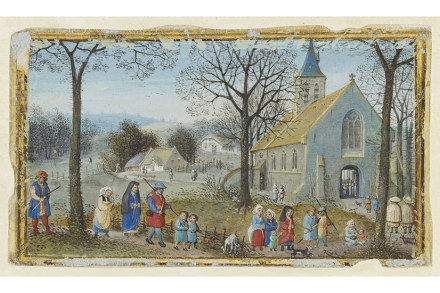
You need to be wary of being too flattering about English churches. As John Betjeman said: ‘Be careful before you call Weymouth the Naples of Dorset. How many Italians call Naples the Weymouth of Campania?’ Even so, the rise of the English medieval church was extraordinary. As early as 1200 there were 9,500 churches in England — all built since 597, when St Augustine started his mission to the English at Canterbury. And lots of them are still there. Our Anglo-Saxon, Norman and Gothic churches must be the highlight of our architectural history, just ahead of our country houses. But how did the English use their churches?

Whodunnit? The lab leak theory is looking increasingly plausible

From our UK edition

38 min listen

We’re still none the wiser about the origins of coronavirus, but has the lab leak theory just got more credible (00:55) Also on the podcast: are English tourists welcome in Scotland (15:25)? And is being rude the secret to success?With author Matt Ridley, virologist Dr Dennis Carroll, deputy political editor Katy Balls, hotelier Gordon Campbell Gray, journalists Harry Mount and Rebecca Reid.Presented by William Moore.Produced by Cindy Yu, Max Jeffery and Sam Russell.

In our narcissistic age, nothing beats good manners

From our UK edition

Last week, a 20-year-old student came into my office, looking for work experience this summer. He was so polite — in a shy, understated, non-oily way — that I was very keen to help him. It was like meeting a time-traveller from the 1950s: no showing-off, just a gentle display of intelligence teased out from behind his veil of self-effacement. He even washed up his cup after I’d told him he didn’t need to. I must introduce a Teacup Test for future interviewees, to see what they do with the cup at the end of the interview. It’s inspired by the Escalator Test, invented by a colleague at the Evening Standard a few years ago. He would watch interviewees leave our office by the down escalator in Northcliffe House, Kensington.

The truth about Prince Philip’s ‘gaffes’

From our UK edition

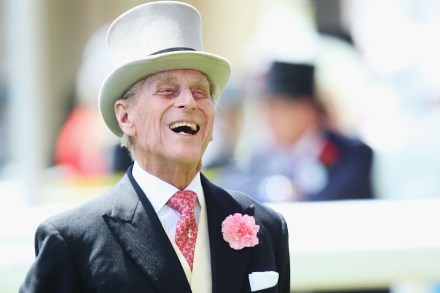
However impressive Prince Philip was in photographs, it didn’t compare to his imposing bearing in the flesh.  When I met him in 2015 – at a lunch at the Cavalry and Guards Club for the Gallipoli Association to commemorate the centenary of the Gallipoli campaign – he was 93. He looked 20 years younger in his immaculate, navy-blue suit, with not an ounce of fat on his lean figure. At the pre-lunch drinks, he’d shaken off his assistants, and was roaming the drawing room at will, hands tucked behind his back, hawk-like visage searching the room for – not quite prey, but some kind of interesting diversion. I was there because my great-grandfather, Lord Longford, father of the prison reformer, had been killed at Gallipoli.

The tragic demise of the National Trust

From our UK edition

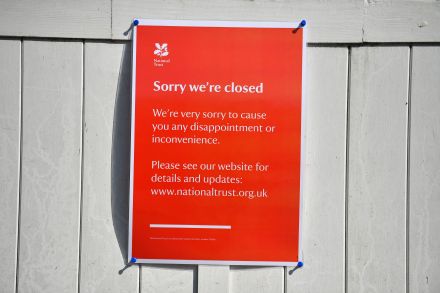
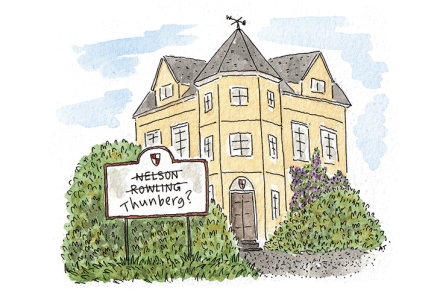
And so the National Trust’s crazed attack on its own properties goes blazing on. Their latest self-hating wheeze is to get children to write poems attacking Britain’s history. One hundred primary school pupils have been taken around the Trust’s country houses before they compose poems about the former owners’ connections with the British Empire. It’s all part of the Trust’s 'Colonial Countryside' project, which since 2018 has been highlighting ties between the Trust’s houses and imperialism. And so, at lovely Charlecote Park, Warwickshire, one child wrote this about the jewelled dress sword and scabbard looted from Lucknow during the Indian mutiny of 1857: 'Stolen by the English; a freedom sword, a stolen freedom sword.

When will the National Trust realise its big mistake?

From our UK edition

The National Trust still doesn’t get it. It still doesn’t understand why so many of its members hate the politicisation and catastrophic dumbing-down of an institution they once revered. Hilary McGrady, the Trust’s Director-General, has just defended the Trust’s report on colonialism and slavery. The report, released last September, looked into the colonial or slavery links of its properties, including Winston Churchill’s Chartwell home and William Wordsworth’s house. McGrady said the Trust should 'make sure we tell all of the stories about all of our properties'. That’s the problem. The Trust isn’t telling all of the stories these days.

Six rules for picking the wokest school

From our UK edition

One of the great advantages private schools offer is an ability to change with the times. While some hold on to traditional notions, many are adapting nimbly to the new woke world — expunging their problematic historical figures and educating pupils in the new equivalent of U and Non-U. But how do parents ensure their little treasures aren’t triggered and are always confined to the safest of spaces? Here, then, is our guide to the wokest schools. Rule one: lots of schools were woke decades ago At my alma mater, Westminster, the history curriculum was pretty much decolonialised in the 1970s by left-wing teachers.

Why is the National Trust so determined to lecture its members?

From our UK edition

Can the National Trust dumb down any further? Its latest crazed venture, the Colonial Countryside project, is 'a child-led history and writing project', working with 100 primary school pupils, 16 historians and ten commissioned writers. The aim is to ensure that 'robustly researched stories of empire are communicated'. So here comes another highly politicised scheme – in the light of its disastrous LGBTQ campaign, forcing volunteers to wear rainbow badges, and outing the owner of one of its great houses, Robert Wyndham Ketton-Cremer, who bequeathed Felbrigg Hall to the Trust.

The Sturgeon paradox: how is she so popular?

From our UK edition

37 min listen

Despite her government’s underperformance on education, health and Covid-19, Nicola Sturgeon’s popularity continues to climb – why? (01:10) Does spending more on overseas aid mean we care more? (14:05) And finally, are we all followers of the cult of casualness? (26:25)With The Spectator’s Scotland editor Alex Massie, former SNP finance spokesperson Andrew Wilson, development adviser Gilbert Greenall, former international development secretary Andrew Mitchell, journalist Melanie McDonagh and editor of The Oldie, Harry Mount. Presented by Lara Prendergast.Produced by Max Jeffery, Cindy Yu and Matt Taylor.

Xi’s world: how Covid has accelerated China’s rise

From our UK edition

32 min listen

China has come out on top from this pandemic year - what does this mean for the world? (00:50) Was Test and Trace doomed from the start? (12:35) And what's with all these Covid excuses? (22:35)With historian Rana Mitter; security expert Nigel Inkster; analyst Richard Dobbs; virologist Elisabetta Groppelli; editor of the Oldie Harry Mount; and Real Life columnist Melissa Kite.Presented by Cindy Yu.Produced by Cindy Yu, Max Jeffery and Matt Taylor.

Covid has become the go-to excuse for shoddy service

From our UK edition

When we were hit by Britain’s biggest crisis since the war, some people behaved like heroes, laying their lives down to fight coronavirus. Others made their excuses, put their feet up and had a good long six-month snooze. My favourite Covid excuse came from Eurostar, which declared in August that, ‘As a result of coronavirus, we are only able to offer wifi in our Standard Premier and Business Premier carriages’. Wireless broadband was duly disabled in its standard-class coaches — until, besieged by complaints, the company conducted a full reverse--ferret operation and turned the wifi back on. Again and again since the virus struck, companies and institutions, big and small, have pounced on Covid as a wonderful excuse to be lazy — or ruthless.

Their Majesties the Presidents

For anyone who’s a little bit worried about the current state of the Union, Andrew Gimson’s book is a godsend. Donald Trump is often called the 45th president, but he’s actually the 44th — Grover Cleveland, president from 1885- 89 and 1893-97, is counted as the 22nd and the 24th. Among his 43 predecessors, you’ll find plenty of drunks, philanderers and incompetents. Suddenly, the teetotal President doesn’t look so bad after all. Gimson is a British journalist, but don’t let that put American readers off. He’s worked for the Daily Telegraph and The Spectator and knows politics well. He previously wrote books about the 40 British monarchs since 1066, the 55 British prime ministers since 1721 and a biography of Boris Johnson.

presidents

The National Trust must stop obsessing about colonialism

From our UK edition

When will the National Trust get it into its thick skull that it’s supposed to look after buildings and landscapes? It is not a political organisation. But now, yet again, the Trust has weighed in with its political blunderbuss, attacking its own properties for their connections with colonialism and slavery. It has published a document listing 93 properties and places, about a third of the total, with links to colonialism and slavery. Among them are Churchill’s house, Chartwell, thanks to his opposition to self-governance in India. Also there is Lundy island, Devon, once home to prisoners doing unpaid labour and Hare Hill, Cheshire, once owned by a slave-owner. 29 places in all are listed after their owners received compensation for slaves after abolition.

The trendies have destroyed the National Trust

From our UK edition

And so the tragic dumbing-down of the once-great National Trust continues, at breakneck speed. In its latest dimbo announcement, it has declared its intention to 'dial down' its role as a big cultural institution and move away from being the custodians of the English country house. An internal briefing document says the Trust intends to put its collections in storage and hold fewer exhibitions at its properties to prioritise its role as the 'gateway to the outdoors'. The ten-year strategy attacks the 'outdated mansion experience...serving a loyal but dwindling audience'. The Trust will instead promote 'specialised experiences' and stop holding specialist exhibitions for 'niche audiences'. In fact, the Trust has been following a similar strategy for at least the last five years.

The rise of the Econian

From our UK edition

A study has shown that protestors who took part in Extinction Rebellion’s demonstrations last year were overwhelmingly middle-class, highly educated and southern. Well, there’s a surprise. It turns out some 85 per cent of the London protestors had a degree, a third had a postgraduate qualification and two thirds described themselves as middle-class. Three quarters of those charged with offences lived in the south. And, if the accents I heard from the protestors as I biked through the throng on my way to work were anything to go on, a high percentage were public school--educated, too. I’d never seen so many Econians — the public school boys and girls who rule the wokerati world.

The Edition: are white working class boys being left behind?

From our UK edition

38 min listen

White working class boys consistently perform worse than other demographics in the UK's education system - why? (00:45) What is it like to be 'cancelled'? (14:20) And is it time to return to the office? (24:50)With the IEA's Christopher Snowdon; former Ucas head Mary Curnock Cook; journalist Kevin Myers; the Spectator's columnist Lionel Shriver; editor of the Oldie, Harry Mount; and Director of UK in a Changing Europe Anand Menon.Presented by Cindy Yu.Produced by Cindy Yu and Max Jeffery.

Why would anyone want to work from home?

From our UK edition

I’ve been having an office romance. Not with anyone in the office — but with the office itself. I’ve been going into the office every day during lockdown and I love everything about it: the bike ride from my Camden flat to work in Fitzrovia; the professional feeling that comes from being in a place dedicated to work; a chance to see more life than the limited activities that go on in your sitting room. I even like office furniture, the soft hum of the photocopier and the stationery box, with its neat cellophane packs of Post-it notes and extensive range of envelopes. But sadly, as an office-lover, I’m in a minority. The office, which has existed since the days of ancient Rome, is under threat. The Home Office has told its staff not to come back for a year.

The famous cities of the ancient world were surprisingly small and fragile

From our UK edition

Greg Woolf didn’t know his book would come out during an urban crisis. Thanks to coronavirus, Venice’s population, for example, is now somewhere between 25,000 and 40,000 — the lowest for centuries. Horrific pandemics were nothing new for ancient cities, which, as this scholarly book shows, have gone through heady rises and catastrophic falls. Rome had a population of nearly a million under the Emperor Augustus. By the sixth century AD it was down to 10,000. Troy, one of the great Bronze Age cities, was buried by the time Byron visited: ‘Where I sought for Ilion’s walls, the quiet sheep feeds and the tortoise crawls.’ Still, plenty of cities have staying power.