Hannah Tomes

Hannah Tomes

Hannah Tomes is US production editor at The Spectator.

How to delete your WhatsApps

Whoever it was that said a picture is worth a thousand words clearly hasn’t read the Daily Telegraph’s ‘Lockdown Files’. After journalist Isabel Oakeshott gave the newspaper access to 2.3 million words worth of WhatsApp messages sent by Matt Hancock during the pandemic, the revelations dominated the news agenda for much of yesterday – with more information set to emerge in the coming days.  The former health secretary gave Oakeshott access to the messages while she ghost-wrote his book about the pandemic. But unluckily for Hancock, if a journalist who disagreed with you on your lockdown policies says she’ll write your Covid memoirs for free, there’s a risk she might not keep all the information you handed over to herself. Who knew!

Is Putin winning?

37 min listen

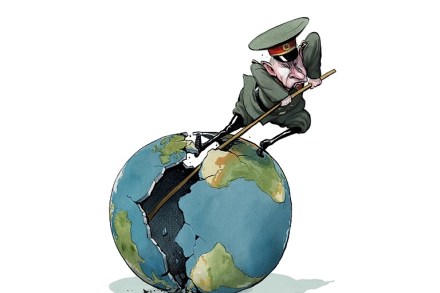
This week:Is Putin winning?In his cover piece for the magazine, historian and author Peter Frankopan says that Russia is reshaping the world in its favour by cultivating an anti-Western alliance of nations. He is joined by Ukrainian journalist – and author of The Spectator's Ukraine In Focus newsletter – Svitlana Morenets, to discuss whether this could tip the balance of the war (01:08).Also this week:The Spectator's assistant online foreign editor Max Jeffery writes a letter from Abu Dhabi, after he visited the International Defence Exhibition. He is joined by author and former member of the ANC Andrew Feinstein, to uncover the covert world of the international arms trade and how governments seek to conceal it (17:52).

Who’s afraid of Keir Starmer?

41 min listen

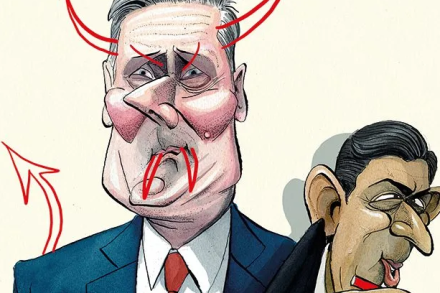
This week: Who's afraid of Keir Starmer? In his cover piece for the magazine, The Spectator's Editor Fraser Nelson says that without a Labour demon to point at the Tories stand little chance in the next election. He joins the podcast alongside journalist Paul Mason, to discuss why Keir Starmer is so hard to vilify (01:10).  Also this week: In the magazine, The Spectator's newsletter editor Hannah Tomes exposes the social media campaign targeting young women, such as herself, to freeze and donate their eggs. She joins the podcast alongside Sophia Money-Coutts, host of the Freezing Time podcast, to consider whether it is right to market this as an altruistic undertaking (16:58).

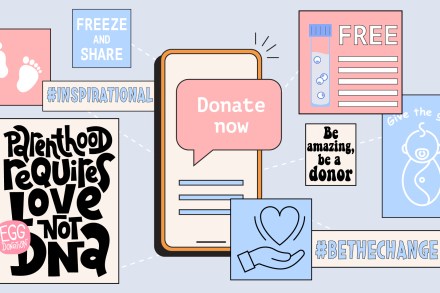
Why is social media pushing young women to donate our eggs?

As a millennial who spends a lot of time on social media, I assumed I was desensitised to adverts. I thought I was ad-blind, until I started being bombarded with posts asking me to donate my eggs. It was a post from the London Egg Bank which first caught my eye, offering a ‘freeze and share’ scheme. In this country egg donors are only allowed to be paid £750 in compensation, but there’s nothing to stop them being given treatments in lieu of cash – and egg freezing is expensive. The average cost to collect, then freeze a woman’s eggs is around £3,350. Medication and yearly storage add at least another several hundred pounds. To have the eggs thawed and implanted into the womb costs another £2,500 on average.

Steve Barclay’s ambulance blame game isn’t working

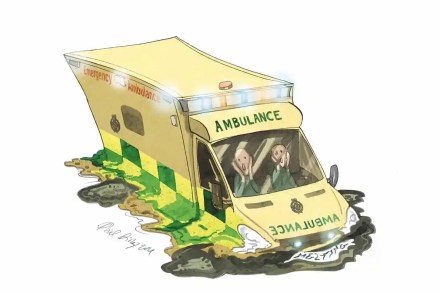
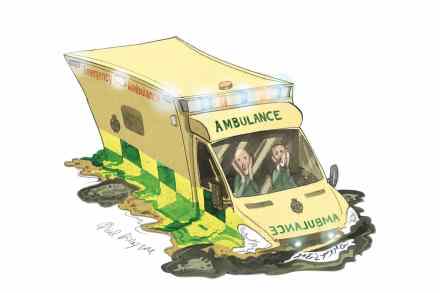
Thousands of ambulance staff across England and Wales have walked out today in a dispute largely concerning pay rises. Members of the Unison, Unite and GMB unions will not be responding to emergency callouts unless they’re of the highest ‘category one’ calls, which cover immediately life-threatening conditions such as cardiac arrest. In most areas, ambulance staff will still attend ‘category two’ calls for strokes, heart attacks and ailments of that ilk, but they will be decided on a case-by-case basis. Health Secretary Steve Barclay wrote, in an article for the Daily Telegraph this morning, that ‘ambulance unions have taken a conscious choice to inflict harm on patients’.

Keeping no-fault evictions betrays private renters

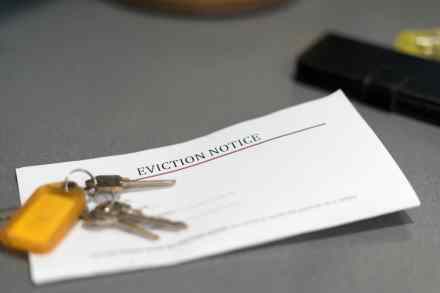
How many U-turns can a government perform before it starts spinning out of control? Liz Truss is reportedly considering yet another change of heart over existing policy: this time over plans to end no-fault evictions. In the month or so Truss has been Prime Minister, she’s U-turned on a key Treasury appointment and scrapping the 45p rate of tax. One source told the Times the eviction policy was not considered a priority by the government and would be delayed; another said it would be scrapped entirely. Asked about today’s reports, a government housing spokesman said: ‘Everyone deserves to live in a safe and secure home. A fair deal for renters remains a priority, and we are carefully considering our next steps for the rental market.

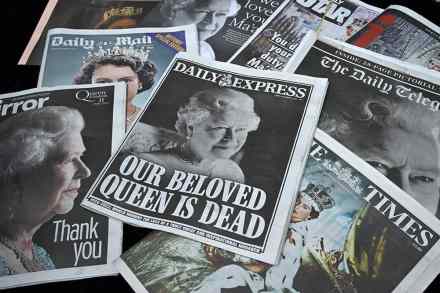
How the newspapers covered the Queen’s death

As the nation wakes up to its first day after the Queen’s death, newspapers in Britain – and around the world – have published historic editions to commemorate her 70-year reign. Here’s a look at some of them. The Times focuses on the Queen’s extraordinary life of service. It also features a moving quote on the back page from her Christmas broadcast in 1957: ‘I cannot lead you into battle. I do not give you laws or administer justice but I can do something else: I can give you my heart and my devotion to these old islands, and to all the peoples of our brotherhood of nations.’ The Guardian has chosen the same picture for their front page – a striking image from the Queen’s Coronation in 1953, when she was just 27 years old.

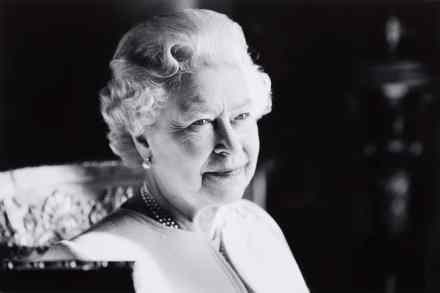
Queen Elizabeth II: in tributes

Her Majesty Queen Elizabeth II died this afternoon at Balmoral, the royal family confirmed. The gravity of the news has been felt across the world, with leaders offering words of sympathy – and reflecting on a reign that spanned 70 years. The first of the tributes came from her son Charles – the new King. He wrote, in a statement released by Buckingham Palace: ‘The death of my beloved mother Her Majesty The Queen, is a moment of the greatest sadness for me and all members of my family. We mourn profoundly the passing of a cherished Sovereign and a much-loved Mother. I know her loss will be deeply felt throughout the country, the Realms and the Commonwealth, and by countless people around the world.

London is far outstripping the north in GCSE results

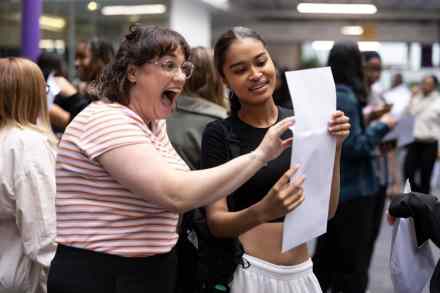
After two years of pandemic-related disruption, GCSEs were this year assessed in the same way as before Covid – i.e. by an outside examination board, rather than by teachers. London far outstripped the north of England when it came to pupils getting the highest grades, with 33 per cent of pupils in the capital being awarded a 7 (formerly an A) or above compared with just 22 per cent in the north-east. This widened the attainment gap from 2019 – then, there was a ten percentage point gap between the regions, compared with 11 percentage points this year.

The government is successfully tackling A-level grade inflation

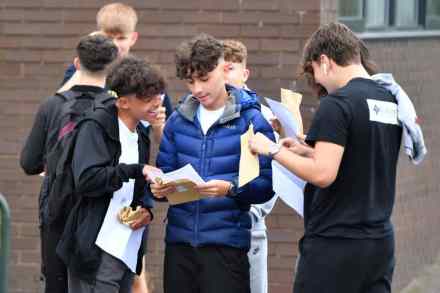
After the disruption caused to education by the pandemic, this is the first year since 2019 in which school leavers have sat traditional A-level exams. Normally, 26 per cent of A-level students are marked A or higher: last year it jumped to 45 per cent after teacher-assessed grades were brought in. Now it’s 36 per cent, as per the government’s plan to mark a halfway house between last year’s grade hyperinflation and normality. But A* grades, normally reserved for the top 8 per cent of pupils, have been handed to 15 per cent. This is slightly down on last year’s 19 per cent.

The Tories don’t care about generation rent

For millennials like me, the prospect of owning a home is a pipe dream. Soaring rental costs and crippling bills make saving for a deposit impossible. The reality is that, as a friend said to me recently, our best chance of getting a foot on the housing ladder is when a home-owning family member pops their clogs. We’re far from alone. Yet the Tory leadership contenders have nothing to offer those who hope one day to buy a house. Perhaps it’s not much of a surprise that this is an issue the Tories are ignoring: Boris Johnson's government was elected, in part, on a manifesto pledge to build 300,000 new houses – something former housing secretary Michael Gove ruled out while he was still in post.

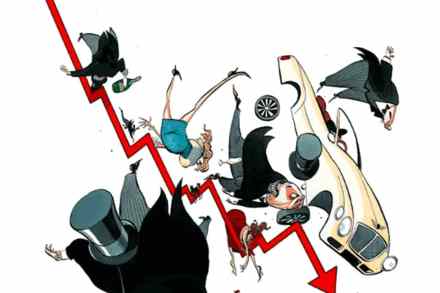
Recession could push millions of Britons into poverty

As the Tory leadership contest rumbles on, questions are being fired at Liz Truss and Rishi Sunak about what they’ll do to tackle the economic crisis facing Britain. The Foreign Secretary has promised to suspend green levies and Sunak said he would axe VAT on household energy – something he had ruled out as chancellor. But there are mounting fears neither of these strategies will go far enough to help a public facing the devastating combination of rising bills and soaring inflation.

Is the NHS beyond repair?

Another week, another warning that the NHS has reached crisis point. A cross-party group of MPs today published a report detailing the extent to which the health service and social care sector in England is understaffed – and found that it is facing the worst staffing crisis in its history. Research found that NHS England is 12,000 doctors and 50,000 nurses and midwives short at the moment. There are more than 99,000 vacancies in the health service – with 105,000 in the health and social care sector. The ever-declining number of healthcare staff is a problem that is only going to get worse as demand rises: almost a million more positions will need to be filled by the early 2030s.

Draghi’s resignation leaves Italy in turmoil

Mario Draghi has resigned as Italian prime minister – for the second time in a week. But this time his resignation was accepted by President Sergio Mattarella, with a snap election expected in September or October. The resignation came after a fiery debate in parliament yesterday in which the populist Five Star Movement joined the right-wing League and Forza Italia parties to abstain on a vote of confidence in Draghi’s national unity coalition, which was ushered in and saw Draghi installed, unelected, as PM during the pandemic.

The twists and turns of ‘desire paths’

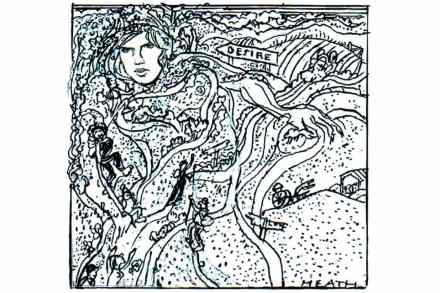
Pause in a park or field in summer and look out across the grass and you’ll see a multitude of thin, earthy tracks breaking up the swaths of green like shatters in a pane of glass. These are most commonly known as desire paths – although other names include cow paths, desire lines, pirate paths or social trails – and are created when humans (or animals) are drawn in the same direction over and over, flattening the grass and eventually wearing it away. The term ‘desire path’ was coined by French scientist, philosopher and poet Gaston Bachelard in his 1958 book La Poétique de l’Éspace (or ‘The Poetics of Space’).

Why do we only care about American abortion rights?

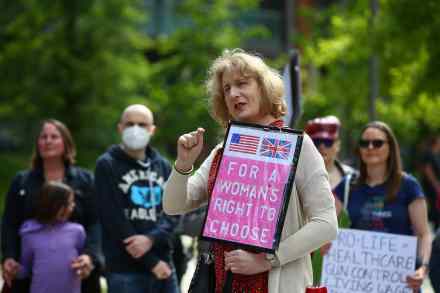
In the week since Roe vs Wade was overturned, you’ve hardly been able to switch on the news or open a paper without hearing British politicians and commentators decrying the decision. Almost every woman I know was furious after hearing the news; I’m sure I wasn’t alone in failing to hold back a few tears of frustration at this eroding of established rights. But while we might feel – deeply, viscerally – for our cousins across the pond, we often forget about the difficulties women in our own country still face. Until October 2019, women in Northern Ireland who needed abortions were either forced to travel outside the province or to go to an underground provider. Only in cases of serious mental or physical harm was the procedure allowed.

For Generation Rent, the landlord is king

Last night, I posted an advert on property rental site SpareRoom: ‘Looking for someone to take over my room in Dalston/De Beauvoir from July. Beautiful house, large bedroom, overlooks a garden centre.’ By this morning, I had almost 60 inquiries. Bleary eyed and fuzzy from sleep, I checked my email: it was inundated with prospective tenants offering to ‘pass’ interviews over Zoom before being granted a viewing or handing over large sums of money for the deposit before even seeing the place in person. One woman had contacted me from Australia.

Brought me to tears: Tortoise Media’s Sweet Bobby podcast reviewed

Eleven years ago, Kirat Assi received a message on Facebook from a man named Bobby. There was a family connection — he was the elder brother of her second cousin’s boyfriend, who had recently passed away. Bobby wanted a shoulder to cry on, someone to speak to as he processed the grief of losing a sibling. Kirat obliged. They grew closer. When he had work worries, health problems, when his marriage began to break down, he told her everything. Eventually, they became lovers. Except Bobby didn’t really exist. What started as a simple message turned into a decade of deception and coercive control at the hands of a master manipulator.

Wolfgang Munchau, Andrew Watts, Hannah Tomes

19 min listen

On this week's episode, we’ll hear from Wolfgang Munchau on the political situation in Germany. (00:49)Next, Andrew Watts on his year long battle against a parking ticket. (11:01)And finally, Hannah Tomes on her love of Baileys. (15:33)Produced and presented by Sam HolmesSubscribe to The Spectator today and get a £20 Amazon gift voucher:spectator.

Hospital pass: The NHS is on life support

41 min listen

In this week’s episode: Is the current NHS crisis a bug or a feature? In the Spectator’s cover story this week, our economics editor Kate Andrews writes about the state of the NHS and why even though reform is so clearly needed it's nearly politically impossible to try to do so. She joins the podcast with Isabel Hardman who is currently writing a book on the history of the NHS. (00:53)Also this week: How is the nation feeling about the Omicron variant? The news of the Omicron variant has not only worried the public about what may become of their Christmas plans, but the government has also reacted by bringing in new travel restrictions and mask mandates.