Gus Carter

Gus Carter

Gus Carter is the deputy editor of The Spectator’s US edition.

Katy Balls, John Connolly and Gus Carter

From our UK edition

17 min listen

On this week's episode: Katy Balls reads her article on the cadets gunning for the Tory leadership. (00:52)John Connolly reads his investigation into the new warehouse ghettos where Britain is sending migrants. (06:36) Gus Carter reads his piece on why he's not getting invited to any dinner parties. (12:05)Presented by Angus Colwell.Produced by Angus Colwell and Sam Holmes.

How the rebels plan to finish off Boris

From our UK edition

45 min listen

In this week’s episode: Is the Prime Minister a dead man walking? Spectator Political Editor James Forsyth and MP Jesse Norman who expressed no confidence in Monday's vote discuss the future of Boris Johnson and the Conservative Party. (00:45)Also this week:Why is there so much virtue signalling in modern advertising? Spectator Columnist Lionel Shriver and veteran copywriter Paul Burke discuss its origins, its prevalence, and its effectiveness. (20:20)And finally:Is the dinner party dead? Gus Carter writes in The Spectator this week about how he is never invited to any. He’s joined by Mary Killen to give him some tips on planning a sophisticated bash on a budget.

Dinner parties are dying

From our UK edition

I don’t get invited to that many dinner parties. I hope it’s not a problem with me, although I can’t rule it out. Instead, I have a feeling that the era of nibbles, laying the table and stressing about the starters is over. When I asked my friends how many invites they get, there was a reasonably consistent answer: roughly one every few months. I’m not talking here about spag bol with pals. A dinner party is a sit-down affair, with multiple courses and, ideally, a few people you don’t know for company. In their twenties, my parents were apparently having a dinner party every week. My mum has three smartly bound journals, all with the title ‘Guest & Menu Book’.

The dreary truth about partygate

From our UK edition

I’m starting to get a bit annoyed about partygate. Well no, that’s a lie. I’m angry in theory. On paper I’m fuming. In real life? Meh. This whole saga has trundled on for so long now I’ve just stopped caring. I’m probably annoyed about something else. Train timetables or maybe the fact that broccoli is £1.60 in M&S. Given how miserable the rest of us were during lockdown, those making the rules should really have done the polite thing and followed them. But then when you read the details of ‘partygate’, you can’t help but think that they weren't really enjoying themselves. A Colin the Caterpillar cake in between meetings? ‘Wine time Fridays’?

Sadiq Khan shows why London doesn’t need a mayor

From our UK edition

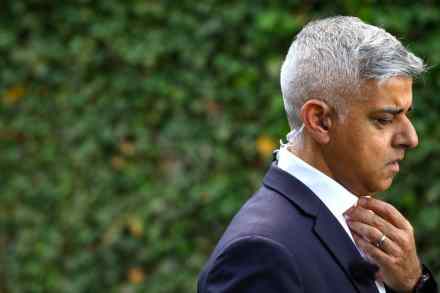
Sadiq Khan doesn’t seem to know what his job is. The Mayor of London announced on Thursday morning that he was setting up a review to examine whether cannabis should be legalised. Just a few hours later, the Home Secretary Priti Patel reminded him that ‘the mayor has no powers to legalise drugs’. Duh. Labour didn’t seem that happy either. Yvette Cooper also gave Khan a ticking off, saying that the national party already had a policy and, no, they wouldn’t be pushing for legalisation. So please be quiet Sadiq. But we all know what the mayor was really up to. Sadiq Khan wants attention. He wants to be a national politician by using a local politician’s platform.

Don’t make war in Ukraine about Putin’s mental health

From our UK edition

There was a time when supposedly serious commentators on world affairs used to at least feign historical knowledge. They might quote Bismarck or Castlereagh. Now, international relations punditry, like almost everything else, has succumbed to the language of pop psychology. Vladimir Putin is ‘gaslighting’ the Russian people, we are told, motivated by his ‘hypermasculinity’. His invasion of Ukraine is, according to one commentator on Radio 4 this morning, ‘unforgivable abuse’. I thought abuse meant kicking a dog or being cruel to a partner. Now it means starting a war. It’s almost as though we’re unable to think of Putin as anything other than a nasty contestant on reality TV.

Border farce

From our UK edition

42 min listen

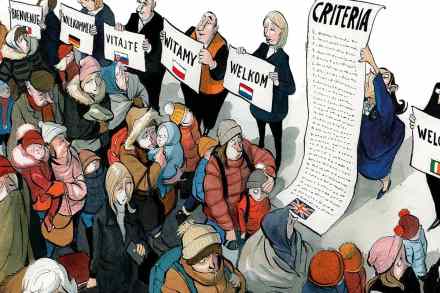
In this week’s episode: is the UK dragging its feet when it comes to Ukrainian refugees?For this week’s cover piece, Kate Andrews and Max Jeffery report from Calais, where they have been talking with Ukrainian refugees hoping to make it to Britain. Kate joins the podcast along with former MEP Patrick O’Flynn to discuss the UK’s handling of the refugee crisis. (00:48)Also this week: are commodity traders finding a moral compass?In the wake of colossal sanctions on Russia are commodity traders feeling pressured to look more critically at the people they buy from? In this week’s issue, Javier Blas, Bloomberg’s commodities columnist and the co-author of The World for Sale, reveals what’s going on in the world of commodity trading.

Are you man enough to eat raw offal?

From our UK edition

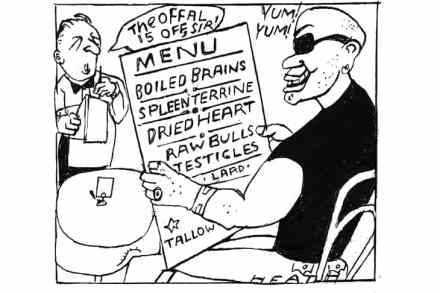
The dominant wolf gets the liver, at least according to the American podcaster Joe Rogan. In one episode, a bodybuilder called ‘CarnivoreMD’ (real name Paul Saladino) tells him: ‘If you eat liver, you get to be an alpha male… or alpha female.’ Offal has taken a markedly macho turn in recent years. No longer resigned to memories of the postwar school canteen, organs have become the preferred food of a certain type of gym bro. The word offal implies wastage – from the Middle Dutch for offcuts – but it can also be a delicacy. Recently saved from a government ban on cruel foods, foie gras is only the most obvious example. For the most part, though, the West has become squeamish about what was once called ‘variety meat’.

The cult of the daffodil

From our UK edition

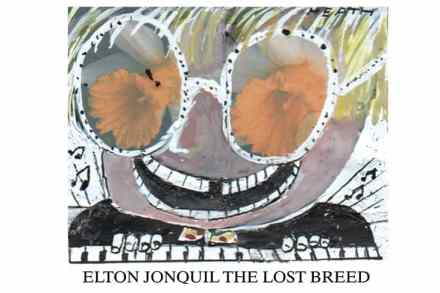
Spring is the season of supermarket daffodils. At a pound a bunch, you can deck out your home like Elton John and still have change from a fiver. From January until April, daffodils burst from village greens and quiet churchyards. The wild daffodil found across Britain is the Narcissus pseudonarcissus, known also as the ‘Lent lily’. Native to northern Europe, the hardy bulbs followed the British empire around the world and can now be found in Canada, New Zealand, Australia and the Falklands. There are thought to be 27,000 different cultivars of daffodil bred from 36 different species. Most are yellow but there are white varieties and a few with splashes of pink. Generally the flowers are a trumpet-like corona encircled by petals.

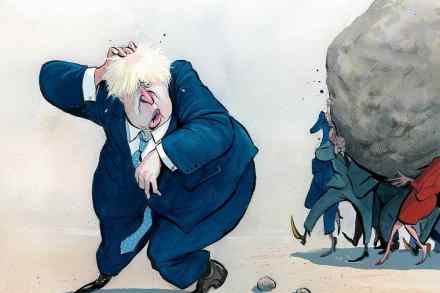
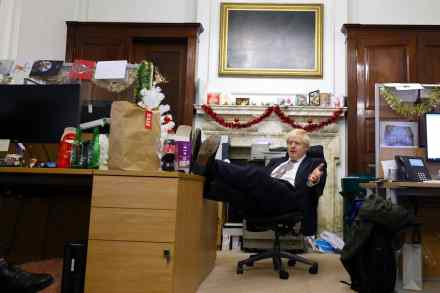
How much trouble is Boris Johnson in?

From our UK edition

Just how bad is it for Boris Johnson? In some ways it's difficult to tell, this is a prime minister who seems almost unable to exist without a crisis.  But last night's new Covid rules — mixed up with the unending stories about Downing Street parties in the depths of lockdown — seem to have ushered in a different level of Westminster discontent. It's more the timing than anything else. On Tuesday morning, the Deputy Prime Minister Dominic Raab said 'We don’t think that Plan B is required'. On Wednesday evening the PM implemented Plan B. What happened?  During those intervening 36 hours, the data on Omicron only seemed to have improved.

It’s Harry, not Meghan, who’s the real problem

From our UK edition

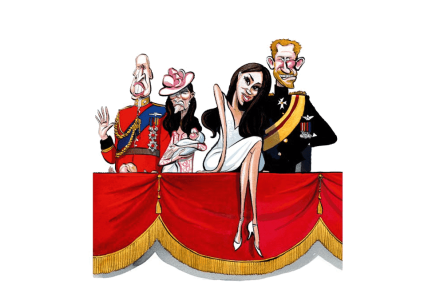
Who or what drove Harry and Meghan to leave the royal bosom for the land of slebs on the other side of the Atlantic? That’s one of the central questions of a new two-part documentary, The Princes and the Press, that aired on the BBC last night. The obvious suspect is the dreaded British media — barging, intrusive, xenophobic — riddled with prejudice, we’re told, against a mixed-race American in the monarchy. But the jostling between royal households seems equally responsible. After the early days of Hazza and Megz, a clear jealousy from some of William and Kate’s people began to seep into the media. The younger brother and his American wife were suddenly the darlings of the British press.

Terror threat level raised to ‘severe’

From our UK edition

The Home Secretary Priti Patel has just announced that the terror threat level has been raised to 'severe' meaning that another attack is now considered 'highly likely'. The move comes after yesterday's explosion in Liverpool was declared to be a 'terrorist incident'. Speaking after a Cobra meeting, Patel confirmed that the Joint Terrorism Analysis Centre had raised the threat level following the Liverpool attack.  https://twitter.com/spectator/status/1460185050797035525?ref_src=twsrc%5Etfw The Home Secretary said that the decision had been taken because two terror attacks had been confirmed in the last month, the former being the murder of MP Sir David Amess.

Liverpool terror attack: what we know so far

From our UK edition

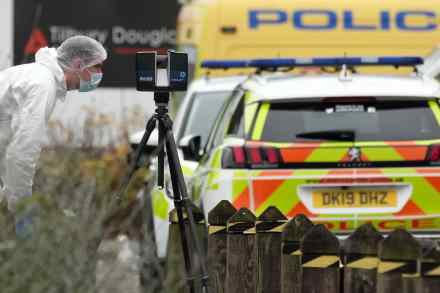
Britain has been subjected to another terror attack, just as the nation fell silent for yesterday's annual Remembrance Sunday memorial. An explosion occurred in a taxi outside the Liverpool Women's Hospital on Sunday morning, killing the passenger and leaving the driver in hospital. Police have now confirmed that the incident is being treated as a terror attack.  Reports suggest that the driver, David Perry, noticed that his passenger had a device and locked himself in the car alongside the bomber. The as-yet-unnamed passenger was declared dead at the scene. Boris Johnson has hailed Mr Perry's 'incredible presence of mind and bravery'. He was discharged from hospital last night after receiving treatment for cuts and burns as well as stitches to his ear.

Superbad: Joe Biden’s plummeting presidency

From our UK edition

41 min listen

In this week’s episode: Has the Biden Presidency stalled or crashed?In our cover story this week, Freddy Gray assesses the state of the Biden presidency. With steadily lowering approval ratings, a disastrous Afghanistan withdrawal, and this week’s failure of the Democrats to hold on to the Virginia Governorship, how much trouble is the US’s oldest inaugurated president in? Freddy talks to Lara along with Emily Tamkin, the US editor of the New Statesman and co-host of the World Review Podcast. (00:49)Also this week: Should we welcome or fear the Metaverse?Kit Wilson writes in The Spectator this week about Facebook’s new venture into the Metaverse, a concept that most of us probably hadn’t heard of until last week.

Are banking apps luring young people into debt?

From our UK edition

Last month, my bicycle got a flat tyre. ‘Both of those tyres are gonna need replacing and you’ve knackered your sprockets,’ huffed the bike man. The bill came to £230. It’s the kind of irritating expense that means I run out of beer money a week before payday. I’ve always assumed I’m a reasonably normal spender. Work pays me, the money gradually disappears over the month, with hopefully a bit left over for my Isa. I’m vaguely aware that something exists called a ‘credit card’, but my parents always made clear to me that if you don’t have the money for something, don’t buy it. Where I differ from older spenders is that like many under-thirties I use a Monzo card.

MPs vote to overhaul their own watchdog

From our UK edition

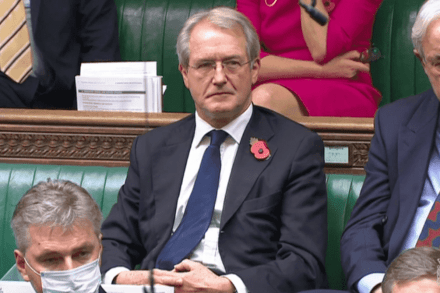
MPs have voted in favour of overhauling their own watchdog after its decision to ban a senior Tory backbencher from the House of Commons. The committee on standards found that former minister Owen Paterson had breached lobbying rules and recommended he be suspended from the House for 30 days. However, the government backed an amendment to the vote on his suspension — normally treated as a formality — that will now see a new committee set up to fix 'potential defects' in the way the current disciplinary system works. Detractors of the cross-party body have accused the standards commissioner, Kathryn Stone, of anti-Tory bias.

How Raab plans to fix the law

From our UK edition

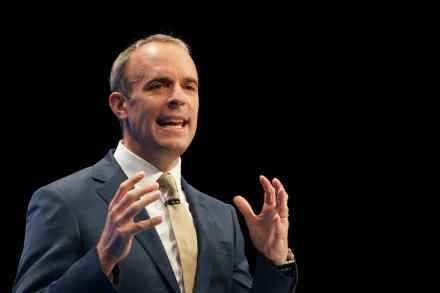
How do you solve a problem like Britain’s creaking criminal justice system? To the newly appointed Secretary of State, the answer involves ripping up the Human Rights Act, rolling out more electronic tags for convicts and pumping cash into preventative projects. At a Spectator event this morning, held at Tory Party Conference, Dominic Raab explained that rewriting the UK’s human rights laws was central to his reforming mission. He told editor Fraser Nelson: The Prime Minister was very clear when he appointed me deputy PM and Justice Secretary that he wanted this done… Overhauling the Human Rights Act is not just a good way of dealing with the foreign nationals that we can’t deport but also of ironing out our constitution.

Richard Tice is a rebel without a cause

From our UK edition

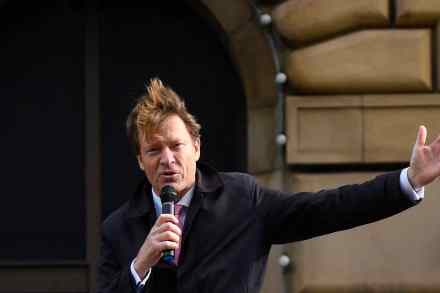
The vaccines make you magnetic, didn’t you know? And Covid is a form of biological warfare, released by the Chinese to weaken the West. New 5G technology is melting people’s brains and the Bank of England is owned by the Rothschilds. I am listening to three delegates from Reform UK’s first party conference, held in parallel to the Tories' much larger jamboree just down the road. They are outside chaining cigarettes and they’re fired up. At last, they feel they can talk about this stuff without being shut down. I nod along. I’m not a scientist, I explain, and I don’t really know how central banks work. But why, I ask, aren’t these things being discussed on the Reform conference stage?

Bog bodies: mysteries of the Iron Age

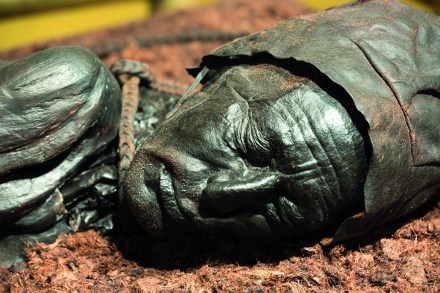
Some believe All Hallows’ Eve (October 31) is adopted from a much older Celtic holiday, Samhain, that marked the change from harvest’s richness to the darkness of winter. In its modern guise, Halloween still retains something of that pagan philosophy — a time when the borders between the living and the spirit world are supposed to be at their weakest. For our pre-Christian ancestors, this sense of the in-between was felt not only in the mulchy decay of autumn but in the land around them. Bogs were an in-between space for Iron Age Europeans. They thought that these muted open wetlands, with their sodden pools of still black water, exposed an opening to some other realm.

bog

Lara Prendergast, Cindy Yu and Gus Carter

From our UK edition

17 min listen

On this week's episode, Lara Prendergast asks if it's so wrong to talk about whether the Covid vaccine affects periods. (01:05) Cindy Yu says China's 'zero Covid' strategy can't last. (06:50) And finally, Gus Carter spends an hour in a sensory deprivation tank.