George Osborne

George Osborne was Chancellor of the Exchequer from 2010 to 2016.

My time in the ‘Naughty Corner’

From our UK edition

An unexpected silver lining to leaving government is that I have a much nicer parliamentary office. The Chancellor’s traditional room in the House of Commons is rather dank and gloomy, with peeling ceiling plaster. Despite repeated efforts by pest control, it is overrun with moths. As a backbencher, my new office is, by contrast, a large, bright room overlooking the Thames and the London Eye. The office used to belong to David Davis, who was — rather reluctantly, I understand — forced to vacate it on entering government. So far I have resisted the jovial advice from various fellow MPs to have my new room swept to make sure it is free of bugs of a different kind. My office sits on a corner of Portcullis House, which some have taken to calling the Naughty Corner.

My run-in with Ivanka Trump

From our UK edition

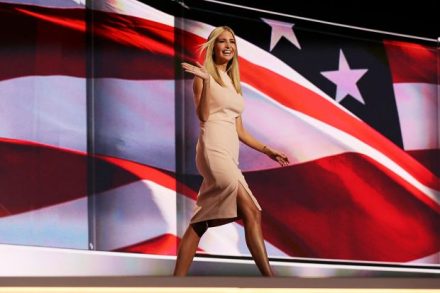
I’ve never met Donald Trump, but I have come across his daughter Ivanka and son-in-law Jared. I met them this summer at a media conference in Aspen organised by the great US network anchor and renaissance man Charlie Rose. It’s fair to say the event was not stuffed with Trump supporters, and there were a few crass barbs aimed at Ivanka. But she and her husband handled it all with great dignity. On the first night, I was heading up to my hotel room when I saw the two of them having a drink at the bar alone, and they asked me to join them. They were a serious, intelligent and modest couple. The first TV debate was just days away and I asked them what Donald was doing to prepare for it. They told me he was doing nothing.

Marmite, Toblerone and the other hidden costs of Brexit

From our UK edition

One thing I won’t miss about No. 11 Downing Street are the Christmas cards: 2,056 Christmas cards to be exact. That was the number I had to sign every year. The recipients included 87 FTSE chief executives, 209 foreign dignitaries, six EU commissioners and one shadow chancellor. They all added up, and it involved several days of signing, and sore wrists. Every chancellor, prime minister and opposition leader I’ve known does the same. Judging by the thousands of cards I would receive, many must go unread. So I propose to my successors a Christmas truce. Only send cards to people you actually know. Give the money you save to a good charity and use your time more productively to, for example, run the country.

Full text: George Osborne’s speech at the Spectator Parliamentarian awards

From our UK edition

I am honoured to be invited to present these awards. Thank you very much for taking me out of my unemployment. When I read the Spectator front cover on the eve of the referendum, I thought it was advice on how to vote: ‘Out - and into the world’. But it turned out to be career advice to me. And of course, normally these annual awards are presented by last year’s winner of ‘Politician of the year’, David Cameron. And it’s another example of where he’s disappeared and left me holding the baby. I wanted to support the Spectator magazine - a brilliant weekly compendium on the arts, on politics, on society. Yours for only £4.25 - or $4 because of the policies of the Spectator.

George Osborne interview: championing the ‘voice of the liberal mainstream’

From our UK edition

After just eight weeks in the wilderness, George Osborne is back – and wants to put the pressure on Theresa May to use the phrase 'Northern Powerhouse' and the agenda that goes with it. Here’s an edited transcript of his BBC Today Programme interview this morning with Nick Robinson. NR: We want to talk about the Northern Powerhouse, but just to be clear then, you’re not tempted to follow your now ex-leader out of politics and spend some time writing your memoirs? No, I’m not. I don’t want to write my memoirs because I don’t know how the story ends and I want to hang around and find out. And there’s an enormous opportunity now to take part in the decisions that are going to affect Britain.

Why Britain and China should stick together

From our UK edition

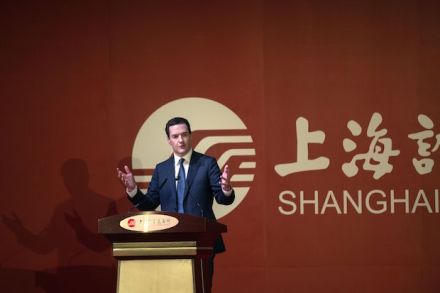
Today I've been at the Shanghai Stock Exchange - the epicentre of the volatility that spooked global markets over the summer. I deliberately chose to come here because I wanted to make sure this simple message would be heard in both our country and China: through the ups and downs, Britain and China should stick together.  Indeed the constant refrain of my five-day tour - with one of the broadest, most ambitious British delegations of recent years - is that China can count on Britain to be its best partner in the West. That means Beijing choosing London as its bridge to Western financial markets, which it has demonstrated this week with groundbreaking agreements that will deepen our financial ties.

Budget 2015: Full text of Osborne’s speech

From our UK edition

Mr Deputy Speaker, Today, I report on a Britain that is growing, creating jobs and paying its way. We took difficult decisions in the teeth of opposition and it worked - Britain is walking tall again. Five years ago, our economy had suffered a collapse greater than almost any country. Today, I can confirm: in the last year we have grown faster than any other major advanced economy in the world. Five years ago, millions of people could not find work. Today, I can report: more people have jobs in Britain than ever before. Five years ago, living standards were set back years by the Great Recession. Today, the latest projections show that living standards will be higher than when we came to office. Five years ago, the deficit was out of control.

George Osborne’s letter from Australia

From our UK edition

To Sydney for the first of three G20 meetings in Australia this year. It’s a long way to travel, but as the formidable Treasurer, Joe Hockey, reminded the jet-lagged finance ministers and central bank governors of the world: now you all know what Australian ministers have been putting up with all these years they’ve been travelling to your meetings. The government of Tony Abbott may be new to the international stage, but they’ve laid on an impressive show. We have a tight agenda, focused on clear and achievable outcomes; and the trappings are kept to a minimum. It all augurs well for the big leaders’ summit in Brisbane this November. I regret to say I’ve only been to Australia once before.

Lincoln’s legacy

From our UK edition

Every so often American Presidents let people know that they are reading a book. When George W. Bush was seen clutching a copy of Andrew Roberts’s History of the English Speaking People, acres of newsprint appeared on this elegant apologia for neo-conservatism. Now his successor in the White House wants us to know that he has a well-thumbed copy of Doris Kearns Goodwin’s Team of Rivals; and just in case you missed that, the publishers have helpfully emblazoned the front of the UK paperback edition with the headline ‘The Book that Inspired Barack Obama’. He could have done much worse. For Team of Rivals is one of the best biographical histories I have read in years.

Speaking for the silent majority

From our UK edition

I asked Henry Kissinger recently whether he had been to see the hit play Frost/Nixon. He told me that he made it a rule never to see plays that included characters he knew in real life, which I guess must mean that he hasn’t seen much post-war political theatre. He also said that he doubted whether any actor could capture the psychological complexity of Richard Nixon, the man whom he flew into the unknown with to talk to Mao Tse-tung and the man whom he had prayed side-by-side with on the night before the final resignation. Kissinger poses but does not answer the question in his memoirs: ‘What would have happened had the Establishment about which he [Nixon] was so ambivalent shown him some love?

A stately progress

From our UK edition

The bookshelves of any self-respecting library used to be weighed down with the monographs of the titans of 19th-century politics. The three volumes of John Morley’s masterly Life of Gladstone would jostle for space as each new volume of Moneypenny and Buckle’s six-volume Life of Benjamin Disrael was published. Yet one Victorian politician would have been conspicuous by his absence on the bookshelves. Edward Stanley, 14th Earl of Derby, was hardly a bit-player in mid-Victorian politics. He was involved in the great battles over reform that dominated the period, both as leader of his party for 22 years and leader of his country. Yet the very title of this first ever full biography — The Forgotten Prime Minister — says it all.

Waiting for Dave

From our UK edition

Waiting for David Cameron’s speech, which is going to be a great end to a great conference. General buzz here amongst those who were at Labour’s Conference last week is that contrast has been striking: their Conference was all very hollow, lots of election speculation covering up the lack of no real substance; while ours has been full of new, exciting ideas. The Party has been really united and determined. We are up for the fight! On my brief there’s a story that is quite interesting – which the Mail and Guardian covered this morning. It concerns Labour’s misleading use of Treasury figures to attack our tax proposals.

All politics is local

From our UK edition

I’ve just been speaking to over hundred business people who have come up to Blackpool for our Corporate Day. I spoke alongside Miles Templeman, Director General of the Institute of Directors. Richard Lambert of the CBI, the British Chambers of Commerce, and Federation of Small Business were also there in force. The event was just part of an action packed day of policy discussions and seminars organised by our business relations operation. We’ve done an enormous amount of work over the year, engaging with small and large businesses, up and down the country, and across every sector. We had record attendance, and the event was oversubscribed. My morning was a blur of newspaper and television interviews.

George Osborne’s conference diary

From our UK edition

George Osborne, the Shadow Chancellor and Tory election co-ordinator, will be contributing to Coffee House throughout conference. Here is his first entry: The first full day of conference. Morning meeting at 8am with David and the team, setting out exactly what we'll do today. Much as I'd like to share the details, I cannot, even with you, dear Coffee House reader. Then onto Sky's Adam Boulton programme in the studio overlooking the conference. Snippet in case you missed it: Adam: "Are you going to introduce out of hours supermarket parking charges?" Me: "No." Who says politicians can't give a straight answer? Watched William Hague's barnstorming speech on TV from my hotel room, while working on my own speech tomorrow.

Right for his times

From our UK edition

Visit the Ronald Reagan Presidential Library, high on a hill overlooking Simi Valley, California and you are greeted at the door by a bronze statue of the former president dressed as a cowboy. For many on the Left in Britain that is exactly how they saw the 40th president of the United States. They should read his diaries and think again. Reagan was no Pepys, or even an Alan Clark — he was far too close to the action to be a wry observer — but his daily entries provide a fascinating insight into a presidency that saw the end of the Cold War and a resurgent belief in the power of the individual. Yet these diaries also show that Reagan the man was not as simple as Reagan the myth.

Losing out in China

From our UK edition

Through all the changes of the past decades, Tiananmen Square still sums up China. I was there last week and the first thing that strikes you is its size. Like many things in China, it is the biggest of its kind in the world. China also has the largest population and the biggest army, produces the most cement, and has put much of this into the world’s largest dam. Combined with the world’s highest rate of sustained economic growth, this makes China both the greatest threat to British economic complacency and the biggest opportunity for UK exporters. Tiananmen Square also reflects China as it is divided: Mao’s mausoleum, a grisly relic of unhappier times, cuts it in two.

While England sleeps

From our UK edition

This week an unusual piece of junk mail joined the forest of pizza delivery leaflets and minicab cards on my doormat. It was a white envelope marked with six chunky coloured circles under which was written: ‘Inside: Important Information from HM Government’. I assumed the ‘important information’ would be that I had been specially selected to win a prize draw and almost threw it away. In fact it turned out to be a leaflet from something called the National Steering Committee on Warning and Informing the Public telling me ‘What to do in an Emergency’.

Bush and Howard are winners

From our UK edition

George Osborne says that on the basis of the ‘keys’ forecasting system George W. Bush will be President next year and Michael Howard will be in No. 10 In the next few months George Bush and John Kerry are going to spend more than $1 billion trying to win the presidential election, while everyone else is going to spend millions of dollars trying to guess the result. They needn’t bother. The result is already obvious. Or so I have just been told by a man called Professor Allan Lichtman. He is a well-known American political scientist who has a simple and (almost) infallible system for forecasting the outcome of presidential elections.

Could a Tory vote for Kerry?

From our UK edition

Welcome to CNN’s Presidential Election Night Special. We’re just getting the results in live from the 51st State. We can confirm that the Great State of Great Britain has voted overwhelmingly for Senator John Kerry. This is a big blow for George W. Bush, and a humiliation for Governor Blair, who viewers will remember strongly backed the President during the campaign.’ If Britain could vote this November, no one doubts what the result would be. Kerry would win by a landslide. He’d win votes across the board. Not just on the Left, but on the Right too. In fact, Kerry would probably get more votes in the Tory shires and suburbs than he would from Labour’s urban heartlands.