Georg Löfflmann

Dr Georg Löfflmann is Lecturer in US Foreign Policy at Queen Mary University of London.

How to fix Germany’s broken army

From our UK edition

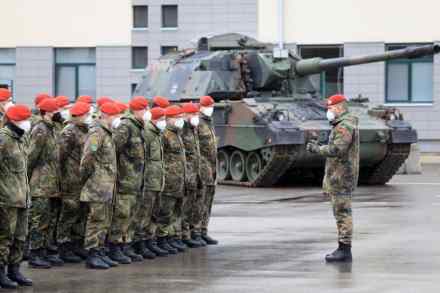
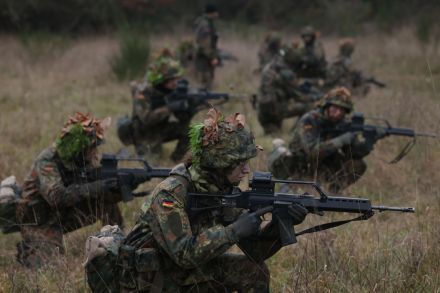
On 27 February 2022, three days after the beginning of the Russian invasion of Ukraine, the German Chancellor Olaf Scholz said it was a historic turning point, or Zeitenwende, for European security. Scholz promised to transform German foreign and defence policy, and substantially modernise and rearm Germany’s armed forces, the Bundeswehr. A key element of the Zeitenwende was the creation of a €100 billion special fund for an immediate increase in defence spending, as well as the promise to meet Nato’s target of spending 2 per cent target of GDP on defence by 2024. Two years on, with the dawn of the second Trump administration, it seems that Zeitenwende was only the beginning for Germany’s armed forces.
Germany’s military muddle over Ukraine

From our UK edition

The reluctance of chancellor Olaf Scholz to provide heavy weapons to Ukraine is now coming under increasing fire from abroad and within Germany itself. Prominent politicians from the liberal FDP and the Greens, the coalition partners of Scholz’s Social Democrats in Berlin, have criticised the chancellor for his lack of leadership, and complain that Germany is lagging behind other major western powers in supplying weapons. Marie-Agnes Strack-Zimmermann, the flamboyant chairwoman of the defence committee in the German parliament, hit out at the chancellor’s ‘deafening silence’ on the subject.

The German army has far bigger problems than funding

From our UK edition

In a historic speech to the German parliament last month, the chancellor Olaf Scholz announced a €100 billion investment fund for the German army and a permanent increase in defence spending to above 2 per cent of GDP. He also promised that Germany would send hundreds of Stinger man-portable air-defence systems and Panzerfaust-3 anti-tank weapons to Ukraine to aid the country in its fight against Russian aggression. In the Reichstag – that still bears the graffiti of Soviet soldiers that stormed the building in May 1945 – Scholz announced a radical departure, or ‘Zeitenwende’, from decades of German post-war foreign policy doctrine. Germany’s military reticence would end – as would its strategic diplomatic and economic engagement with Russia.