Geoffrey Owen

Sir Geoffrey Owen is head of industrial policy at Policy Exchange and a former Editor of the Financial Times.

Is this Dominic Cummings’ biggest legacy?

From our UK edition

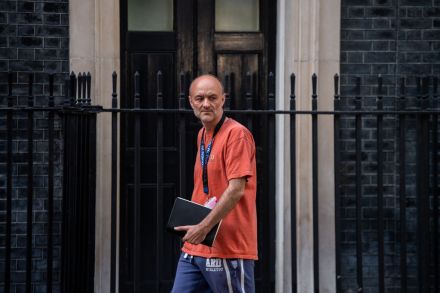
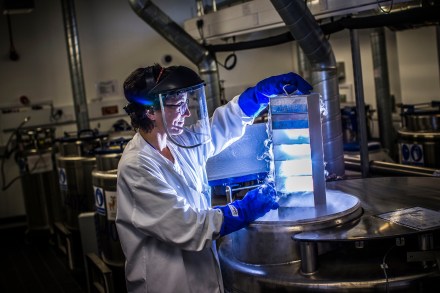
The government’s decision to set up a new research funding agency, to be known as the Advanced Research and Invention Agency (ARIA), marks an important break in UK science and innovation policy – potentially more important than any recent government initiative in this field. The aim, as the Business Secretary Kwasi Kwarteng explained last week, is to fund high-risk, high-reward research, ‘supporting ground-breaking discoveries that could transform people’s lives for the better.’ As part of this mission, the chief executive of ARIA will be free to choose which areas to research and which projects to fund without direction from ministers.
How the UK can become a science superpower

From our UK edition

Boris Johnson wants the UK to be a science superpower. Part of his plan is to set up a new funding agency, loosely based on the much-praised Advanced Research Projects Agency (ARPA) in the US. This agency, strongly pushed by the Prime Minister’s adviser Dominic Cummings, will back high-risk, high-payoff projects with minimal bureaucratic control. But there is another part of the science and innovation landscape where at least as much attention is needed as any new proposed agency. UK Research and Innovation (UKRI) was set up in 2017 to bring together all the government bodies that use public money to support research and development.

‘The Branded Gentry’, by Charles Vallance and David Hopper

From our UK edition

We care because our name’s on it. This was the slogan used by Warburtons, the family-owned bakery company, to set itself apart from its rivals, most of which had impersonal names like Premier Foods or Allied Bakeries. Is this just a marketing ploy, or do people actually prefer to buy from a company that has the same name as the person who owns and runs it? The answer is not obvious. Entrepreneurs often choose to use an invented brand name rather than their own. Branson Atlantic sounds less inviting than Virgin Atlantic, and Apple might not be the company that it is today if it had followed the example of its Silicon Valley predecessor, Hewlett Packard, and called itself Jobs Wozniak, after the two founders.

Tycoons of our times

From our UK edition

How should the lives of business tycoons be judged — by their personal wealth, by the size of the companies they created, or by how long their business survives after their death? If the last of these criteria is chosen, then the record of recent British business leaders is not impressive. A good many of the men and women who figure in this collection of business obituaries — mainly covering people who died in the last ten years — were shooting stars; they had brief moments of glory but no staying power. Freddie Laker pioneered low-cost air travel; Joe Hyman saw how polyester and other new fibres would transform the textile industry; but the careers of both men ended in disappointment.

An early lead lost

From our UK edition

In 1926 Simon Marks, head of a little-known chain of penny bazaars called Marks & Spencer, placed an order for men's socks with Corahs, a Leicester knitwear manufacturer. The order was kept secret - the Corah brothers did not want to offend the wholesalers, who forbade their suppliers from selling direct to retailers - but it proved to be the start of a beautiful friendship. The cost to Marks & Spencer was 8s 6d for a dozen pairs of socks, a shilling less than a wholesaler would have charged. But Simon Marks was not just interested in lower prices. He wanted to distinguish M&S from Woolworths by upgrading quality and giving consumers real value for money. Hence he entered into a dialogue with Corahs on how the shilling saved could be spent on producing a better garment.