Geoff Hill

Geoff Hill is a Zimbabwean author and journalist. His book of short stories, Pharaoh’s Bath, will be published this year.

The joy of rescuing snakes

From our UK edition

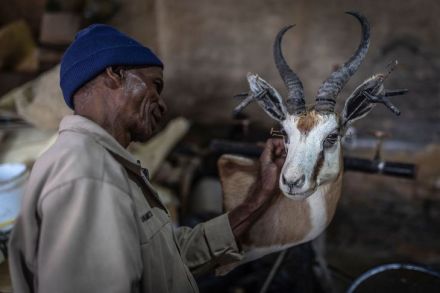
Snake rescuers like me always get asked the same question: have you ever been bitten? I've dealt with mambas, giant pythons, cobras – some of the world's deadliest snakes – and, thankfully, the answer is no. But why do people always assume the worst about these wonderful creatures? People love to hate snakes. They are the Biblical baddy, the reptile that represents evil. Having nursed a sick cobra back to health, gently holding his head up during a daily bath, I know this depiction is deeply unfair. I've long been fascinated by these animals. My father’s family landed at the Cape in 1795 but I was the first to develop a love for snakes. Everyone I knew killed them even though most of the species in Africa are harmless to humans. In a few, the venom can be lethal.

Putin has escaped his South African dilemma

From our UK edition

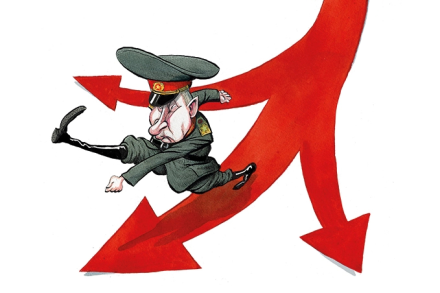
As a founding member of the International Criminal Court, South Africa has an obligation to arrest Vladimir Putin should he ever step foot in the country. This posed a problem for Pretoria, given the Russian leader was due to attend a meeting of the Brics trading group in Johannesburg next month. No longer. President Cyril Ramaphosa announced on Wednesday that Mr Putin would be staying home.  Long-range warheads landing on Jo’burg, Durban and Cape Town would soon have shortened Brics to Bric The International Criminal Court has accused him of war crimes in Crimea, especially over the treatment of children, and has issued a warrant to all member states.

A trophy hunting ban won’t save Africa’s wildlife

From our UK edition

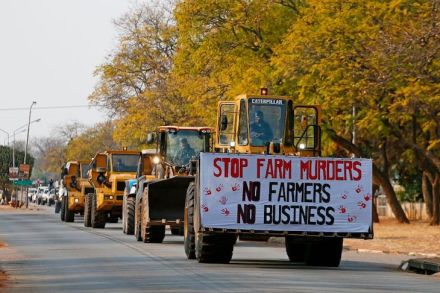
British rule over South Africa ended in 1910, but now parliament is busy with legislation that could have a devastating effect on its old colony. A landmark law to ban trophy hunting imports is making its way through the Lords. The Hunting Trophies Bill would prevent tourists importing animal skins, severed heads and carcasses of certain animals to the UK after shoots abroad. But the planned law has holes wide enough for a hippo to walk through. The crackdown may be well intended but it also betrays a lack of understanding about South Africa – and the trade many people, not least farmers, rely upon to survive. In South Africa, many farmers keep giraffe, impala, wildebeest, kudu and nyala.

Cyril Ramaphosa’s ‘state of disaster’ speech could not have gone worse

From our UK edition

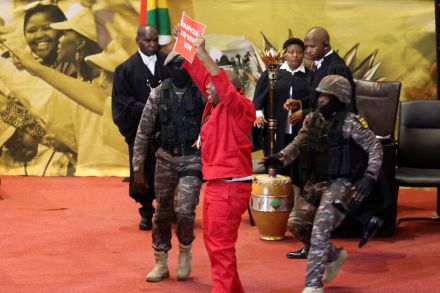
Joe Biden was heckled by Republicans during the US president's State of the Union address this week. But that reception was warm compared with the one faced by his South African counterpart Cyril Ramaphosa during his State of the Nation speech last night. Ramaphosa faced a record number of interjections from the floor, as he declared a state of disaster amid rolling power cuts and a looming recession. With an election due in May 2024, this speech was Ramaphosa’s chance to set out why his ruling African National Congress (ANC), in power since the late Nelson Mandela was elected in 1994, deserves another five-year term. Things did not go well.

The Zulu’s new king brings peace, for a moment

From our UK edition

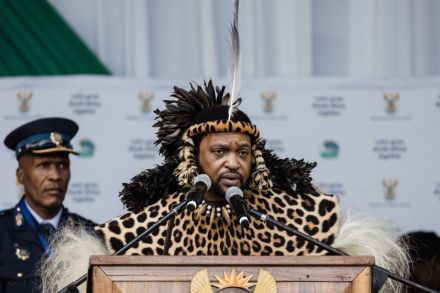
A new king of the Zulu was crowned at the weekend. Thousands in South Africa went to Durban to watch the coronation of Misuzulu kaZwelithini. The city was sunny, which meant the Zulu ancestors were happy. The coronation, held at the Moses Mabhida stadium, was a celebration of Zulu tribal dominance. While South Africa’s president, Cyril Ramaphosa, who handed over the certificate recognising Misuzulu as the Zulu monarch, was booed by the audience, his predecessor, Jacob Zuma, was cheered. Ramaphosa comes from the tiny Venda tribe, on the border with Zimbabwe. Zuma is a Zulu. Zulus don’t care much about the accusations against their former president.

Back door to Britain

From our UK edition

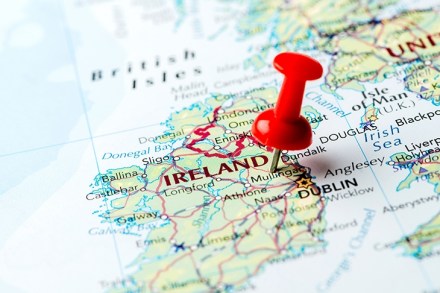
I was working in Johannesburg when I first got wind of the fact that Ireland has become an illegal back door to the UK. If you’re from a country such as South Africa, Swaziland, Lesotho, Fiji or Guyana, you need, not just a passport, but a prearranged visa, obtained from the local embassy for a fee, before you can even board a plane to Britain. It takes time, your details are checked, and you need to show a reason why you’ll go home at the end of your stay. In the 1980s most African nationals could come to Britain visa-free. But worries about terrorism and crimes committed once in the UK meant that, one by one, African countries had to join the visa scheme.