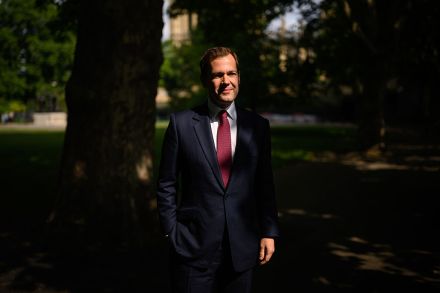
Gavin Rice

Gavin Rice is head of political economy at the think tank Onward.

MAGA-nomics is working

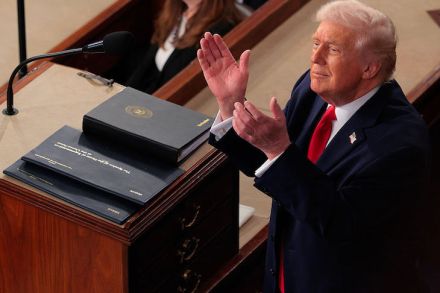
Donald Trump’s State of the Union address, the longest in history, served as a reminder of the relentless will and unstoppable energy he brings to the office of the presidency. In a coup de grace he humiliated Congressional Democrats, securing footage of them remaining seated en masse as they refused to accept that the role of the government is to prioritise American citizens. He gently chastised the Supreme Court judges, assembled in the front row, for declaring his tariff programme unlawful last Friday.
The British right is where the energy is

From our UK edition

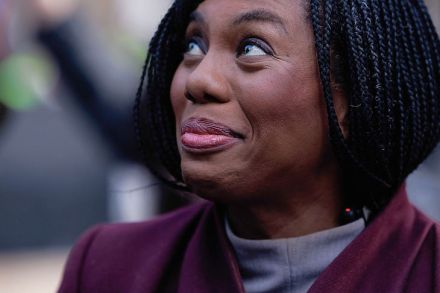
The British right is tearing itself apart. The departure of Robert Jenrick, for many Tories the obvious king over the water in whom so much hope was invested, means a potential future has now been cut off. Meanwhile the Reform party, having robbed the Tories now of two titans – the other is the MP for Devizes, Danny Kruger – has trained its sights ever more aggressively on destroying Kemi Badenoch. There is no war quite so painful as a civil war, and with the loss of Kruger and Jenrick in particular many old, deeply held relationships within British conservatism are now under deep strain, if not completely severed. After a strong original response from Badenoch to the news of Jenrick’s likely defection, the Tories descended into wounded tribalism for the following two days.

Debate: what next for the British right?

From our UK edition

30 min listen

The general election result of 2024 reflected – among other things – a collapse of trust among British voters in the Conservatives. How can the British right evolve so it learns lessons from the past and from across the pond, in order to win back its base? This is an excerpt from an event hosted by The Spectator and American Compass; a leading US think tank.

Britain needs to reindustrialise

From our UK edition

In recent years, governments looking for good news on growth have sounded increasingly desperate, like a doctor looking for signs of an improvement in a terminally ill patient.  In the first quarter of this year Britain’s economy grew by 0.7 per cent, slightly higher than expected – a fact seized upon by this already beleaguered government. Both Rishi Sunak and Sir Keir Starmer have clung furiously to the belief that we are ‘the fastest growing economy in the G7’, a fact only true on the most selective of snapshots. Our industrial energy costs – among the highest in the world – are killing off what’s left of UK production Both statements mask a much bleaker reality.

What J.D. Vance gets right

From our UK edition

J.D. Vance is just about the least popular conservative in Britain right now. The US Vice President's treatment of Volodymyr Zelensky, and more recent leaked text messages discussing strikes on Yemen, have left Vance mired in scandal. Even in America, home of the MAGA movement, he is among the most disliked veeps in history, at least at this early stage in his term. So it’s no wonder that last week Vance tried to move back onto his home turf and the issues for which he first became famous as a writer: the impact of globalisation on the American working class. In a room full of tech entrepreneurs, his championship of red-state, Main Street conservatism was clearly a hard sell.

Why Britain needs growth

From our UK edition

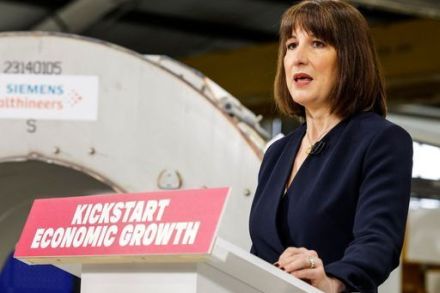
'Growth' – the focus of the Chancellor Rachel Reeves' speech this morning – can be a confusing word. It’s intangible, obscure, hard to visualise. It happens slowly, often imperceptibly, over a political cycle – when it happens at all. The changes needed to achieve it can be tough and involve trade-offs. Often voters feel those changes will not directly benefit them, or may even make their lives worse – whether it's new housing developments, HS2, a new runway at Heathrow (which Reeves backed) or new nuclear power stations. For anyone who stood on the doorstep during the last election, we know that making and doing more things can be a hard sell.