Gavin Mortimer

Gavin Mortimer

Gavin Mortimer is a British author who lives in Burgundy after many years in Paris. He writes about French politics, terrorism and sport.

The developing world has grown tired of Britain’s hypocrisy

From our UK edition

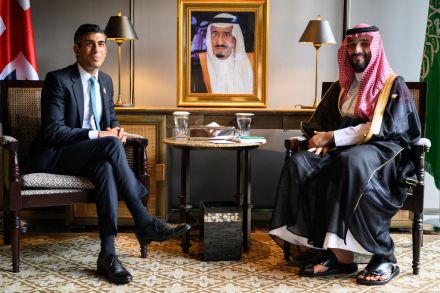
The timing could not have been worse for Rishi Sunak. Just days after it was confirmed by Downing Street that the Prime Minister would host Mohammed bin Salman (MBS) in the autumn, a human rights organisation published an extensive report accusing Saudi Arabia of the ‘mass killing’ of migrants at its border with Yemen.  The 73-page report was released by Human Rights Watch (HRW), and its contents have been relayed by several media outlets, including the BBC and the Guardian. It is a harrowing read.
Enforce the borders, stop the boats, save lives

From our UK edition

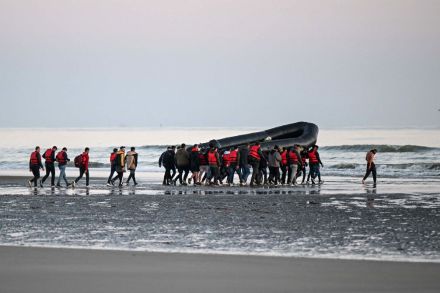
Rishi Sunak has failed in his pledge to ‘Stop the Boats’, and the £480 million deal he signed with France in March is nothing more than a gargantuan waste of money. In fact, the French have intercepted fewer migrants in the Channel this year than they did in 2022. If the Prime Minister is truly committed to stopping the boats he must look to Australia and not France for inspiration. It is ten years this summer since Australia solved its own small boat problem. It did so with determination, courage and a refusal to be cowed by howls of outrage from those who champion a borderless world.

Macron doesn’t care about migrants crossing the Channel

From our UK edition

The British government is reportedly ‘frustrated’ with France for its failure to stem the numbers of migrants making their way illegally across the Channel.  What’s new? It’s a gripe going back years and the solution has always been the same: to throw more money to France in return for a solemn promise from Paris that patrols will be increased to reduce the numbers looking to enter Britain illegally.  Britain should wise up and understand that Macron has no intention of helping to reduce the numbers of migrants crossing the Channel In February 2016, for example, David Cameron’s government announced it was giving €20 million (£17.

Europe’s migrant crisis is about to get much worse

From our UK edition

The first time Mohamed Bazoum came to the attention of the European media was in the aftermath of the Great Migrant Crisis of 2015. The man who was, until a fortnight ago, the president of Niger, was at that time the minister of the interior.   The shockwaves of a war in Niger would be felt in Europe It was his responsibility to implement an accord between Niger and the European Union to stem the flow of migrants through his country north towards the Mediterranean coast. The majority of men, women and children who had Europe in their sights passed through the Nigerien city of Agadez, a route used by migrants traversing Africa for centuries. Most did so voluntarily but not all, and young Nigerian women fated for sex work in Europe also transited Niger.

Macron can’t escape blame for France’s failures in Africa

From our UK edition

Emmanuel Macron was the recipient of a letter on Monday from nearly 100 senators from across France’s political spectrum. The signatories lamented the ‘failures and setbacks’ of the Republic’s policy in Africa in recent years and called on the president to rethink French strategy on the continent. Listing some of these failures – the rejection of France by Mali, the Central African Republic, Burkina Faso and, most recently, Niger – the cross-party group warned that there could be more trouble in store in the Ivory Coast and Senegal, where anti-French sentiment is growing.  Then there is North Africa, where relations with Morocco and Tunisia aren’t what they were and, in the case of Algeria, they are positively hostile.

Macron is pushing France to tipping point

From our UK edition

In the last three years, Mali, Guinea, Sudan, Burkina Faso and Niger have all undergone coup d'états. The most recent regime change was last week in the west African nation of Niger, where Mohamed Bazoum was overthrown by the elements of the presidential guard.   The coup’s leader is Colonel-Major Amadou Abdramane. Last Wednesday he informed Niger’s 24 million citizens on state-run television that President Bazoum had been removed because of 'the continuous deterioration of the security situation, the bad social and economic management'.

Is France’s loss Russia’s gain in Niger? 

From our UK edition

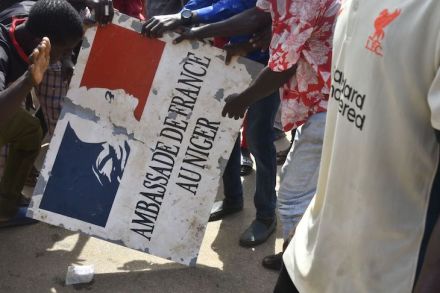
France is preparing to evacuate its citizens from Niger following the coup d'état in the west African country on 26 July. The French embassy in Niamey – the capital of Niger – said in a statement that the air evacuation 'will take place very soon and over a very short period of time'. Last week’s coup, in which general Abdourahamane Tchiani of the elite presidential guard seized power from president Mohamed Bazoum, is the latest turmoil in a region that has become dangerously destabilised in the last three years. There have been coups in Mali and Burkina Faso which, like Niger, were former French colonies but have turned against their erstwhile master.

The French police have lost faith in the judiciary

From our UK edition

Emmanuel Macron broke his silence about the recent riots in France at the start of this week. In a speech in New Caledonia in the southwest Pacific, the president of the Republic declared that the country required a ‘return to authority at every level’.  He added: ‘The lesson I draw from this is order, order, order.’ There was a certain irony to the president’s proclamation. He spoke as a crisis erupted in France, at the heart of which is a power struggle between the police and the justice system.  Resentment has been festering for a number of years within the police – among senior officers as well as the rank and file – that that country’s magistrates don’t much like them.

What the French media can learn from the Farage banking scandal

From our UK edition

Geoffroy Lejeune knows how Nigel Farage feels. Like the former Ukip leader turned TV host, Lejeune’s ‘values’ have made him persona non grata among France’s progressive elite. The 34-year-old journalist was last month appointed editor-in-chief of Journal du Dimanche (JDD), France’s only dedicated Sunday newspaper with a circulation of 140,000.  Newspaper staff were outraged. They downed tools, and have been striking now for five weeks. The papers’ journalists remain ‘more determined than ever’, they say, to continue their industrial action.  The real danger to democracy aren’t the likes of Lejeune or Farage, whatever their opinions may be The problem is Lejeune’s politics. He is described as ‘far right’, and counts among his friends Marion Marechal.

Could Ulez lead to Sadiq Khan’s downfall?

From our UK edition

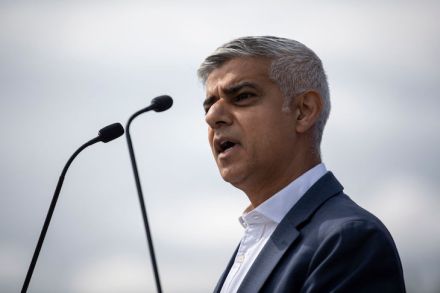
Emmanuel Macron has spoken of his fear of France’s ‘fragmentation’ and of the nation’s ‘division’ following the riots that reduced parts of the Republic to rubble earlier this month. The truth, as the president well knows, is that France is already deeply divided, and the fractures are numerous. As well as the topical one, that of the chasm separating many of the Banlieues from the rest of the Republic, there is also the growing gulf between those who prostrate themselves at the altar of Net Zero and those who are sceptical or downright resistant. And the French, being French, have never been shy in demonstrating forcefully their opposition to the Green zealots.

Will the French riots spawn a new generation of jihadists?

From our UK edition

Apart from the 96 arrests and 255 burned cars, Bastille Day passed off without a hitch in France. A bullish Interior Minister, Gerald Darmanin, expressed his satisfaction in a tweet, thanking the 45,000 policemen and women who had been deployed across the country. It says much for the state of France that avoiding a riot on their national day is a cause for celebration.  Still, one can understand why the government is grateful for small mercies after the trauma of the recent uprising. The financial cost of the damage caused by the rioters is predicted to top €1 billion (£858 million), a staggering sum for a country that is already dangerously indebted. This figure is double that of the unrest of 2005, when for three weeks youths went on the rampage.

Where did it all go so wrong for Emmanuel Macron? 

From our UK edition

It is Bastille day in France but few people are in the mood for festivities. The riots of a fortnight ago have left physical and psychological scars that won’t heal anytime soon.    It is Emmanuel Macron’s seventh Bastille day as president, and his special guest this year is Narendra Modi, Prime Minister of India, chosen to mark the 25th anniversary of the strategic partnership agreed by the two countries.    France is more divided, more angry and above all more frightened than it has been in decades The day’s celebrations will end in the traditional way, with a grand display of fireworks, although the cynic might wonder if the French haven’t had enough of those in recent weeks.

What was Algeria’s role in the French riots? 

From our UK edition

In March 2012 a French Algerian called Mohammed Merah murdered three soldiers and shot dead three Jewish children and a rabbi in southern France; three years later two French Algerian brothers murdered the staff of Charlie Hebdo and later in the year men of Algerian heritage were among the terror cell that slaughtered 130 people in Paris. The two teenage killers of the elderly Normandy priest in July 2016 could also trace their lineage to that region of North Africa, and it is an Algerian woman awaiting trial who is accused of the horrific rape and murder of 12-year-old Lola last October in Paris.  These crimes elicited scant comment from Algeria.

Who really helped end the French riots?

From our UK edition

It wasn’t president Macron who brought six days of rioting in France to an end, nor the brave bands of mothers who called for calm in some of the inner-city estates. It wasn’t even the presence of 45,000 police and gendarmes on the streets that persuaded the rioters, arsonists, vandals and looters to stand down. Instead, it seems that it was the drug gangs who decided enough is enough. Having so many boys in blue patrolling the streets was bad for business and so gang leaders exerted their influence and ordered the young hoodlums back to their bedrooms.  That, at least, was the news broken to Macron at the start of this week when he dropped by a police station in the 17th arrondissement of Paris.

France’s riots have left the country more divided than ever

From our UK edition

There is a myth of France, specifically of its banlieues, that has been frequently repeated in recent days. Descriptions of ‘marginalised suburbs’, ‘ghetto-like suburban estates’ and of ethnic minorities ‘shunted away into suburban housing projects…out of sight and out of mind’ have emerged in the international media. It’s even been suggested in one British publication that rising food prices were to blame for the riots.  Nanterre, where 17-year-old Nahel was shot dead by a policeman eight days ago, has some tough estates but it not a ghetto abandoned by the French state. The housing estate where Nahel lived was built in the late 1970s and at the time was considered ‘an emblematic project of democratic urban planning’.

France’s riots are fuelling division over Europe’s migrant crisis

From our UK edition

The riots that have ravaged France in recent days have given Eric Zemmour a second wind. The leader of the right wing Reconquest party has been on the airwaves and in the newspapers, saying, with a touch of schadenfreude, ‘I told you so’.  In a television interview on Saturday evening, Zemmour explained that the reason he entered politics in late 2021 was because of what he described as the Republic’s twenty-year policy of ‘crazy mass immigration’. It was the issue on which he campaigned during last year’s presidential and parliamentary elections. Unlike Marine Le Pen and her National Rally party, Zemmour barely mentioned the cost of living crisis; immigration and Islam were his main agenda.

France wants Macron to send in the army

From our UK edition

Nearly three quarters of French people think it’s time for President Macron to send in the army to restore order to the towns and cities that have been sacked in recent days. According to a poll published yesterday, 70 per cent of people said they wanted the military to be deployed to areas that have been looted, vandalised and firebombed since police shot dead a 17-year-old in western Paris on Tuesday morning. The teenager, Nahel, was laid to rest on Saturday afternoon but it remains to be seen whether the furious reaction to his death – for which a policeman has been charged with voluntary manslaughter – will abate in the coming days.

Is it safe for France to host the Rugby World Cup?

From our UK edition

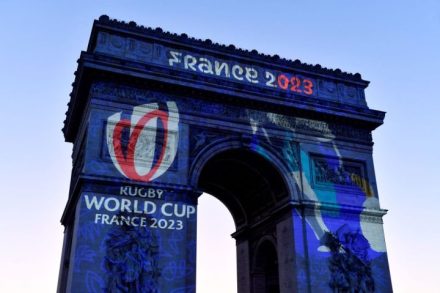
The Rugby World Cup kicks off in just under ten weeks with hosts France playing New Zealand in the Stade de France. The national stadium sits squarely in Seine-Saint-Denis, a district which yesterday was smouldering after a night of anarchy. Shops were looted, cars torched and a bus station destroyed in an orgy of violence that was replicated across the republic.   President Macron cut short a trip to Brussels for a crisis meeting with ministers and security chiefs in Paris on Friday morning, and he reportedly said there will be ‘no taboos’ in doing what is necessary to restore law and order. Further details will be forthcoming but there is no indication at this stage that a state of emergency will be declared, as many on the right have demanded.

France is in danger of descending into anarchy

From our UK edition

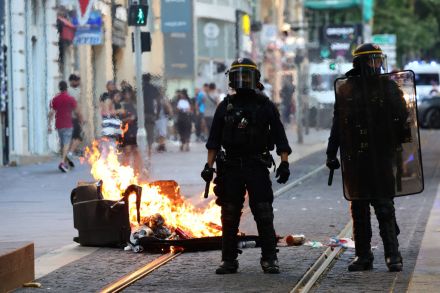
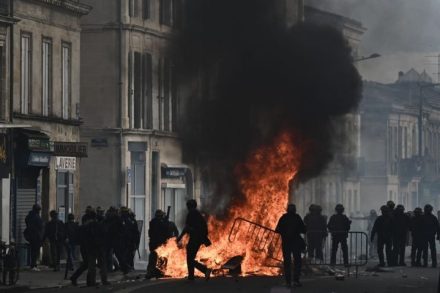
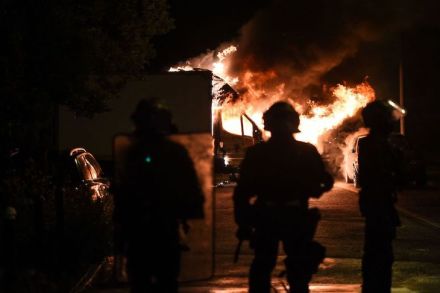
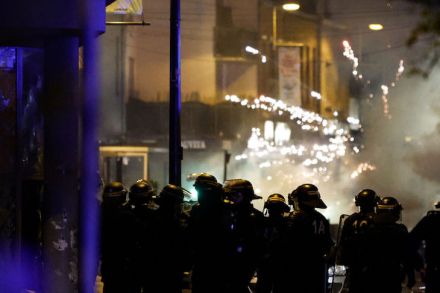
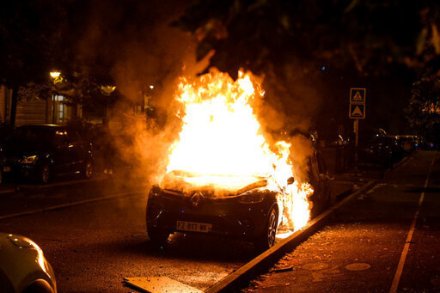
France endured its worst night of rioting yet on Thursday as violence continued across the country. For the third consecutive evening, youths went on the rampage in most major cities, despite the presence of 40,000 police. Shops were looted, town halls attacked, police stations firebombed and vehicles were hijacked in extraordinary scenes of urban warfare. The police fought running battles with mobs and made 421 arrests, over half of which were in the capital. The epicentre of the anarchy was in Nanterre, in the west of the city, where on Tuesday morning 17-year-old Nahel was shot dead by police as he sped away from a traffic stop.  The officer who fired the fatal shot has been charged with voluntary manslaughter and remanded in custody.

France is a country in chaos

From our UK edition

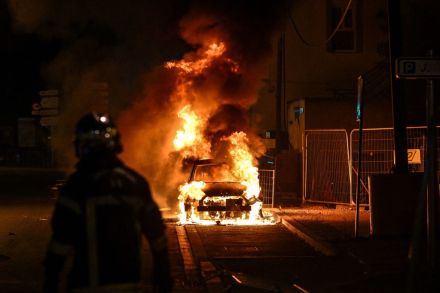
Emmanuel Macron is facing arguably the gravest crisis of his presidency after another night of rioting across France. Much of the trouble was in the Paris region, particularly Nanterre, to the west of capital, where on Tuesday police shot dead a 17-year-old after he sped away from a vehicle checkpoint.   On a night of extreme violence, police cars were torched, police stations mortared, shops pillaged, trams destroyed and an attempt was made to storm a prison at Fresnes. Dozens of rioters were arrested in Paris, but there was also disorder across France, from Lille in the north to Lyon in the east to Toulouse in the south.