Gary Dexter

Surprising literary ventures | 23 September 2009

From our UK edition

Ermyntrude and Esmeralda was written in 1913 but not published until 1969, long after Lytton Strachey’s death. The delay was not surprising: the book consists of an exchange of letters between two naïve 17-year-old girls who are determined to find out where babies come from. Ermyntrude theorises that ‘it’s got something to do with those absurd little things that men have in statues hanging between their legs’, and reports to her eager correspondent that Once, when I was at Oxford, looking at the races with my cousin Tom, I heard quite a common woman say to another, ‘There, Sarah, doesn’t that make your pussy pout?’ And then I saw that one of the rowing men’s trousers were all split and those things were showing between his legs.

Surprising literary ventures | 9 September 2009

From our UK edition

Patricia Highsmith, as readers will know, was the author of the upmarket thrillers Strangers on a Train and The Talented Mr Ripley, among others. She was also a keen artist, and illustrated (rather than wrote) the rare book Miranda the Panda is on the Veranda, to text supplied by her friend Doris Sanders. Its pages, somewhat Seussian in tone, include statements such as: ‘Mabel Grable, a sable, reads a fable at the table in the stable near the gable with a cable’; ‘A monk and a skunk and some junk on an elephant’s trunk’; and ‘A veil on a snail.’ The book was published by Coward-McCann, who also handled her adult fiction.

Surprising literary ventures | 12 December 2008

From our UK edition

James Patterson likes rape, torture, mutilation and death. So do his readers. Who doesn’t? It has been estimated that Patterson’s lifetime sales of thrillers have now topped 150 million, and that one in every 15 hardbacks bought in the world in 2007 was a Patterson novel, which means that we must all like rape, torture, mutilation and death, perhaps with extra rape on the side, and then some child rape, child torture, child mutilation and child death, then some more rape, more death and more rape, and finally some rape, death, rape and death. But it isn’t all rape and death: James Patterson also wrote the book at hand, SantaKid. This is the heartwarming tale of ‘Santa’s little girl’, Chrissie, who lives at the North Pole with Santa and Momma Claus.

Surprising literary ventures | 3 December 2008

From our UK edition

‘It looks to me like Boris the Blue Whale,’ said Rightwayup Bird. ‘I have read all about him. He is one hundred feet long and weighs 150 tons.’ Astonishing prescience for 1981? Willy and the Killer Kipper — like the first of Jeffrey Archer’s two ‘Willy’ books, Willy Visits the Square World (1980) — is full of delights. A submarine has stalled on the ocean floor, and Willy and his teddy bear, Randolph, set out on the back of the Rightwayup Bird to save it from Konrad the Killer Kipper. On the way they are helped by Sybil the Seagull, an aspiring author and correspondent for the Bird Times who talks loftily about how humans are always plagiarising her articles.

Surprising literary ventures | 19 November 2008

From our UK edition

Chekhov originally wrote the dramatic monologue, On The Harmful Effects of Tobacco, in 1886, and substantially revised it for a second version of 1902 shortly before his death. It deals with Ivan Ivanovitch Nyukhin, a hen-pecked husband who delivers a lecture (at the request of his wife) on the evils of smoking. The play has largely been ignored by Chekhov scholars in the West, despite the fact that the original version was popular in Russia in the 1880s as a farce: it was only published in translation in 1954, and appeared in the edition shown above in 1977.

Surprising literary ventures | 5 November 2008

From our UK edition

Ken Follett is a cult in countries such as Japan, Italy and Spain — in Spain, in fact, there is a statue to him, inaugurated in January this year, in the town of Vitoria-Gasteiz in the Basque country. In Britain he is also loved, but perhaps not with the fanatical devotion he deserves. Most people don’t even know that he wrote under the pen-name, early in his career, of Bernard L Ross. In fact, most people haven’t heard of Amok, King of Legend, a book widely known in Holland, France, Tibet, the Republic of Ireland, Ghana and Germany, where it appeared with the title Amok: Der Killer Gorilla. The plot is as follows. A film crew go to a hidden African valley where they find a giant ape.

Surprising literary ventures | 22 October 2008

From our UK edition

The Crows of Pearblossom is a rare children’s book by Aldous Huxley, written in 1944 and published posthumously. It originated as a present for his five-year-old niece Olivia de Haulleville, who often visited Huxley and his wife, Maria, at their ranch in Llano in the Mojave Desert (Olivia later moved to the Greek island of Hydra and became Mrs Yorgo Cassapidis). It was while living on the ranch that Huxley began experimenting seriously with psychotropic drugs such as mescaline and LSD. The story deals with two crows, the female of which wears an apron. Mrs Crow finds that her eggs are being eaten by a Rattlesnake, and after suffering 297 such thefts in a single year (she does not work on Sundays and public holidays) she begs Mr Crow to destroy it.

Surprising literary ventures | 8 October 2008

From our UK edition

Alexander McCall Smith is best known for his No. 1 Ladies’ Detective Agency series of novels (Tears of the Giraffe, Morality for Beautiful Girls, The Kalahari Typing School for Men etc.) as well as the Isabel Dalhousie mysteries and the 44 Scotland Street series. But McCall Smith has a number of other strings to his bow. He is, for example, an Emeritus Professor of Medical Law at Edinburgh University, and has written or co-written several books in the field of law and medicine, among them The Forensic Aspects of Sleep, The Duty to Rescue and The Criminal Law of Botswana, all of which could serve as titles for No.1 Ladies’ Detective novels.

Surprising literary ventures | 24 September 2008

From our UK edition

Using the Oxford Junior Dictionary (1979), by Philip Pullman Before Lyra, before polar bears and His Dark Materials, and before his first children’s book, Count Karlstein, in 1982, Philip Pullman was a lowly drudge in the very humblest halls of lexicography. Pullman in fact spent his earliest career in teaching, working at various Oxford middle schools before moving in 1986 to Westminster College, where he taught B. Ed. students. In 1979 he did some jobbing work for Oxford University Press and produced the booklet at hand, Using the Oxford Junior Dictionary (his name appears only on the inside cover, though he is the sole author).

Surprising literary ventures | 10 September 2008

From our UK edition

Ruth Rendell, it turns out, as well as being the queen of ‘adventure sex’, is a furious decentraliser. In this small book of 1989 she argues not only for devolution for Scotland and Wales but autonomy for the English regions and a ‘cantonisation’ of the UK along Swiss lines. Undermining the Central Line is nothing to do with the Tube system, therefore, but is a plea to ‘give government back to the people’, published in the year of the introduction of the Poll Tax and a few months before the fall of Margaret Thatcher in 1990.

Surprising literary ventures | 15 December 2007

From our UK edition

Who is Cleo Birdwell?’ begins the flyleaf text of this book. ‘The simple answer is that she’s a New York Ranger, a schoolteacher’s daughter from Badger, Ohio, who becomes the hottest thing in hockey.’ Well, not quite. The simplest answer is that she’s Don DeLillo, author of White Noise, Underworld and Falling Man, publishing pseudonymously early in his career. Amazons is a woman’s first-person confessional account written covertly by a man. Not content to stop there, DeLillo makes this a book almost entirely about sex (there is very little hockey in it).

Surprising literary ventures | 1 December 2007

From our UK edition

A. E. van Vogt was a doyen of the Astounding generation of mid-20th-century science-fiction writers, a group whose senior members included Asimov, Clarke and Heinlein. Among van Vogt’s novels are The Voyage of the Space Beagle, Slan and The World of Null-A. He also produced this little book, published in 1992 but conceived much earlier, a pre-feminist and pre-pop-biology attempt to pin down the problem of the violent male, or as he also termed it, the ‘right man’ — ‘right’ in the sense of wishing always to be right. The ‘right man’ is abusive towards women, is prone to outbursts of jealous rage, has a secret death-wish, and can be found at the helm of ‘all Communist countries’.

Surprising literary ventures | 17 November 2007

From our UK edition

The slender book above was the last thing Roald Dahl ever wrote, and was published posthumously by the British Railways Board. It is something of a deathbed conversion. The author spends the whole of it telling children — whom he describes as ‘uncivilised little savages with bad habits and no manners’ — how to behave themselves, in VERY LARGE RED CAPITAL LETTERS. ‘I have a VERY DIFFICULT JOB here,’ he admits in the first paragraph. ‘Young people are fed up with being told by grown-ups WHAT TO DO and WHAT NOT TO DO ... and now I am going to have to tell you WHAT TO DO and WHAT NOT TO DO.... This is something I have never done in any of my books.

Surprising literary ventures | 3 November 2007

From our UK edition

The Fixed Period is the most un-Trollopian thing Trollope ever wrote. It is a first-person futuristic narrative set in the state of Britannula, an island somewhere near New Zealand, in the year 1980. The President of Britannula, John Neverbend, decides to institute a fixed term of 67½ years for the life-span of his citizens, after which they will be dealt a painless and compulsory euthanasia. The Fixed Period is similar in style to a book published a few years earlier, Samuel Butler’s Erewhon; in film perhaps its closest kinship is with Logan’s Run or Soylent Green. Let any man look among his friends,’ Neverbend says, ‘and see whether men of 65 are not in the way of those who are still aspiring to rise in the world.

Surprising literary ventures | 20 October 2007

From our UK edition

John Cage was the composer of 4’33”, the piano performance piece that consists of 4 minutes and 33 seconds of complete silence — except for the mutterings of the audience — and Imaginary Landscape No. 4, in which 12 radios are played at the same time for several hours. He was also the inventor of the ‘prepared piano’, in which a grand piano is filled with nuts, bolts and scrap metal to alter its sound. But Cage once said that if he were to live his life over again, he would be a botanist rather than an artist. He was in fact an amateur mycologist of some distinction, helping to found the New York Mycological Society, winning an Italian TV quiz on mushrooms in the 1950s, and co-writing (with Lois Long and Alexander Smith) The Mushroom Book, shown above.

Alternative reading | 6 October 2007

From our UK edition

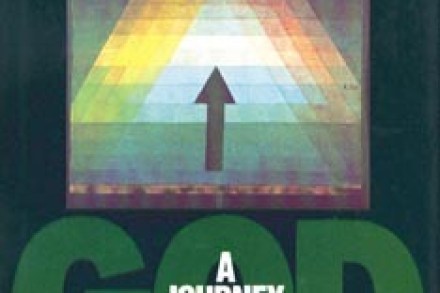
A Journey into God is one of four books by Delia Smith on the subject of Christian spirituality, the others being A Journey into Prayer, A Feast for Lent and A Feast for Advent. Delia journeys into God painfully aware of her own lack of recipes. She takes the apophatic approach, describing God as what he is not: he is not ‘the Life-Stifler God’, nor ‘the God of Fear and Anxiety’ nor ‘the Cuddly-Bear God’ nor ‘the God of the Well-Informed'. He lies outside human rationality, including human theological enquiry (which is useful, since it means you don’t have to read Barth, Bultmann or Strauss). Delia, while a patient student of the Bible, is seduced, ultimately, by mysticism of no particular denomination.

Alternative reading | 8 September 2007

From our UK edition

Alternative reading Fences and Gates, Walkways, Walls and Drives by E. Annie Proulx E Annie Proulx is the Pulitzer Prize-winning author of The Shipping News and Brokeback Mountain: she has also won the PEN/Faulkner Award, the O. Henry Award and the Dos Passos Prize, and is thus one of the most lauded of all American writers. But her literary apprenticeship was spent writing a number of practical self-help manuals. They include Sweet and Hard Cider: Making It, Using It and Enjoying It; The Complete Dairy Foods Cookbook: How to Make Everything from Cheese to Custard in Your Kitchen; The Gourmet Gardener: Growing Choice Fruits and Vegetables with Spectacular Results; and Plan and Make Your Own Fences and Gates, Walkways, Walls and Drives.

Surprising literary ventures | 9 December 2006

From our UK edition

Santa’s Twin (1996) by Dean Koontz Dean Koontz is the author of the schlock-horror novel Demon Seed (later a film) about a woman who is raped by a computer. Further offerings include Watchers, Lightning, The Bad Place, Intensity, Fear Nothing, and False Memory. His talents, however, don’t end there. His publishers explain: ‘At the request of his fans, bestselling novelist Dean Koontz has created a contemporary masterpiece that is destined to take its place alongside “The Night before Christmas” and A Christmas Carol as a perennial Yuletide favourite.

Surprising literary ventures | 25 November 2006

From our UK edition

Action Cook Book (1965) by Len Deighton The fact that the cover of this book by Len Deighton shows a chap cooking spaghetti while wearing a gun lends itself to many interpretations. Was spaghetti so expensive in 1965 that it needed an armed guard? Will someone be paying the ultimate price for overcooking it? Is she checking him for nits? Was Deighton’s sense of his own masculinity so fragile that he needed a shoulder- holster and bird in a negligée to write about cooking? Is that an insufferably solemn question? But these are matters perhaps for the cultural historian. I will confine myself to saying that Action Cook Book was Deighton’s second cookbook, after Où est le garlic?

Surprising literary ventures | 11 November 2006

From our UK edition

187 Men to Avoid (1995) by Danielle Brown Danielle Brown ... Danielle Brown ... isn’t there something familiar about this name? Hold on. If you ... remove the ‘ielle’ ... it’s ... No. Yes. 187 Men to Avoid was written by the author of the Da Vinci Code in 1995, before he was famous and rich. Described on the back cover as ‘a survival guide for the romantically- frustrated woman’, this first edition (above) is now highly collectable (it was later reprinted with a slightly different cover announcing ‘by the author of the Da Vinci Code!’, which is worth nothing). The text of the book simply lists, in very large print, and with no further comment, the ‘men to avoid’: ‘Men who think yeast infections cause mouldy bread ...