Freddy Gray

Freddy Gray

Freddy Gray is deputy editor of The Spectator and the editor of the US edition. He hosts Americano on YouTube.

Take the Vatican ‘Gay Mafia’ talk with a pinch of holy salt – for now

From our UK edition

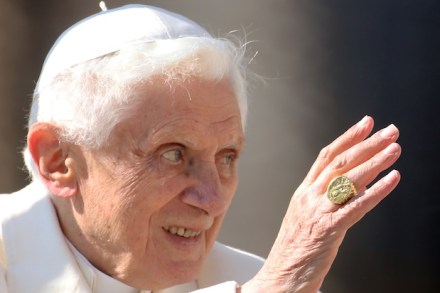
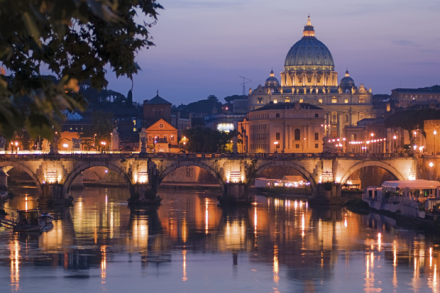
A rather feverish mood around the Vatican today: La Repubblica’s sensational splash suggesting that Pope Benedict XVI was pushed out by a 'gay mafia' within the Church hierarchy has set Latin tongues wagging. Lurid whispers about sex and bribery abound. The theory - given wind by Benedict's Ash Wednesday statement that opposition ‘mars the face of the church’ - is that the Pope was so appalled by the findings of the top secret 300-page dossier he commissioned into the ‘Vatileaks’ scandal, he decided he couldn’t go on. It’s all rather intoxicatingly Italian, even if it sounds a bit too much like a pastiche to be true. More sober voices point out that journalism here is always incredibly hyperbolic and La Repubblica is on the wackier fringe.

David Cameron should have read Hilary Mantel’s essay before criticising it

From our UK edition

How stupid of David Cameron to join this absurd row over Hilary Mantel's-speech-turned-LRB-essay on monarchy. I strongly suspect that the Prime Minister was told to do so by aides, who for their part had been reading various journalists on the subject, who for their part hadn't actually read the essay at all. They just all mouthed off because they wanted a little outrage to fill the day, and LRB's provocative cover has (cleverly, perhaps) given them an excuse. Anyone with more than three brain cells who bothers to read the bloody thing will see that it is in fact an odd - albeit electrifyingly brilliant - ramble about our understanding of monarchy and how the public images of our Queens and Kings are constructed and changed.

A New York pontiff? Why I’m betting on Cardinal Timothy Dolan to be the new pope

From our UK edition

It's got to be an African, hasn't it? That's what editors, including my esteemed boss, are saying across the country in response to Pope Benedict's shock resignation. And Fraser's right: a black conservative figure would make sense. It would perfectly represent the face of Catholicism in a globalised world. But there are good reasons to think that, far from being someone from the evangelically charged developing nations, the next Pontiff might be an American. Under Benedict, the power of America in the Holy See has increased dramatically. Vatican insiders even talk about the 'American moment' in Rome.

Can Christians still have Holy Matrimony?

From our UK edition

That's that then. Marriage will change, one way or another. Progress has won. Cue lots of right-on politicians talking about how proud they are to have ushered in such a historic reform. But what about the losing side? What should those Christians who believe that marriage must by definition be a union of man and woman do now? Accept and move on, I suppose. The best response is surely not to bleat on about a sinister 'Orwellian' state. But there's another way. Since the politicians have changed the meaning of a word for political gain, perhaps Christian leaders should play the same game. They could move the definitional posts again, ditch the word marriage and talk only about 'Holy Matrimony' instead? Sounds ludicrously old-fashioned, I know. But read me out.

What if Chuck Hagel is just another plodding politico?

From our UK edition

It looks as if the anti-Chuck Hagel lobby, despite a successful day yesterday at his confirmation hearings, won't prevent their nemesis from becoming US Secretary of Defense. Yesterday Hagel seemed unsure of himself and a bit hopeless at repelling wild suggestions that he is some sort of anti-Israel zealot and a friend of Iran. But he didn't mess up enough to derail his nomination. His fiercest critics still seem barking mad. But his admirers do now have added reason to be concerned. Hagel has been trumpeted as a great realist, refreshingly pragmatist, a safe pair of hands who would manage America's changing role on the global stage with intelligence and caution. But the truth, if yesterday's evidence is anything to go by, might be more dreary.

Israel Notebook

From our UK edition

Friday night in Jaffa, and it’s a party. Jaffa, to the south of Tel Aviv, is where the cool kids hang, apparently — think Dalston or the meatpacking district, and add radical chic. An Israeli-Russian dude in big ironic spectacles tells me that, not far from here, they filmed scenes for the second season of Homeland. ‘So you can see how edgy it is,’ he says. He’s being sarcastic. We’re in a nice big two-floor apartment. The crowd is a mix of British foreign correspondents grumbling about their salaries, good-looking Israelis, and anguished Yanks competing to be more pro-Palestinian than each other. (‘Off the record — OK? — but Israel is effectively a terrorist state that is systematically oppressing an entire people.

Israeli elections: first exit polls

From our UK edition

The first story of the exit polls here in Israel seems to be the success of Yair Lapid, the charismatic and populist TV man, who looks set to win 19 seats. Lapid has appealed to a large swathe of the disgruntled secular middle classes, talking a lot about social issues, but not a lot about the peace process. It looks like it still could be good news for Bibi Netanyahu, the Prime Minister. He polled at 31, which is weaker than last week's polls suggested. But I'm told it should be quite easy - though of course this all early speculation - for him to bring Lapid into a broad coalition. And it might be bad for the ultra-orthodox bloc.

Israeli elections: the IDF goes to the polls

From our UK edition

Israel's election is tomorrow, yet voting started here yesterday. At Kirya Defense Headquarters in Tel Aviv, serving Israel Defence Force troops have cast their ballots, and today more polling stations will open for soldiers. There is not much solid information as to suggest how the troops will vote. In recent elections, however, they appear to have backed the parties of the Right. So it is a fairly sure bet that a large number - especially among the rising proportion of Zionist-religious young men in the Force (NOT ultra-orthodox) - will be drawn to Naftali Bennett and his very right-wing Jewish Home party. Bennett seems to be the liveliest story of the election, both abroad and here.

Is Israel going green?

From our UK edition

Israel’s PR electoral system annoys mainstream politicians because it encourages a plethora of fringe parties, who waste their time and prevent them from doing what they want. The governing Likud-Beiteinu came together on a promise to overhaul the system. The proposals include raising the threshold for entering the Knesset from 2 to 6 per cent, thus removing some the smaller parties from the picture. Diversity is often numbing. But the prospect of Israel’s leaders revising the rules for their benefit invites suspicion, especially now that Avigdor Liberman, who led the push for reform, has had to stand down following charges of corruption. Moreover, reform would make things less funny.

Israel is sleepwalking to election day

From our UK edition

Maybe it's the unconscious effect of the Sabbath, but here in Tel Aviv a soporific atmosphere hangs over next week's Israeli elections. Among the Israelis I have spoken to (mostly secular Tel Avivians), apathy prevails. Prime Minister Benjamin Netanyahu is going to win whatever happens, it seems, and he is going to have to come to some agreement with the hard right-winger Naftali Bennett. 'The television wants to make it exciting,' an old Labor voter told me earlier today. 'But it is not. Everybody knows.' His wife nodded from behind her sunglasses, and smiled. Another elderly fellow told me that he would only vote for the 'least bad one - it's always that way.' The political story of this election is of a hardening Right and a paralysed Left.

The Pacific President

From our UK edition

On Monday, as Barack Obama is sworn in again as President, his allies in the West will ask themselves the same nervous question they posed four years ago: how much does he care about us? The British, in particular, are worried. War looms in Mali, yet Washington seems happy to let the French take charge, showing even less interest than it did in Libya two years ago. Cheerleaders for the ‘special relationship’ accuse Obama of taking a back seat, of failing to show leadership and even of betraying his country’s oldest friends. They look back to that much-discussed episode when the new President removed a bust of Winston Churchill from the Oval Office and point out that he has steadily sought to disentangle America from its strategic partnerships with Europe ever since.

Sorry atheists, organised religion works

From our UK edition

'I’m spiritual, not religious' is something people say to make themselves sound interesting. It doesn’t work. What is intriguing, though, is that, according to this new survey, those who see themselves as spiritual but don’t follow conventional religion are far more likely to be mentally ill. Now, before you trolly atheists out there in webland start typing 'What a lot of crap. ... anyone who believes in God is nuts. LMFAO!!', read me out. Yes, we might have a case of chicken-and-egg here -- the chicken being mental illness and the egg being the thirst for existential understanding. Or vice-versa.  But the survey might also go to prove the value of that least trendy thing: organised religion.

The easy language of opposition

From our UK edition

Isabel makes an excellent point about Ed Miliband's One Nation spiel. It soothes political minds to talk about society rather than economics, people rather than the state, the common good rather individual utility. Voters like it, too, because globalisation and technology make many of us feel lost and alone. But it is, as Isabel says, an easy language of opposition, even a facile one. In office, reality tends to preclude such grand posturing, particularly in an economic crisis. As it happens, last night I went to an interesting Centre for Social Justice lecture by Jon Cruddas, Labour's policy review chief, on the role of the state in the Good Society. Now I like Cruddas, even if he is a little too inebriated by the exuberance of his own verbosity.

The Church of England rejects women bishops

From our UK edition

Gulp. The General Synod of the Church of England has, against almost all expectations, rejected the ordination of women bishops. This seems to represent an early defeat for the incoming Archbishop of Canterbury Justin Welby, who earlier had called on his fellow Anglicans to ‘finish the job’ and accept reform. Secularists and liberals will be baffled – just how fuddy-duddy are those members of the Synod who voted it down? Somehow there still are enough conservative evangelicals and Anglo-Caths in the Synod who are uncomfortable with the measure as it was presented. The chief controversy, it seems, was over provisions for parishes who did not want a woman bishop in charge.

Why Old Etonian Justin Welby is good news for the CofE

From our UK edition

So, another Old Etonian at the apex of the British establishment: Justin Welby, the Bishop of Durham, will be the next Archbishop of Canterbury. It’s sweet, in a way. All we need now is an OE named as Bank of England Governor, and David Cameron’s alma mater will have the complete power set. But it would be wrong to be too chippy about Welby’s elevation. Representatives at Number 10 actually pushed for John Sentamu, the charismatic conservative African, who had the blessing of, among others, Rod Liddle. But they got Welby instead. And why not? He seems a worthy enough choice, regardless of his 'lack of experience' as a bishop – he's a former oil executive who saw the light.

US election 2012: do Conservative values no longer matter on the American right?

From our UK edition

What's happened to America's social conservatives? Eight years ago, traditional 'values voters' were said to have been key to Bush's victory. Karl Rove was credited with a strategic master stroke — by persuading the President to talk about 'life', not 'abortion', he was said to have motivated the conservative base while reaching across the centre to sympathetic undecideds. But now, Karl Rove is a GOP monkey on Fox News, and the electoral landscape looks very different. Indeed, Obama might have just played the 2004 Republican trick in reverse — by targeting the Republican weakness among women in swing states, he mobilised the left and appealed to moderate American ladies disturbed by Republicans making bizarre comments about rape.

US elections 2012: God Bless Negativity

From our UK edition

Today, says American political journalist Michael Brendan Dougherty, '120 million Americans will choose who they don't want to be president.' Exactly — for all Mitt Romney and Barack Obama's upbeat noise over the last few days, the 2012 US presidential elections have been motivated, entirely, by fear and loathing. The key questions: Are you so fed up with Barack Obama that you can bring yourself to vote for Romney? Or do you hate the Republicans enough to vote for Obama? With all its attack ads and its mudslinging, this election has been negative populism from the start. It's not liberalism vs conservatism; it's anti-liberalism vs anti-conservatism. Let's not be pious, though. Passion and 'values' are hugely overrated virtues.

The small-minded people of the abortion debate

From our UK edition

Are men not allowed to talk about abortion any more? I've lost count of the angry comments I have read on Facebook and Twitter, denouncing Jeremy Hunt, the new Health Secretary, as a vile bigot because he supports a reduction in the 24 week time-limit on legal abortions. 'Hunt: stay out of my c***' is one that sticks in mind. Lily Allen, the singer turned Twitterer, has joined the outrage. 'Can small minded idiot blokes stop telling women whether or not they're entitled to abortions please?' She added: 'Enough now... The day the number of single father households equal the number of single mother households is the day I start to listen to their views.' Hang on there Lily, because the small-minded one here might be you.

Deliver us, Lord

From our UK edition

Why has David Cameron made his conference slogan 'Britain can deliver'? That word 'deliver' is revolting. Cameron clearly likes it: 'Britain delivered', he said after the Olympics. But if only Dave and his handlers read the Spectator's Dot Wordsworth more closely, they'd know better. In 2003, Dot wrote: 'Politicians and managers who use the word deliver should think again . Until recently, the most frequent use of the word deliver was in the phrase 'deliver us from evil.' The sense 'liberate, set free' had been conveyed by the Latin liberare . But in late Latin this meaning had been taken over by the emphatic deliberare, which in classical Latin meant 'to weigh well. 'So I suppose there would have been a late Latin Dot Wordsworth complaining of the misuse of liberare ..

The professorial President

From our UK edition

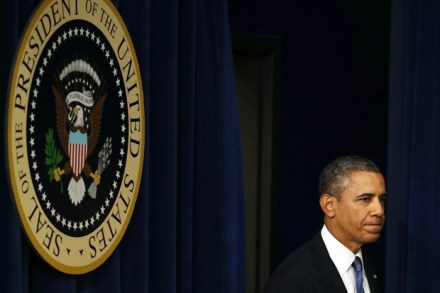
Is Barack Obama really as clever as he looks? Ever since he first appeared in the public eye, it’s been taken as read that he’s a major intellectual. Liberals say, in fact, that brilliance is his greatest flaw. He’s too academic, too nuanced; too eager to understand both sides to be an effective leader. The right, meanwhile, regards him as a professorial Marxist, a tenured radical in the White House. Like or hate him, it seems, Barry got brains. But does he? On Wednesday Obama faced Mitt Romney in the first of the three 2012 presidential election debates. The expectation was that the president, the celebrated rhetorician, would come out on top. Romney is hardly the sharpest tool.