Freddy Gray

Freddy Gray

Freddy Gray is deputy editor of The Spectator and the editor of the US edition. He hosts Americano on YouTube.

Cambridge Analytica’s use of Facebook is straight from Obama’s playbook

Every few weeks, it seems, Carole Cadwalladr drops a long piece for the Guardian or the Observer about how the Trump and Brexit campaigns mind-hacked democracy. On both sides of the Atlantic, people who don’t like Trump or Brexit share these pieces and shriek. The latest article, which lit up the political internet at the weekend, has the added spice of a whistleblower – a pink-haired ‘data science nerd’ straight out of science-nerd central casting. He’s called Christopher Wylie and Cadwalladr reveals that he has been the source for her much-vaunted scoops on Cambridge Analytica, the data firm who worked with the Trump and Brexit campaigns.

Is Steve Bell pastiching Nazi propaganda? Or plagiarising it? 

From our UK edition

My objection to Steve Bell, the Guardian cartoonist, is not that he is risqué. Nor is it that he’s rabidly anti-Tory. It’s that his cartoons are often unfunny to the point of being humourless. I’m not exactly his target audience, though, so I would say that.  But a friend has pointed out that his drawing this week on the May-Russia story takes direct and obvious inspiration from Nazi propaganda:  https://twitter.com/guardianopinion/status/973982860917944322?ref_src=twsrc%5Etfw [caption id="attachment_10057942" align="aligncenter" width="365"] An anti-communist poster from 1940[/caption] Now, let’s not be all inverse-Owen Jones. Let’s try not to scream ‘offensive’ before we’ve understood the joke.

Boris Titov doesn’t want to be president but he’s still taking on Putin

From our UK edition

Boris Titov is running to be president of Russia, but he’s eager to talk himself out of the job. ‘I am not a good politician,’ he says, over breakfast at the Lanesborough hotel in Knightsbridge. ‘To be a president means you need to be wise, a big politician like Thatcher, Deng Xiaoping, Lee Kuan Yew. Russia needs a tough politician in the presidential chair and I am not that man.’ Titov knows that on 18 March, Vladimir Putin, the toughest politician of our age, will be re-elected as Russia’s Supreme Commander-in-Chief. ‘Everybody understands that,’ he says. ‘We are not stupid. I have common sense.’ Which prompts the question: why run?

Meet Boris Titov: the man who wouldn’t be president

Boris Titov is running to be president of Russia, but he’s eager to talk himself out of the job. ‘I am not a good politician,’ he says, over breakfast at the Lanesborough hotel in Knightsbridge, London. ‘To be a president means you need to be wise, a big politician like Thatcher, Deng Xiaoping, Lee Kuan Yew. Russia needs a tough politician in the presidential chair and I am not that man.’ Titov knows that on Sunday, Vladimir Putin, the toughest politician of our age, will be re-elected as Russia’s Supreme Commander-in-Chief. ‘Everybody understands that,’ he says. ‘We are not stupid. I have common sense.’ Which prompts the question: why run?

Rex Tillerson’s sacking isn’t about Russia

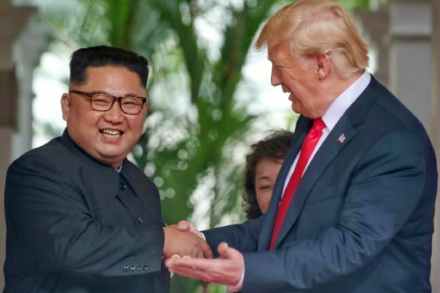
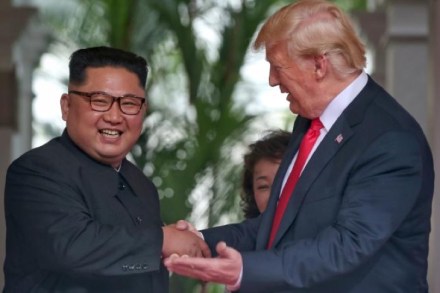
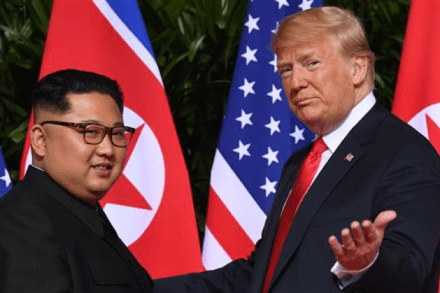
Sometimes it’s almost as if Donald Trump wants the world to think he’s a Russian patsy. Yesterday, Rex Tillerson, as Secretary of State, warned Putin that Russia’s alleged assassination attempt on British soil would trigger ‘a response’. Today he’s been sacked. https://twitter.com/realDonaldTrump/status/973540316656623616?ref_src=twsrc%5Etfw But the sacking almost certainly isn’t about Russia. It seems Trump asked Tillerson to go on Friday, a day after Trump agreed to meet Kim Jong-un. So the more likely cause of Tillerson's departure is the most obvious: the sudden rapprochement with North Korea. Tillerson was reportedly blindsided by the announcement that Trump would meet Kim Jong-un.

No, Britain shouldn’t invoke Article 5 of the NATO treaty

From our UK edition

Theresa May might regret using such strong language in her statement on the Skripal case last night. Saying that there had been the 'unlawful use of force' on British soil and that a response would be imminent has led to a lot of people invoking Article 5 of the NATO treaty - something mentioned in newspapers today. Lord Ricketts, a former UK national security adviser, is one of many to say that this 'unlawful' act warrants the use of NATO. For its part, NATO has released a statement saying 'the UK is a highly valued ally and this incident is of grave concern to NATO'. May did not say ‘armed attack’ - the condition to invoke Article Five - but ‘unlawful use of force’, which is different. It’s all hot air, though - and will be seen as such by the Kremlin.

Welcome to Spectator USA

From our UK edition

It’s an exciting day at the office. We’ve just launched Spectator USA, a new website from the world's oldest weekly magazine. For 190 years, The Spectator has been producing some of the sharpest, funniest and best-written journalism. Now we want to do more of the same for an American audience. Spectator USA will cover politics, culture and life in America. We’ll also offer American readers the best articles from the British Spectator on world affairs.

Surprise, surprise — here comes the tariffs retreat

We should by now be used to Trump's modus operandi. But we aren't. We should all know the art of his deals. But we don't. He is the counterpuncher who quite often smacks first and then retreats. Look at the tariffs story now unfolding. It goes like this: Trump makes fierce opening gambit. This shocks everybody apart from his supporters who say that that is exactly what he said he'd do. Finally, a president who does what he promised, they say. The media starts speculating on the collapse of the liberal world order. Then, amid the hyperventilation, Trump backs down. He does so while pretending that he hasn't. Then he blames the Republican Party for not supporting him. We've seen this with healthcare, with immigration reform, and now perhaps with his protectionism.

1,2,3,4 — Trump declares a trade war

‘Whatever complicates the world more — I do,’ Donald Trump once said. As President, that still seems to be his mantra. Everybody knows that he feels America has been ripped off for decades when it comes to global trade — and that he intends address imbalances that hurt his country wherever he can. But his abrupt decision to announce huge tariffs on steel and aluminium has sent shockwaves across the world. It has thrown global markets into a panic. It has caused division in his White House and put him at odds with his party establishment, which is ideologically committed to free trade and terrified of protectionism. It is vintage Trump, in other words. The great disruptor strikes again. So what is he doing?

Trump loses 4th spin doctor as Hope Hicks quits

Every week is extraordinary in the Trump administration — but this week seems stranger than most. Matters are rumbling in the belly of the beast. On Tuesday, we learned that Jared Kushner had his security clearance downgraded. Today, we learn that Hope Hicks, famously Trump’s most trusted aide, has resigned, a day after she testified to the House Intelligence Committee as part of the Russia investigation. Hicks stonewalled questions from the committee for several hours, though she did reportedly open up a little on certain aspects of Trump’s transition. She is the fourth Trump White House communications director to quit in just over a year. It can't be easy leading the war against fake news.

The unstoppable gun reform lobby

He did not address how he might respond to the inevitable debate that will now consume America over the legality of assault weapons. Again, here he differs from Obama, who for instance used his speech in the wake of the Umpqua Community College shooting in Oregon to make an appeal for what he called ‘common-sense gun legislation’. The irony, however, is that whereas Obama consistently fell short in his attempts to ban what he called ‘weapons of war’ and establish tighter legal controls of who can buy guns, Donald Trump might now succeed. The 45th president has so far flip-flopped on the banning of assault weapons – as he has on other culture-war issues such as abortion and gay marriage. In 2000, he said, ‘I support the ban on assault weapons.

Is Jared Kushner’s power really waning?

It was always ridiculous that Jared Kushner, an amiable 37-year-old who had no diplomatic, political or military experience, should have had top-level ‘SCI’ security access as a senior member of the White House — just because he happened to be the President’s son-in-law. Well now, he’s been downgraded, as Politico reports. He continues to have 'secret level’ access, which is still pretty silly when you think about it. But the downgrading signals that Kushner, who just a few weeks ago was still thought to be the supreme power in the White House, is losing influence. It also suggests that General John Kelly, Trump’s chief of staff, is taking further charge of international affairs.

Why won’t the Syria hawks talk about Libya?

From our UK edition

On Coffee House today, the Tory MP Johnny Mercer says that Britain lost its ‘strength and leadership’ on 29 August, 2013,  the day we decided not to attack Assad. We've heard this line a lot from a certain sort of politician. Michael Gove and Nick Clegg lost their tempers in the hours that followed the Syria vote. Ed Miliband, who turned against the intervention, was called all sorts of horrible names by all sorts of MPs. George Osborne tells audiences in America with his most earnest face on that Britain lost its mojo that day (We got it back, apparently, when we decided in 2015 to bomb Isis – not Assad, but, hey, whatever!) The let’s-bomb-Syria brigade has never quite recovered from the shock of being rebuffed in Parliament.

Brexit Britain could do with some cricket diplomacy

From our UK edition

Peter Oborne, The Spectator’s associate editor, is something of a legend in Pakistan — as least among the defence establishment types we met there. That’s because every year he takes a cricket team on a tour of the country. Last September, in Miranshah, they played a ‘Peace Cup’ match against an XI consisting of current or retired Pakistani internationals in front of a crowd of about 15,000. The Pakistan army turned the occasion into a PR stunt, since Pakistanis love cricket and the military elite wants young people to take up sport rather than global jihad. I don’t want to detract from Peter’s efforts. Surely, though, our government should do one better and send the England cricket team over?

Diary – 15 February 2018

From our UK edition

Not so long ago, Barack Obama called Waziristan ‘the most dangerous place in the world’. It was the losing front in the war on terror, a lawless region in the Federally Administered Tribal Areas of Pakistan infested with Taleban and terrorism. Today, thanks to the Pakistan army, even a risk-averse hack like me can go there with scarcely a tremor. On Wednesday, as part of a British media delegation, I flew by military helicopter to Miranshah, the administrative HQ of north Waziristan. The soldiers took us to a newly built ‘markaz (hideout) re-enactment’ centre, which we quickly renamed Jihadi Disneyland. It is a true-to-life terrorist den, constructed by Pakistani soldiers with extraordinary attention to detail.

The man who wouldn’t be president

From our UK edition

Boris Titov is running to be president of Russia, but he’s eager to talk himself out of the job. ‘I am not a good politician,’ he says, over breakfast at the Lanesborough hotel in Knightsbridge. ‘To be a president means you need to be wise, a big politician like Thatcher, Deng Xiaoping, Lee Kuan Yew. Russia needs a tough politician in the presidential chair and I am not that man.’ Titov knows that on 18 March, Vladimir Putin, the toughest politician of our age, will be re-elected as Russia’s Supreme Commander-in-Chief. ‘Everybody understands that,’ he says. ‘We are not stupid. I have common sense.’ Which prompts the question: why run?

Trump’s sunbed optimism is rubbing off on the world

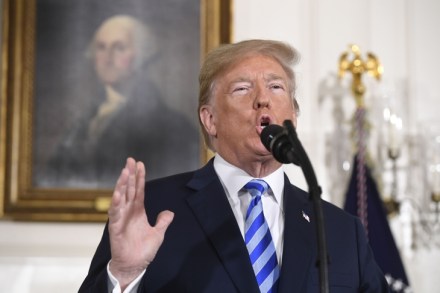
Donald J Trump’s State of the Union was as expected: long, boastful, cheesy — and largely right. Trump says he is creating a ‘new American moment’ — and it’s hard to deny that he is. Before he was president, and even in his inauguration speech, Trump painted only a vision of America in ruins. Now, after a year of him in charge, his message is reassuring and upbeat. It’s not the same as Reagan’s sunny optimism — it’s more post-modern and surreal than that — but it’s not far off. You could call it Trump’s electric sunbed optimism. It’s feel-good, it's a bit orange, and it seems to be rubbing off on the world. ‘Our families will thrive,’ he said in conclusion.

Donald Trump (sort of) says the hardest word

From our UK edition

Wow. As far as I know, Donald Trump has only apologised twice since he emerged as a presidential candidate in 2015 — never apologise, never explain seems to be his usual rule. Once he said sorry after the famous ‘locker room’ talk Access Hollywood tape was leaked in 2016. And today, with his pal Piers Morgan, he offered an apology for retweeting Britain First's videos, saying: ‘Here’s what’s fair. If you’re telling me these (are) horrible people, horrible racist people, I would certainly apologise if you’d like me to do that.' WORLD EXCLUSIVE: In his first international interview since becoming US president, @realDonaldTrump says sorry for retweeting anti-Muslim videos. @piersmorgan https://t.

Brexit Britain is putty in Trump’s hands

From our UK edition

President Donald Trump, famously, has two modes: flattery and hostility. Theresa May had a taste of the latter following Trump's decision to cancel his trip to the UK. But he has changed mode again for Davos – and is now laying it on thick. At their press conference today, he told the PM: ‘There was a little bit of a false rumour out there, I just wanted to correct it. We love your country. We have the same ideals and there’s nothing that would happen to you that we wouldn’t be there to fight for you ...  We’re on the same wavelength in every respect.' Music to Brexiteer ears.

How seriously should we take this new pro-Trump conspiracy theory?

From our UK edition

What if the great smoking gun in the Trump-Russia enquiry is not Donald Trump’s collusion with the Kremlin? What if the real conspiracy turns out to be a Democrat conspiracy to invent a Trump-Russia conspiracy? What if the baddies of 2016 turn out to be not Trump and Vladimir Putin — but Barack Obama and Hillary Clinton? These are questions that right-wing headbangers have been asking for months — but everyone tends to think they are crazy so ignores them. In recent days, however, the theory of a dark Democrat plot to discredit and undermine Donald Trump has taken on a life of its own.