Will the riots burn down Trump’s presidency?
From our UK edition
15 min listen
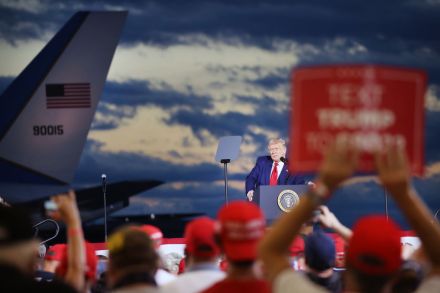
As America continues to burn, Freddy discusses with Jacob Heilbrunn what the protests mean for Trump's chances for re-election.
Freddy Gray is deputy editor of The Spectator and the editor of the US edition. He hosts Americano on YouTube.
From our UK edition
15 min listen
As America continues to burn, Freddy discusses with Jacob Heilbrunn what the protests mean for Trump's chances for re-election.
From our UK edition
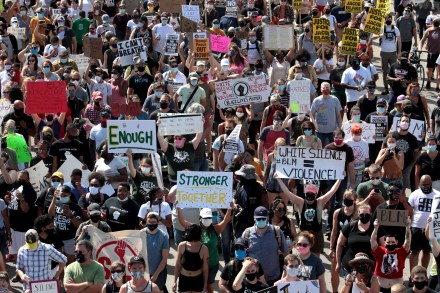
‘This American carnage stops right here and stops right now,’ said President Donald Trump in his inauguration speech on January 20, 2017. Three and a half years later, in the early summer of 2020, a bout of heavy riots has broken out, like a virus spreading, in cities across America. Minneapolis rioted for days on end. Other cities erupted: in Los Angeles, Las Vegas, Phoenix, Houston, Dallas, Atlanta, New York and Washington. A mob now menaces the White House. Maybe that American carnage is just beginning. This latest unrest, coming as it does in the middle of an ongoing global health crisis and a concomitant economic recession, feels more devastating We’ve seen plenty of riots in America in the last few decades.
If you have been following the Minneapolis riots on Twitter or Facebook, you may have come across an edgy new media channel called Unicorn Riot. The company is five years old and describes itself ‘viewer-supported’, ‘independent’ and ‘alternative’. In fact, it thrives by circulating images and videos of social unrest with indisputable glee — on riot porn, in other words. Unicorn Riot's Twitter channel has about 150,000 followers. The account specializes in fanning the flames of racial aggravation. It also helpfully informs viewers where the National Guard blockades are in case anyone might want to avoid or attack them.
From our UK edition
23 min listen
Freddy Gray talks to Andy Ngo, editor at large of the Post Millennial, about the riots unfolding in Minneapolis after the death of George Floyd.
From our UK edition
19 min listen
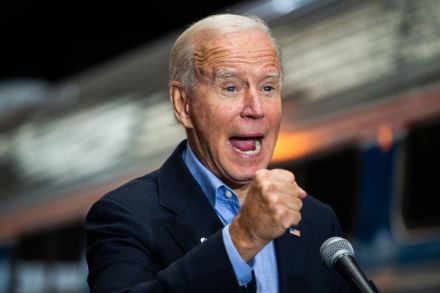
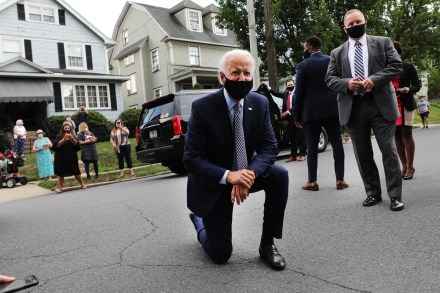
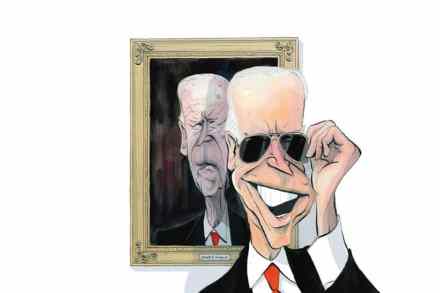
President Trump gets away with a lot because much of the world thinks he’s a buffoon. Former vice president Joe Biden gets away with a lot because much of the world thinks he’s demented. Welcome to American politics in 2020. Trump may or may not be a buffoon; Biden may or may not be senile — there’s been perhaps too much speculation about his mental health. What is certain is that he gives the strong impression of being a doddery old codger. Perversely, in what Gore Vidal called the United States of Amnesia, that could be the key to his success. You can’t really blame a man who has lost his mind. He can’t be that bad, after all, if he doesn’t know what he is doing.
From our UK edition
25 min listen
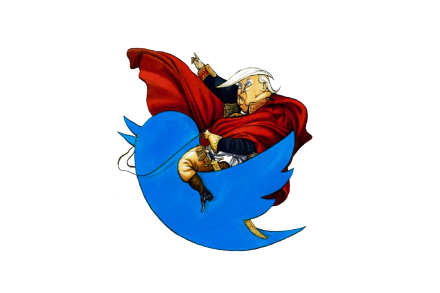
On Twitter yesterday, Donald Trump sent out the political equivalent of a Hail Mary pass. ‘Today we commemorate the 100th Anniversary of the birth of Saint John Paul II,’ tweeted the President. ‘HAPPY BIRTHDAY!’ This was not just Trump being thoughtful about a great spiritual leader. It was an electoral appeal to Catholics on social media and a move that suggests Trump is worried about the Catholic vote. He’s right to be. There are endless debates about the extent to which America’s Catholics decide elections — or, indeed, whether the Catholic vote exists at all, given the diversity of the nation’s sprawling Catholic population.
From our UK edition
25 min listen
With Matt Mayer, President of free market group Opportunity Ohio and contributor to Spectator USA.
From our UK edition
32 min listen
The government is looking at easing the lockdown, but how much remains unknown about the coronavirus (00:40)? In the meantime, Joe Biden is batting off sexual assault allegations (10:15), and we take a look at the upside of lockdown for new parents (21:30).With science writer Matt Ridley, virologist Elisabetta Groppelli, Spectator USA editor Freddy Gray, host of the 'Democratically: 2020' podcast Karin Robinson, the Spectator's Assistant Editor Lara Prendergast, and Editor of the Times Literary Supplement Stig Abell.
From our UK edition
14 min listen
Freddy Gray talks to The Spectator's economics correspondent Kate Andrews about the reform of sexual assault guidance for colleges and universities.
From our UK edition
So Mrs American Voter, which septuagenarian sex abuser do you want to be President? The whole ‘#MeToo’ business probably should have taken a back seat in 2020 — given the epochal health crisis, the vast Covid-19 death toll and the collapsed US economy. But sex always makes headlines and this month Joe Biden, the presumptive Democratic nominee, finds himself wrestling with the shocking allegation that in 1993, he ‘digitally penetrated’ a young woman staffer called Tara Reade. Biden adamantly denies Reade’s claims. However, as someone who peddled the ‘Believe all women’ mantra when it suited him politically, he is now hoist by his own canard.
Coronavirus is so insidious that it is hitting America where it hurts — the stomach. We’ve seen huge lines of cars lining up for food banks since lockdown began, and now a growing number of reports suggest that the nation’s meat supply is breaking down, as outbreaks of COVID-19 affect the largely immigrant workers in pork and beef processing plants. Wendy’s, the fast food chain, is facing complaints from customers who say they can only order chicken — a ‘where’s the beef?’ meme has developed on social media. McDonald’s is putting its meat products on ‘controlled allocation’ to prevent shortages. Tyson Foods, one of the country’s largest meat producers, has said that 'the food supply chain is breaking'.
From our UK edition
Technology can save the world — from South Korea to Singapore to, um, the Isle of Wight. Oh yes. Britain is catching up at super-fibre-optic-lightning speed with the superpowers of tech in its fight against Covid-19. We’ve developed a snazzy ‘track and trace’ app, that's already been trialled at an RAF base in Yorkshire, and the government now intends to roll it out in a pilot scheme on the lovely Isle of Wight and the Scottish Isles, Health Secretary Matt Hancock will announce on Monday. Sod the threats to privacy and liberty — let’s get people-monitoring done! One small problem — the internet on the Isle of Wight doesn’t really work. Mobile telephone reception is notoriously rubbish; so too is broadband. It's a common gripe down here.
From our UK edition
25 min listen
With Kevin Gutzman, Professor of History at Western Connecticut State University.
From our UK edition
Every time you think Donald Trump has lost his talent for making people’s heads explode, he somehow excels himself. His latest? Telling Americans that injecting disinfectant and shining UV light could cure Covid-19 patients. You’ll have seen the clip already, everybody has, but it is worth watching again: https://twitter.com/QuickTake/status/1253623556308717570?ref_src=twsrc%5Etfw Trump voters don’t necessarily take Trump all that seriously This was a Trumpian masterpiece. I particularly enjoyed the way he turned to the experts for validation, while his mouth trotted out the peculiar ideas.
The Spectator in London has this week done something no other magazine has done. We’ve just published our 10,000th edition. We’ve been producing a weekly magazine since 1828 — I’m proud to have been involved in the magazine for 10 of those 192 years. The key to our longevity is that The Spectator is unique; it dares to be different. We have pretty much stuck to the same simple editorial formula — news and comment first, book reviews after — because it works. We allow jokes and dissent. We encourage arguments. As Douglas Murray puts it in his column this week, The Spectator’s enemies are ‘Boredom. Predictability. Obviousness. Humorlessness. Dullness. Staleness.
From our UK edition
24 min listen
With Eitan Hersh, political scientist and author of Politics Is for Power: How to Move Beyond Political Hobbyism, Take Action, and Make Real Change.
‘This is a good day for America,’ said President Bill Clinton on May 24, the Year of Our Lord 2000. ‘In 10 years from now we will look back on this day and be glad we did this.’ Clinton was talking about the House of Representatives’ vote to award normal trade relations to China. And he was right. By 2010, despite the crash of 2008, the knowledge class still largely considered the decision to support China’s entry into the World Trade Organization as a great boon. China’s rise had turbocharged globalization and made us all richer — never mind the stupefying sovereign debts. Labour unions had opposed it, but leaders and corporations were still enthralled by the gargantuan consumer markets.
From our UK edition
14 min listen
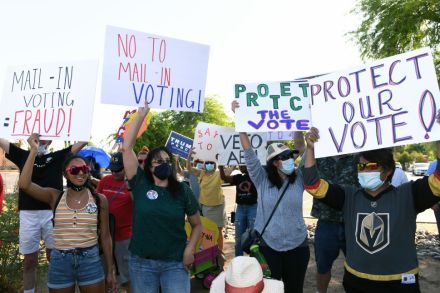
Freddy Gray talks to Spectator USA's publisher Zack Christenson about how the coronavirus will impact the way American voters cast their votes in the upcoming election.