Fraser Nelson

Fraser Nelson

Fraser Nelson is a Times columnist and a former editor of The Spectator.

Conservative Conference: Boris delight

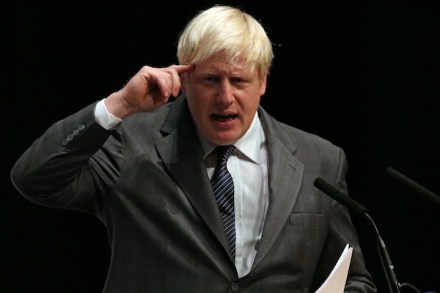
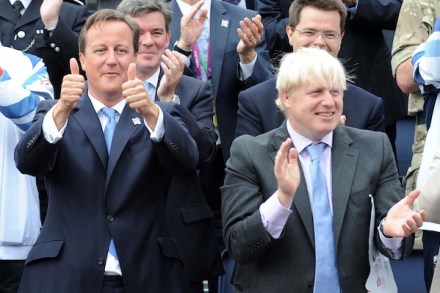
You could tell this was the Boris Johnson show because people were smiling when they queued, smiling as they listened and smiling as they left. The mood in the conference hall had been completely transformed: it was as if this were comedy night, and we were waiting for the Prince of Political Standup. He was introduced via a Bond-style video, and made an extraordinary entrance which I tried to record on my iPhone. The quality is not Emmy-winning, but it may give some sense of the mood:- Boris thanked everyone for the Olympics, hailed London as the world’s greatest city and then walked his very fine line of support for Cameron. He did not say that Cameron is brilliant, as we all know by now that he doesn’t think that.

Conservative conference: Tories find themselves on a different wavelength to voters

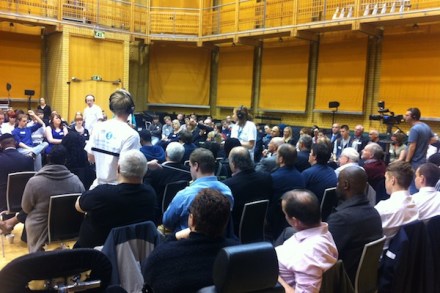
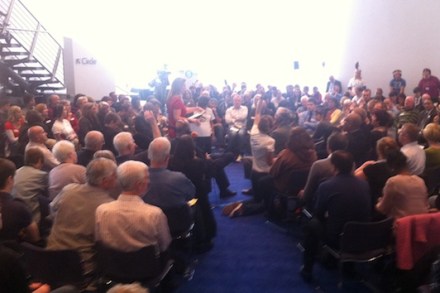
BBC Radio Five is broadcast on 909 kHz, but whatever wavelength the Conservative Party is using was not being received by the 200 average voters assembled by Victoria Derbyshire’s meet-the-public programme now held in every party conference. It’s normally the closest that ordinary voters get to the party conferences, inviting frontbenchers to take questions from locals. The results are quite often explosive. Grant Shapps, the new Tory chairman, was the first guest and was inevitably asked about why he ran his business operating under a made-up name. He gave various explanations but the man in the audience wasn’t buying it. 'My name’s Barry Tomes. That’s my real name, by the way,' he started, to much laughter.

Conservative conference: Boris refuses to say if Cameron’s doing a better job than he would

Speaking to John Pieenar on  Five Live, Boris Johnson said he wished to deal with the leadership speculation, shoot it down with “six inch guns”. He did so by repeatedly refusing to say that David Cameron is doing a better job than he would have done. He was behind Cameron “from the very beginning,” he said – perhaps so, but not the question he was asked. And the fun began:- listen to ‘Boris on leadership on Five Live, 7 Oct 12’ on Audioboo In fact, he said, there is an upside that everyone was talking about his destabilising David Cameron. It is “entirely natural” that “there should be a narrative” because it kept the focus on the Tories and off Ed Miliband.

Labour’s new big lie: millionaires and tax cuts

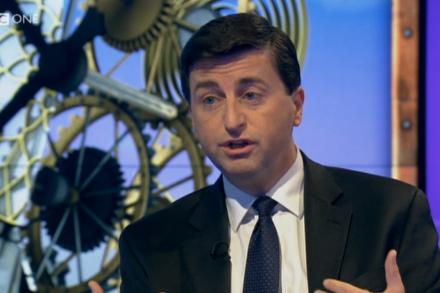
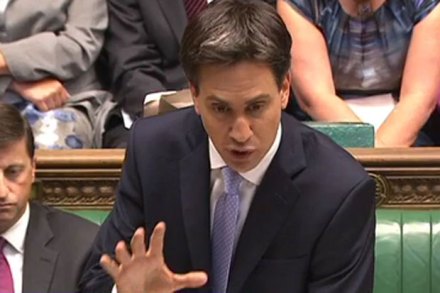
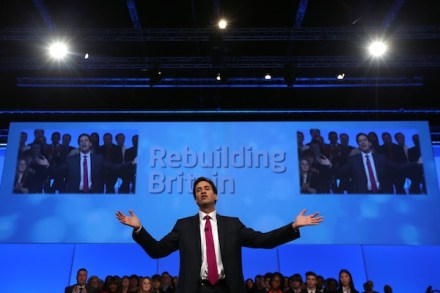
Ed Miliband is, for all his faults, fairly honest - as politicians go. So why did he tell an outright lie in his conference speech? Andrew Neil has just confronted Douglas Alexander on a claim that Miliband made last week. Here's what was in the speech:- Next April, David Cameron will be writing a cheque for £40,000 to each and every millionaire in Britain. And here’s the worst part. David Cameron isn’t just writing the cheques. He is receiving one. He’s going to be getting the millionaires’ tax cut.’ Now, there are 619,000 millionaires in Britain. To claim that “each and every” one of them will get a cheque is not an exaggeration, it is a lie.

Michael Gove: why I’ll never run for leader

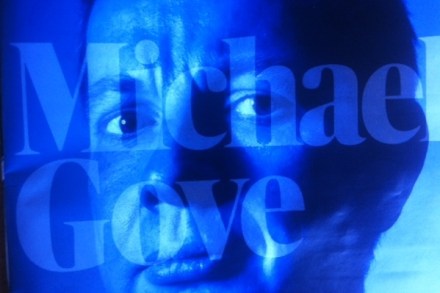
Today's Guardian magazine runs a Michael Gove profile, colouring him blue on the cover as if to alert readers to the threat he poses. "Smoother than Cameron," it warns. "Funnier than Boris. More right-wing than both. Are you looking at the next leader of the Tory Party?" There is nothing unusual about leadership speculation following a  prominent Tory frontbencher, but there is something unusual about the way Gove has ruled it out in almost any way imaginable. He has combined General Sherman and Estelle Morris, saying he wouldn't and couldn't do  the job. It is now being said that Gove is protesting too much, but he has been clear about this for years. I'll add my tuppenceworth. Gove was once, briefly, my news editor at The Times.

Labour to launch a deficit clock for Tory conference

Things have come to a pretty pass when the Labour Party is launching a campaign with a deficit clock to expose George Osborne’s shortcomings. But they are about to do today, I understand, highlighting how much extra the government is borrowing over the four days of the Tory conference compared to last year: £277 million, they say. I’ll post the link when it becomes live. Significantly, Labour is shifting from being in a position of deficit denial towards a position where they will (I suspect) sign up to Osborne’s spending plans. As Balls has found out, Osborne’s game is to dress up only-slightly-modified Labour spending plans with Tory language. But Osborne, and David Cameron, have overdone it with the rhetoric.

Dave’s going down

By now, it will be clear even to David Cameron that he is on course to lose the next general election. The British electoral system always was rigged against the Conservatives, and his hopes for changing that were dashed by Nick Clegg before the summer holidays, when he scuppered Tory plans for boundary reform. All parties are returning to a new reality: the economic recovery has evaporated, and with it the Tories’ chances of winning next time. An unprepared Labour Party is cruising towards power, under a leader who has just held a surprisingly successful party conference. Every bookmaker now agrees: Cameron is heading for a crash. The Tory party conference, which starts in Birmingham this weekend, ought to be a crisis meeting. How did things get to this stage?

Labour conference: the anger of voters

Every time I come to Manchester for a conference, the perimeter fence guarding the politicians seems to shrink, retreating further towards to the garrison complex. There is something allegorical about this: the debate inside the conference is narrowing, appealing to a bunch of political nerds talking about ‘pre-distribution’ or the ‘big society’. And outside there is real, raw anger from the voters. The closest the general public get to party conferences nowadays is the Victoria Derbyshire show on Five Live, where 250 random people are invited to meet those politicians who dare venture outside the security-sealed conference bubble.  The result is discussion quite unlike anything you’ll hear from a stage-managed conference floor.

Labour conference: Ed Miliband’s class war video is a mistake

In America, presidential candidates make films about serving in Vietnam. In Britain, Ed Miliband has made one about going to a comprehensive. If this really is the most exciting and appeal thing about him, then Labour is in some trouble. The intention of the video is clear enough: he wanted to say ‘I didn’t go to Eton’ over and over again. But do voters care? Only in Westminster is it exceptional to have gone to what Alastair Campbell called a ‘bog standard comprehensive’ and Ed Miliband would be ill-advised to claim that he won a Purple Heart of the Proletariat.

Another growth plan falters

It seems that yet another coalition growth scheme is falling flat on its face: this time, Sir Mervyn King’s ‘Funding for Lending’ brainwave. The theory was that the Bank of England would lend money at below-market rates to the financial institutions: sub-prime loans, in other words. Not without its risks: chiefly, what if the banks just use this cheap cash to lend more to their safest borrowers, rich guys with big deposits? Don’t worry, Sir Mervyn said, the Bank would monitor every month and report back. It just has, and Citi Research has chewed the results (PDF).

Damian McBride: Brown, Balls and the African Coup

Damian McBride promised that he’d never write a memoir, which I imagine is a relief to Ed Balls who now pretends he had little to do with “Mr McBride”. But now and again, the artist formally known as McPoison uses his blog to reminisce. His posts usually full of honesty and insight and today’s post  is no exception. He has reflected on the “African coup”, when Tony Blair announced, without informing Brown, he would fight a third term. His blog is worth reading in full. What jumps out at me is how Ed Balls is working hand in glove with McBride, even texting him orders after the Blair announcement: “You’ve got one job – Gordon and everyone around him needs to be totally disciplined about this. Total discipline.

The dangerous attraction of wealth taxes

I’ve written about the deceptive attraction of wealth tax in my Telegraph column today, and I wish I was wasting my time. Once, you could say it was an idea so flawed that it stood no chance of getting into government. In the coalition era, there is no such thing.  Tory ministers will wave through an idea they regard as nuts because the Lib Dems want it, and that coalition is about compromise. Political horsetrading has supplanted rational economic debate, and if the Lib Dems want a wealth tax there is a horribly high chance that Osborne may give way — as he almost did over Mansion Tax. Not because he is weak, but because that’s how this coalition works. Here are my main points. 1. The idea of a wealth tax is superficially attractive.

The war over England’s schools

Good teachers should get pay rises, bad teachers should not. Can you think of a less controversial proposition? Sir Michael Wilshaw, head of Ofsted, has told today's Times that "something is wrong" with the way pay rises are awarded to teachers on the basis of length of service. "In last year's [Ofsted] report we said that 40pc of lessons overall were not good enough. And yet everyone is getting a pay rise. Hey! Something is wrong with the system." This has enraged the teachers' unions, who negotiate the across-the-board pay rises, and they have accused Sir Michael of "war" on the profession. If there is a war, the  unions are the aggressors. Their precious collective bargaining system is not fairness, but the negation of fairness.

The death of the party conference

The party conference season is now underway, with Lib Dems gathering in Brighton. It’s time to admit that our political parties are in a bad way, and this has nothing to do with voter apathy. Britain’s political culture is bursting with life, it’s the parties that are dying. This will be horribly apparent in the conferences. David Cameron couldn’t even fill the hall for his speech last year, the first time in living memory that this happened. This is no reflection on his (usually excellent) speeches but the decay of conferences in general. Since they moved to the cities, they became geared at those with expense accounts rather than membership cards.

Nick Clegg’s viral apology video

The free publicity which comes with party political broadcasts is more powerful than the broadcast itself: nowadays, our MPs hope their messages will go viral. Nick Clegg's apology has: and how. The below video has his voice being digitally altered (like Cher's in Believe) but the result is far catchier. It demands to be watched: The video-maker has done Clegg a favour. Only the most cold-hearted cynic would feel a tinge of sympathy for him  here, which may be been the idea behind the video. What Tony Blair called the 'masochism strategy' where you apologise and get visibly beaten up, ideally by a pensioner, until voters start to pity you.  The funniest thing, to me, is that Clegg isn't apologising for breaking his promise - he's apologising for making it in the first place.

Mitt Romney attacks ‘victim’ Obama voters

A secret recording of Mitt Romney talking to donors has been released by Mother Jones, a left-wing American magazine, and even to his wellwishers (myself included) it sounds dreadful. He declares that 47 per cent of Americans are 'dependent' on government and regard themselves as 'victims'. 'There are 47 per cent of the people who will vote for the president no matter what. All right, there are 47 percent who are with him, who are dependent upon government, who believe that they are victims, who believe the government has a responsibility to care for them, who believe that they are entitled to health care, to food, to housing, to you-name-it. That that’s an entitlement. And the government should give it to them.

Andrew Lansley: the Tories chose not to win

I’m at a YouGov conference in Cambridge where we’re just had a speech from Andrew Lansley, the new Leader of the House. He was speaking about the coalition, and gave a brief history of its inception. 'None of us had, in truth, understood the nature of what a coalition government might be...I’m not even sure the Lib Dems had thought about what a coalition would look like. In normal circumstances, with that election result, there would not have been a coalition. We’d have formed a minority government, put forward a programme, challenged the House to support it or not and after a decent interview - probably a few months - we would have had a general election and would have almost certainly won a majority...

The Age of Ed Miliband

What more does Ed Miliband need to do to be taken seriously as the next Prime Minister of Britain? He has been ahead in the polls since the start of last year, and the bookies favourite for longer. A geek? Maybe, but one who has a personal approval rating higher than David Cameron. A leftie? Certainly, and that’s why the orphaned Lib Dem voters feel so at home with him. But his real secret is that no one has the faintest idea what Labour, if elected, would do. We may well be entering the Age of Ed and the terrifying thing is that no one, not even the party leader himself, seems to know what it will mean. I look at this in my Telegraph column today. Here are my main points. 1. Plenty of Tory MPs are preparing for the age of Ed.

Ed Balls proposes coalition with Vince Cable

Ed Balls has today made his very own full, open and comprehensive offer to the Liberal Democrats – or, rather, to Vince Cable. The shadow chancellor said he could work very well with Vince (but, pointedly, not Nick Clegg). 'I wish George Osborne would see Vince Cable as a man to do business with and listen to, rather than telling the newspapers he is putting his allies in [to the Business department] to try and surround him and hold him back. Vince should be listened to on banking reform and on the economy. I could work with Vince. I would like the Liberal Democrats to say right now that this coalition has failed and we're going to change course.' Balls can't really work with anyone (just ask Ed Miliband); and nor is he likely to have to.