Fraser Nelson

Fraser Nelson

Fraser Nelson is a Times columnist and a former editor of The Spectator.

George ‘Masterchef’ Osborne spices up the accounts

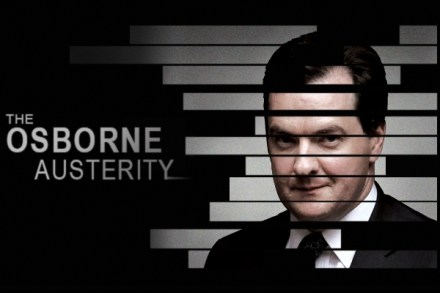
Fresh from his success nationalising the Post Office pension, which artificially knocked £23 billion off the national debt, the Chancellor has come up with another manoeuvre which effectively adds £35bn to the total of QE - and analysts think this just save him from having to tear up his fiscal rule in next month’s mini-Budget. CoffeeHousers may remember that two years ago, Osborne said that the debt-to-GDP ratio would be falling by 2015/16. But the outlook between his first budget and his last one has deteriorated rapidly. But help may be at hand. There is a lot of spare cash from debt interest hanging about in the Asset Purchase Facility: the interest that has accumulated on the gilts bought as part of Quantitative Easing.

Swedish study: free schools improve everyone’s results

What will free schools mean for the quality of education — in the new schools, and in the old ones they compete with? In Sweden, they don’t have to guess. They have almost 400 free schools, and data from millions of pupils. The latest study has just been published, and has strong results that I thought might interest CoffeeHousers (you can read the whole paper here). It makes the case for Michael Gove to put the bellows under the free school movement by following Sweden and let them be run like expanding companies (that is to say, make a profit). It finds that: 1. Growth of free schools has led to better high school grades & university participation, even accounting for other factors such as grade inflation. 2.

Tory MPs vs free press

How strong is the Conservative commitment to liberty? Today's Guardian front page holds the answer. A long line of Tory MPs have written to the newspaper, calling for the Prime Minister to seize a 'once-in-a-generation' opportunity to regulate the press. It is surprising as it contains several of the names I would had put down as friends of liberty. Jesse Norman, Andrea Leadsom and Nadhim Zahawi are the last people you’d expect to be writing to the Guardian demanding state action against the newspapers. The Guardian says that the signatories hope to make a  'cross-party consensus' is possible. I bet they do.

New York’s incredible resilience

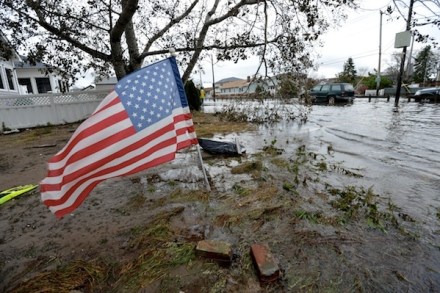
America is now mourning the loss of at least 80 lives taken by Hurricane Sandy, including those of two boys swept from their mother’s arms. The pictures of the destruction of Staten Island are staggering, and the city's marathon has been cancelled because Mayor Bloomberg accepted that it would, after all, have diverted resources from the recovery. The world has gawped at images of water flooding New York’s underground, yellow cabs floating down the street, housing estates flattened, skyscrapers darkened and evacuated and, now, people queuing for petrol. We can expect such images to dominate the news headlines here,  there is no shortage of genuine horror stories.

Mitt Romney is closer than ever to the presidency

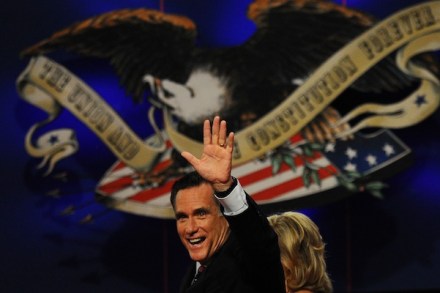
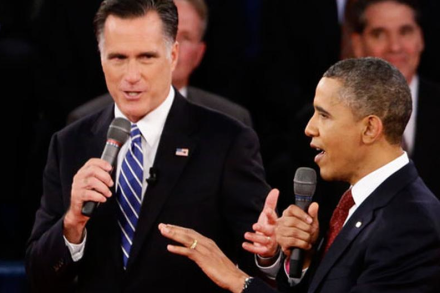
The presidential debates are over, and Mitt Romney is within touching distance of the White House. Barack Obama was the better candidate – just - in last night’s third and final presidential debate, on the attack and with his trademark eloquence restored. But he needed to deliver a knockout blow to Mitt Romney, and failed. Everyone knows Obama is great with words. What is not entirely clear to voters is that Mitt Romney isn’t evil. As it turned out, Romney came across as moderate, articulate and well-informed- and a plausible commander-in-chief. The next election may very well be his. A snap CNN Poll called it 48-40 for Obama, wider than the 37-33 of the second debate but a far cry from the 71-10 victory Romney was granted in the first debate.

The SNP’s dismal conference

The Scottish National Party conference in Perth ought to have been a festival of ideas, showcasing solutions that only be applied by independence. Instead it has reminded everyone that the SNP is bereft of ideas*  - and why the union is not in as much danger as Alex Salmond makes out. Salmond's speech laid into the "Lord Snooties" down south, and the "London government" which would "put this first class nation in the second class carriages." His message - and that of his colleagues - seemed to be that an independent Scotland would have so much money that it'd be first class for everyone. Nicola Sturgeon’s speech suggested that the problem of Scottish poverty is not enough welfare payments.

Ed Miliband’s winning strategy

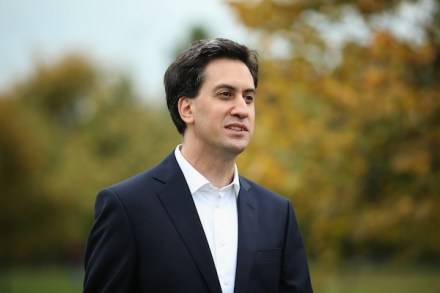
Ed Miliband has adopted a rather simple strategy: do nothing, and wait for your opponents to screw up. It’s lazy, but undoubtedly effective. The Tories are playing along perfectly. The last week has given plenty ammunition for his new theme — which he repeated during his union Sponsored Walk yesterday — 'they think they are born to rule, but they are not very good at it.' The Sunday Times reports MPs' anger that No 10, the most visible part of Whitehall, is turning out to be one of the most dysfunctional. David Cameron’s odd fuel tariff announcement last week did have normally loyal Cabinet members wonder what on earth is going on in No 10.

Why Andrew Mitchell had to go

Andrew Mitchell’s resignation does not leave David Cameron looking weak, as Labour is claiming tonight. The weekend press will have plenty fun with all this. But in the longer run, it's the best option - and for everyone involved. The Prime Minister had an unattractive choice: he could cut his Chief Whip adrift, and give the police unions the scalp they were seeking. Or he keep him around, sitting on the front bench at PMQs and becoming a permanent magnet for any ‘pleb’ jokes that Ed Miliband may want to crack. Cameron is fairly cool-headed about these things: he doesn’t get angry (like Major), or vengeful (like Brown) or pig-headed (like Blair). Instead, the PM tends to carry out a risk assessment - and on a daily basis.

Coffee House scoops top award

Coffee House was this morning named Best Online Comment Site at the Editorial Intelligence awards. We fought off stiff competition from three excellent rivals: the Guardian's Comment is Free site, the New Statesman's ever-improving blog and the Sunday Times's own unmissable site. Our Coffee House editor Isabel Hardman collected the gong, but there was no speech. Which is just as well because there is a very long list of people to thank. Chief amongst them is Pete Hoskin, who edited Coffee House until the summer of this year (he's now writing for Conservative Home). David Blackburn has also worked tirelessly, keeping the coffee flowing over the summer before Isabel joined.

Obama edges the 2nd presidential debate

Obama edged this one, but I'd say it was a pretty low quality debate. The president's performance would have done nothing to reassure voters who wanted to know more about what he’d do with four more years. He was eloquent but, at times, vacuous. Romney, for his part, started to ask questions of Obama directly. He ended up looking like a snapping lapdog - or a failing interviewer - when Obama declined to answer. A snap CNN poll calls it for Obama by 37-33, with 30pc thinking it was a draw. Gallup gave the first debate to Romney by a far bigger margin, 72-10 with 9pc undecided. So the early verdict is a decisive Romney win, followed by a marginal Obama win.

Keep Gordon Brown out of the battle for Scotland

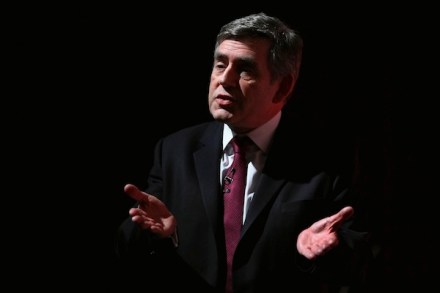
I used to be a barman in a pub in Rosyth, where David Cameron is visiting today, and it’s hardly a hotbed of separatism. Its dockyard is not just a reminder of the many defence jobs the Union brings, but of what happens when the work shrinks and the jobs go. Many of the locals in Cleos were unemployed ex-dockyard workers, and I spent a good chunk of my life hearing them tell me about life and politics. All of them derided the idea of an independent Scotland: they saw it as a quixotic bet that a family man could not afford to place. Mind you, they had a burning hatred for obfuscating politicians who spoke down to them. This was a solidly Labour seat, and had been since Gordon Brown settled down (and even married) a couple of miles away in North Queensferry.

Alistair Darling, braveheart.

When the unionists were looking for a hero to fight Alex Salmond, no one really thought of grey old Alistair Darling. He was the human fire extinguisher, sent into blazing departments to make them so boring that no smoke - or anything else - ever emerged. But now, he is taking a torch to Salmond's mutating, flaky case for independence. Salmond and David Cameron are expected to sign a deal on Scottish referendum tomorrow, and Darling is itching to get his "yes to the union" campaign started. On the BBC's Sunday Politics, he said he is  looking forward to cutting through Salmond's “bluster and the nonsense.” I always suspected Salmond was angling for a compromise, knowing his independence daydream was not shared by those who would have to live with the consequences.

What George Osborne can learn from the Paul Ryan/JFK tax cut plan

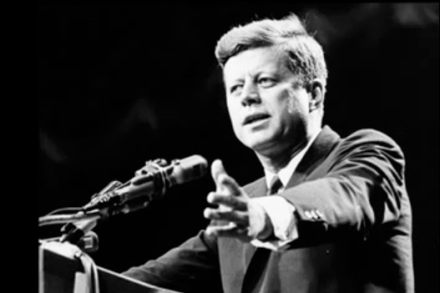
One of the highlights of the Paul Ryan vs Joe Biden debate last week was Ryan attempting to explain that you can lower tax rates and increase tax revenues. "Not mathematically possible," snapped back Biden. "Never been done before." It has, replied Ryan. "Jack Kennedy lowered tax rates and increased growth." An incredulous Biden said: "Oh, now you're Jack Kennedy?" The audience laughed, but the joke was on Biden. People like him (and he has plenty counterparts in Britain) think that the only way of squeezing more money out of an economy is to increase the tax rates and cut spending. JFK understood that it's more complicated: you need growth, and you need lower taxes to encourage growth.

Nick clegg debt

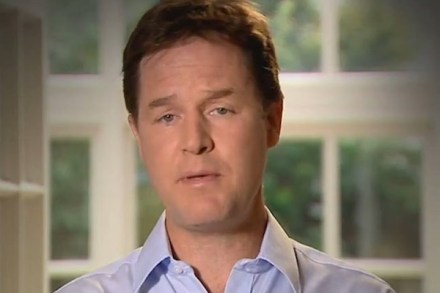
Britain’s national debt is rising faster than any of the basket-case Eurozone countries that George Osborne is so fond of disparaging but here’s the thing: only 16pc of voters realise that debt is going up. Why? Are they all thick? Or could it be that our political class is systematically misleading them? I’m inclined towards the latter. The odd debt vs deficit slip is forgivable. But ministers do seem to trying to exaggerate – even lie about – what they are doing to the national debt. And I’m afraid that Nick Clegg is my Exhibit A.

David Cameron is the leader battling inequality

The great paradox of British politics is that the left moan about inequality, but it’s the right who will remedy it. Ed Miliband is proposing the restoration of the old order, where the poor get the worst schools and the rich get the best (and the opportunities that flow from it). Labour plans to tax the rich more, and give money to the poor as if by way of compensation. The Tories want to revolutionise the system, so the poor have the same choice of schools that today only the rich can afford. Labour wants to make sure the unemployed are well looked-after. The Tories want to make sure the unemployed are rewarded — not penalised — if they seek work. It may sound perverse.

Conservative conference: David Cameron’s rally-style speech

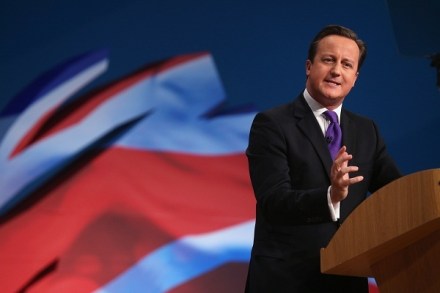
This was one of David Cameron's optimism speeches, a recession-era variant of his 'let sunshine win the day'. It was pretty short of announcements, which is understandable given the lack of any good news. Instead he focused on essential optimism of the Conservative message: that this is a party which places faith in people, not in governments. And he wanted to spell out what that means, confronting Labour's criticism of his party (and himself) head-on. His speech was full of praise for 'buccaneering' Britain, a nation whose ability to take on the world was reflected in the Olympic medals table. That there is no problem we can't solve, if we can persuade the Queen to parachute out of an aircraft to raise a laugh we can do anything.

Conservative Party conference: the mood

The notion of "the mood” of the Tory party conference is harder to judge nowadays, when only one in four people here are actually Tory activists. But those I do speak to are quite upbeat. They shouldn't be, really: the polls are pretty grim, the IMF has today underlined the depressing economic situation. But this has nonetheless feels like a conference fizzing with life. Crucially, this is because of the fringes - not the conference hall. The conversations in the pubs and bars are about events people saw  outside the secure zone. Sure, you might get the odd person talking about Osborne’s speech - which was well-received - or making Boris jokes.

Any questions for Iain Duncan Smith?

I’m interviewing Iain Duncan Smith today for a fringe event at the Conservative Party Conference, hosted by the Centre for Social Justice. I will be able to grill him for an hour. It’s been quite a week for him, with this rapprochement with George Osborne and continued questions over the viability of his Universal Credit. A year since the riots, it’d be interesting to know what – if anything – has changed as a result the task forces etc that he was telling The Spectator about a the time. But what questions would you like to put to the Secretary of State?

The poverty of economics

The IMF's growth downgrades will make tomorrow’s newspaper headlines but the more striking point is its decision to massively rewrite British economic history. As Citi's Michael Saunders notes (PDF), the IMF now believes that UK economy was massively overheating in the boom. What we had thought was normal growth was, in fact, crazy exuberance.  Britain's economy was more overheated by any in the G7, the IMF now tells us. Things were worse in 2007 than in the ‘Lawson boom’. Had we known about this overheating, of course, it ought to have been remedied by an interest rate rise. The asset bubble might never have been blown and the cheap debt party (in which the bankers were bartenders, not organisers) might never have got so out of hand.

The Spectator debate: George Osborne isn’t working: we need a Plan B

Today’s downgrades from the IMF have overshadowed the Tory conference and pose an awkward question: if George Osborne’s policies were working, wouldn’t they be working by now? Is it time for a Plan B? It’s the biggest issue in British politics right now and we at The Spectator are bringing together two former Chancellors to discuss it with Andrew Neil chairing it. I thought that Coffee Housers might be interested in some details. Alistair Darling is becoming the most powerful critic of Osborne’s policies. Ed Balls’ attacks can be written off as his usual snarling but Darling is more considered and his arguments carry more weight as a result.