Fraser Nelson

Fraser Nelson

Fraser Nelson is a Times columnist and a former editor of The Spectator.

Exclusive: the moment Ed Miliband said he’ll bring socialism back to Downing Street

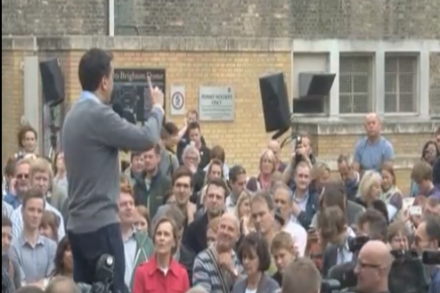
What’s Ed Miliband about? In a word: socialism. You can think this a good or a bad thing, but there ought to be no doubt about where he stands. At a Q&A in the Labour conference last night, he was challenged by an activist: When will you bring back socialism?' 'That’s what we are doing, sir' Miliband replied, quick as a flash. 'That's what we are doing. It says on our party card: democratic socialism'. It was being filmed, and your baristas at Coffee House have tracked down the clip as an exclusive. This little exchange will perhaps tell you more about Ed Miliband and his agenda than much of the over-wrought character-spinning stunts you can expect to see this week. It was no slip of the tongue.

Labour conference: ‘It’s Scotland vs Salmond’ says Johann Lamont

The Scottish speech is normally a neglected part of the Labour Party conference but has more potency now that there's less than a year to go to the referendum. Johann Lamont, leader of Scottish Labour, is an important actor in the battle to save the union. The Tory vote in Scotland has been reduced to staff members and blood relatives so much depends on whether Labour is able to pack a punch. And Ms Lamont certainly is. She rather cleverly mocked the way that Salmond is in full hyperbole mode, declaring every second day an 'historic' day — to create the idea that we're building up to some Braveheart-style Independence Day.

George Osborne is the king of ‘black holes’. So why does he attack Labour?

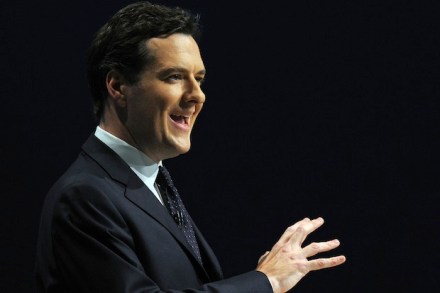
'Labour plans have a £27 billion black hole,' says the Sunday Times, quoting  analysis from George Osborne's Treasury.  If true, that’s the first piece of good economic news we’ll have heard from Labour. Osborne’s black holes have been way, way bigger – well over £100 billion so far. In his excellent new book about journalese, Robert Hutton offers this definition of black hole: 'A point in space so dense it creates a gravitational field so strong that not even light can escape. Or, in newspapers, a gap. Especially in finance, where it typically refers to any funding shortfall over £1 million.' Parties love casting a slide rule over each other's policies, declaring that they don't add up and use phrases like 'black hole'.

Where was the Nigel Farage fizz? UKIP speech analysis

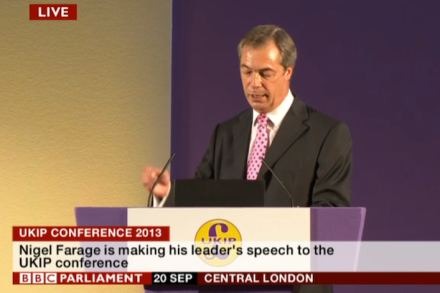
Three years ago, just two lonely journalists turned up to the UKIP annual conference. This year, they have accredited 150 of them. Now Britain’s third-largest party (it has led the LibDems in the polls since March) Nigel Farage positions himself as an insurgent whose message is so incendiary that the mainstream would not dare to broadcast it. Today was his chance. The UKIP conference is getting plenty coverage on BBC Parliament Channel, a huge chance. And one that was not really taken. We’re used to seeing Farage with a pint and fag in hand, looking mischievous and raising hell. Today he looked fretful and sweaty. He didn’t use autocues -  which is fine, neither does David Cameron when things get sticky.

Finally – Damian McBride provides the Labour confession we’ve been waiting for

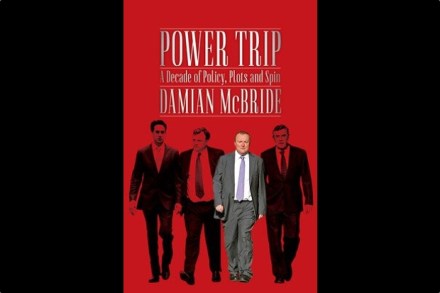
'Drug use; spousal abuse; secret alcoholism; extra-marital affairs. I estimate I did nothing with 95 per cent of the stories I was told. But, yes, some of them ended up on the front pages of Sunday newspapers.' And with this starts the serialisation of what will be perhaps the most explosive book about British politics for ten years. Damian McBride's memoirs look every bit as good as I had hoped. The Daily Mail serialisation today gives a taste of what should really be called 'confessions of a political hit man' - the methods and motives of Team Brown, perhaps most ruthless and effective bunch of character assassins that Westminster has ever seen.

The joy of 1995 Lagavulin

In a small cupboard at the end of my office sits a bottle of 1995 Lagavulin, distilled in a Pedro Ximénez sherry cask. Just looking at it from my desk gives me immense pleasure. I can open it and smell the cork if I need inspiration. And sometimes, after The Spectator is put to bed, I may take a sip or two. Maybe not even enough to reach the throat, just to moisten the tongue and refresh the palate. It is the most remarkable whisky I have ever owned. I’m sure that Taki, our High Life correspondent, knows his whisky. I like to think, then, that he appreciated the bottle he somehow liberated from my office to pour into a plastic glass at The Spectator’s recent tea party.

12 shot dead at US Navy base in Washington

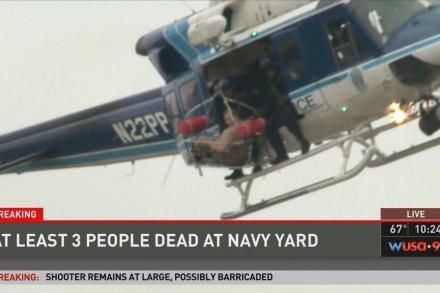
Twelve people have been killed in a shooting at US Naval Sea Systems Command’s HQ in Washington DC by a gunman later shot dead by police. The below charts events as they unfolded yesterday. It began at 8.20am EST in Building 197 of the Washington Navy Yard complex, which is home to 3,000 workers. Latest developments:- 8pm One of two suspects has been found and eliminated from inquiries, DC Police Tweets:- The white male in the tan outfit has been identified and is not a suspect or person of interest. — DC Police Department (@DCPoliceDept) September 16, 2013 7.10pm "It appears that we have at least 12 fatalities... no known motive at this stage" says Vincent Gray, Mayor of DC. 6.22pm Accounts from those who saw and heard the shooting are now coming out.

How to deflate Osborne’s housing bubble?

During the Brown bubble, most economic commentators spotted nothing – buying the theory that the West was adopting to a new era of permanently lower interest rates. Jeremy Warner and Jeff Randall stood out amongst a consensus which spied no danger. But a new generation of economic commentators are more sceptical. Allister Heath, an associate editor of The Spectator, has long had his eye on all this. And in today’s Times, Sam Fleming calls out Osborne’s housing bubble. His analysis is certain to annoy the Treasury, which wishes to present soaring property prices as part of a durable economic recovery. There's so much concern that the Bank of England's new Financial Policy Committee is meeting on Wednesday to discuss fears about a new housing bubble.

David Aaronovitch: Syria vote shows Ed Miliband is a ‘vulture’ not a ‘leader’

David Aaronovitch's column in The Times today (here) is fairly devastating for Ed Miliband. He’s angry about the Syria vote, but this has crystalised his misgivings about the character of the man who would be Prime Minister. Miliband could have accepted Cameron's motion and taken credit for getting proper process established, he said. But instead he chose to exploit and scavenge. It was said of Gordon Brown that he was a destructive force, and could not build - as Blair had built. Aaranovich gives an even worse verdict for Miliband: he's so hopeless that cannot even destruct. He just waits for people to fall into trouble, and then swoops. He wouldn’t outline his own alternative strategy — he’d just defeat Mr Cameron’s.

What use is a GDP recovery if living standards are stagnant?

Labour had better get used to headlines of economic upgrades. There’s about two dozen major forecasters out there, and each will take a turn to say that Britain’s doing better than they’d thought. To have such good news repeated will be a headache for Labour, as Iain Martin blogs today. But Labour are right to latch on to the caveat: the GDP number are not much use to someone facing a decade of wage stagnation. Words can be deceptive in economics: if you read ten news stories from ten forecasters talking about upgrades, it doesn’t necessarily mean things are getting better. The Treasury recently released five-year forecasts from the people it follows (pdf, here) and it’s not much better than the fairly glum forecasts from the Office for Budget Responsibility.

David Frost 1939-2013: a video tribute

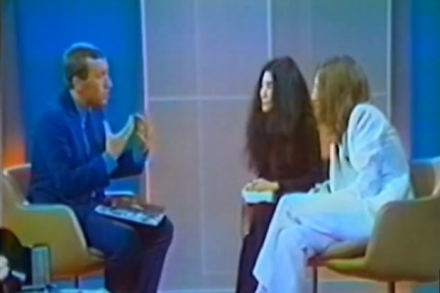
Sir David Frost died of a heart attack this morning, aged just 74 Here are a few videos from his truly extraordinary career - starting with his own take on satire: His famous Richard Nixon interviews - highlights: With Margaret Thatcher:- With Mohammed Ali: And John Lennon: The exiled Shah of Iran:- With Brian Clough, two months after being sacked from Leeds United:- Giving Prince Charles his first television interview:- 'Trial by television' with Emil Savundra: Paul McCartney.

Barack Obama’s decision to consult Congress pays David Cameron the highest compliment

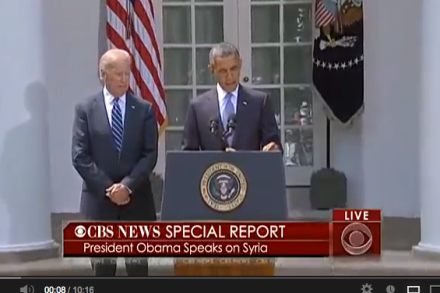
When seeking election, both David Cameron and Barack Obama promised to seek a vote before going to war. Until an hour ago, it seemed that the Prime Minister was as good as his word but the president was not. His decision to follow Cameron's example and consult Congress has stunned Washington, not least because popular support for a missile strike is even lower in America than in Britain (about 20pc). So what helped shift opinion in Washington? Obama did not attempt to disguise it. Those asking him to recall Congress, he said, were... "undoubtedly... impacted by what we saw happen in the United Kingdom this week when the Parliament of our closest ally failed to pass a resolution with a similar goal, even as the Prime Minister supported taking action.

Syria defeat: the anatomy of an omnishambles

Britain has not rejected America nor abdicated its role in the world. The Sun's reports of the death of the special relationship are exaggerated. Thursday's vote may have given John Kerry a chance to indulge his Francophillia (‘our oldest ally,’ purred the Swiss-educated State Secretary) but this was not us chickening out. It was a very British omnishambles. Today’s Daily Telegraph splash carries the depressing details of what went wrong. This is not the first time Cameron has conjured up an historic defeat from nowhere. Remember the Health Bill? The 2012 Backfiring Budget? The 71 U-turns? You could add the general election campaign, perhaps the biggest self-inflicted wound of all. The Syria vote fits a trend.

George Osborne’s tendentious logic on Syria

A sombre George Osborne has just popped up on the Today programme saying that parliament last night triggered 'soul searching' in the country. 'I think there will be a national soul-searching about our role in the world and whether Britain wants to play a big part in upholding the international system, be that big open and trading nation that I'd like us to be or whether we turn our back on that.

Syria defeat: What next for David Cameron?

Having lost last night’s vote, David Cameron needs to spend today fighting back. There are quite a few ways he can do so. He can easily brush off the more excitable charges: that he faces a leadership challenge, or that Tories will come for him at party conference. They won't. Cameron was elected to fix Britain, not Syria, and he’s doing quite well with the day job. Employment is at a record high, schools and welfare are being reformed, crime’s down. Cameron has not been defeated on a cornerstone of his foreign policy, but on a plan to join an American missile strike that may not take place. It was a grave error for Cameron to put his reputation on the line and portray the Syrian missile strike as a moment that would define Britain for good and for ill.

Cameron’s historic defeat

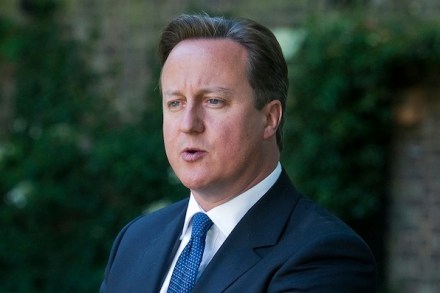
David Cameron has lost far more than the argument over Syria. He put his credibility on the line tonight, and lost. This is not just an extraordinary defeat but a spectacular political misjudgment, as I say in my Daily Telegraph column tomorrow. There will be a great many more questions asked tomorrow: from a sleepy summer recess, Cameron has conjured up one of the most spectacular parliamentary defeats in modern political history. The first such foreign policy defeat since 1782. What on earth was No10 thinking? That it could depend on Ed Miliband’s support? (He spoke abysmally today, by the way, offering a "sequenced roadmap", and his amendment was defeated. There are only losers in today’s vote.

Theresa May, action woman

The Sunday Times p1 today reveals (to people who don’t read the Daily Telegraph or CoffeeHouse) that Theresa May is planning a Modern Slavery Bill. The Home Secretary writes about its details in the newspaper and in so doing exhibits a very peculiar trait. She appears to belong to a tiny subcategory of politicians: those who want to be known by what they do rather than what they say. The Home Office is normally a politician’s graveyard. But she is enacting reform after reform and her quiet momentum has seen her overtake Boris to become the bookmakers’ favourite to succeed David Cameron as Tory leader (when the time comes). Abu Qatada has been put in the catapault many times before: only May managed to release the elastic.

It’s time to end slavery in Britain – again

Today is the United Nations day for he Remembrance of the Slave Trade and its Abolition – and the school packs have been readied to tell pupils about Britain’s part in this great evil. But the way we tend to remember (and, occasionally, apologise for) slavery has two main problems.  Yes, British traders played a full and shameful part in the slave trade. But what marks Britain out is out objection to it. As Thomas Sowell has pointed out, slavery was a worldwide institution for thousands of years – yet nowhere in the world was slavery controversial until the 1780s when some Brits started kicking up a fuss about it. White slaves were being sold in the Ottoman empire long after American slaves were freed.

Now is the perfect time for George Osborne to stop wasting money on HS2

It's not just Ed Miliband who’s facing pressure over HS2. George Osborne’s famous political antennae must be twitching furiously by now  — does he really want to be the last man in England backing this? Alistair Darling’s case (£) reeks of cold logic: he has become the latest public figure to withdraw support for HS2 because the costs now outweigh the benefits. The facts changed; he changed his mind. This is what rational people do. Unless you’re ideologically wedded to the idea of HS2, then there’s now not much grounds for supporting it – as a glance at the latest the Institute for Economic Affairs report attests.

David Cameron denies he’s planning another coalition. Good.

I'm just back from three weeks away to find the summer momentum very strongly behind the Tories. A ComRes poll suggests that the majority of Labour supporters think Ed Miliband is doing badly, and things are going so strongly for the Tories (as George Trefgarne writes) that the odds on a Tory majority are shrinking rapidly. So why would Cameron be planning for another coalition, as my colleague James Kirkup writes in his Telegraph splash today? His piece has struck a nerve in No. 10, which is strongly denying that the Prime Minister is thinking of anything other than a Conservative majority in 2015. There are, I'm told, no plans to change any rules to make coalition more doable after the next election. Of course, you may say, Cameron would say this anyway.