Fraser Nelson

Fraser Nelson

Fraser Nelson is a Times columnist and a former editor of The Spectator.

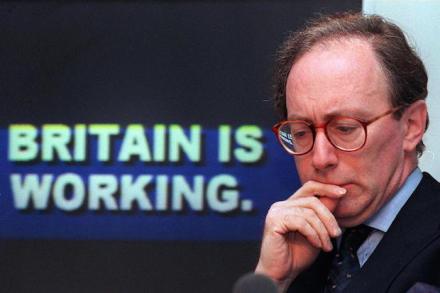
The sad truth is that Malcolm Rifkind’s political career ended in 1997

From our UK edition

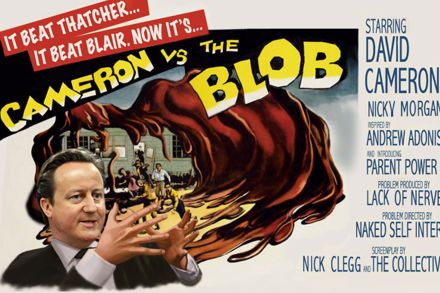
For years I saw Malcolm Rifkind as an unusually principled politician, one of the very best and brightest talents in the Conservative Party. After the rout of Scottish Tories in 1997, he decided to stay and fight for his old seat, Edinburgh Pentlands, rather than follow Michael Forsyth and Ian Lang along the high road to the House of Lords. I was working covering Scottish politics for The Times then, and during the 2001 campaign I had a chance to see how hard he worked at at a time where he had little national profile. He was giving his all, fighting for Scotland at a time when his party had pretty much given up on it. Had 900 people voted a different way in Edinburgh, he would have succeeded in fighting his way back to parliament in 2001.

Britain already has the world’s highest property tax. Why do we need a Mansion Tax?

From our UK edition

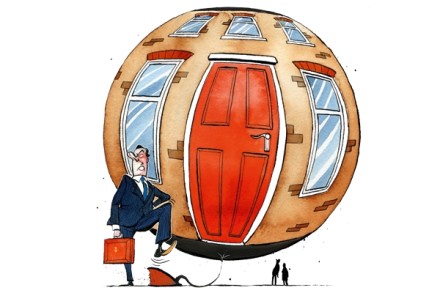
To listen to the debate about Labour's prospective Mansion Tax, you’d think that the UK didn’t have any wealth or property taxes. So your CoffeeHouse baristas looked up the figures, which are collected by the OECD. Our stamp duty, business rates and council tax give the UK the highest property tax in the world. This has been the case decades. And it's becoming more, em, progressive. Once stamp duty used to be charged only on the pricier properties. Osborne’s cunning decision to leave the £250,000 threshold untouched and the asset boom caused by low rates mean more people are being hauled into stamp duty (via fiscal drag). For the first time, someone buying the average UK house will be ensnared in the stamp duty trap.

The Spectator on Thatcher’s election as party leader, 15 Feb 1975

From our UK edition

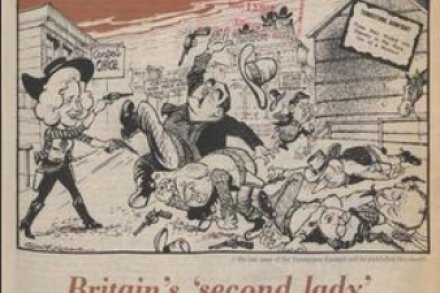
It seems hard to believe now, but only The Spectator supported Margaret Thatcher in the first leadership ballot.  She had been Keith Joseph's campaign director, and when he faltered she took his place. The Economist, true to its endearing habit of being wrong in major calls in modern British history, said she was "precisely the sort of candidate who ought to be able to stand, and lose harmlessly" The Spectator has different tradition: of being isolated, but entirely correct. We were for Maggie all the way, and when she triumphed we devoted a front page leading article to her triumph under the cover line "Britain's Second Lady". The leader (below) was written by the Patrick Cosgrave, our then political editor, who loathed Ted Heath.

Sales of The Spectator: 2014 H2

From our UK edition

The Spectator’s sales figures are out today, and our rise continues. The website's traffic is up a remarkable 50 per cent year-on-year to 1.8 million monthly unique users and over 4.5 million pageviews. But the rise in digital is not coming at the expense of print sales, which are also rising – our sales in the UK are up 4pc over the last year – which, in a market down 4pc, is not bad going. Our print subscriptions stand at a five-year high and are rising all the time. So reports about the death of print have been exaggerated. A print magazine has inimitable advantages – you can’t curl up in the bath with an iPad.

A century on, Scotland still has a drink problem

From our UK edition

The tragedy of the Rab C Nesbitt caricature is that there is a lot of truth in it - Scots do tend to have more problems with booze then those in the rest of the UK. Things are improving: today's figures show that the alcohol-related death rate for men in Scotland is 29.8 per 100,000 – down from 45.5 per 100,000 ten years ago. But in England, this rate stands at 17.8 per 100,000. Now, I'm all in favour of Scots who enjoy a drink – we employ one of them, the peerless Bruce Anderson, as our wine columnist.

Australia joining the Eurovision shows the awesome soft power of the song contest

From our UK edition

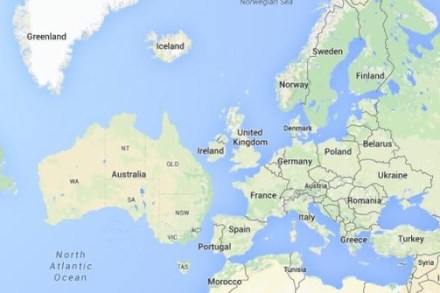
All you want from Europe is free trade, cheap flights and the Eurovision Song Contest – the rest is bureaucracy. One of the contest's many strengths is its generous, expansive definition of ‘European’. Its soft power is awesome, and effective. It reaches out to countries banging on the door of the West - nations the European Union itself is too sniffy, paranoid and insular to include. This has led to several historic occasions, underling Eurovision's status as the world's premiere forum for the collision of politics and culture, where hatchets are buried (or dug up) and new alliances struck. Israel has been contesting since 1973, and its giving 12 points to Germany in 1982 was a landmark in rapprochement between the two nations.

Mortgage rates stand at record lows – so why won’t George Osborne boast about it?

From our UK edition

Under George Osborne, borrowing costs have fallen to record lows – as data released by the Bank of England today shows. And this, rather than pretending that he has been helping savers, should be his line of attack – after all, when borrowing costs are down so is the interest savers can earn. The effect Osborne's cheap money has had on borrowing costs really is quite extraordinary. The average rate on a 2-year 75 per cent LTV fixed mortgage is at a record low of 2.01 per cent, down from 2.6 per cent last summer. That is a significant saving for those signing the contract on their house today. Just look at the graph above to see how rates have plummeted. Personal loans are also becoming far cheaper too.

The truth? Savers have been losers under this government, and Osborne knows it

From our UK edition

Even the evening BBC bulletins are leading with this morning’s announcement by George Osborne that he will extend his ‘pensioner bonds’ programme – a glorified way of giving pre-election bungs to the over-65s. This is Osborne’s answer to Gordon Brown’s bribe, the ‘winter fuel payment’ (the word ‘fuel’ being redundant). When elections grow near, governments bribe pensioners because the pensioners are most likely to vote. The Chancellor told Andrew Marr today (pdf) that ‘backing savers is part of our long-term plan’. The opposite is true.

The unravelling of the left continues as RMT president joins the Greens

From our UK edition

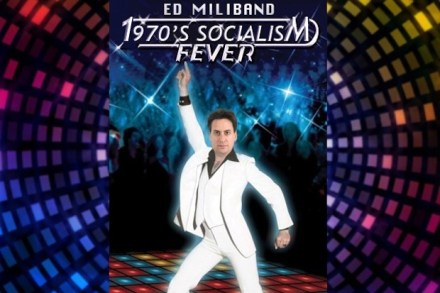
Socialism fever is spreading. This time last year, Ed Miliband looked to be on course for 10 Downing St for the simple reason that the right in Britain had been split (by Ukip) while the left stood united for the first time since 1983. Lefty LibDems had returned to Labour and it seemed that Miliband was the bad leader of a massive block of votes. Now, things have changed. The left is unravelling too: Labour is losing votes to the SNP in the north and the Greens in the south. That’s why the Greens' recruitment of a top trade union official is significant. Peter Pinkney, president of the RMT union, says he’s joining the Greens because they are more left-wing than Labour.

The implosion of Scottish Labour means the battle for Britain has only just begun

From our UK edition

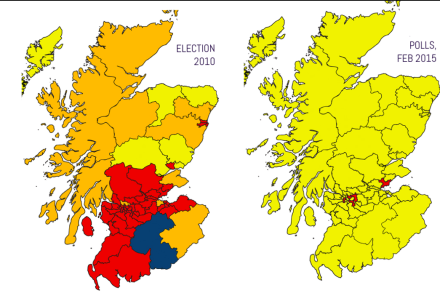
Gordon Brown is holding an adjournment debate on the union this evening, which comes after an Ashcroft poll which shows precisely what danger the union is in. If today’s polls were tomorrow’s election result, the SNP would have 55 out of 59 seats in Scotland. It's even set to lose Coatbridge, where it picked up 67pc of the vote at the last election. Yes, all this will help the Tories in the short term: Cameron needs the SNP to destroy Labour in the north and the SNP need Cameron in No10 – remember, their political model is based on grudge and gripe. Without a villain, Alex Salmond won't have a pantomime. But back to Brown. He designed devolution to kill off the Tories in Scotland – he succeeded, but has ended up with the SNP instead.

Watch: Ed Balls names ‘Bill somebody’ as Labour’s sole business supporter in car crash Newsnight interview

From our UK edition

Newsflash! Labour does have a business supporter – or so, at least, Ed Balls was able to disclose to Emily Maitlis on Newsnight. His name is Bill. But he couldn't quite remember his surname. It was comedy gold, certainly my moment of the campaign so far. Maitlis asked if Balls was worried that in 2001 there were 58 business leaders writing to the Times backing Labour, in 2005 there were 63 writing to the FT backing Labour.  Where were they this time? Ed Balls: I've been at a dinner tonight with a number of business-supporting Labour figures [sic] Maitlis: who? who? who? Ed Balls: Well, em, Bill. The former chief executive of EDS who I was just talking to... Maitlis: The former chief executive of EDS... Ed Balls: Of course.

Freezing the education budget won’t hurt pupils. Here’s why

From our UK edition

David Cameron has today been refreshingly honest about his plans for school funding in England: budgets will be flat, which (when you factor in inflation) will mean a drop of 7 per cent over the next parliament. Cue much mockery from Labour. But what will this mean for the future of education quality? Not very much, if the experience of the Labour years is anything to go by. Under Blair and Brown, school spending more than doubled while England hurtled down the world education performance tables. So if doubling the budget didn’t help, then why should freezing it hurt? The strange thing about education is that it's not so responsive to cash. A brilliant teacher is (alas) paid pretty much the same as a bad one.

David Cameron should support work through tax cuts, not more apprenticeships

From our UK edition

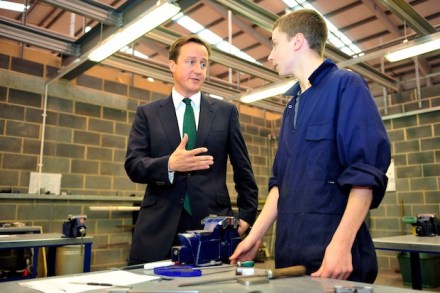
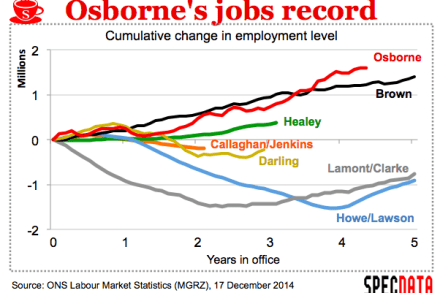
In a Telegraph interview, David Cameron today pledges to cut the welfare cap – to £23,000 from £26,000 – to fund another three million apprentice places. He says that this:- 'Tells you everything you need to know about our values' He is refreshingly honest, in that this welfare/apprenticeships policy is designed to articulate Conservative Party values rather than actually help the country. He wants to send a message: the Tories stand for work, not welfare. So here is policy intended to take away from those on welfare, and give to those in work. It's encouraging that the Tories seem to be edging away from George Osborne’s spurious claims about the deficit and towards their most solid, spectacular achievement: the jobs miracle (below).

The British economic recovery, in 12 graphs

From our UK edition

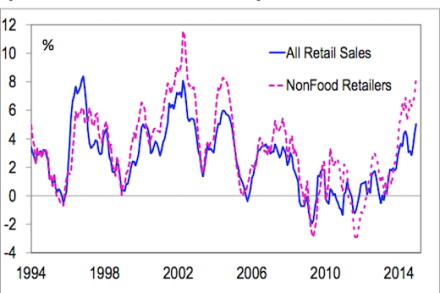
Everything seems to be falling into place ahead of the election for the Tories. Today’s data shows high street spending rising at the fastest rate for more than 13 years – and this is not a freak. In fact, it’s part of a broader picture which is more impressive (and promising) than George Osborne seems to realise. The Chancellor is a wee bit slow off the mark when it comes to recognizing the radical effect of his own tax cuts. He is still banging on about fiscal position when the consumer story is the one he should be telling. Here’s why: 1. Shops are busier than ever. Brits spent £331bn in the shops in 2014 (excluding fuel) – more than they've ever spent before. And sales were up 2.

What Oxfam doesn’t want you to know: global capitalism means less poverty than ever

From our UK edition

The hijacking of Oxfam by the politicised left is nothing short of a tragedy. It’s heartbreaking to see a charity that has built up so much goodwill from so many people being used by activists as a vehicle for global class war. As a result, Oxfam is switching its focus away from global poverty towards something very different: wealth inequality. It has today come up with some questionable figures suggesting that the richest 1 per cent will soon own over 50 per cent of the wealth.

Exposed! George Osborne’s secret plan to help people back to work.

From our UK edition

We’ve spent plenty time on Coffee House challenging George Osborne’s more dubious claims (‘deficit halved!’, etc) as has much of the media. But happily, there now seems to be a truce. Grant Shapps, Tory chairman, has confirmed that from now on he’ll use clear and honest language when talking about the deficit – a promise made good by the Tory political broadcast on Wednesday. In my Telegraph column today, I express a hope that the party has turned the corner and instead of telling porkies it will restrict itself to the large number of genuinely true boasts. The above chart shows Osborne’s greatest boast: he has overseen more job creation than any other Chancellor in recent history.

Cost of living crisis, Ed? The price of goods is now falling…

From our UK edition

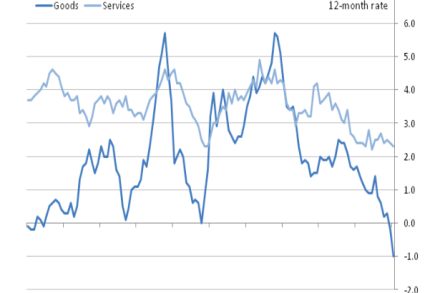
For goods, as opposed to services, Britain has just joined the Eurozone deflation club. This morning's figures show that goods (i.e., the stuff we buy) were 1pc cheaper in Christmas 2014 than Christmas 2013.  Factor in services and still, UK consumer price inflation was 0.5pc in December, the (joint) lowest since records began in 2004 (pdf). Pretty bad timing for Ed Miliband, who has decided to fight the election on a ‘cost of living crisis’. And his other bête noire, the energy companies? This is from the ONS press release explaining the low inflation... ‘The main contribution to the slowdown in the inflation rate came from prices for gas and electricity... In December 2013 a number of the major utility companies raised their prices.

Revealed: the truth about Ed Miliband’s ‘1930s’ porkie

From our UK edition

Today, on the Andrew Marr show, Ed Miliband repeated his porkie that David Cameron plans to reduce state spending to 1930s levels. When he first made this bizarre and obviously untrue claim, even your baristas here at Coffee House didn’t have 1930s spending data to hand. Now we do, so the extent of his deceit can be laid bare. The above graph (which you can explore by moving your cursor over the lines) shows total UK government spending, adjusted to today’s money. At £720 billion, the level of state spending in 2020 under George Osborne's plans will be almost ten times higher the levels of the 1930s.

The Tories need to ‘weaponise’ Ed Miliband’s incompetence

From our UK edition

Ed Miliband was on Andrew Marr's sofa this morning, drawing 2015 battle lines. It all looked very encouraging – if you are a conservative, that is. Miliband started discussing the Paris attacks, saying he wants to give the security services what is necessary — but as MI5's director-general said on Thursday evening, that means more than money. It means the powers to put a wire on the bad guys, intercept emails and do so quickly. Does Miliband agree that these capabilities are also needed? On the deficit, he tried to play the fiscal hawk... "Most Labour leaders go into elections saying we’re going to raise spending. “I’ve got great news”, they say, “we’re going to raise spending in every area.

Six key points from MI5’s Andrew Parker speech on the terror threat in Britain

From our UK edition

A lot of rot is written about what MI5 thinks, because the spooks don’t talk –even to deny wrong stories (like the supposed Remembrance Day Plot to kill the Queen, etc). But now and again, they do speak. Andrew Parker, the agency’s director-general, gave a wide-ranging speech last night which worth reading in full. It makes the front pages today. Here are half a dozen points which jumped out at me: 1. The terror threat is heating up. ‘Terrorist-related arrests are up 35 per cent compared with four years ago. Since 2010, more than 140 individuals have been convicted for terrorist-related offences’. 2. Three Islamist plots have been intercepted ‘in recent months’. Since 7/7, police say the spooks have intercepted a major Islamist plot a year.