Fraser Nelson

Fraser Nelson

Fraser Nelson is a Times columnist and a former editor of The Spectator.

Budget tricks: is Middle Britain really getting a tax cut?

From our UK edition

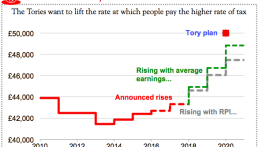
We learn this morning that George Osborne is planning a tax cut for the middle class, by raising the earnings threshold for the 40p tax. Of course, this was raised automatically in the Labour years (in line with RPI inflation) and even tricksy Gordon Brown never billed it as a tax cut. It’s only a tax cut if the threshold rises faster than average wages (i.e., the green lie above). If the threshold is frozen, or falls at lower rate the average earnings, then it’s a tax rise. This point is often lost on broadcasters, and HM Treasury is in no rush to explain things. So keep your eyes on this: it seems certain that Osborne will raise the threshold, but unless it’s rising faster then earnings then it ain’t a tax cut.

With no coalition partner, George Osborne negotiates himself out of £12bn welfare cut

From our UK edition

Let’s face it: George Osborne's pledge to save £12 billion from welfare over two years was never really credible. He never told us where the savings would come from, and it seemed as if he didn't really know. So tonight’s news, that the Chancellor has cut this to £8bn and given himself an extra year (or two) to make the full £12bn, is welcome. listen to ‘Nick Robinson: Osborne will soften his £12bn welfare cuts.

Five tricks that George Osborne may pull in his Budget tomorrow

From our UK edition

It’s Budget day tomorrow, and as James Forsyth put it recently, George Osborne will never have a better time to do bad things. The Labour party is a complete mess, the quality of scrutiny will be pretty ropey. So if he's going to pull a fast one, now's the time. Gordon Brown's budgets were famous for having a lollipop (a goodie, briefed out to the press) and several weasels (nasties, heavily disguised in the small print). Now, Osborne may well be honest about his good and bad news tomorrow. But his Treasury staff, schooled by years of Brown's shenanigans, may have persuaded him that the best way to deliver bad news is to conceal it.

The Greeks have voted ‘no’. Now, the real crisis will begin

From our UK edition

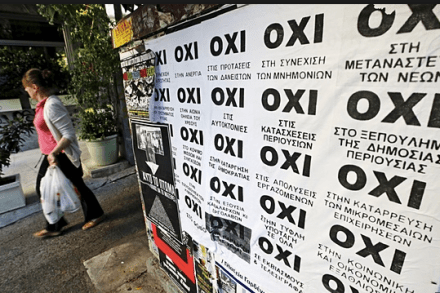
In a landslide vote, the Greeks have said ‘no’ to the latest EU bailout deal - and, perhaps, to the Euro itself. Alexis Tsipras will stay as Prime Minister, and treat the result as a mandate to negotiate a better deal. But that's not how the Germans see it: their economic affairs minister, Sigmar Gabriel, has just told the Tagesspiegel newspaper that the Greek 'no' has just 'torn down the last bridges on which Greece and Europe could have moved towards a compromise' and furthermore: 'With the rejection of the rules of the eurozone ... negotiations about a programme worth billions are barely conceivable.' So events may now well spiral out of anyone’s control. Here's what we're facing...

When will George Osborne commission a war memorial for soldiers?

From our UK edition

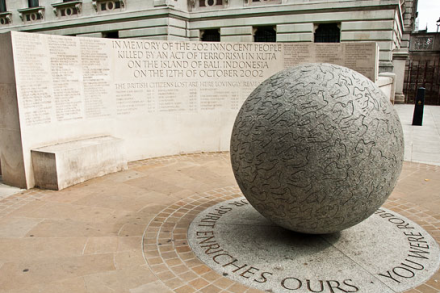
We learn today that George Osborne will say in his Budget that he’s using the fines he’s collected from bankers to build a memorial to terror victims. I find this juxtaposition rather odd: why link terrorism to banking? Why not just be honest: that any memorial will be funded from the the same tax pool as everything else? But moreover, I do wonder where this memorial will go.  We’re told that the Chancellor will consult with the relatives of the victims before agreeing a location. These memorials do serve a purpose: they become part of the world our ministers operate in; part of their daily lives. Most politicians will know every memorial in Westminster - who they commemorate, and why. You can see what has given him the idea.

In pictures: The Spectator’s readers’ tea party

From our UK edition

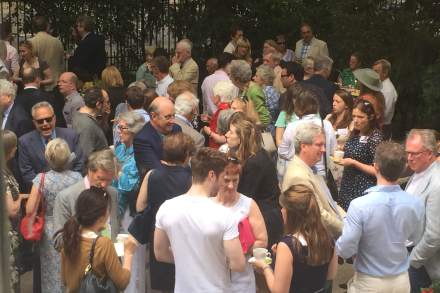
'They are just as you hope they’d be,' said my colleague Damian Thompson midway through our readers’ tea party today. I knew what he meant: we were actually getting to meet the people we work for, the people we imagine when we’re commissioning or writing stories. You build up a fairly clear idea what they’re like – and what they’re not like. There’s no typical age: today we welcomed readers from 25 to 85. They come from a wide range of backgrounds; architects, students, lawyers, priests, financiers. And from all over the country: I met subscribers who drove down from Oldham and even Glasgow to join us today. Taki was there, as was Andrew Neil, Mary (as in 'Dear Mary') Killen and those of us lucky enough to work in 22 Old Queen St.

Diary – 2 July 2015

From our UK edition

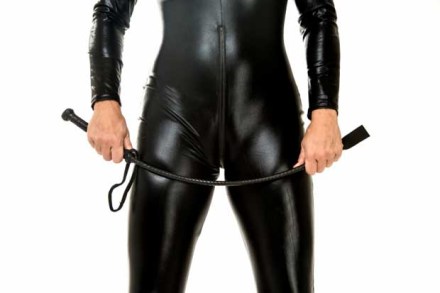
‘Hello. I’m lesbian threesome,’ the young lady tells Taki. ‘And I’m Mongolian rampage,’ says the young man beside her. We’re at Jeremy Clarke’s book launch in the Spectator’s back garden, to which he invited a dozen Low Life readers chosen for submitting the best stories of drunken debauchery. Some were summarised in Jeremy’s column last week, which made for a marvellous party. Throughout the evening, guests tried to match the face to the story. Which reader was kneecapped by a pimp in Amsterdam? Who was the academic who got into a drunken fight with a janitor over the affections of the chemistry teacher? My favourite exchange of the night: ‘Do you think that’s the chap who was whipped naked with riding crops?

State schools, not private schools, are the real sponsor of inequality in Britain

From our UK edition

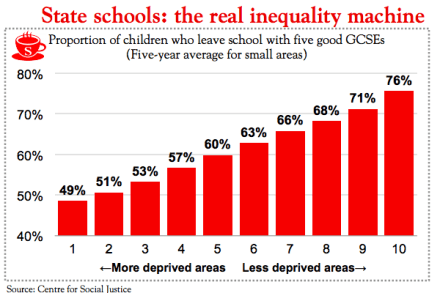
In today’s Observer, Will Hutton unwittingly highlights the poverty of the inequality debate in Britain. Gifted writers like him bang on about private schools the whole time rather than look at the far greater problem: inequality within the state system. He devotes a column moaning about the schools which, I suspect, will supply a good chunk of the students he’ll meet in his role as Principal of Hertford College, Oxford. “Social apartheid,” he says: a lazy analogy, suggesting a binary divide between state and private. In fact, the truth is far worse. Britain doesn’t have a two-tier system: we have a multi-tier system where educational attainment is directly linked to parental wealth. Are you semi-poor? Then your kids can expect semi-bad results.

Sorry, SNP, but Scotland’s social attitudes are just the same as England’s

From our UK edition

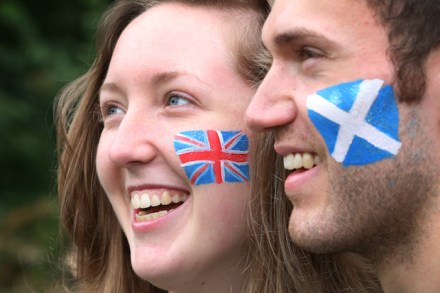
For most of my adult life, I’ve heard people say that Scots are – politically – different to the English. Not small differences, but fairly fundamental ones. This never rang true to me; I grew up in or around military bases which bring families from all over the UK together and never noticed any difference. If anything, I noticed a bigger difference moving from the Highlands to Glasgow than moving from Glasgow to London. But anecdotal evidence counts for nothing, and you can’t deny that Scots have a tendency to vote for left-wing parties. But was this simply because they had the more impressive candidates, or because – as the SNP allege – Scotland and England fundamentally disagree?

Official: income inequality has fallen under David Cameron.  

From our UK edition

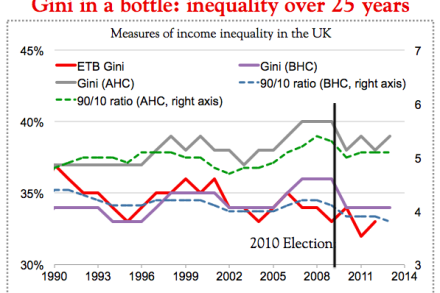
“Inequality has gotten much worse in the United Kingdom,” declared the Nobel laureate Joe Stiglitz when he was on Andrew Marr’s Start the Week last month (clip below). It’s one of those things that ‘everyone knows’ which is (to put it politely) not supported by the data. The latest inequality data came out today, taking us up to 2013/14. There are various measurements, but you get the overall picture (above). As David Cameron said in Prime Minister’s Questions yesterday, inequality is lower than the levels inherited under Labour. There has been a lot of talk about surging economic inequality recently, and lot of books about the problem. But not much evidence.

Diane Abbott’s car-crash Sunday Politics interview shows the depth of Labour’s denial

From our UK edition

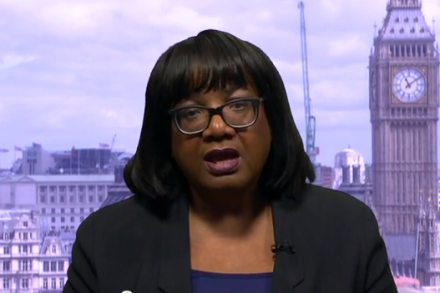
The Labour leadership contest is compulsive watching for conservatives with a taste in schadenfreude. Jeremy Corbyn’s inclusion reminds everyone how the party may have succeeded in expelling the electable Blairites, but not the unelectable lefties. Corbyn pulled out of being interviewed by Andrew Neil for BBC Sunday Politics today, citing a last-minute emergency. But we were treated to Diane Abbott instead. It was a case study in Labour's denial of reality. “We should be making sure that the people with the broadest shoulders bear the greatest burden,” she said. That’s precisely what George Osborne did when he cut the top rate of tax (below). The best-paid 1pc, 0.1pc and 0.

Earn as you burn: the green energy offer that saved the monks of Pluscarden

From our UK edition

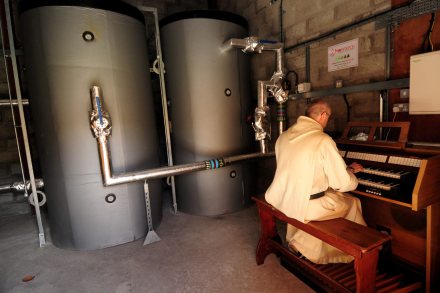
Pluscarden Abbey, just outside Elgin in northeast Scotland, is one of the most beautiful places in Britain. But to those who have visited in winter over the years, it has also felt like one of the coldest. After the war, when Benedictine monks arrived to restore what was a medieval ruin they slept with no roof, let alone heating. Then came the paraffin burners, which gave the monks a choice between freezing and asphyxiation. Central heating arrived in 1980 (it’s needed, if your day starts with prayers at 4.30am) but it was used sparingly. But when I went to visit last month I found a miracle had happened. There is a biomass boiler – pictured, above – which means they can not only afford to heat the place, but actually make a profit in so doing.

Goodbye deflation, hello low-flation

From our UK edition

Reports of deflation's death are exaggerated – sure, the CPI index has risen from -0.1pc in April to +0.1pc in May. But many important things are still getting cheaper: food, for example, costs 1.7pc less than this time last year. And the prices of larger-ticket items, the so-called 'consumer durables,' fell an average 2.6pc in May – the sharpest year-on-year drop since Labour's 2009 emergency VAT cut. But as the above graph shows, Citi reckons (pdf) that inflation will not bounce back to where it was before. Sluggish pay and a strong pound mean we're in for a relatively long period of stable prices.

Osborne’s welcome conversion to the advantages of a budget surplus

From our UK edition

There should always be celebration when a sinner repents, and so it’s great to see George Osborne’s belated conversion to the cause of budget surpluses. As the above graph shows, he has not seemed in a rush to hit surplus himself – giving him many more years of increasing the national debt. James Forsyth summed it up brilliantly: Osborne is the St Augustine Chancellor: give me fiscal responsibility, but not yet! And today, he will add something: when I get there, let's make it illegal for anyone not to balance the budget again! In economics, as in much else, converts are always the most zealous. Osborne's new plan—to have surpluses mandated by law—makes a lot of sense.

George Osborne must implement Charlotte Church tax reforms – and urgently

From our UK edition

As the Chancellor prepares his post-election Budget, he faces an obvious opportunity. Throughout the last general election campaign, we heard from a great many people advocating higher taxes. And it’s not all vindictive: many, like the writer Polly Toynbee, would actually be liable for a higher tax on the 1pc. A significant number of wealthy people in Britain do actually want to give the government more of their money and at present, there is no easy way for them to do so. Strikingly the singer, Charlotte Church, recently declared that: "I have paid all my tax since I was 12 years old, and I would certainly be happy if the rate was 60 per cent or 70 per cent. I wouldn’t move away, I wouldn’t have an offshore account.

Wanted: freelance researchers for The Spectator

From our UK edition

Summer’s coming, and we’re looking for some specialist research help at The Spectator. We like to answer the questions other publications don’t, which means digging beyond the available social data and widening the parameters for debate. And we'd like some help, ideally from a specialist. You could be a PhD student looking for a few hours’ extra work, a specialist who knows exactly how to mine the Millennium Cohort Study database or a genius school dropout who can do a Lisbeth Salander (pictured, above) for social data. The pay is hourly, and will be commensurate with your experience (ie, how quickly you can get the stuff done). You can (of course) work from home.

Revealed: Lithuania, not Sweden, was Britain’s real Eurovision choice

From our UK edition

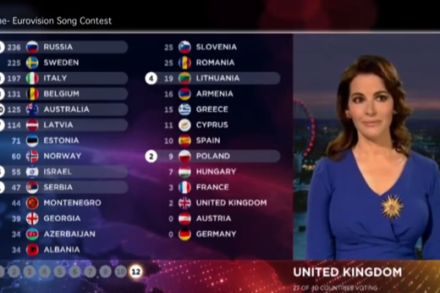
So when Nigella Lawson popped up on television to give Britain’s results, what had Britain decided? The UK vote is a 50/50 split between jury and televoting - and the Eurovision authorities have just given the breakdown. They show that British televoters went for the cute, joyful Lithuanian duet. https://www.youtube.com/watch?v=r13a2VUTajU Our second choice was Poland, whose rather lovely Monika Kuszyńska did pretty badly overall, finishing in 23rd place with just ten points. She would have been given ten points from the UK alone had there been no jury. (The UK entry finished 24th overall with five points; voting data shows the Polish public thought it was as bad as everyone else did). https://www.youtube.com/watch?

How to break Britain’s Eurovision curse

From our UK edition

"Over the past five years, Britain has produced some of the biggest chart-topping acts on the planet from Adele to One Direction, Ed Sheeran, Sam Smith. But in nearly two decades, it has failed to produce a single winner of Eurovision." - BBC 1 News, 24 May 2015. That's one way of putting it. Another way is to say the BBC has failed to produce a Eurovision winner: its bureaucrats are the ones choosing the British entry, and they get it wrong every time. Graham Norton and Paddy O'Connell are superb, funny and knowledgable  hosts; I have nothing but praise for how the BBC actually covers Eurovision.

‘We need 10,000 mayors’

From our UK edition

‘Let me give you a Californian hug,’ says Steve Hilton, and I try my best to give him a Scottish one. We have met a few times before. He served as David Cameron’s chief strategist and his job was to keep out of the headlines and newspapers. In government, he took on a near-mythical status as a restless, shoeless radical who roamed around Downing Street terrifying civil servants. Then, after two years in power, he jetted off to California, where he has kept quiet. Until now. We meet to discuss his new book, More Human, which is his manifesto for radical conservatism. It is, he says, an outline of where David Cameron’s government will go next. ‘That’s the direction we’ve already been going down.

Andy Burnham isn’t just the unions’ candidate, he’s the Tory candidate too

From our UK edition

“I’m the change candidate,” said Andy Burnham, settling down to the consolidation phase of his leadership bid. Chuka Umunna is out, so he is now the bookies’ favourite. He faces a conundrum: the brains of Labour want to tack to the centre, the money (ie, the unions) want to keep it to the left. So how can he keep both happy? Andrew Marr this morning asked Burnham if he was happy to be the union candidate. “I’m the unifying candidate,” he said. He admitted that he has spoken to Unite’s Len McClusky – the union Godfather - but only as part of his attempt to “build support from all parts of the Labour Party.” And Charlie Falconer, Blair’s ex-flatmate, is backing him – so surely that’s enough?