Fraser Nelson

Fraser Nelson

Fraser Nelson is a Times columnist and a former editor of The Spectator.

Why are private schools so touchy about state schools’ success?

From our UK edition

The success of school reform in Britain seem to be worrying the private schools’ spokesmen. They’ve taken the unusual step of releasing a statement in response to my Daily Telegraph column yesterday, where I show that the top state schools outperform top private schools in A-Level league tables. I’m not sure why they’re so upset; I didn’t have a word of criticism for private schools. I think their success is admirable. I just argued that there is, now, just as much excellence in the state sector - and I produced data to back this up. Barnaby Lenon, chairman, Independent Schools Council, didn’t seem to that one bit.

The rise and rise of England’s state schools

From our UK edition

Moaning about private education is an ancient British tradition; how can there be fairness in society when the rich can afford such great schools? Let’s count how many privately-educated judges there are, or Olympic athletes, or MPs! Open a cupboard in Cameron’s No10 and an Old Etonian falls out! What, is then asked, should be done to the private schools hoarding all of this excellence? It’s well-known that Britain’s private schools are world-class. But what’s less well-known is that our best state schools are, actually, better. I look at this in my Daily Telegraph column today. I started off looking into Grey Coat Hospital School, in which the Prime Minister’s daughter, Nancy, will enrol next month.

The anti-immigration Sweden Democrats are now the no1 force in Sweden, polls show

From our UK edition

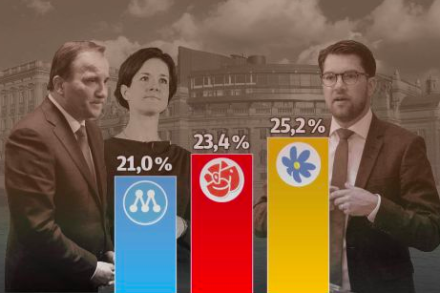
On the Swedish election before last, there was shock that the populist Sweden Democrats ended up with a foothold in parliament. Even more shock when they did well enough in last year's election to topple the conservative-led government. Sweden's parliament works on coalitions, but no party wants to do any kind of deal with Sweden Democrats. They're regarded as toxic, beyond-the-pale. But now, according to a shock YouGov poll today, they're the no1 party in Sweden. At first it was argued: let these lunatics come to parliament! They're nuts, let everyone see how mad they are! In fact, they've been coming pretty well-prepared to debates in the Swedish Parliament - even the ones that are not televised.

What Christian Guy’s appointment says about David Cameron’s No.10

From our UK edition

What will David Cameron do with his final few years in power? On election night, he said he wanted his party 'to reclaim a mantle that we should never have lost: the mantle of one nation'. This raised the prospect of Cameron trying to succeed where so many of his predecessors failed: in making it clear that conservatism actually delivers the fairness, the poverty reduction and the social cohesion that Labour can only talk about. Cameron has spoken about this agenda over the years, but there’s seldom much of a follow-up – raising questions about how serious he actually is. But today, we seen a signal of harder intent: he has hired Christian Guy, the director of the Centre for Social Justice, as an adviser.

Inflation is rising at a snail’s pace; interest rates will too

From our UK edition

With inflation nailed to the floor, real wage increases are now increasing at the fastest rate in years. Today's CPI inflation data today shows it moving from zero in June to 0.1pc in July - but this masks a 2.7pc reduction in the cost of food. For those on the breadline, it's a welcome trend: salaries are up, and the cost of groceries is going down. The strong pound means the price of consumer durables is falling faster than anywhere on the continent. Inflation will pick up, but it will stay low for quite a while according to the Office for Budget responsibility:- And the effect on interest rates? We've heard plenty about their rising, but the City expects they won't go back to anywhere near pre-crash levels. Good news for borrowers, bad news for savers.

Sales of The Spectator: 2015 H1

From our UK edition

It’s a red-letter day for us here at 22 Old Queen Street. The latest circulation figures for British magazines have just been published and show that sales of The Spectator have broken through their all-time high. More people are buying the magazine now than at any time since we started publishing 187 years ago. Our last high was in the first half of 2006; since then, print publications have struggled to cope with the challenges of the digital age. Newspaper sales have fallen by 40 per cent and are falling still; ours bottomed out mid-2009. Different publishers have responded in different ways; some have full paywall, others no paywall at all.

Journalists didn’t kill Kids Company. Camila Batmanghelidjh did

From our UK edition

To listen to Camila Batmanghelidjh on the Radio 4 this morning, you’d think that her upstanding charity had been mysteriously assassinated by a vicious media – and by nothing else. This sounded like a very different Camila Batmanghelidjh to the one who telephoned me after The Spectator first blew the whistle on the irregularities at Kids Company – she was apoplectic. Didn’t I know that journalists normally love Kids Company? Kids Company has now collapsed – and not because journalists had (finally) been allowed to start asking questions. It has collapsed because Camila Batmanghelidjh ran up financial costs that she was not able to cover. She ran the charity, the responsibility was hers – it’s odd to hear her suggest otherwise.

The myth of Britain’s two-tier education system

From our UK edition

On Broadcasting House, one of my favourite Radio 4 programmes, was this morning discussing a report (pdf) from the Social Mobility and Child Poverty commission. It finds, amongst other things, that 'education at a private or a Grammar school is also associated with an increased chance of labour market success' amongst dim kids. Who’d have thunk it? During the subsequent R4 discussion, the Labour peer Joan Bakewell referred to a ‘two-tier education system’. It's a familiar phrase and a familiar idea: that British kids are somehow cast in a binary divide: the privately-educated and the state-educated. You hear this analysis all the time.

George Osborne’s ‘Living Wage’ will soon set wages for 11pc of UK workers

From our UK edition

George Osborne’s Budget plan to raise the minimum wage to £9.35 for over-25s was a surprise – which means it has not yet been much scrutinised. Ed Miliband’s £8 by 2020 pledge was pretty much a non-pledge as inflation would probably have taken the £6.50 minimum wage to £8 by the end of the decade anyway. So it would not be controlling a greater share of the workforce; Miliband's apparent generosity was a trick of inflation. But Osborne goes far further; and this has implications. The chief question, to me, is: what share of the workforce will have their wages set by the government under the proposed National Living Wage (NLW)?

Why is David Lammy getting beaten up for telling the truth about tax credits?

From our UK edition

Poor old David Lammy. At 11pm last night, the Labour mayoral hopeful tweeted that his mum had depended on tax credits so he supports them now. Twitter went wild, saying that they were only invented in 2003 so he must have been fibbing! Even Derek Draper got stuck in. And, oddly, the story has grown since then – in spite of being utter nonsense. Lammy wasn’t quick enough to rebut, and the non-story ends up being followed up in The Guardian. https://twitter.com/DavidLammy/status/623253767677444098 After a child poverty campaign in 1970, tax credits were introduced (as a temporary measure) by Ted Heath in 1971.

Alistair Darling: why I changed my mind on tax credits

From our UK edition

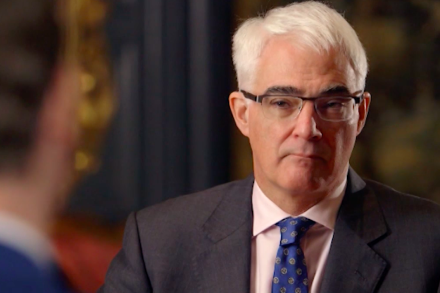
Last autumn, I presented a Ch4 documentary on inequality. I could have made three hours’ worth of that show - or written a book - but it was distilled down to 27 minutes so a lot was chopped. Including my interview with Alistair Darling about the malfunction of tax credits. (Our conversation to QE is above). I later quoted from the unused clip in the Daily Telegraph a while back: he said that tax credits had come to subsidise low wages “in a way that was never intended.” This must have caught the eye of a No10 speechwriter because this quote has ended up quoted by the Prime Minister and the Chancellor (who mentions it in a Guardian article today).

Labour leadership bingo: your guide to the leadership debate

From our UK edition

Yes, it’s a sunny Sunday – but for Tories, it will be a lot sunnier after watching the Labour Party leadership debate. With some helpful suggestions from Twitter, here's my guide to what they'll say: Yvette Cooper: 'Working mum!' or 'as a mother' What she’ll mean: 'I am one, unlike Liz Kendall! So I’ll make out like I oppose cuts in family tax credits more because I’m a mum – and how many other mums are standing on this panel? Eh? Eh, Liz? Of course, being rich doesn’t stop me understanding the poor; being healthy doesn’t stop me understanding the sick. But being a mum does mean I have unique insights into mothers, not available to my rivals. If I win, my slogan will be: Vote Labour – and come to mummy!

The Queen won’t have been the only British girl messing about with Nazi salutes in 1933

From our UK edition

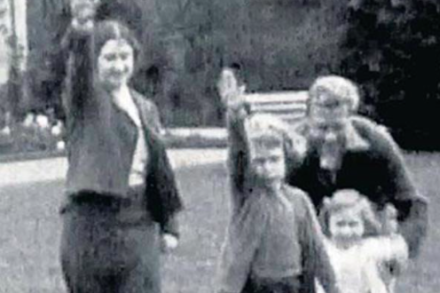
Reassuringly, not even anti-monarchists are making mischief out of today’s pictures of an eight-year-old Queen being shown by her uncle how to make a Nazi salute. It’s a striking picture, but as everyone knows, it simply did not mean then what it means now. It was taken in 1933, when the full horrors of Nazism had not begun. It's possible that the eight-year-old Queen was not following the rapidly-changing events in Germany very carefully. Hitlerism - with its uniforms, goose-stepping and other weird gestures – was seen by most Brits as a strange phase that Germany would soon grow out of. Hitler’s antics were looked upon with fascination and horror, but with mockery, too.

Britain would be the loser if Jeremy Corbyn is elected Labour’s leader

From our UK edition

It's hit Taylor Swift, Justin Bieber and the New York Mets and now the Labour Party has become the victim of vote hijacking: people voting for an unlikely candidate for a joke, just because they can. The impeccably informed Stephen Bush reveals that: ‘"More than two thirds" of new recruits since the election are supporters of Jeremy Corbyn, a finding mirrored by the leadership campaigns' experience of phoning new members’ This won't come as a surprise to the Tory supporters who have been busy joining Labour to vote for the unelectable Corbyn. In an attempt to copy the SNP’s membership surge, Labour is offering the chance to become a ‘registered supporter’ for £3 – which includes the right to vote in its leadership election.

Sorry, but Greece isn’t victim of a ‘coup’. It’s a victim of the Euro

From our UK edition

After 17 hours of negotiations Greece and its creditors have just agreed a third bailout deal - and already there's a new hashtag campaign on Twitter protesting that #ThisIsACoup. Paul Krugman agrees. Why so? The terms of a €86bn, three-year bailout involve sharper sending cuts than those rejected by the Greeks in their recent referendum and flogging some €50bn of Greek assets which would be held in trust by some suitable institution in Athens (not outside it, as had been mooted earlier). If Greece didn't agree, it was going to be offered "swift negotiations on time-out from the Euro" (below). This seems to have focused minds. And this time: no wriggle room, no referenda.

George Osborne will soon decide the salary of one in six British women

From our UK edition

The Budget contained little economic analysis of George Osborne's sensational plan for a £9 minimum wage for the over-25s. Of course, it's not driven by economics: the main objective is to destabilise the Labour Party. So far, the policy is being defended by Tories using rather flimsy logic: business moaned when Tony Blair introduced the minimum wage, but did that create mass unemployment? Eh, no. So we can ignore those who moan now; they'll come around. But, alas, things are a little more complicated than that. The OBR has already broken the news the Living Wage helps richest households almost twice as much as poorer ones, because so many minimum wage workers are the spouses of high earners. Yes, all of this discomfits Labour.

Amanda Platell is wrong: only Ch4 would have had the guts to screen Benefits Street

From our UK edition

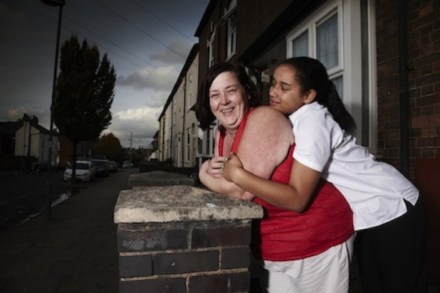
My Saturday morning would not be complete without Amanda Platell’s delicious put-downs in the Daily Mail, usually aimed at people who richly deserve them. But today she identifies a target that doesn’t. Her piece, “White Dee, and how the Left lost the war on welfare,” argues that Ch4 made Benefits Street to "provide a powerful argument for the deserving poor” but ended up awakening a nation to the abuses of welfare. She’s wrong: Ch4 knew what it was doing. And only Ch4 would have had the guts to do it. Benefits St was indeed a landmark in the debate; she’s right about that. But wrong to suggest that it somehow backfired on Ch4.

At last, defence has been saved from further cuts

From our UK edition

So much has happened in this Budget that it’s easy to overlook one of the most important announcements: that George Osborne will, after all, fit a lock on defence spending to make sure that it stays at 2 per cent of GDP until 2020. The Spectator has been calling for this for some time; I called for it again last week – and, to be honest, more in hope than expectation. But the Chancellor has delivered; his pledge is watertight. The MoD had thought that defence spending (as defined by Nato) was set to slip to 1.85 per cent of GDP within five years – and filling that gap would cost £3.23 billion. Osborne hasn’t given us the exact figures, but you can work them out (see graphic, above) - he has committed a cumulative £6.

Six policies that George Osborne has just stolen from Ed Miliband  

From our UK edition

[audioplayer src="http://rss.acast.com/spectatorpolitics/summerbudget2015/media.mp3" title="Fraser Nelson, James Forsyth and Isabel Hardman discuss the Summer Budget"] Listen [/audioplayer]The morning after the election, Ed Miliband said that his party had lost the election but won the argument. He was mocked for this observation but surveying Osborne's summer budget, he may have a point. It was cleverly spun: the tax-cut for Middle England trumpeted this morning has turned out to be a run-of-the-mill 1.2pc revision to the 40p threshold, not even in line with earnings. Clever old George.

Why Osborne is copying – and bettering – Miliband’s minimum wage pledge

From our UK edition

During the last Labour campaign, there will be been a few moments where George Osborne will have looked at Ed Miliband proposals and thought: damn! Wish we’d come up with of that. Take a pledge to raise the minimum wage to £8 by 2020. That was Miliband's pledge; Osborne says £9. Doesn’t cost the government a penny. In fact, it's better off because of lower welfare payments. So the politician gets to come across all generous, while saving about £200 million in lower welfare! Result! A higher minimum wage could be a massive (and revenue-raising) spoonful of sugar to make the medicine of tax credit reform go down. So it’s now £9/hr by 2020 (and £7.20/hr by April next year).