Fraser Nelson

Fraser Nelson

Fraser Nelson is a Times columnist and a former editor of The Spectator.

Labour comes out against Emirati bid for Telegraph

From our UK edition

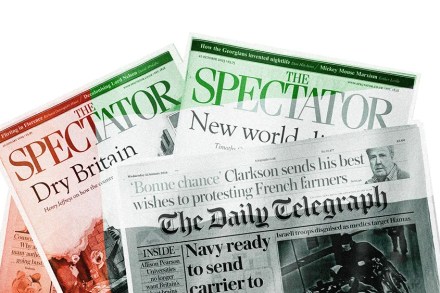
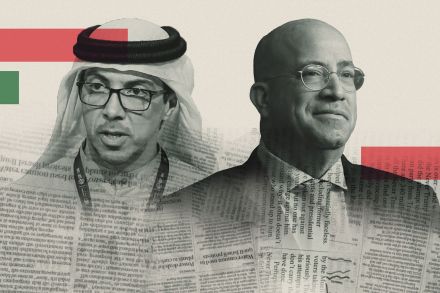
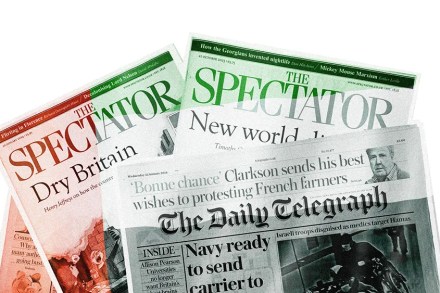
This is a big week for the future of the British press with the Department for Culture, Media and Sport and the House of Lords both due to take decisions on the RedBird bid for the Daily Telegraph and The Spectator. Lucy Frazer, the Culture Secretary, will respond to reports she has been given looking at competitive issues. There are none. The real concern is about whether this deal is funded by the government of the United Arab Emirates. It is majority-financed by International Media Investments (IMI) which RedBird says is a private entity that happens to be run by Sheikh Mansour, an Emirati royal and its Deputy Prime Minister, but acting in a private capacity.

Lords amendment could thwart Emirati bid for Telegraph and Spectator 

From our UK edition

When the Emirati government moved to bid for the Daily Telegraph and The Spectator, via an investment vehicle called RedBird IMI, ministers were blindsided. Since the 2008 crash, autocracies have been testing how much infrastructure they are allowed to buy in newly debt-addled democracies (as this OECD report details) but Britain had not really joined other countries in setting limits. The idea of a national newspaper (and magazine) being controlled by any government, let alone an autocratic foreign government allied to Putin, is plainly absurd. But no laws exist to prevent it happening, because no one thought a foreign government would ever attempt it. The House of Lords could be about to change that.

Lee Anderson suspended: what now?

From our UK edition

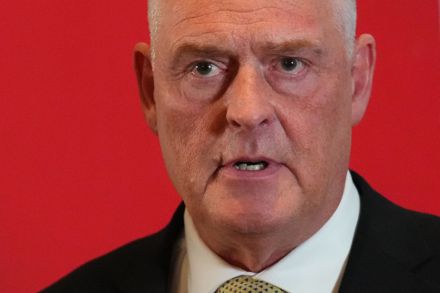
Lee Anderson has been suspended from the Conservative party this afternoon after saying on GB News that Islamists controlled Sadiq Khan. Will Rishi Sunak miss having the Ashfield MP in his party? Will Anderson join reform? Max Jeffery speaks to Fraser Nelson and Katy Balls.

Sunak was right to suspend Lee Anderson

From our UK edition

When Lee Anderson was made deputy chairman of the Conservative party, it was on the understanding that he’d explode now and again. Say something outrageous, cause a stir. The unelected Rishi Sunak had a wide conservative coalition to keep together and was mindful that, as a besuited Goldman Sachs alumnus, he may struggle to keep the right of the party (and the electorate) on board. Occasional outbursts from Suella Braverman and Lee Anderson were helpful: they were chaff and flares which would save him from incoming missiles from the right. But Sunak is up against the strong centrifugal forces pulling conservatives further to the right. A great many politicians look at Trump's success and think the future lies in being angry and setting up camp outside the Overton window.

Commons chaos revealed the threat to MPs’ safety

From our UK edition

13 min listen

As MPs return to their constituencies, the drama from Wednesday's parliamentary debate is still fresh in Westminster. James Heale speaks to Fraser Nelson and Isabel Hardman about whether MPs' safety concerns are influencing democracy, and why the outcome of the debate could mean lessons are learned for the future.

Why Britain stopped working

From our UK edition

50 min listen

Welcome to a slightly new format for the Edition podcast! Each week we will be talking about the magazine – as per usual – but trying to give a little more insight into the process behind putting The Spectator bed each week. On the podcast this week: the cost of Britain’s mass worklessness. According to The Spectator’s calculations, had workforce participation stayed at the same rate as in 2019, the economy would be 1.7 per cent larger now and an end-of-year recession could have been avoided. As things stand, joblessness is coexisting with job vacancies in a way that should be economically impossible, writes Kate Andrews in the cover story.

Are citizens’ assemblies the future?

From our UK edition

13 min listen

In the Times today is the latest instalment of Tom Baldwin's authorised biography of Keir Starmer. It includes reports that Labour chief of staff Sue Gray has been drawing up plans for so-called citizens' assemblies. Are citizens' juries the future of democracy? Or is this simply a way for Starmer to avoid making policy decisions?  Elsewhere there is some interesting polling out from the think tank Labour Together, warning that Labour should not get complacent despite their huge poll lead and recent by-election success. This is due to the large 'don't know' vote share and the possibility that the Reform vote could be squeezed at a general election. What would happen if the Reform vote collapses? James Heale speaks to Katy Balls and Fraser Nelson.

A new comments system for The Spectator

From our UK edition

From its inception, The Spectator website has helped to facilitate conversation with – and between – our readers. Not all of them, of course: fewer than 1 per cent of subscribers currently leave comments, although 20 per cent read them. This is why it is a shame that, when we launched our new app, we were not able to import this important feature. Readers love our new app, but they miss the comments. So, we have created a new comments system that you can use on both our website and app – and there’s one big change you need to know about. Comments will now automatically be left under the name associated with your subscription unless you choose a display name – to register one, you need to go to your account by clicking here.

Could the Lords stop the Emirati bid for the Telegraph and The Spectator?

From our UK edition

I’ve just given evidence to a House of Lords Select Committee which is considering the future of news and media more broadly. The best thing that politicians can do for the press is leave us alone: protect our independence (from politicians and government) but also protect the press from politicians and governments of other countries. This is now in doubt, with the Emirati bid for the Daily Telegraph and The Spectator through one of their investment vehicles, RedBird IMI. The Media Bill is currently going through the Lords. Their lordships could amend it to state that foreign governments and their proxies cannot own television stations or newspapers in the UK. Such a stipulation should be, as Lord Forsyth recently said, a "no-brainer".

Is the Labour party already fractured?

From our UK edition

25 min listen

Having ditched the green investment pledge, Keir Starmer faces questions over what the Labour party actually stands for. And without a clear vision, how can the Labour leader hold together a divided party? Cindy Yu speaks to Fraser Nelson and former Labour advisor Ayesha Hazarika.

What Liz Truss’s PopCon launch was really about

From our UK edition

11 min listen

Liz Truss is back! This time with a conference called 'Popular Conservatism', bringing together voices in the Conservative party and aiming to 'deliver popular conservative policies'. But what does the event really tells us about the state of right wing political thought in the UK today, and why were some of Truss's key allies not there? Cindy Yu talks to Katy Balls and Fraser Nelson. Produced by Cindy Yu.

Rishi Sunak admits to failing on NHS waitlists

From our UK edition

11 min listen

Rishi Sunak is in Belfast to mark the return of Stormont after a two-year deadlock. With Sinn Fein now the leading party, can the government pitch this as a win? Also on the podcast, the Prime Minister admitted he's failed to meet the NHS waitlist targets from his five pledges last year. James Heale speaks to Katy Balls and Fraser Nelson.

Why Kate Forbes is right about high tax

From our UK edition

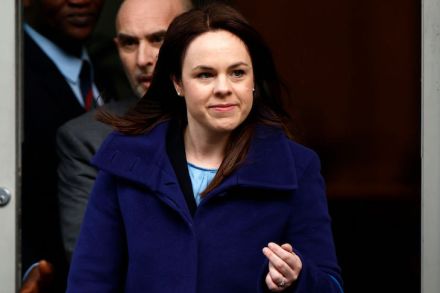
I was on BBC1's Question Time with Kate Forbes in Glasgow last week in which she was oddly loyal to the SNP government. She seems to have been the only member of Nicola Sturgeon’s government not to be deleting her WhatsApp during Covid and I suspect she’s appalled at the way Sturgeon & co placed secrecy at the heart of their Covid response. She said on Question Time that the way to grow Scotland’s economy was to attract people to come and work there. I put to her that having the highest tax rates in the UK (as Humza Yousaf has chosen to do) didn't exactly scream "come to Scotland!". She didn’t really respond. But she has been more candid in an as-yet-unpublished column in West World, a community newsletter that serves Mallaig and its environs.

Should ex-MPs stop shilling for foreign rulers?

From our UK edition

12 min listen

In his Telegraph column, Fraser Nelson makes the case that it's time to ban former politicians accepting jobs from foreign rulers. The likes of Tony Blair, George Osborne and David Cameron have all made money from government's abroad. But is this becoming more of a problem? And are their critics simply a product of their success? Natasha Feroze speaks to Fraser Nelson and James Heale.

How the Tories gave up on liberty

From our UK edition

43 min listen

On the podcast: have the Tories given up on liberty?Kate Andrews writes the cover story for The Spectator this week. She argues that after the government announced plans to ban disposable vapes and smoking for those born after 2009, the Tories can no longer call themselves the party of freedom. Kate is joined by conservative peer and former health minister Lord Bethell, to discuss whether the smoking ban is a wise precedent for the government to set. (01:22) Also this week: can the UAE be trusted on press freedom? At The Spectator that’s a question close to our hearts at the moment as we face possibly being sold off to an Abu Dhabi backed fund.

Minister hints that Emirati bid for the Telegraph will be blocked

From our UK edition

Few phrases are more likely to get the blood of ministers going than the words ‘Urgent Question’. Today it was the turn of media minister Julia Lopez, who was summoned to the House to answer MPs’ queries about the sale of the Telegraph and The Spectator to RedBird IMI, an entity bankrolled by the United Arab Emirates. The UQ was tabled in the name of Alicia Kearns, chair of the influential Foreign Affairs Committee, who asked Lopez what safeguards were in place to stop foreign state-owned companies buying up the British media. Lopez told the House that she could not offer any new information, but was there to listen to MPs’ views. She is being kept out of the loop in this quasi-judicial process, she added.

Should foreign governments own UK newspapers?

From our UK edition

The Emirati / RedBird IMI bid for the Daily Telegraph and The Spectator is opening up a wider conversation: how much of our national infrastructure should autocracies be allowed to buy? The Emiratis have been on a bit of a spree in recent years. They have 10 per cent of Heathrow airport, 15 per cent of Vodafone, 49 per cent of the Dogger Bank wind farm, Man City FC and now they want the Telegraph and Spectator. It would be the first time that a dictatorship would own a newspaper in a democracy, thereby setting a precedent. Much is riding in whether the UK government approves the deal. LBC radio has just held a phone-in on the topic hosted by Ali Miraj, pegged to a new poll showing two-thirds of the public are against such deals. I opened the debate.

Fraser Nelson: governments should never own our press

From our UK edition

16 min listen

NHS consultants have (narrowly) rejected another pay increase offered to them by the government. They will not immediately go back on strike, and will instead negotiate further with the government. Kate Andrews takes us through the details. Also on the podcast, Fraser Nelson responds to Spectator chairman Andrew Neil's comments on BBC's Newsnight last night, on the potential sale of our magazine to UAE-backed RedBird IMI.  Produced and presented by Max Jeffery.

McMafia: inside the SNP’s secret state

From our UK edition

After years of scandal and intrigue, the Scottish National party has not lost its ability to shock. The UK Covid Inquiry has moved to Edinburgh for three weeks and in the process has exposed Nicola Sturgeon’s government to some robust scrutiny. The verbose, preening Hugo Keith has been replaced with Jamie Dawson, a more incisive KC. What he has uncovered has been a revelation. That Sturgeon deleted her WhatsApp messages is bad enough. The ability to learn from the decision-making process is vital, so for a senior minister to wipe records like these can be seen as a conspiracy against the public. But as we have learned this week, the civil service in Scotland was also deeply complicit.

Fraser Nelson, Robert Hardman & Michael Simmons

From our UK edition

18 min listen

This week: Spectator editor Fraser Nelson on why the Emirati ownership of the magazine matters (00:30), Robert Hardman on the time the King could have poisoned Rishi Sunak (06:24) and Michael Simmons on why sobriety isn't worth it (13:02).