Fraser Nelson

Fraser Nelson

Fraser Nelson is a Times columnist and a former editor of The Spectator.

Sales of The Spectator: 2019 H1

From our UK edition

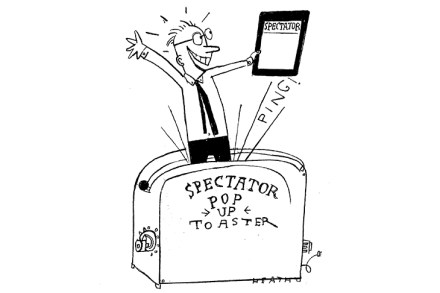
We can today announce that The Spectator’s sales have hit another record high: 77,889 for the first half of this year, up 9 per cent year-on-year. Print subscriptions are growing at their fastest rate since 1995, but we’re recruiting new subscribers through digital means. We hear a lot about the decline of print, or even ‘subscription fatigue’, so ours is an unusual story. And one that I’d like to tell you about in more detail. The Spectator is the world’s oldest weekly, but its sales are at a 191-year high and growing fast.

The new Boris machine owes very little to Westminster

From our UK edition

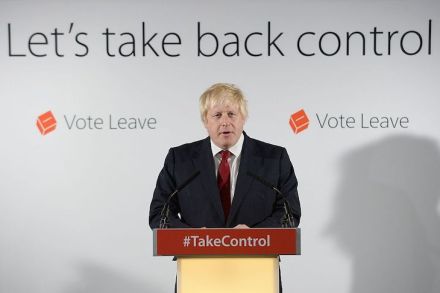
Until now, new Prime Ministers have always arrived in 10 Downing Street accompanied by the team they built around them in Parliament. But Boris Johnson is different. He is the creature of two Blair-era inventions: devolution and referendums. The team he is building around him in No. 10 is from City Hall and Vote Leave, where he was able to pioneer a new style of politics and government. I look at this in my Daily Telegraph column today. The changes he is making go well beyond new faces in Cabinet, dramatic though they are. It is about how government is run, what it does and how it works. When I was a reporter in the Scottish Parliament I thought that Edinburgh might pioneer new political techniques far ahead of Westminster. It was not to be.

Sajid Javid will give the Treasury a culture shock

From our UK edition

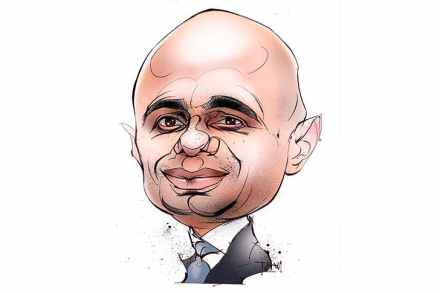
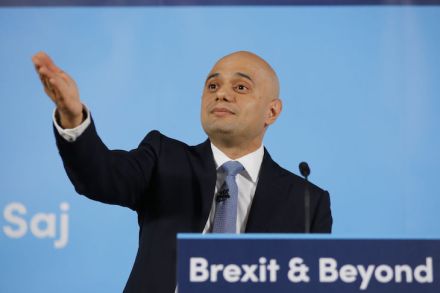
Sajid Javid as Chancellor is the latest of a string of encouraging appointments. He knows finance better than almost anyone else in parliament, let alone Cabinet. When Osborne took the the brief, he would confess to people that he didn't have a clue about economics. In Sajid Javid, we have someone who was vice-president of Chase Manhattan bank aged 25: not because of any family ties but because of his sheer ability. Javid has the knowledge and nerve for a clear no-deal plan, and was always arguing for one in the Cabinet. This will be a bit of a culture shock to HM Treasury, which has been the HQ of Remain refuseniks for quite some time: it served to delay and frustrate others who were preparing for no deal.

Labour’s losing its old heartlands. Backing Remain could make things worse

From our UK edition

A moderate, halfway-competent Labour party could crush the Tories. But given that Labour members are Corbynite in inclination, what are the chances of a moderate leader emerging? In my latest Daily Telegraph column, I argue that to change leader now in order to make Labour the party of Remain might well make this even worse for Labour – and create an opportunity for the Tories. The Morten Morland cover image we ran a few weeks ago – Corbyn depicted as a scarecrow being picked apart by the Brexit Party and the Liberal Democrats – has come to pass. The Brexit crisis has started to polarise voters, with many moving to the Brexit Party and the Lib Dems. Labour and the Tories are suffering badly.

David Johnston and social mobility

From our UK edition

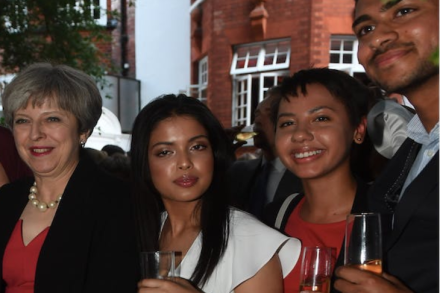
For some time now, I’ve been involved in the Social Mobility Foundation, whose interns we take at The Spectator (and who were at our summer party last week). It has been run by David Johnston, who has stood down after ten years. What he has achieved at the SMF has been nothing short of extraordinary. The idea was that it takes bright teenagers who qualify for free school meals, and help them with internships – and other forms of support – to give them more of the opportunities available to wealthier families. When this all started, it was against the grain: a great many employers couldn’t see what was wrong with giving internships to their friends and family.

Job vacancy: a researcher for The Spectator

From our UK edition

The Spectator is growing – and hiring. We’re looking for a researcher for fact-checking, data reporting and editing news for our daily emails. We’d like someone who can find a story in figures, perhaps someone familiar with Google Analytics (or capable of learning about it). The advantages: no two days in the office will be the same, you’ll be working with a tight and brilliant team of about a dozen journalists in our Westminster office. There will be a wide variety of editorial tasks: the job would suit someone with energy, eagerness to learn and – crucially – an eye for accuracy. The full-time post would report to John O'Neill, our research director, working in the editorial office. It would not suit someone seeking to become a writer.

Boris Johnson didn’t implode in the BBC debate. So for him, it’s a win

From our UK edition

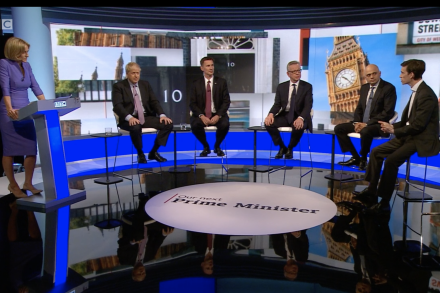
I’m not sure we learned terribly much this from the rather noisy BBC debate this evening. Each Tory candidate had rehearsed the answers so well that they sounded like pull-string dolls at times.  If you watched Ch4’s debate on Sunday – conducted along the lines of its old Fifteen-to-One gameshow – you’ll have heard many of these lines before. Michael Gove strong on his own reforming record and Corbyn-baiting, not so strong on the economy. Sajid Javid a bit more willing to use his biography as strategy, at one point having his rival candidates agree to an inquiry into Islamophobia in the Tory party (although I'm not sure how far this will endear him to the Tories whose votes he is seeking).

Sajid Javid: send me into the final two and I’ll “make a better Boris”

From our UK edition

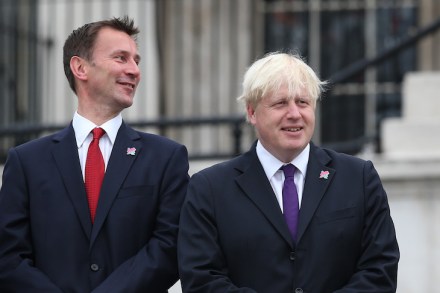
At the hustings held by the 1922 Committee of backbench Tory MPs this evening, the question wasn’t who was going to win but who should be sent to put Boris Johnson through his paces before he wins. Word is that Team Boris is lending about 15 votes to Jeremy Hunt, who he'd most like to go up against - either today, or in later voting rounds. Boris is understood to have over 120 supporters now - more than the next three put together - so he could lend 40 votes to Hunt if he wanted. But he is more likely to keep the number low so the vote-lending isn't obvious. There’s even talk that he’ll win by such a big majority that no other candidate would get above the 33 l-vote threshold today. It's possible. But deeply unlikely.

Supporters of Johnson could vote for Hunt, to ensure an easy final

From our UK edition

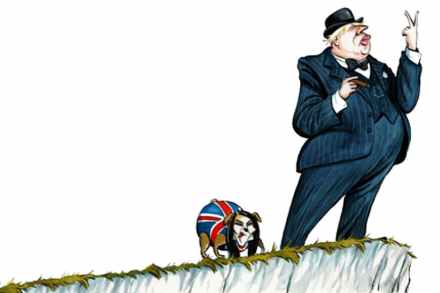
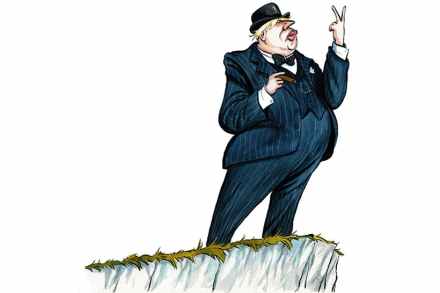
If half of Boris Johnson’s supporters had stayed in bed this morning, he’d still have won by a safe margin. The number of MPs supporting Johnson is astonishing, given how many were saying until a few weeks ago that they despised him. They may well still do, but Nigel Farage is now grasping them by the ankles and dangling them over a cliff – which is focusing Tory minds. It’s wrong to see all Conservatives as ideologues. Some of them are, to be sure, but most of them like power and will go with those who offer it. In Boris Johnson, they see the candidate most likely to keep them in power by swatting away Farage with one hand and Jeremy Corbyn with the other.

Gove, Javid and the uses of backstory

From our UK edition

Michael Gove’s launch was, easily, the strongest of any candidate yesterday and he deserves the plaudits he’s getting now. Even if you dislike him, his speech is worth listening to (it’s here) and it was made without notes. I’ve heard him talk before about the school in Liverpool he mentioned where only one pupil got decent grades. In his original telling, his point was that the distance between Liverpool and Edinburgh (where his birth mother is from) was about the same as the distance between Aberdeen and Edinburgh – so he could have ended up in either city. But alongside the cocaine use, another disclosure in Owen Bennett’s new book is that Gove was actually born in Aberdeen.

Your Kindle subscription can now bring full digital access to The Spectator

From our UK edition

The Spectator is the ideal read on Kindle, but until now our subscribers haven't been able to access our website or receive our daily emails. That’s about to change. On your laptop, phone or tablet, visit: spectator.com/kindle There, you can register with your Kindle details and upgrade to enjoy full digital access. That includes: • Our daily emails • Coffee House, our blog, with around six articles a day • Full digital access to our Archive, dating back to 1828 • Full digital edition on mobile phones • Access to our range of podcasts • Priority booking and preferential rates for our range of events • All for a special price of £3.

Can Sajid Javid tell the story of Sajid Javid?

From our UK edition

"I entered politics to do my best for this country,” says Sajid Javid in the video that launches his campaign, “the country that has done so much for me". A good point, which he didn't elaborate. A shame, because a powerful point lies therein - a point that explains who he is and his claim for the job. Had his parents stayed in Punjab and not emigrated to Britain in the 1960s, he’d have grown up in poverty there, rather than here. What would his life have been like then? And why was it better here? The answer isn’t about natural resources or the weather: the answer lies in politics. Sometimes, the characteristics that make Britain great are best described (and appreciated) by those who are mindful that, for a twist of fate, they would have grown up somewhere else.

A green wave has just swept Europe

From our UK edition

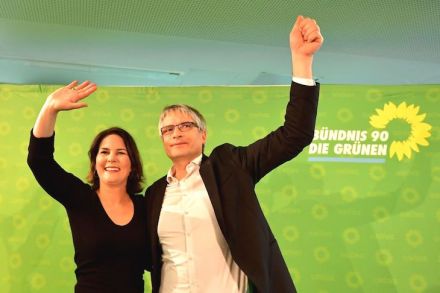
As Brits understandably focus on Brexit and populism, another story is emerging: the green wave. It is especially focused in amongst the young and in cities: Greens took nine of Germany’s ten largest cities, sometimes by large margins. Across Germany, Die Grünen relegated the Social Democrats to third place. In France, Les Verts came from nowhere to finish third, greens came second in Finland and broke into double digits in Austria and The Netherlands. In Ireland, Greens trebled their share of the vote and won their first European Parliament seat for 20 years: an exit poll showed 90 per cent of voters thought the Irish government needs to do more on climate change. And it was a doubling of the Green vote that forced the Tories into a humiliating fifth place in the UK.

The big Tory leadership question: what happens on All Saints Day?

From our UK edition

If the EU is unable to make a Brexit offer that is acceptable to Parliament by the Brexit deadline on 31 October, what then? This is the big question in the Tory leadership contest and – slowly – we’re getting answers. 1. No deal back on the table, an extension not ruled out Dominic Raab this morning told Andrew Marr that if the EU does not compromise then he’d leave anyway, without a deal. In other words, the Tory 2017 manifesto position would be restored: no deal is back on the table, only this time they'd have to mean it. Boris Johnson, Michael Gove, Jeremy Hunt and Sajid Javid all agree. All would seek a compromise with the EU: modified version of Theresa May's deal. Nigel Farage says this is pointless because the outgoing Commission is intransigent.

You can’t blame politics (or Brexit) for Britain’s Eurovision woe

From our UK edition

Yes, Eurovision is political - but for 20 years now, this fact has been used as an excuse to explain why Britain bombs. Everyone hates us, runs the complaint, the system is rigged, there's nothing we can do. But as we digest the latest embarrassment (we just finished last - again) it’s hard to escape a simple point. The UK entry does badly because it tends not to be as good as the others. If the English-singing Duncan Laurence (pictured, above) had been singing for the UK instead of The Netherlands, he'd still have won. We are guaranteed a place straight into the final, as the UK pays so much money to the European Broadcasting Union. This has made us lazy, fielding songs that would never have made it through the semi-finals - a gauntlet most other countries have to run.

The LibDems are back – with their strongest advance since 1995

From our UK edition

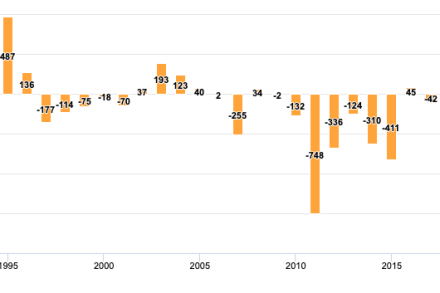
The biggest winners from last night are the Liberal Democrats who have (so far) won 260 seats – their best overall performance since 2003 and the highest number of gains since 1995. And this matters because the rationale of Change UK (the latest name for the Chuka Ununna-Anna Soubry group of breakaway MPs) is that the Lib Dems are bust, useless as a vehicle for centrist Remainers. This may have seemed true in the 2017 general election, but does not seem to be true now. They have taken Chelmsford, Cotswold, Winchester and North Norfolk – amongst others. Meanwhile, ChUK is a disgraceful shambles – unable to agree on a logo or a name, unable to equip would-be candidates with basic material to fight the European Parliament elections.

Editor’s Notebook

From our UK edition

The power of editors is comically overstated. I’m struck by the number of politicians who imagine that there’s a hierarchy: that editors shape the opinions of columnists who, in turn, shape opinions of readers. The truth, I’m afraid, is that the hierarchy works in the other way. People like reading well-argued pieces with which they might disagree. Editors and writers alike serve at the pleasure of those readers. If they find writers boring, unoriginal, repetitive hectoring then they stop buying the publication and choose another. The power belongs to them - and only to them. Good writing seeks to inform, to entertain, to make people think - but not convert anyone to a particular point of view.

Internships at The Spectator for summer 2019; no CVs (or names!) please

From our UK edition

Since we abolished CVs for The Spectator’s internship scheme, it has acquired quite a reputation. There are fewer than two dozen journalists here in 22 Old Queen St and we recruit people rarely – but when we do, we seek to recruit from our interns. As do other people: The Spectator's no-CV internships helped a 48-year-old mum-of-three with no previous journalism experience to her job at The Sunday Times, and a former teacher to National Review in the US.  Last year, we hired three of our former interns. Most publications demand some kind of CV to get an internship, and it helps to have a well-connected friend or relative. Not here. In journalism, all that matters is flair, enthusiasm and capacity for hard work.

Our next Prime Minister? David Lidington interview

From our UK edition

David Lidington is the most powerful minister you’ve never heard of. He is Theresa May’s de facto deputy, tasked with both supervising the domestic agenda and solving the trickiest Brexit conundrums. And the Sunday newspaper front pages talk about a plot to enstool him as a caretaker Prime Minister: an idea supported, we read, by Amber Rudd, Greg Clark, David Gauke and Philip Hammond: all of whom campaigned against Brexit in the referendum and are most likely to support a customs union-style Brexit favoured by Labour. Lidington is understood to have held talks with Labour a few days ago to implementing a version of this, using Labour support to win a parliamentary majority and overcome opposition from Tory backbenches.

How Philip Hammond snookered Theresa May on Brexit

From our UK edition

Philip Hammond’s whole career as Chancellor has been leading up to this moment. Next week, in his Spring Statement, he’ll say that MPs have a choice: back the EU’s deal, or go for a no-deal Brexit for which government has failed to prepare. Without any serious leadership for the latter, it’s unlikely to pass. The Prime Minister is snookered. He has won. He was against Brexit and has not quite stopped fighting those who advocated it – on the radio yesterday he distinguished himself from “the Brexit wing of the party.” But he has second best: a Brexit deal which is EU membership in all but name. Perhaps to be followed by a proper Brexit, perhaps not. And why is Theresa May unable to negotiate anything better?