Fraser Nelson

Fraser Nelson

Fraser Nelson is a Times columnist and a former editor of The Spectator.

The Spectator, war and slavery: a note on our history

From our UK edition

The Spectator is the world's oldest weekly, so we have quite a history to defend. But what sets us apart from other long-running magazines is that our values have not changed much since we were founded in 1828 – or, indeed, since the The Spectator appeared in its original form in 1711. When I made this remark a short while ago, it aroused some teasing: surely, some asked, a magazine needs to change with the times? But the values I refer to – cherishing diversity of opinion, being unafraid to go against the grain – don’t age. I’ve written before about the ways in which the values of the 1711 Spectator inspire us today (including the name of this blog, Coffee House).

slavery

The Spectator, war and slavery: a note on our history

In her article about the point of protest, Tali Fraser mentions the support of Manchester in the 1860s for the North against the slave-owning South in the US civil war. At the time, this was an unpopular cause amongst the British elite. Of all the publications still around today, only one backed Abraham Lincoln then: The Spectator. The magazine almost went bust as a result. I remarked a few days ago that what sets us apart from other long-running magazines is that our values have not changed much since we were founded in 1828 – or, indeed, since the The Spectator appeared in its original form in 1711. That aroused some teasing: surely, some asked, a magazine needs to change with the times?

Fact check: has Sweden really just renounced its anti-lockdown strategy?

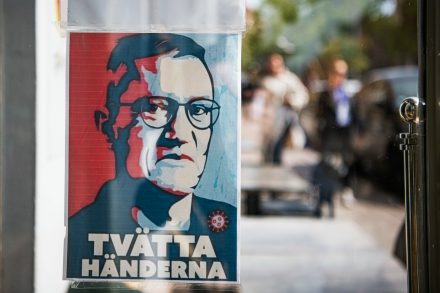
Has the great Swedish mea culpa finally arrived? Anders Tegnell, Sweden’s state epidemiologist, is quoted by the Financial Times saying that his country ‘should have imposed more restrictions to avoid having such a high death toll’. His 'admission', continues the FT, 'is striking as for months he has criticized other countries’ lockdowns'. The Guardian goes just as hard on the story. 'Man Behind Sweden’s Controversial Virus Strategy Admits Mistakes,' screams Bloomberg. But turn to Wednesday's Swedish press and there’s something strange: they seem to have missed the scoop entirely. All the stranger, seeing that Tegnell's remarks were made to Swedish radio. So was something lost — or, rather, added — in translation?

sweden

Is it time for the government to admit its mistakes?

From our UK edition

16 min listen

With an NHS tracing app not fully up and running until autumn, contact tracing seems like the latest in a series of events where the government has over-promised and under-delivered. Is it time for the government to admit the mistakes it has made in dealing with the pandemic?

New study suggests Covid infections were falling before lockdown

From our UK edition

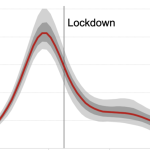
When lockdown was first imposed, there was little science to base it on. The virus was assumed to be growing at an exponential rate, with each infected person passing it on to about four others. The controversial assumption: only mandatory lockdown could stop this. Graphs were drawn, showing the infection rate barely dented by voluntary measures (like handwashing, keeping socially distanced etc.) but lockdown making things safe instantly. Imperial College’s cliff-edge graph had huge traction (the below is a BBC reproduction) and made an open-and-shut case for lockdown. The above assumptions were the basis of a recent Sunday Times investigation entitled 'UK’s lockdown dithering led to worst death toll in Europe.

Our duty to Hong Kong: time to grant citizenship

From our UK edition

40 min listen

As China looks to push through its national security law, is it time to offer Hong Kongers a way out? (01:00) And with the Black Lives Matter protests continuing to rage in America, can they unseat Donald Trump? (15:30) And last, do animals have culture?

Our duty to Hong Kong: the case for granting full British citizenship

From our UK edition

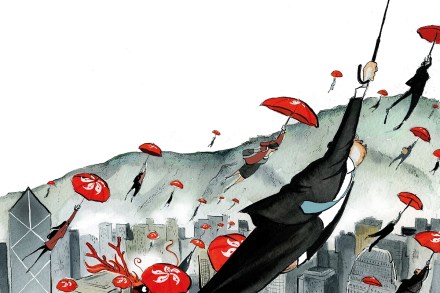
When the fate of Hong Kong was last seriously considered by a British prime minister, the world looked very different. It was argued — naively — that not much would change when the colony was handed back to China in 1997. A deal had been struck. Beijing would run defence and customs control, but otherwise Hong Kong would still be self-governing. It was always unlikely that China would honour this promise, but the pretence was useful to a Tory party terrified of admitting the alternative: that Britain had a moral duty to let the Queen’s subjects stay British. Which meant allowing them to settle in the UK if they wished. The deal is now in tatters. After gnawing away at Hong Kong’s liberties for years, Beijing is now engaged in an all-out assault.

Norway health chief: lockdown was not needed to tame Covid

From our UK edition

Norway is assembling a picture of what happened before lockdown and its latest discovery is pretty significant. It is using observed data – hospital figures, infection numbers and so on – to construct a picture of what was happening in March. At the time, no one really knew. It was feared that virus was rampant with each person infecting two or three others – and only lockdown could get this exponential growth rate (the so-called R number) down to a safe level of 1. This was the hypothesis advanced in various graphs by Imperial College London for Britain, Norway and several European countries.

Is Labour’s stance on reopening schools worsening the education gap?

From our UK edition

17 min listen

The government is aiming to reopen schools on June 1, but with teachers' unions putting up opposition to the move, this timeline is unlikely to be met. Latest research shows that, meanwhile, the education gap between the poorest children and the wealthier is widening all the time. So in its support for the teachers unions, is Labour doing enough to bear in mind the lifelong impact on the worst off kids during this pandemic?

Boris sets out the shape of an exit strategy

From our UK edition

18 min listen

It's been six weeks since the Prime Minister first sat down to give the statement to the British public that began lockdown. Today, as James Forsyth first reported in The Spectator two weeks ago, Boris Johnson announced that the lockdown isn't over yet. From Wednesday onwards, the one form of exercise a day rule will be removed so that, social distancing provided, people will be able to spend time outside even when they are not exercising or shopping. But not much else has changed, and in his statement, Boris Johnson sets out why. The 'R' number simply isn't sufficiently low enough. A new metric for judging the risk to the population with five levels has been devised, and we are somewhere between levels 3 and 4 (with 5 being the risk at its peak).