Fraser Nelson

Fraser Nelson

Fraser Nelson is a Times columnist and a former editor of The Spectator.

Is the petrol crisis good for the government?

From our UK edition

15 min listen

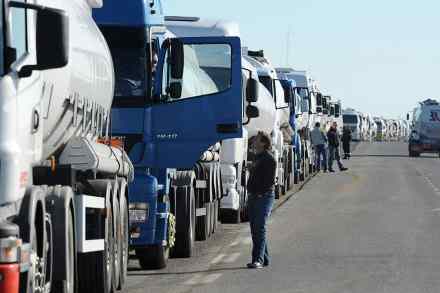
A shortage of HGV drivers has led to empty petrol pumps and talk that supermarket shelves could be empty come Christmas. Delivery firms want the government to ease immigration rules to fill the gap, but, aside from allowing a small number of emergency visas, they have refused to step in. Why? Katy Balls speaks to Fraser Nelson and James Forsyth.

Will the energy crisis leave Britons cold?

From our UK edition

17 min listen

For this week's Saturday Coffee House Shots, Katy Balls, Fraser Nelson and James Forsyth sit down with John Kemp, senior energy analyst at Reuters to discuss the energy crisis. How long will this continue? How high will prices go? What will the government do in response? And is there a possibility of blackouts during the winter months?

Why does the gas crisis matter so much?

From our UK edition

10 min listen

With many smaller energy companies folding because of a steep rise in the cost of gas, how long will it take before the bigger firms turn to the government for help, and will continuously rising wages help soften the blow? Katy Balls talks to Fraser Nelson and James Forsyth.

Fraser Nelson, Michela Wrong and Mark Mason

From our UK edition

25 min listen

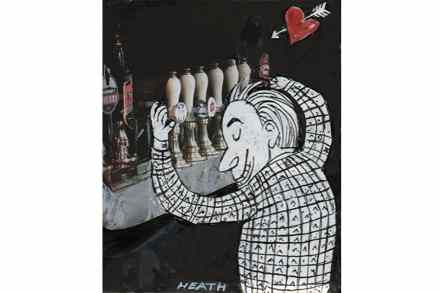
On this week's episode, Fraser Nelson starts by reading the leader. Britain has a labour shortage and our immigration system is a mess - why not have an amnesty for migrants without legal status? (01:00) Michela Wrong is on next. She found herself in the sights of Rwandan President Paul Kagame after she wrote a book exposing the abuses of his regime. (07:05)Mark Mason reads his piece to finish the podcast. Ordering at the bar isn't just about buying a drink, he says.

Can Gove remake conservatism?

From our UK edition

16 min listen

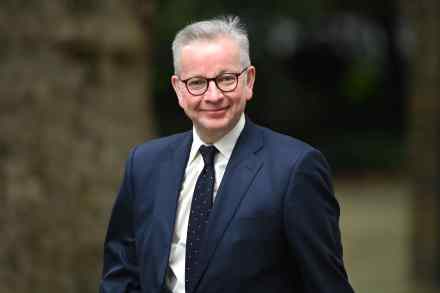
Michael Gove has been tasked with transforming levelling up from a soundbite to an agenda. What will this look like? And what Michael Gove will we get, the liberal reformer or big state lockdown supporter? Katy Balls is joined by Fraser Nelson and James Forsyth to discuss.

What are Javid’s winter Covid plans?

From our UK edition

13 min listen

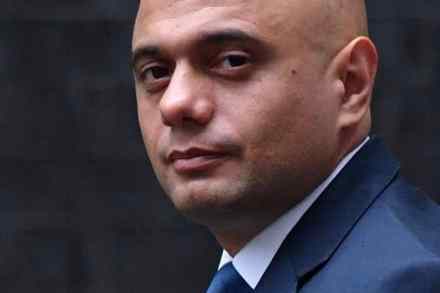
Health Secretary Sajid Javid today laid out his two plans for dealing with Covid this winter. The first, Plan A, proposes a booster shot for everyone over 50, combined with the flu jab. This would also see contact tracing continue, along with self-isolation for the infected and financial support for those isolating. Plan B proposes vaccine passports and mask mandates in certain settings. To discuss how this was received in the Commons, Katy Balls is joined by Isabel Hardman, James Forsyth and, making a surprise appearance, Fraser Nelson.

Twenty years on, what is the lingering impact of 9/11?

From our UK edition

18 min listen

It's been 20 years since the 11 September attacks and their effect has had a lasting impact on the world. Katy Balls talks to Fraser Nelson and James Forsyth about their memories of that day, the mistakes made in its aftermath and if the new Taliban takeover of Afghanistan leaves us more vulnerable to similar attacks.

Should the Tories be concerned by their drop in the polls?

From our UK edition

12 min listen

Labour are ahead of the Conservatives in a poll for the first time since January. It comes just days after Boris Johnson announced his government's plan to fix social care: a rise in National Insurance. Should the Tories worry? Katy Balls is joined by James Forsyth and Fraser Nelson.

What do the Tory abstentions mean for Boris?

From our UK edition

15 min listen

Boris Johnson has got his social care payment plan past the Commons, but there were a fair number of Tory abstentions, who still have a philosophical issue with this policy. Also with vaccine passports seemingly just around the corner, could this be another battleground for a Conservative rebellion? Katy Balls is joined by Fraser Nelson and James Forsyth to discuss.

Assetocracy: the inversion of the welfare state

From our UK edition

33 min listen

On this week's episode: why is the Prime Minister so desperate to support the assetocracy? In The Spectator’s cover story this week, after Boris Johnson revealed his plan to pay for social care with a National Insurance increase, Fraser Nelson says there has been an inversion of the welfare state. Is it right to ask the working poor to pay more taxes to help cover the social care of people who could easily fund it themselves? Kate Andrews, The Spectator’s economics editor, joins Fraser to discuss. (00:47) Plus, why is our knowledge of Soviet atrocities so poor? Attempting to fix this, James Bartholomew has been interviewing and recording the stories of survivors of Soviet oppression and torture.

Assetocracy: the inversion of the welfare state

From our UK edition

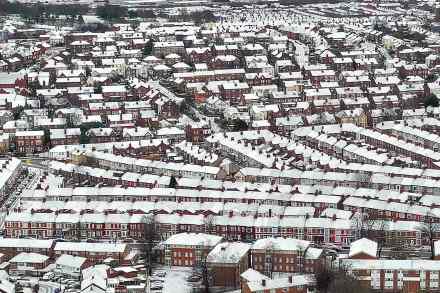
To understand how the Tories ended up in such a muddle about who they are and what they stand for, take a walk down any of the nicer streets in Boris Johnson’s constituency. North Hillingdon is as idyllic now as it was a generation ago: spacious houses, with large drives, built before the war. The houses were, once, more or less affordable. One property on Parkway, for example, was bought for £175,000 just over 20 years ago. It’s now valued at £1 million. And what’s true in Hillingdon is true of the rest of the country too. The asset boom that started at the turn of the century has transformed the finances of families across the country, turning modest-income retirees into unexpected millionaires: a new ‘assetocracy’.

Why raise tax to subsidise the wealthy?

From our UK edition

When conservatives renege on election-time promises not to raise taxes, they tend not to be forgiven in a hurry. 'Read my lips: no new taxes', promised George H.W. Bush, words that Bill Clinton did not let Americans forget. John Major also promised not to raise taxes, then hiked National Insurance, blaming unforeseen circumstances. Tony Blair never let up, arguing that the Tories had forfeited the right to be believed on financial promises. In the 2005 campaign, the Tories announced they would not make any tax promises because they would not be believed. Once you renege on a promise, credibility takes a decade — perhaps more — to repair.

Is Boris Johnson about to betray his manifesto?

From our UK edition

15 min listen

Despite pledging not to raise taxes in the 2019 manifesto, rumours abound in Westminster that Boris Johnson is about to increase National Insurance in order to raise funding for healthcare and social care. Katy Balls talks to Fraser Nelson and James Forsyth about whether the government has other options.

Books railing against private schools are actually the best marketing for them

From our UK edition

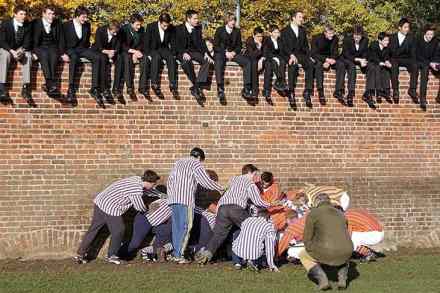
When Michael Gove was selling his school reforms a decade ago he was asked to define success. ‘I hope that thanks to the reforms we’ve introduced the next Guardian editor but three will be a comprehensive school boy or girl.’ It was his little joke: that the loudest critics of private schools, the people who rail against the injustice of the whole system, tend to be people who went to these schools. There is a long tradition of books by public schoolboys decrying public schools. The latest is Sad Little Men: Private Schools and the Ruin of England whose author, Richard Beard, went first to Pinewood, a prep school on the Wiltshire/Oxfordshire border, and then the £41,700-a-year Radley College.

What if vaccines can’t end the pandemic?

From our UK edition

14 min listen

New data from Israel shows that the Delta variant is getting through the protection offered by double jabs, even though the vaccines do lessen symptoms.  But the study, of more than 800,000 cases, suggests those who have recovered from Covid have stronger protection than those who have not: jabbed or unjabbed. Will this make it harder to justify "no jab, no job" policies, if those at risk of losing their jobs say they can prove they were diagnosed positive and now have antibodies? Isabel Hardman talks to Fraser Nelson and Kate Andrews.

What does the Kabul attack mean for Biden?

From our UK edition

11 min listen

After the attack on Kabul's airport by Isis-K, President Biden addressed the world last night and mourned for the 13 US marines who were killed. But with this grim event already being politicised by the Republicans, what will the lasting damage to the president legacy be?Isobel Hardman in conversation with Kate Andrews and Fraser Nelson.

Is the ‘gentler, kinder’ Taliban already gone?

From our UK edition

13 min listen

As many had expected, President Biden has not agreed to extend the August 31 deadline despite pleas from Nato allies in today's G7 call. Meanwhile, there are signs that the veneer of the new and reformed Taliban is already beginning to crack in Afghanistan. Katy Balls talks to Isabel Hardman and Fraser Nelson.

Will Biden agree to Boris’s Afghanistan request?

From our UK edition

12 min listen

The Prime Minister has requested Washington to extend the August 31 deadline for the withdrawal of US troops from Kabul. But will Joe Biden acquiesce, amidst warnings from the Taliban that there will be 'consequences' if the US stays longer? Isabel Hardman talks to Fraser Nelson and Katy Balls.

Can ministers ever go on holiday?

From our UK edition

14 min listen

With Dominic Raab in the firing line for his £40,000 Crete holiday, the Coffee House Shots team reflects: can ministers ever go on holiday? And if they do, should they be sticking to the domestic ones, and at what point of a political crisis does one decide to turn back? Isabel Hardman talks to Fraser Nelson and former special advisor for Sajid Javid, Salma Shah.

Is Raab the victim of a witch hunt?

From our UK edition

14 min listen

While Dominic Raab continues to weather charges of incompetence and call for resignation, it is the Health Secretary Sajid Javid who might not have any time for a holiday come autumn. Israel, one of the most vaccinated countries in the world, is seeing a rush of new Covid cases. Could mean a wave of Covid and flu, later this year? Cindy Yu talks to Fraser Nelson and Isabel Hardman.