Fraser Nelson

Fraser Nelson

Fraser Nelson is a Times columnist and a former editor of The Spectator.

Cameron urges Brown to clean-up politics

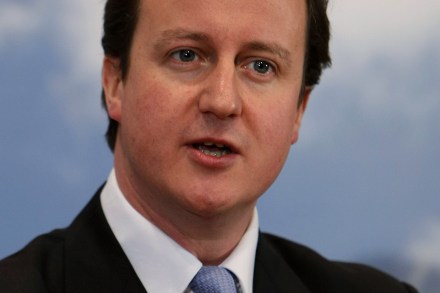
A rather downbeat PMQs session, where the following quote from Cameron is the highlight. “If he really thinks these exchanges once a week are a substitute for a proper television debate, then he’s even more out of touch than I thought. We have to be honest with ourselves – not many people watch these exchanges and not all those that do are hugely impressed with them. We’ve seen TV debates in Italy, Australia and Poland. So I have to ask him: what on earth is he frightened of?”  Cameron came to PMQs today on a mission to clean up politics, and sought to enlist Brown’s support. Does he agree that MPs should not vote on their own pay? Erm, yes he does and he voted on it too.

Made in Sweden: the new Tory education revolution

Fraser Nelson reports on the radical Swedish system of independent state schools, financed by vouchers, that has transformed the country’s education performance and is now inspiring the Conservative party’s dramatic blueprint for British schools: to set them free This summer, at least 25,000 children will drop out of English schools without a single qualification to show for their years of compulsory education. Some 240,000 will graduate from primary school unable to read or write properly. By autumn, some 250 schools judged to be failing will welcome an intake of new pupils. Youth unemployment will probably hit an 11-year high. It will, tragically, be just another year in one of the world’s highest-funded education systems.

Clegg rebuffed

Michael Martin has for once proved his worth by throwing out Clegg’s amendment for an “in or out” referendum saying its not relevant to the Lisbon Treaty (which, of course, it isn’t). So is Davidson’s amendment their only hope? Or might his amendment get thrown out too? Stay tuned.

Splitting Brownies

We’re on the last couple of days for collecting entries for the Gordon Brown’s book of fibs, but we haven’t quite decided what to call his embellishments. Many of you say he lies, and we should call a lie by its name. But Brown normally operates by the misleading presentation of a real fact. Unemployment is at a 30-year low, for example, if you just look at claimant count and forget the 5m languishing on other benefits. (This is Brown’s “false proxy” technique, where he gives claimant count as a proxy for joblessness when this long ago ceased to be the case.) So are we talking about Fibs? Brownies? Porkies? Or, as one unkind soul suggested, McPorkies? Suggestions, please.

Calling Nick Clegg’s bluff

An early test of Nick Clegg’s credibility is at hand. Labour’s Ian Davidson has sent a letter to him proposing a solution: a two-question referendum on both the Lisbon Treaty and on EU membership – the “in our out” question which Clegg would have us believe he wants so badly. If the Tories back Davidson’s plan (no reason why they shouldn’t) then a trio of Conservatives, LibDems and Labour rebels could actually deliver the referendum that all three of them promised at election time. So accepting a vote on the Lisbon Treaty would, surely, be a small price to pay for the in-or-out question which Mr Clegg tells us is such a point of burning principle for the LibDems. Wouldn’t it?

The cost of drugs

To clarify my earlier blog, I certainly did not mean the murdered prostitutes in Suffolk were “victims” of the government’s failed war on drugs. They were born free and chose drugs. My point is how much cheaper and easier it has become in the last ten years to take such a choice. The point of prohibition is to make heroin unaffordable, or very difficult to get hold of. Of course this price collapse started before Labour came to power - the earliest figure I have is £88/gram for July 1995 v £40 now. It was even higher in the 1980s - I have no idea how Zammo afforded it.   Perhaps they scrapped Grange Hill because the drug plot-lines would have been overwhelming. In 1994, just 1% of UK schoolchildren reported cocaine use. Now it’s 5%.

Victims of a failing war on drugs

As the Suffolk Stranger was being sentenced, the Home Office slipped out this written answer on the street price of heroin. It’s almost halved from £74 a gram to £40 a gram. The symmetry was chilling: all the murdered women were addicts. As I write in the News of the World today the government is losing its “war on drugs” (price falls reflect softening of availability constraints) – and in Suffolk we had a glimpse of the human cost.

The original Coffee House

Some people ask why we call this blog Coffee House. The principal reason is that this magazine’s founders, Joseph Addison and Richard Steele, went around such places picking up gossip and scandal – coffee houses were the 18th century equivalent of blogs, hated by the establishment for irreverence. Reports from the coffee houses filled the 1711 incarnation of the publication you are now reading online. The Times today quotes Charles II describing them in 1675 as “places where the disaffected met and spread scandalous reports concerning the conduct of His Majesty and his Ministers.” Our job remit precisely.   PS The first 1711 edition was printed every day, on a single piece of newspaper.

An act of genius, or of self-indulgence?

Does Daniel Day Lewis deserve an Oscar for There Will Be Blood? I'd say so, over Clooney anyway - who rarely differs the characters he plays. In a Hollywood era where stars basically play themselves, Day Lewis changes beyond recognition and always has - think Room with a View, My Beautiful Laundrette or My Left Foot. But he has a detractor in Gerald Kaufman, who has just recorded an interview for GMTV on Sunday. This is his take:- "There Will Be Blood is one of the most phoney and ostentatious films I've seen for years, technically brilliant - but, technically brilliant - anybody can do that.

Killer Cable strikes again

I'm on the train back from Question Time (most of the panel stayed in Newcastle last night) and I am again sitting three seats down from a man who has come to personify the Tories' problem. Vince Cable was lauded by Alan Duncan and Ruth Kelly for his leadership on Northern Rock - before, after and during filming. Why is Brown now back in the lead on economic management? What has he done right that Osborne has not done? My take:- 1. Cable knows his Onions. He has been as constant as the north star on this, where the Tories' position has been complex and changing. Who in Britain can explain what the Tory position is? That's the problem. 2. Cable works hard at it.

The brain drain goes into overdrive

Anyone who was depressed by the powerful splash in the Daily Telegraph today about Britain’s brain drain had best sit down. I have worse news. It may be a new OECD report, but the data’s from the 2000/01 census (first served up on CoffeeHouse). So the picture today will be much, much worse.  At the turn of the century just 161,000 Brits a year were emigrating. After a few more years of this wonderful government, the Brits voting with their feet had steadily risen to 206,000 a year. So how many Brits has Labour hounded out of this country? We won’t know until the next worldwide headcount, due at the turn of the decade. By then, Britain may have overtaken Mexico to become the country that repels more of its own people than any other developed nation.

Viewing guide

Anyone with a taste for schadenfreude can tune in to BBC1 Question Time tonight, where yours truly will be in Newcastle extolling the virtues of the free market in the home of Northern Rock. Other panellists are Ruth Kelly, Vince Cable and Alan Duncan.

Lib Dems all at sea over the Lisbon Treaty 

CoffeeHouse has just been brought up in the Commons – Mark Harper has challenged Ed Davey to clarify what on earth Lembit Opik is on about. Is it true, he asked, that Lembit is not a rebel as he claims because the LibDems plan to abstain on the issue of a referendum on the Lisbon Treaty? Davey cryptically said that we will have to wait and see – and said that one option open to them was “constructive abstention,” whatever that is. Answer: no one in that disorganised party has the faintest idea what their policy is. They can’t even decide if they will sit on a fence.

Brown and Cameron back at it

Back refreshed from the recess, Cameron (41) starts off by wishing Brown a “happy 57th birthday” – when “happy birthday” would have done. Nothing groundbreaking in their exchange. Cameron had a few good lines responding to what Brown had just said. “There always is an inquiry with this government. Frequently a police inquiry.” And then “That facts were left on a civil servant’s desk for a year he presents somehow a triumph of government policy.” And bad jokes “nationalisation that would make Castro proud”. I suspect these were memorised – Cameron’s speciality is reeling off memorised lines with the fluency of a stage actor. At PMQs, it works. Clegg was right to go on Northern Rock.

Happy Birthday, Mr. Prime Minister

It’s our Dear Leader’s birthday today: Gordon Brown is 57 years young. He's a famous bibliophile - and I figured we could send him a list of books. Here’s five to start with. 1) Don’t Sweat The Small Stuff – how to stop control freakery leading to misery 2) Wikinomics – why hierarchies are collapsing and the age of big government really is dead 3) Littlejohn’s Britain – he can take a view of his government from the bottom up. 4) Words That Work – Frank Luntz on why repeating “stability” seven times a day is a route to lose elections. 5) The Power of Charm - because it’s never too late for self-help. Can CoffeeHousers think of any more?

Brown tries to outflank the Tories on welfare reform

The Tories had a head start on welfare reform, but Brown is fast catching up.  When Chris Grayling launched his Wisconsin-style proposals last month, there were (typically) fears internally that they were too harsh. Yet there were two surprise factors: the overwhelmingly positive public reaction, and Brown's inability to decide whether to accuse them of heartlessness or plagiarism. Brown then decided to follow, perhaps sensing the anger over this. He is making fast progress - rhetorically at least, which at election time is 80% of the battle.  Reading today's press trailing a Purnell announcement, it seems Labour is briefing hard and recognises in welfare reform a powerful agenda which Brown rightly does not want to let the Tories champion.

Opik tries to set the record straight

Lembit Opik calls up to set me straight. Here was I portraying him as a principled rebel true to his manifesto by pledging to abstain, rather than vote against, the totemic issue of whether the British public should have a referendum on the Lisbon Treaty. Au contraire, he says. 'On this occasion, I am being a good corporate citizen' because Clegg has decided to allow his 65 MPs to abstain on the issue of a referendum after all. So people like Lembit are off the hook. Rather endearingly, Lembit admitted he wasn't 100% sure but would call back if he found out any different. Good luck to him finding out anything.

Opik joins the yellow rebels

A cheeky little bird has leaked me this text, from a letter Lembit Opik sent to a constituent - saying he will defy Nick Clegg and abstain from a vote on a referendum for the Lisbon Treaty: “The question of a referendum on the Treaty itself is a hard question.  As you well know, others say that the treaty is so much like a Constitution that it warrants a referendum on its own. I think the best thing I can do is abstain on the specific vote about a referendum on the treaty, while pushing for a vote in accordance with our position that the real referendum that needs to be had is whether we stay in the EU or not.

Taking the puppet-master with him…

A few months ago, I rather unkindly suggested that Alistair Darling is no more a Chancellor than Captain Scarlett was an actor. This may now be his salvation. Reading Rachel Sylvester’s column, we learn that Brown watered down capital gains tax reform and made his volte-face on Scottish tax proposals without consulting his Chancellor. If Darling is letting it become known that the strings are indeed being tugged from No10 then he’s also saying that if this puppet goes down, he’ll take the puppet master with him. A stand-off to savour.

Government backs Blair for EU Presidency

I interview Jim Murphy in tomorrow's Spectator, in which he gives his endorsement to Tony Blair as EU president. For the first time, we're running a longer version of the piece online (click here). I've always rated Murphy, ever since I saw him shout down Trots in my student days at Glasgow. Coffee Housers are normally suspicious when we praise Brown's younger ministers - what, it is asked, have they ever done? This isn't a Cabinet, it's a creche. Now, many of these criticisms are valid. But I consider Murphy a cut above for the following reasons: 1. He turned the safest Tory seat in Scotland into one of Labour's safest seats in Scotland, using exhausting and innovative campaign methods which transcended party loyalties.