Fraser Nelson

Fraser Nelson

Fraser Nelson is a Times columnist and a former editor of The Spectator.

Power and the press | 8 March 2008

From our UK edition

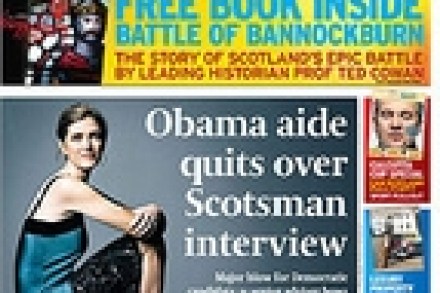
There was a fantastic clash on MSNBC last night between Tucker Carlson and Gerri Peev, the Scotsman journalist to whom Obama adviser Samantha Powers confided that she regards Hillary Clinton as a “monster”. It was an on-the-record interview but after Powers misspoke she instructed Peev “that’s off the record”. Peev had made no such agreement, and ran with the story. Why, Carlson asked, didn’t Peev do what she was told? She did a double-take. “Are you really that acquiescent in America?”. If the subject thinks “woops, that was controversial” and wants to strike a remark off the record that’s too bad unless this has been agreed beforehand.

The Brown Machine Roars into Gear

From our UK edition

I am taken to task by CoffeeHousers for praising Brown’s new team– or, as CS rather wonderfully puts it, “making cow eyes at the latest set of rentaquote spivs”. Have I gone native in a Westminster village that confuses spinners with real people? John says I’m too close to the story: outsiders should not be hired in British politics. After indulging me with that 2,400-word extended version of my political column, here’s a rather prolix reply.   First, CS, I have done a few blogs saying Team Brown is getting better because I have found this to be the case. Simple as that. Labour’s attack machine is sharper. Twice now I have learned about a Cameron press conference from a Labour Party email getting their attack lines in first.

Power failure | 7 March 2008

From our UK edition

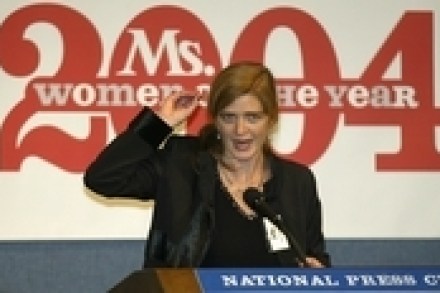
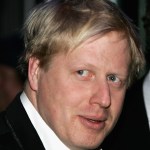
When I was at The Scotsman we dreamed about getting the kind of scoop the newspaper has this morning – one that impacts the American presidential race and runs on Drudge all day. It’s by Gerri Peev, political correspondent, who has an eerie knack of drawing candour from people (just ask Tory MP James Gray). Samantha Power (pictured), Barack Obama’s foreign policy adviser, has told Gerri she regards Hillary as a “monster” who is “stooping to anything”. Power has now resigned. This is what McCain can dream about: internecine warfare amongst Democrats. And there may be months to go.

Brown’s super subs

From our UK edition

I had so much material left over from my political column this week – looking inside the doors of the revamped Team Brown and the needing-to-be-revamped Team Cameron – that I have posted a longer version online. The gist: Brown has had a Goldman Sachs-style restructuring of No10 and he has hired very good people. He’s recognised his shortcomings, and subcontracted out to people who will not bungle. This contrasts with tales of drift at CCHQ, where – in West Wing terms – there is no Leo McGarry figure making the operation work. Cameron’s ideas are good, his press operation is good. But in terms of retail politics, you have to take this product to market.

Brownie No.1 – Inflation

From our UK edition

"Inflation is only 2.1%, or as he will now say, only 2.2%. That is not what my groceries, fuel, energy, rail travel, council tax, water charges, insurance etc. etc. tell me." - m "I'll go with inflation as well - surely there can't be many people out there who find themselves buying household fuel, food or petrol, or paying mortgages and council tax, who seriously believe that the extra they are paying can realistically be offset by cheaper televisions and frocks from Tesco." - Liz Upton As CoffeeHousers 'm' and 'Liz Upton' indicate, inflation is perhaps the hardest to swallow of all the Government's fiddled figures. As the nation shells out more than £1 a litre at the pumps and digests a 15% rise in bills, the Prime Minister tells us we’ve never had it so cheap.

What now for the Tories?

From our UK edition

Now the referendum vote is defeated, what for the Tories? First, hope it's overturned in the Lords. Then? A ConservativeHome poll shows 76% of grassroot members want a retrospective referendum. I disagree. That would allow the party to be caricatured as harking back to the past.  I suspect once Lisbon is ratified, the EU will get up to truly outrageous stuff. It will move quickly to force Britain's hand on areas where our veto is weakened or abolished. So by a May 2010 election there will be a fresh battle to fight and the part will have plenty opportunity to make their Europe approach seem forward-looking. Brown is trashed by The Sun brilliantly today, and he'll hate it. The only upside is that he may get a Tory split once the ink on the Lisbon Treaty is dry.

Europe dominates PMQs

From our UK edition

Fabian Hamilton kicked off with today’s planted question. Poverty pay in this country has been abolished by the National Minimum Wage, he says, and will Brown increase it and retain his commitment to high employment?  Poverty pay is, of course, alive and well – in those who operate in the booming black market. At least a quarter of a million are paid less than the minimum wage. Anyway, Brown announces it will be £5.73 this October – a 60% rise from the original minimum wage (Brownie alert - that’s a bogus rather than real terms rise using the £3.60 rate of 1999 as a base). We have created 3m jobs, says Brown (no, the economy has created them and 81% of those jobs are accounted for by immigrants). And just 3% of these jobs are minimum wage jobs.

The Tories should fear the dynamic new team of professionals that Brown is assembling

From our UK edition

It is a story that could have been scripted to boost morale in Conservative headquarters. At five o’clock one morning, security guards at 10 Downing Street were called in to intercept an intruder only to find the Prime Minister trying to enter his own office. Apart from the delicious image this conjures of Gordon Brown in his pyjamas, cursing as he bashes in the security code, it caricatures him as the ideal political opponent. An inept, flailing control freak, whose own shortcomings will lose Labour the next election. Alas for the Tories, this story is several months out of date. It took place in the earliest days of the Brown premiership, when he had no home access to the Prime Minister’s computer, forcing him to sneak downstairs to the office.

Pledge-avoidance tactics

From our UK edition

I went along to the launch for Cameron’s Military Covenant Commission, aimed at renewing the obligations that are owed to the military.  It’s a good idea and good box office – we had Falklands veteran Simon Weston and Frederick Forsyth (or “Freddie” as Cameron calls him) up in front of the cameras. Far better than the usual politicians. But Cameron faced the same line of questioning – if the military is his no1 priority, as he said, what will he do about spending?

What’s to blame for the Broken Society?

From our UK edition

A CoffeeHouser, William, asks how I can blame socialism for the Broken Society – a problem which he says is an “absence, not the promotion, of a collective responsibility”. This cuts straight to the heart of the problem. It is a play on words. "Collectivism" in the terms of state socialism (and the current welfare state) has become an agenda for the atomisation of society. It means more selfishness. The more folk rely on the state, the less they depend on each other. If welfare means a family is better off apart than together, the economic rationale of a family vanishes. If welfare pays more than minimum wage work, is it any wonder so many choose welfare? I have a simple rule: more government means less community.

The dangers of state dependency

From our UK edition

A powerful Panorama was shown tonight about the Broken Society (as the BBC didn’t call it). It was about how if communities get together they can reclaim control of the streets. What the documentary didn’t look at was the roots of these problems: why do kids wander around like this? What has caused communities to disintegrate in this way? Answer – mass joblessness/ welfare dependency. I looked up the data (Excel) for two areas in the programme: East End Park in Leeds and Bulwell Hall in Nottingham. In both areas, a staggering 28% of adults are on welfare (but just 5% on jobseekers allowance). This was called a “Great Depression” when it happened in America.

Can the Lords deliver?

From our UK edition

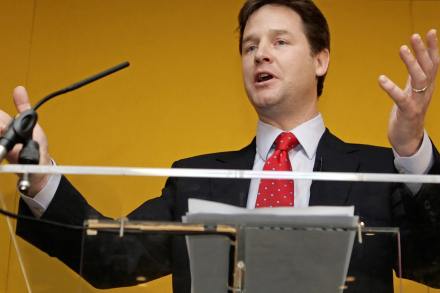
For a split second, I felt sorry for Nick Clegg. I mean, aren’t all political leaders entitled to a honeymoon? But no, he deserves this. Every bit. Each one of his 62 MPs was elected on a promise for a referendum, and in planning to abstain on this totemic question they betray all of the 5.99m people who voted for them on election day believing the Lib Dems were somehow more honest than the other two.  No wonder I Want a Referendum’s poll of LibDem voters shows just 2% agree with Clegg’s position to abstain on the referendum – a smaller number than believe Elvis is still alive. And no wonder Clegg is in the muck. His first action as LibDem leader was to tear up a manifesto pledge. Let’s not give up hope on the Lords, by the way.

The British Obama?

From our UK edition

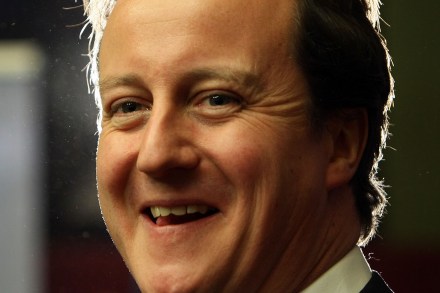
When Barack Obama first came on the scene, his supporters called him the “black Blair” (a phrase used to compliment him in America, and insult him in Britain). But is David Cameron becoming the white Obama? Look at his speech yesterday and it’s laden in similarities.   It’s all about the mission. Obama is not just running against Hillary but at the entire US political system. He seeks to tap into a separate force: discontent with the system. And as this is perhaps the strongest force in British politics (we’re about the only country in the world where more abstained than voted for the ruling party) then it’s a vein which Cameron seeks to tap.

Depositing pain

From our UK edition

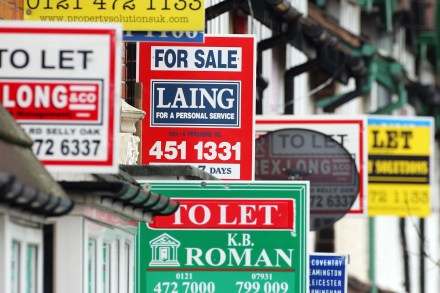
The decision by Lloyds TSB to stop offering mortgages to anyone who has a deposit of less the 10% opens up what could be a striking divergence in fortunes.  Those with enough equity will not really notice the impact of the credit crunch. First Direct, for example, was recently offering a 4.75% fix to those with more than 25% equity. It is to the poorer that loan rates will shoot skywards.  So Middle England may not notice the crunch, or any slide in its property prices. The pain will be felt, and repossessions visited, on those without a parental nest egg to deposit. And this pain may well not be picked up in national trends.

A responsible blogosphere?

From our UK edition

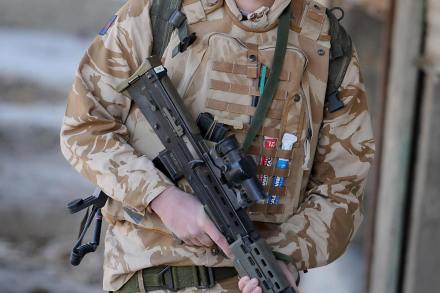
Was Fleet Street right to cover up the fact that Prince Harry is in Afghanistan? Many in cyberspace would see this as an Old Media cover up. Journalists have known about this for ages, some have great photographs ready for when the lid comes off the story. But now Matt Drudge has yanked the lid, with the BBC (and tomorrow’s papers) rushing to follow.  My take: Harry couldn’t serve in Iraq as news that he was out there would endanger his life, and those of his troops. The same would have been true for Afghanistan. I know several bloggers knew this, and suspect Guido did too - and censored himself.  My point: the British blogosphere is more responsible than its detractors suggest.

520 abortions every day

From our UK edition

I would have missed this ONS study had it not been to the very last line in the Guardian’s story about the number of over-40s giving birth. “In other findings, conceptions outside marriage increased from 47% to 56%,” it said.  Now, I’ve blogged before about most births (amongst non-immigrants) being outside marriage this year for the first time, but it turns out it has long been true for conceptions. One figure too grim for newspapers to print: of the 866,000 conceived in Britain in 2006, just 78% made it to the maternity ward. Our abortion rate is 22%.  The ONS study doesn’t include miscarriages or illegal abortions, thus magnifying the percentages slightly. But the fact remains: this country is performing 520 abortions every day.

Blowing the Tory budget

From our UK edition

Eight years ago, Tony Blair sat on Sir David Frost’s sofa and pledged that Labour would spend 8% of GDP on health. Brown called up afterwards in a fury, saying “you’ve spent my f**king budget”. One wonders what David Cameron said to Andrew Lansley after his Times interview where he says 11% of GDP should be spent on health. A number of responses spring to mind:- 1) Please explain to me why you considered it helpful to come up with this 11% figure. Please. I’m interested. 2) Did anyone authorise this 11% figure? Or was it in the faxed instructions the BMA send you each morning in large type?” 3) How am I supposed to handle the rest of the Shadow Cabinet who all want spending on their departments?

Cameron urges Brown to clean-up politics

From our UK edition

A rather downbeat PMQs session, where the following quote from Cameron is the highlight. “If he really thinks these exchanges once a week are a substitute for a proper television debate, then he’s even more out of touch than I thought. We have to be honest with ourselves – not many people watch these exchanges and not all those that do are hugely impressed with them. We’ve seen TV debates in Italy, Australia and Poland. So I have to ask him: what on earth is he frightened of?”  Cameron came to PMQs today on a mission to clean up politics, and sought to enlist Brown’s support. Does he agree that MPs should not vote on their own pay? Erm, yes he does and he voted on it too.

Made in Sweden: the new Tory education revolution

From our UK edition

Fraser Nelson reports on the radical Swedish system of independent state schools, financed by vouchers, that has transformed the country’s education performance and is now inspiring the Conservative party’s dramatic blueprint for British schools: to set them free This summer, at least 25,000 children will drop out of English schools without a single qualification to show for their years of compulsory education. Some 240,000 will graduate from primary school unable to read or write properly. By autumn, some 250 schools judged to be failing will welcome an intake of new pupils. Youth unemployment will probably hit an 11-year high. It will, tragically, be just another year in one of the world’s highest-funded education systems.