Fraser Nelson

Fraser Nelson

Fraser Nelson is a Times columnist and a former editor of The Spectator.

The truth behind the high cost of living

From our UK edition

If looked as if Alistair Darling were stuck on a groove on his Sky News interview. Michael Howard was famously asked the same question 13 times – Darling seemed to give the same answer as many times. I suspect his message was programmed by No10 because it has Brown’s fingerprints all over it. Here’s that message – repeated ad nauseum. “People are feeling the pressures, but it is driven by the fact that food world prices are up by 40% and oil has doubled in the last year. That’s feeding through. The key is we take action to reduce these oil prices and get lower prices at the pump, lower prices at the supermarket.” There are three elephants in the room, trampling on his argument: 1.

A time for choosing

From our UK edition

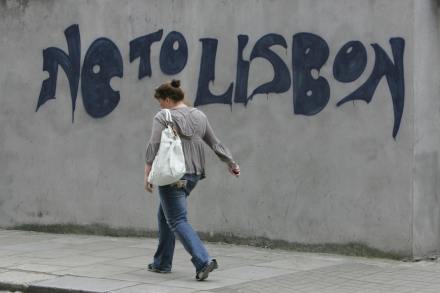
The Irish "no" vote just gets better and better. The Plan B, as Wolfgang Müünchau says in today's Financial Times, probably is to carry on without Ireland and create what many countries have wanted for some time: a two tier Europe. So the obvious question is: how do we sign up? Suddenly, Brown's decision to ratify the Lisbon Treaty becomes more than just a futile act of arrogance. It would wrongly place Britain amongst the enthusiasts, whereas the British public's position is identical to Ireland's: yes to EU, no to Lisbon. If this is an option, it is one that British government is honour bound to seize as this is, according to the European Commission's own opinion polls, what the public wants. But is honour a word in Gordon Brown's vocabulary? We shall see this week.

Unprecedented actions?

From our UK edition

Is Davis' action really unprecedented? The latest issue of The House magazine has a piece by Vernon Bogdanor, perhaps the best politics academic in Britain. He names all previous by-election candidates, almost all of which changed party and believed they had a moral duty to seek a new mandate (Quentin Davies take note). Duchess of Atholl, 1938, Conservative to independent, Richard Acland, 1955, Labour to independent. Dick Taverne (now-Lord Taverne), 1973, Labour to Democratic Labour. Bruce Douglas-Mann, 1982, Labour to independent SDP. Of the above, only Taverne kept his seat. Bogdanor says the closest comparison is when 15 Ulster unionists resigned in 1986 over the Anglo-Irish agreement, ie to reinforce the policy of their party like Davis. 14 succeeded.

Let’s drink to the Irish

From our UK edition

Eight decades ago, Britain gave Ireland back her sovereignty. Today, it seems the people of that glorious country have returned the favour. It’s too soon to know for sure if the “no” vote has prevailed, but all indications appear so. Yet again, the EU project has failed; unable to pass the tiniest bit of democracy from the European people. This tells you all you need to know about its true nature. There is something odious about a politicians’ project whose success depends on its ability to circumvent the people they purport to represent. For years their central deception has been encapsulated by the question: “do you want more powers to pass to the EU, or do you secretly hate foreigners?

Is Davis the sanest man in the Westminster madhouse?

From our UK edition

I am just out of doing BBC news interview, where they were discussing the public reaction to Davis. Eveyone in Westminster thinks Davis is mad, loopy, gone off on one, etc. But 95% of the comments to the BBC's extensive listener and viewer response says this is a very welcome break from the tired identikit politics of Westminster. When I spoke to Davis this morning and asked him if he knew he'd be denounced as a madman, he said yes. But he said he genuinely believes in the cause,  and that he hopes the public would recognise this authenticity. It could just be that Davis is right, and the political class is wrong. That this 58 year old former soldier and businessman has found a modern theme that the Cameroons missed.

The Passion of David Davis

From our UK edition

After pumping the phones, I am now clear(er) on the great Davis mystery. To get to the bottom of what many in Westminster regard as an act of borderline lunacy, you consider a few things. 1) Weirdly, Davis means it. He’s not opposing 42 days for tactical advantage: he despises the measure in every way. “He has always been like this,” says someone who worked for Michael Howard. “When Howard wanted to introduce identity cards in 2004 we pretty much had to sedate Davis. He went bananas.” His commitment to British civil liberties is heartfelt, and he gets het up about subjects he believes in. This is rare in a Westminster where most things are done for factional advantage. This is why his behaviour seems incomprehensible to political strategists.

Davis: the word in Westminster

From our UK edition

Every lunch in Westminster has just been rudely interrupted. Rumours are already whirling - did Davis storm out of a meeting with Cameron, angered that a Tory government would not repeal 42 days? Have the Lib Dems agreed not to stand a candidate against him? Michael Martin refused to let Davis resign in the chamber, and people are asking when in history the last by-election was called over an issue (the corn laws are being mentioned). I know some Shadow Cabinet members are shocked at this, asking if they should resign next time something big blows up. I just met a No10 aide smiling broadly - saying this is just mad, and will be seen as such.

Brown struggles through his press conference

From our UK edition

Short of having Nick Leeson pledge to sort out banking regulation, it’s hard to think of a less congruous sight than Gordon Brown pledging to sort the financial mess he’s got us all in to. Yet this was the pitch of his press conference today. Standing against a podium saying “fuel, food and finance” he did his best to pose as the Great Helmsman to steer Britain through the choppy waters. Here’s my take: Ulster. Tom Bradbury from ITN asked him if he can, hand on heart, say that deal was not discussed in his talks with the DUP. Like the impact of the polls on the bottled election, he denied it all.

Ed Balls gets it wrong, wrong, wrong

From our UK edition

Never let it be said that The Spectator makes no space for dissenting views. Ed Balls makes the case for his school policy today – worth reading. It is a powerful tour of the arguments and half-truths which compose Labour’s education policy. To Fisk this would end up in an article four times the length of the original, so I will confine myself to his criticism of Tory policy. Okay, just one other point. “On each of our key reforms — education to 18, diplomas, school admissions, raising standards and tackling underperforming schools — there is a clear difference between the two main parties” says Balls. Note how he says “education to 18” without the word “compulsory.

As the vote looms, Government success looks likely

From our UK edition

Depending on who you listen to, the government is currently between 4 and 18 votes down on 42 days, excluding the DUP's eight votes. But it's difficult to divine the truth when there is so much expectations management in play. The DUP could of course take the government's £200 million and still vote with the Tories. But it would be mad to close the door to further bribes. There are two more years to go of Brown and, the way things are going, the DUP may be starting a long and fruitful relationship and may be able to negotiate control of Western Scotland. Expect Brown to be unbearable if he wins. As, I suspect, he soon will.

42-days dominates PMQs

From our UK edition

It was a 42 days special, with Brown referring five times to the advice of the "security services." On Monday a CoffeeHouser named "Smiley", claiming to be from MI5, said the Service has never offered any advice in public or private, and added that the phrase "security services" was devised by Blair to obscure this point. A hoax comment, I thought, but intriguingly the head of MI5 issued a statement later in strikingly similar language. My point: MI5 doesn't arrest or detain anyone, is stridently neutral on this, and it is disingenuous of Brown to hint otherwise. But Cameron was on simply superb form, deriding Brown for quoting comments on ConservativeHome website. Yes it's popular to lock people up, he said, but the job of parliament is to do what is right.

The Blairites are making a comeback — at Conservative HQ

From our UK edition

David Cameron really must do something about the quality of the Conservatives’ leaked documents. Once they offered delicious details of the infighting and reprisals which occupied the party for more than a decade. Yet the leaked memo which emerged last Friday simply warned that the party cannot ‘sit back and let Gordon Brown self-destruct’ and must be ‘as radical in social reform as Mrs Thatcher was in economic reform’. On first glance, utterly unnewsworthy. But on a wider level, it suggests a significant shift in ambition. Radicalism is a relatively new idea for Mr Cameron. His initial strategy was to minimise the difference with Labour, making the leap as small as possible for wavering voters.

Should Britain join the Euro?

From our UK edition

Should Britain join the Euro after all? Patrick Hennessy, political editor of the Sunday Telegraph, bravely asks the question over at Three Line Whip, arguing that one can no longer claim the British economy is doing better than the Eurozone's. A provocative point, certainly, and one we're likely to hear much more often as the consequences of Gordon Brown's reign of error at the Treasury hit mortgage owners and shoppers. My answer is pretty simple. One cannot conceive of a way that the Euro would help us. The arguments used ten years ago by the pro Euro campaign - more jobs, lower prices, increased trade - have been proven to be false. If they were true, there would be some sign of them in the Eurozone member countries. The City flourished outside the Eurozone.

Let parents be the tsars

From our UK edition

Slip some truth serum into Lord Adonis and, yes, I suspect he will admit the flaw in proposing new combined primary and secondary schools. Not that they won't work, but because the idea that the politicians know how best to educate children has been tested to destruction. The Tory proposal would let new schools set up in the most poular formats - if there was a demand for new sprawling school, aged 5 to 18, it would be met. More likely the demand will be for small, manageable boutique schools of around 300 pupils, a third of today's average size. For as long as poliicians are pontificating on exam structure, school size or teaching methods nothing will improve.

An Afghanistan progress report

From our UK edition

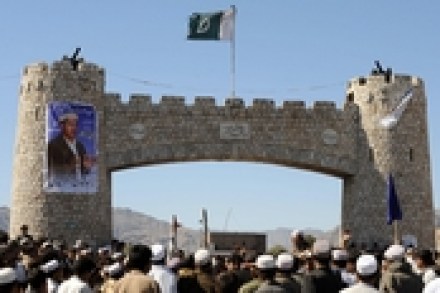
Channel Four says it feels "dutybound" to examine on what ground Gordon Brown says of the 100 servicemen who died in Afghanistan that "they have paid the ultimate price but they have achieved something of lasting value." On its always welcome Snowmail email, Ch4 lists its own yardsticks to decide if things of lasting value have been achieved and declares that "reliable measures of these things are scarce". Not too scarce, actually. Here are my thoughts on their seven tests .... 1. Territory safely held - all of Helmand is safe, apart from three districts near the border (pictured). The main areas, including the Pashtun capital Kandahar, have been made safe by the British. 2. Schools reopened: 2,000 schools have been rebuilt in the last five years, 6.4 million children (including 1.

The Taliban’s suicide bombing campaign

From our UK edition

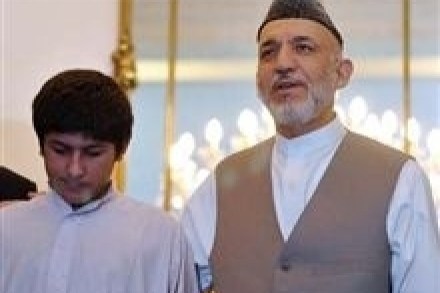
If you ever wondered what a Taliban suicide bomber looks like, examine the boy on the left.  Aged 14, Rafiqullah was caught with a suicide vest but pardoned by President Karzai.  However, this did not dent the suicide bombing campaign which yesterday claimed the lives of another three British servicemen. The suicide bombers intercepted are invariably Pakistanti – which is why an increasing number of Afghans regard this not as an insurgency but an Afghan-Pakistan war. The bombers are plucked from orphanages or madrasahs in al-Qaeda’s new bolthole, the quasi-autonomous northwest tribal areas of Pakistan. Referred to as FATA (federally administered tribal areas) this is the source of the IEDs, the Taleban agents and, alas, the suicide bombers.

Should British military casualties be named and honoured in PMQs?

From our UK edition

Should the Prime Minister (and, increasingly, each party leader) name and honour the recent fallen in Iraq and Afghanistan at PMQs? I had thought this quite respectful, but when I was in Afghanistan I was surprised to find a number of soldiers opposed to it. Their problem is that it reads to the nation a narrative of failure when the incredible success of the military during the turnaround against the Taleban barely gets a mention. I raised this with Brig Mark Carelton-Smith, commander of Taskforce Helmand, when I was in Lashkar Gah and I print his response in my News of the World column today. “The casualty rate is not high,” he said. “Yet a steady drumbeat of casualties does eat away at stamina and resolve that a country needs to keep its nerve.

Miliband needs to check his facts

From our UK edition

Strikingly good BBC Question Time last night, the highlight of which was David Miliband being asked if he could save the Labour Party. He avoided that question, but his answers to the others seemed to suggest he is ruling himself out of the job because he made so many mistakes. First, he admitted he became Foreign Secretary without knowing that Robert Mugabe had been given an honorary knighthood – something that has been a contentious issue since Blair was dragged into it five years ago. Then, on 42 days, Miliband claimed “you can be held for up to four years in France” – it’s actually four days, as Shami Chakrabarti lost no time in pointing out.

Brown squares off against the Bank of England

From our UK edition

The intriguing power struggle between Gordon Brown and Mervyn King has just heated up a few notches. Since (finally) securing his second term as Bank of England governor, King has been emboldened and is saying – in code - ‘no more of your funny games, Brown’. I blogged earlier about his assessment of Treasury spin. He has become more frank in his economic assessments, telling it how it is. Ditto his chief economist Charles Bean, who has compared the recent plunge in the pound to Black Wednesday. Now King is pushing for Bean to become his deputy, replacing the recently-departed Rachel Lomax. This is all bad news for Brown, whose election strategy depends on spinning a fake economic narrative.