Fraser Nelson

Fraser Nelson

Fraser Nelson is a Times columnist and a former editor of The Spectator.

Darling’s less optimistic forecast

From our UK edition

Good old Alistair Darling is on manouevres again. Normally, Chancellors stay quiet before the Budget but he has admitted to the Sunday Times that there will not (surprise, surprise) be an economic recovery starting in July as he predicted last October. "We must be realistic about this," he says. "I think it will be the back end, turn of the year time, before we start seeing growth here.” I can't remember another time that a Chancellor told a newspaper his new forecast weeks before he told Parliament. The Sunday Times confidently states that the Budget will show a 3% fall in GDP When Darling says "You must not build up any false hope," I wonder who he has in mind? Certain dour Scotsmen who have been going around saying that the G20 illusion will speed the global recovery?

Brown’s G20 bounce trims Tory lead to 7 points

From our UK edition

The figure Gordon Brown will have been waiting for is now in: the post G20 bounce. He's reduced the Tory lead to 7 points ( from 10 points pre-G20) with Labour up a modest three points to 34% according to a YouGov poll published in the Sunday Times tomorrow. The Tories are at 41% and Labour at 34% and the Lib Dems down one to 16% Some 52% said the G20 summit had been a success (see, the power of that $1.1 trillion figure!) Brown's approval rating is up from 36% to 41% although still outweighed by the 53% disapproving. If Labour were a rational party interested in survival, they'd call an election now and do the equivalent of crash land on the Hudson - leaving the Tories to be in power during those headlines of 3.5m unemployment and a possible IMF bailout.

Politics | 4 April 2009

From our UK edition

For the last 15 years, a four-letter word has terrified and paralysed the Conservative leadership: cuts. When it has been deployed by Gordon Brown on the electoral battlefield, the Tories have had no defence. Even after they surrendered and signed up to Labour’s spending plans, Mr Brown still accused them of planning ‘deep and painful cuts’. It is, as it happens, a charge entirely without foundation. Even now, the only people openly saying that state spending is too high are a bunch of supposed oddballs: Norman Tebbit, John Redwood — and 72 per cent of the British public. The last group has crept up almost entirely undetected upon Westminster — which is so often the last place to realise which direction the rest of the country has taken.

Has Eric Pickles seen the light on expenses?

From our UK edition

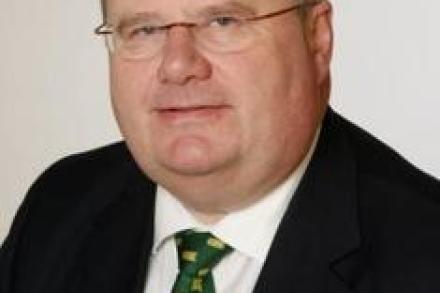
Eric Pickles says his Question Time disaster last week was a "car crash" which has changed his views on MPs expenses. He opens his heart to Andrew Neil in Straight Talk, being shown on BBC News Channel this weekend. "You're just trying to steer away and the more I tried to steer away the worse it was. You could see the conclusion coming and I made the mistake of making actually quite a trivial point ... but it has changed my views."   And how? He says a "completely different system" is needed for expenses "on the basis where it's a lot less." "I cannot justify members of parliament claiming flat-screen televisions, buying beds, buying three-piece suites, buying cookers, buying microwaves.

Brown’s illusory G20 deal

From our UK edition

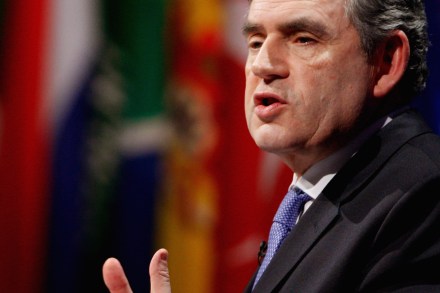
Britain has as its Prime Minister a master of political illusion. He may not be much of an orator, but there is no one better at dressing up old money as new. If the G20 nations wanted to fake progress, to spin a $1.1 trillion figure while committing no new money at all, then Gordon Brown is their man. “This is the day that the world came together to fight the global recession, not with words but with a plan,” said our Dear Leader. Well, let’s have a closer look at this supposed plan… 1) “Making available an extra $1 trillion”. Ahh, those Brown verbal tricks. What does “make available” mean? Is it guarantees, promises, statement of intent? Real spending? Not a penny of cold hard cash has been pledged by anyone.

Ten reasons why a Tory government should cut state spending

From our UK edition

For most of the 15 years, an orthodoxy has governed Westminster: that cuts are bad, and that higher state spending – sorry, “investment” - is good. While the Tories stayed mute, Gordon Brown embarked on the biggest explosion of state spending in the developed world. As I say in my column today, only the oddballs say that state spending is too high: Lord Tebbit, John Redwood and 72% of the British public. This last figure is from a poll conducted by PoliticsHome – which is moving into opinion polling, but of a specific type. It has a new technique, deliberative polling, where a representative group of 1,400 people are chosen. You ask them the question, then present them with the arguments, then ask them again.

Their minds were elsewhere

From our UK edition

How Brown must have loved reading out his day’s business at PMQs: meeting with President Obama, then his counterparts from Russia, China and Japan. For months, he will have been dreaming about today like a four-year-old dreams about Christmas. All the world leaders, all here in London – and Brown playing the statesman. Then Edward Garnier has to lower the tone of national rejoicing by raising the Lord Myners and asking Brown if he realises his ministers are “held in ridicule and contempt” by the public. “I see he has risen to the occasion of today,” noted Brown in a more-in-sorrow-than-anger way. Here is he, saving the world – and these Tories talking about grubby little things like lying ministers. So what would Cameron go on?

Who would replace Smith?

From our UK edition

Given that Jacqui Smith is almost certainly toast, who will replace her? I'm dismayed to hear James Purnell's name mentioned - dismayed because we need him doing welfare reform, and because the Home Office is the graveyard of political ambition. I'd quite like Purnell around long enough to be Opposition leader, keeping Cameron on his toes. But Brown's strategy is to identify and destroy his most likely successor - and for this reason, Brown may send Purnell to the Home Office. Ladbrokes is now taking bets on who the Home Secretary will be by Christmas.

Questions for the climate change brigade to answer

From our UK edition

Why are so many intelligent people taken in by the climate change argument? I have long (and genuinely) suspected I'm missing something. So I tuned in to Start The Week to hear Sir Nicholas Stern back with a new book on climate change - which (surprise, surprise) he says has grown far worse since he came out with his review in Oct 06.  Andrew Marr asked him why he, with a "flip of the wrist," dismisses the argument of those who do not believe it is man-made. (There is a "yearning," Marr says, to believe that it's not really our fault). Stern (who has zero scientific expertise) replied that the "status of that argument now is like that between HIV and Aids or smoking and lung cancer.

Has Darling slipped up over the Dunfermline Building Society?

From our UK edition

Might the collapse of Dunfermline Building Society turn into a political scandal? Tonight, Channel Four news has an interview with Jim Faulds, its chairman, who appears to be saying the Treasury have been lying about him. He didn't want a bail out, he says, just a £20m loan (the spin had been that he wanted three to five times that). He also flatly denies Darling's claim that the building society had any sub-prime exposure. Now, knowing the chaos surrounding every bank collapse it would be shocking but not surprising if Darling had misunderstood all this. Conspiracy theorists will note that, if he has slipped, it will be a good time for No 10 to send the dogs after him - punishing him for his collusion with Mervyn King over trying to stop Brown launching a second stimulus.

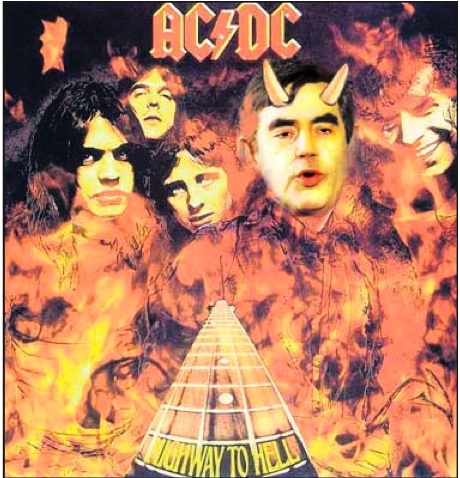
Brown’s Highway to Hell

From our UK edition

As Brown left Argentina, he might have thought "at least nothing else can go wrong now." After all, Dan Hannan had started a Mexican wave of derision with his now-famous speech in Strasbourg; then Brown was introduced in New York as a man who became PM in 2007 "and it was all downhill ever since"; then to Brazil where he was snubbed by Pele and ribbed by the president; then to Chile to be given lessons in Keynsian economics. Then, finally, he learns Cameron will have 60 minutes with Obama - just 5 less than he is due. Thus the scene is set for a farcical G20 next week, and I lay all this out in my News of the World column today. Set aside the personalities, and there is a rift in how to deal with the probem: is more debt-fuelled spending a good thing?

Politics | 28 March 2009

From our UK edition

To comprehend the scale of the sickening task awaiting George Osborne if he becomes chancellor, consider the following. If he were to raise VAT to 25 per cent, double corporation tax, close the Foreign Office, cancel all international aid, disband the army and the police, release all prisoners, close every school and abolish unemployment benefit he would still be unable to close the gulf between what the UK government spends and what it raises in taxes. Hopes of a relatively rapid economic recovery that could conceivably fill this gap are receding every month. And there is a limit to how long the government can make up the difference with borrowed money and refer to its profligacy as a ‘stimulus’.

Another trip, another embarrassment for Brown

From our UK edition

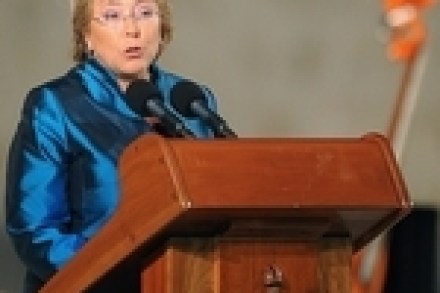
For a while it looked like Brown was about to go to a country without some comic mishap. But he didn't let us down. Michelle Bachelet, the Chilean President, noted at her joint press conference with Brown how her government had been able to introduce a significant fiscal stimulus because of their "decision during ... the good times in copper prices, we decided to save some of the money for the bad times and I would say that policy today is producing good results." – a prudent approach that Brown, sadly, didn't take in Britain. It's worth noting that Bachelet is authentically Keynesian: the whole principle behind stimulus is that the state reduces debt in the boom and counter-cyclically gears up in a bust.

Standing up for our financial sector

From our UK edition

I was on the Today programme this morning (here) defending bankers, up against Michael Meacher who has drafted a private members' bill imposing a punitive retrospective tax on bonuses. This, of course, is simply vengeance - the political equivalent of smashing Fred Goodwin's windows. And for such a bill to be even before Parliament sends a dangerous message about the mood in Westminster. My argument is simple: Britain does banking phenomonally well, and we profit from hosting this highly mobile breed. I didn't give statistics on air, but the financial sector generates a quarter of all corporation tax, the richest 1 percent pay 23 percent of income tax. What happens if we threaten 45p tax rate rates, or have ex-ministers lay down legislation for arbitrary tax raids?

Cameron should learn to love the bankers

From our UK edition

Seeing Fred the Shred’s house being trashed in Edinburgh gives a glimpse of the nastier elements of the hang-a-banker mood out there – not just in Britain but internationally. Here is a remarkable opportunity for the Conservatives. World over, there are votes to be gained in threatening to tax or regulate the bejesus out of all financiers. Left-leaning governments (such as the Obama administration) find it difficult to avoid this temptation. There has been something of a rift in the White House over this, as Obama’s economic advisers know it makes makes very bad economic sense: in this globalised world, bankers can go anywhere they like (Barclays, for example, recently said it intends to double its staff in Tokyo).

The beginning of the end?

From our UK edition

Is the Government about to go pop? If Britain does go to the IMF it would be because the Government fails to find buyers for its debt. And this morning, for the first time in seven years, this happened. It could be a one-off, it could be for technical reasons as yet undisclosed. But given how dependent Brown is on being able to bum money from the City, a so-called buyers' strike (ie, when investors say 'we don't want your crappy debt') will be hanging over him like the sword of Damocles. Britain this year will need to raise £180bn according to Ernst & Young, equal to the entire economic output of Ireland. It's a mammoth task. And this morning the auction of the 4.

The Tories’ current plans would leave national debt 60% higher than it is today

From our UK edition

I had a text a while ago saying "you doing Gordon Brown's work for him then?" and that was from someone who had not the seen graphic which the News of the World designed to go with my column today. I know many CoffeeHousers will take it as prima facie case of treason, but I'm afraid my sole loyalty is to The Spectator (1828) Party and these things have to be said. Cameron's original poster claimed a baby born in Britain is saddled with £17,000 of Brown's debt. Under the plans the Tories are pursuing - ie, raise spending regardless of the tax base - this figure would be £27,000 by the end of a Tory government.

A 45p tax rate is not what’s best for this country

From our UK edition

It has taken five months but George Osborne has finally fallen into the trap Gordon Brown set for him when he proposed a new 45p tax on the richest. Without prompting on The Today programme this morning, Osborne said: “If you look at the proposal to increase the top rate of tax for people earning £180,000, a new 45% rate, I've said that's going to be difficult to avoid and I think that is just a statement of the truth.” Difficult to avoid if you have no imagination. It’s not a statement of truth, but a depressing snapshot into the Tory thought process. “If we do x, Gordon Brown will say y, so we should do z instead.

Politics | 21 March 2009

From our UK edition

Once a week, about half of the Cabinet make the rather pointless journey into an underground bunker in Whitehall to learn just how quickly the British economy is disintegrating. This is all to humour Gordon Brown, who calls them his ‘National Economic Council’ and has them meet in the nuclear-proof room as if they were at war with the recession. After six months of such meetings, it is depressingly clear to all concerned that the recession is winning, and in ways that they never really thought possible. Given that almost everyone in Westminster is trying desperately to read the politics of the recession, those summoned to the Brown bunker have at least one clear advantage.

Regulating for the future

From our UK edition

One of the biggest dangers posed by the credit crunch is the instinct to introduce regulations that would stifle any economic recovery. Those whose memories only really cover the boom years might think the mistake was light-touch regulation and that you now need heavier regulation. That's why the debates in the Lords on this subject are far more informative than those in the Commons: the upper chamber has people who are veterans of economic warfare and know the danger of jumping too much the other way. Here are some edited extracts of my interview with Lord Lawson (read the full transcript on the Spectator Inquiry wiki site) who makes the case for a British Glass Steagal Act. Do you think the FSA was structurally unable to see what has happening?