Fraser Nelson

Fraser Nelson

Fraser Nelson is a Times columnist and a former editor of The Spectator.

Finally, a stroke of good luck for Gordon Brown

From our UK edition

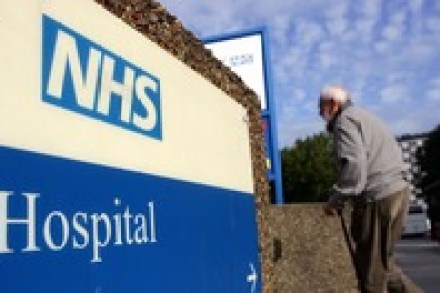
This UK-US spat over the NHS has spilled over into a snowballing twitter campaign, with comments flooding in from Brits. Nigel Lawson said the NHS was like a religion to Britain, and many have come to defend the faith. Brown has lent his support to the campaign, and it's perfect for him. It allows him to play the patriotic card, telling those yanks (especially - boo - the conservative ones who watch Fox news, and their neocon supporters like Class Enemy Hannan) where to shove it. He also gives President Obama - he of Obama Beach fame - some political support. Finally, it allows him to claim that the NHS is somehow a great success - and of course it was a great Labour creation that the wicked Tories would ruin etc etc.

The truth behind Mandy’s “half-a-million jobs” claim

From our UK edition

Anyone listening to Lord Mandelson’s claim this morning that the Brown stimulus saved “at least” half a million jobs would have smelt a large, whiskered rat. The Treasury has tonight told The Telegraph that the 500,000 figure was a maximum estimate, not a minimum as Mandy claimed. Your baristas here at Coffee House have asked the Treasury to show us their study – not available, it seems. So we have submitted a Freedom of Information request for it. While we all hold our breath, it’s worth looking at this claim in more detail because it is a Brownie we are highly likely to hear again.

Brown’s children

From our UK edition

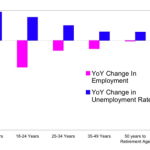
Why is this recession so cruel to the young? The unemployment figures - now up to 2.44 million - are bad enough. It's the largest single quarterly drop since data began in 1971. But look deeper and there's a striking disparity amongst the age groups. The under-18s – school leavers – are hit the most, with their employment numbers down 17% year-on-year. The 18-24 year olds are next worst hit. But there is actually a rise in pension-aged people returning to work. The bottom line: unemployment amongst the under-25s is a third higher than when Labour came to power. CoffeeHousers may remember how full of pious anger Gordon Brown was during the last recession, saying that youth unemployment was a particular outrage, and he called them "Major's children".

‘Progressive conservatism’ riles Mandelson because Labour has achieved so little

From our UK edition

Conservatism is beautifully simple. It flows from the belief that society is stronger and fairer when power lies with the many and not the few. It is about trusting institutions — the family, the community — while being sceptical about the grander claims of government. It is about believing that a man will spend the money he earns more wisely and justly than the state could ever do on his behalf. To be a conservative is, fundamentally, a vote of faith in mankind. But how can one distil all this into a soundbite? David Cameron has struggled to answer this question. He watched uncomfortably as William Hague (briefly) and then Iain Duncan Smith tried to import ‘compassionate conservatism’ from the US Republican party.

Mandy’s class war avoids the real problems

From our UK edition

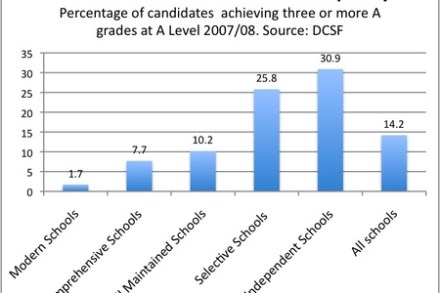
I don’t for a minute believe that Mandelson believes this class war nonsense, brilliantly rubbished by Melanie Phillips today. His decision to reprise the “posh unis don’t let in poor kids” theme is a more a sign that even someone as horribly powerful as Mandy feels the need to kowtow to a certain element of the Labour Party. The Sutton Trust is absolutely correct to point to social segregation as being one of the biggest problems in Britain today – but the problem lies with the schools, not the universities. The suggestion that snobbish admissions tutors are somehow to blame does the working class no favours by deflecting attention from the real problem.

Can Cameron afford Lansley?

From our UK edition

Is Andrew Lansley using his untouchable status* to bounce David Cameron into a three-year budget settlement? On the Marr sofa (or the Sophie Raworth sofa as it was today), he announced that the Tories are planning "real term increases to the NHS year on year." Well, David Cameron has only said he would protect health from cuts - but he has not specified how long for. It could be as little as one year. In my political column for this week's magazine I recommend Cameron keeps uses this to wriggle out of what is now an unaffordable promise. He should freeze NHS spending for a year, then take a scalpel to it. When Lansley first gaffed about how protecting health cuts would mean 10 percent cuts, there was a key part to this overlooked at the time.

Why Georgia matters

From our UK edition

When David Cameron flew to Georgia last year, it was perhaps the clearest and most welcome statement of foreign policy made by the party since he became leader. Liam Fox’s piece on conservativehome today pays tribute to this, and gives us a welcome reminder of the stakes. The Russian threat is growing: there are 10,000 troops there and settlements will soon start. The best the West can do is show solidarity, and there is no clearer sign than going there. As Cameron did. Like Israel in the Middle East, Georgia is a light of democratic freedom in an area with plenty of unlit candles. There is something totemic about its independence, something the Conservatives can express clear and unequivocal support for.

The difficult slog ahead

From our UK edition

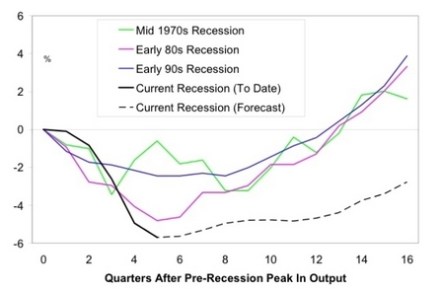
With about 5,000 people being laid off every day, it sounds strange to talk of an economic recovery - as Stephen Timms did at the World at One. But he's right. I reckon that, even now, the recession is over and that the economy will be shown to have grown in Q3 - ie, July, Aug and Sep. This is, of course, just the end of the beginning. We will have started the long crawl to recovery - and it will be about five years before the British economy gets back to where it was before the downturn. So it is a rash politician who will say "all clear, recession over" - unemployment will keep rising until about the middle of next year and then may take a very long time to recover. We are used to relatively quick economic recoveries - as per the early 1980s and 1990s.

Why Cameron should ditch the 50p tax rate

From our UK edition

When justifying his decision to keep Gordon Brown’s 50p tax for the super rich, Cameron has recently taken to saying that the well-off must “pay their fair share”. This is worth closer examination. The richest 1% in Britain contribute 24 percent of all income tax collected – it is unclear whether Cameron regards this as “fair” or not. But if he wants it to rise, then it is clear what he should do. Data released last week from America, and picked up by the smarter economics bloggers, gives us a striking example. If he wants to soak the rich, cut their taxes. This US data shows that the richest 1 percent contribute 40 percent of all tax collected. And zoom in on the richest 0.

Cameron must now show his mettle and take proper advantage of Labour weakness

From our UK edition

This is turning into a summer of extraordinary good luck for the Conservatives. First the Norwich North by-election victory, then the extraordinary success of the Totnes open primary. And all set against the background of what is, for Tories, the most mellifluous sound in politics: Harriet Harman’s voice. As David Cameron enjoys what will probably be his last real holiday for several years, he has a comfortable dilemma: now all this good fortune has arrived, what will he do with it? A basic formula has governed British politics in the last 35 years: the more useless Labour becomes, the bolder the Conservatives can be. Mr Cameron is at his most active when facing disaster, as he demonstrated with radical welfare and education policies ahead of the election-that-never-was in 2007.

Balls keeps on telling porkies

From our UK edition

So, it took me two weeks to get out of the blogging mindset - when you read something outrageous, and start mentally composing a blog. I found out that James and Pete had a bet to see how long I'd last for while on holidays - they reckoned four days. Ha! I was back yesterday, and didn't blog just to show that I could hold out. But there's been plenty of temptation during these past two weeks. Not least when my friend Ed Balls tried one of his porkies again. "I actually think it's an astonishing achievement that we've arrested that rise in inequality," he said two weeks ago. I was going to let that one slip, until I spoke to a senior Tory yesterday who said that inequality was rising in the 1990s. That's Balls, I told him - but of course, who's to know?

Escaping the Internet

From our UK edition

This little phone, pictured, is my present to myself for this summer. It’s a Nokia 2630, costing £35 and distinguished by what it can’t do. No 3G. No email. No internet. No PoliticsHome, no ConservativeHome – just my wife’s family home in the outskirts of Stockholm, where I will be spending the next fortnight. I have all manner of missions lined up. There is a Swedish cookbook whose secrets I want to master. And there is a charming, rather charismatic 19-month-old boy I want to spend some time getting to know a little better. Last time I tried to take time off completely – sans internet - was my honeymoon. But the Blair coup happened and I ended up filing a cover story from my hotel  – which my wife still teases me for.

A soldier’s tale

From our UK edition

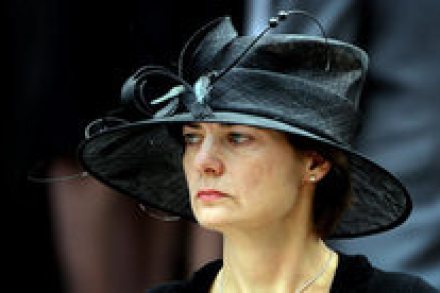
This picture is, for me, one of the most haunting images of the Afghanistan war – Sally Thorneloe at her husband’s funeral last week.  Lt Col Rupert Thorneloe, who was killed by a Taleban roadside bomb three weeks ago, told me about her when we were on a trip to Iraq last summer. It’s weird, he said, he felt he saw her less working in London than he did on deployment. That day we left for the trip, he had arrived home at 2.30am – and left at 7am. Sally had seen him off. “Did you work as late as he did last night?” she asked the special adviser who had dropped by Rupert’s house to pick him up. But no-one worked like Rupert: 7am to 10pm every day.

Purnell starts building his leadership platform

From our UK edition

Since I hailed James Purnell as a possible Labour leader just over a year ago , CoffeeHousers have been, to put it politely, unconvinced. But pick up The Guardian today, and I tell you: my boy's on track. He has given an interview to Allegra Stratton which puts him squarely in the frame to be Labour's leader-after-next. She came away thinking that he'll "probably never stand to be leader," but my impression is different. I mean, he tells her that he decided to quit the government while sitting "on a park bench on a former council estate in his constituency". Note, not at Eat (where he'd always nip out for drinkable coffee while at the DWP), not at one of his favourite Soho restaurants. His Newtonian apple drops while he's sitting on a park bench in a touched-up Manchester scheme. Classic.

The IMF reveals just how bad it is

From our UK edition

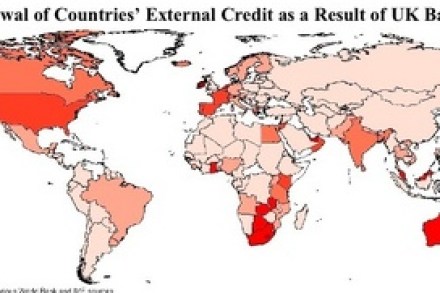
Gordon Brown calls the recession the "world economic downturn," but the IMF has just released a devastating report into Britain which puts things in a different perspective. It's really worth downloading (here) and saving somewhere: all sorts of ammo is in there. Page 22 is devoted to the  "Potential Spillovers from the UK Financial System to the Rest of the World". It's not just Britain that has been screwed by the collapse of the British banks. The Brown/Balls banking regulatory system meant there was no proper oversight and these banks were lending like crazy to all parts of the world (including US subprime). Now withdrawal of such credit is really affecting those countries - and the IMF gives the below colour coded map to say which parts of the world are hit.

Why marriage should be recognised in the tax system

From our UK edition

Cameron has been fairly bold in entering the debate on marriage, because we don't like do that debate in Britain. Not really - it's private, and we Brits don't like debating private things. Anything which helps marriage can easily be paraphrased as "deploying fiscal incentives to force something which should largely be a private decision". And not by the left, but by our very own Pete Hoskin in the below post. Now, we are a heterodox bunch of baristas here at CoffeeHouse and we do disagree - so here is why I think Pete is wrong. I'd like to have a go offering some of the "convincing answers" he's looking for. Right now, millions of couples are better off apart under the perverted incentives of the welfare state. The Tories would remove this anomaly.

Political reform mustn’t be left to politicians

From our UK edition

The House of Commons is not, technically, the ‘mother of all parliaments’. This phrase was coined in 1865 by the radical MP John Bright, who was referring to England. She was, he said, the ancient country of parliaments: men had held these august gatherings for 600 uninterrupted years, even before the Conquest. So of course, he argued, the vote should be extended to the urban working class: anything that took greater account of English opinion would necessarily enrich our political system. In this spirit, The Spectator has been asking readers over the past six weeks to make proposals for constitutional reform. It is, we have argued, too important an issue to leave to Gordon Brown or to any committee the Prime Minister might be tempted to convene.

Behind the swine flu panic

From our UK edition

I am instinctively sceptical about health scare stories, so have been watching the Swine Flu story with much suspicion. We are seldom reminded that it's less serious than normal flu. Hysterically, Andy Burnham claims there could be up to 100,000 infections a day in Britain next month - the latest worldwide tally is 121,000. We are told how many die from swine flu, but not how many have also died from normal flu so we can put it in context (the DoH, remarkably, can't tell me).   Proper diagnosis is not being done by our doctors. Virtually anyone with a summer cold is being told to stay at home for seven days - result! - and prescribed Tamiflu just in case.  I went hunting for the normal flu figures, but found something else instead: that this is a London flu.

Continuing the immigration debate

From our UK edition

My post on immigration the other week was picked up by BBC World Service, who invited me to discuss it with Lord Maurice Peston (podcast here). I regard it as one of the most important yet least discussed issues in Britain right now, and my original also raised some typically robust comments and critiques from CoffeeHousers. My point is that Britain has a dangerously dysfunctional labour market, one so flawed that when the economy expands it sucks in foreign workers rather than tackling our unemployment. I also revealed that all net job creation in the private sector can be accounted for by immigration. Anyway, allow me to respond to some of the points raised: 1. THE BORIS FACTOR.

What Labour women think of Gordon

From our UK edition

For those of you who missed it, Radio Four has just broadcast a piece about what the women who worked with think Gordon Brown think of him. Not a lot, it seems. Here are some of the quotes: Jane Kennedy "Well I think that the Labour Party is expecting us to do better. The Parliamentary Labour Party were told in the first meeting after the election in June we were promised that there was going to be a change.  We haven't seen that change yet, we haven't even really seen the kind of clarity and willingness to listen to what the voters are telling us about policy.