Fraser Nelson

Fraser Nelson

Fraser Nelson is a Times columnist and a former editor of The Spectator.

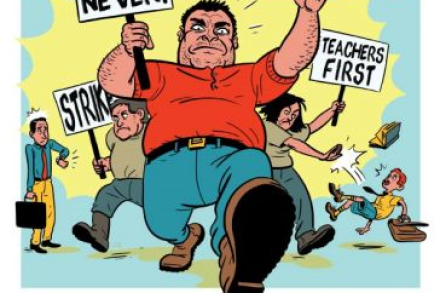
Breaking strikes

Shortly before Michael Gove organised a strike for journalists in Dundee, I crossed a school picket line with my mum, a teacher at my local school (Nairn Academy). She was a member of a teaching union, the PAT, that didn’t believe in strikes, so when the school closed the two of us went in. It

Tax versus philanthropy 

I was on the panel of Any Questions last night in Saltaire, the most beautiful town I’ve seen outside of the Highlands. Jonathan Dimbleby always warms everyone up with a test question, which lets the panelists make their mistakes early. The first question was this: the town of Saltaire was founded by a philanthropist, Sir

The myth of cuts

Last week, Ed Balls warned against the effect of George Osborne’s vicious, front-loaded cuts. Today, we have an update in the form of monthly state spending figures. In cash terms, a new record has been set in state largesse. The UK government’s current spending was £51.7 billion in May, up from £50.6 billion in May

The limits of stigma

As James says, it’s been a day of high passions here at The Spectator. He feels strongly that many of the problems in Britain are societal, and require a cultural shift. Maybe so. I disagree with James when he says a Prime Minister’s role is to “lead society”. I disagree. We pay him to run

Cameron takes on bad dads

It’s Fathers’ Day today — and David Cameron is marking it with an extraordinary attack on those dads who are AWOL. It comes in one paragaph of an otherwise excellent and moving piece for the Sunday Telegraph (albeit one that downplays the role of the taxman), in which he says that men leaving their family

Hilton will probably ride it out

Not for the first time, a throwaway line in a Spectator article by James Forsyth has been picked up by Fleet St and set the hares running. It’s about Steve Hilton, Cameron’s best friend and chief strategist, and whether he’ll quit. Hilton is a man in a hurry — rightly, in my view, as the

Balls' bloodlust gets the better of him

Ed Balls’ problem is his killer instinct. If he were a Twilight vampire, he’d be a Tracker: someone whose uncontrollable bloodlust takes him to places he should avoid. His position on the deficit is so extreme — more debt, more spending — that he’s pretty much isolated now. People are mocking him. John Lipsky, the

Inflation: cock-up, not conspiracy

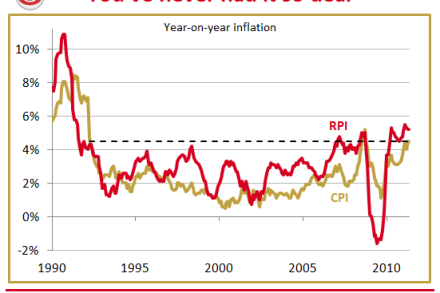
Britain has the worst inflation in Western Europe; this is today’s story. CPI is 4.5 per cent and RPI is 5.2 per cent. This masks even worse rises which, as the IFS says today, hit the poor hardest. The price of a cauliflower is up 38 per cent to £1.26, potatoes are up 13 per

Labour is working towards a decade of Opposition

Is Ed Miliband finished? That’s the implication of many of the papers today — and David is portrayed as waiting in the wings, ready to claim his rightful inheritance. Dream on. Ed Miliband’s leadership of the Labour Party is hardly in crisis. If there was an election today, he’d win a Labour majority of 34.

How the coalition hopes to fix Britain's economic dysfunction

The largest welfare-to-work programme on the planet is launched today by Chris Grayling and Iain Duncan Smith. It’s not much of an exaggeration to say that the future of this country — and, perhaps, David Cameron – depends on its success. The lead article of this week’s Spectator looks at it, and we used various

Osborne's "flexibility" explained

So what does George Osborne mean by “flexibility“? Do we hear the quiet sound of a gear change, prior to a u-turn? No, I’m told, it’s Plan A all the way. And here are the details. The government’s five-year departmental budgets (the so-called DEL limits) are set in stone. They won’t change (in cash terms)

The Lucifer Effect

Today’s papers are full of comment on the brilliant Panorama exposé of care home abuse. But none have mentioned what jumped out at me: the parallels between this and the Stanford Prison Experiment. The way that the tattooed Wayne treated his mentally ill patients is sickening — but, to me, this is not just a

The austerity hasn't started yet

Another month, and another all-time record for state spending in Britain. The government splurged £1.8 billion a day in April — of which £332 million a day was borrowed. Up goes the national debt. All of which leaves us with the question: where is this austerity that George Osborne keeps talking about? He’s been in

Cutting through the BS

If the Big Society were a horse, it would be shot. The wounds are too deep, the contamination too great, its legs are broken. And, worse, the Big Society is giving a good idea a bad name. David Cameron tried manfully today, but we only ever hear about the BS (as most Tory MPs call

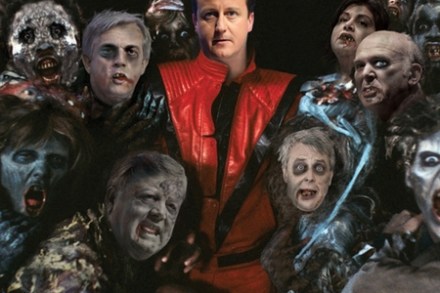
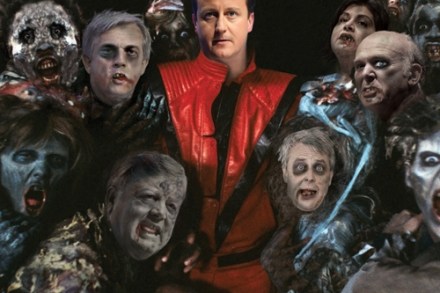
More thoughts on Cameron's Cabinet of the undead

CoffeeHousers raised some very good points about my post on Cameron’s undead ministers. I thought I’d reply in a post, rather than the comments thread. 1. About the ‘undead’. Cameron leads a radical government of surprisingly competent people: the ambitious tasks of welfare and school reform are testimony to how far he is moving. Cameron’s

Cameron should cleanse his Cabinet of the undead

Chris Huhne “cannot be sure” whether he might, after all, have been driving his car that fateful night. Ken Clarke cannot be sure why he spoke about rape in that way. Andrew Lansley cannot be sure. All this we learn from the Sunday newspapers: three ministers are for the chop — it’s just a matter

Hugh Grant and Low Life

I’ve always rather admired Hugh Grant, so it was almost a pleasure to be beaten up by him on Newsnight last Friday. He was attacking the celebrity-hunting media, whereas I set out to defend free press and self-regulation of the media. If you’re going to have sympathy with any Hollywood figure, you’d have sympathy with

Debt as a security concern

Is Britain’s growing national debt a matter of national security? In a speech this morning, Liam Fox said so. Sure, he said, you can protest at the defence cuts — but strength comes from having a strong economy and strong national accounts. “Those who are arguing for a fundamental reassessment of the Defence Review are really

Salmond’s treasure map

Since oil was struck in the North Sea in 1970, it has fuelled dreams of Scottish independence. ‘Rich Scots, or poor Britons?’ ran the Scottish Nationalist Party’s slogan two years later. Alex Salmond has refined this slogan into a formal plan for separation which — he says — would make Scottish independence financially viable. For