Fraser Nelson

Fraser Nelson

Fraser Nelson is a Times columnist and a former editor of The Spectator.

An EU ruling that Cameron must fight

A showdown with the EU may come sooner than we expect. The European Commission has today threatened to sue David Cameron’s government unless it starts letting EU citizens come here to claim benefits. Until now, any EU citizen could live here, but if they couldn’t find work, they were not entitled to claim benefits. This was widely accepted. Today, the EU has issued a statement saying: ‘Under UK law, certain social security benefits - namely Child Benefit, Child Tax Credit, State Pension Credit, Income-based Allowance for Jobseekers, Income-based Employment and Support Allowance - are only granted to persons with a "right to reside" in the UK. Other EU nationals have to fulfil additional conditions in order to pass a so-called 'right to reside' test.

Miliband VS Predator

You can see what Ed Miliband was trying to do. As his party isn’t trusted on the economy (his number one problem) he had to say how much he admires business. But, then again, his party is bankrolled by unions who dislike capitalists. So, Ed Miliband draws a dividing line: the ‘predator’ companies (bad) and companies like Rolls Royce, for example, and presumably small businesses (good). Here is the new narrative of his leadership: Miliband vs Predator, coming to a cinema near you. But just like Cameron’s ‘runaway dads’, the concept of a predator company is easier to talk about in the abstract than in real life. Just what is a bad company?

The danger to a free press

“In Britain, a free press is non-negotiable,” Ivan Lewis has just said – before suggesting ways that Government might, ahem, oversee this freedom. The shadow culture secretary has an idea: a register system to license journalists. “As in other professions, the industry should consider whether people guilty of gross malpractice should be struck off,” he said. He wants “a new system of independent regulation including proper like-for-like redress, which means mistakes and falsehoods on the front page receive apologies and retraction on the front page”. It’s an odd type of independence: one that would be prescribed by the political elite. And what type of journalists might it target?

Labour won’t look on the bright side

Walking around the Labour conference and its fringes, it sometimes feels like the party suffered not just a defeat but a lobotomy. There are no great arguments about the future of socialism, the uses and limits of the market etc. There is no spark, no protest, not even dissent. No debate, no tension. That's not to say there aren't any clever people: Ed Miliband has some real brainboxes behind him and some of his ideas show the result of hard thinking. There are plenty of bright young Labour things, and  it will be a party worth listening to when the 2010 intake starts to ascend the ranks. But now? Last night's receptions felt more like a wake than a rally. Jurassic union leaders roam around with a proprietorial air.

Miliband woos the strivers

Finally, a good idea from the Labour conference. In his speech tomorrow, Ed Miliband will say he'd give workers priority over the jobless for social housing. This is the dividing line he was reluctant to draw when asked to by Andrew Marr on Sunday. It's a clever move, and one that recognises the resentment felt by the strivers against the welfare dependent. He will say: "The hard truth is that we still have a system where reward for work is not high enough, where benefits are too easy to come by for those who abuse the system." So councils dolling out housing should not only take need into account, but whether applicants "are working, whether they look after the property and are good neighbours." I can't see why IDS would oppose this, and perhaps consensus can be reached.

New Balls?

Given that Ed Balls’ strategy has backfired on his party so far, with Labour ten points behind the Tories on economic credibility, something has to change. Either the policies, or the shadow chancellor. Read between the lines of Balls’ speech today, and you can see a man backtracking – and trying to hold on to his job. Even when Balls tells porkies, he does so with imagination and élan. He is always worth listening to. He had the 8.10am slot on Today this morning. Here’s what jumped out at me: 1) Mea Culpa, kinda. The other day in the Commons, Balls said sorry – you could tell then that it’s the first of many.  He repeated it again, while making clear that he is no more guilty than any finance minister anywhere around the world.

Balls’ new rules

It’s Ed Balls’ speech today, and he’s cleared it with Ed Miliband – a courtesy that Gordon Brown never extended to Tony Blair. He promises to introduce a new set of fiscal rules, which I’m sure will make the nation’s heart leap, given how well the last set of fiscal rules worked. But what jumps out at me is his pledge to use any money raised from flogging off the banks for deficit reduction, rather than a giveaway. Here’s what Balls is expected to say, 'Even as bank shares are falling again, David Cameron and Nick Clegg are still betting on a windfall gain from privatising RBS and Lloyds to pay for a pre-election giveaway. We could also pledge to spend that windfall.

Miliband: cuts are okay now

I’ve just caught up with Ed Miliband on Marr this morning (transcript here) and his aim seemed to be burying Ed Balls’ complaint about cuts being too fast and too deep. In its place, he called for more growth. Here’s my take on his interview: 1) He doesn’t complain about cuts.  “The basic message is this: we've got to cut the deficit, but the best and most important way of doing that is to grow our economy… A year ago there was a contested argument whether the government strategy should work. It's not working.” You don’t hear him talk about Ed Balls’ “too hard, too fast” cuts, just a reference to ‘the government’s strategy’.

Read my lips: no new tax cuts

There are still rumours in Westminster that David Cameron will cut taxes to stimulate the economy, but the speech he gave to the Canadian parliament on Thursday rather scotches this idea. Here’s what jumped out at me 1) No Obama-style deficit-financed tax cuts, please, we’re British. "The economic situation is much more dangerous and the solution for most countries can not be simply to borrow more. Because if the government doesn’t have the room to borrow more in order to cut taxes or increase spending, people and markets start worrying about whether a government can actually pay back its debt. And when this happens confidence ebbs away and interest rates will rise, hitting people with mortgages, and hitting companies that want to borrow to invest.

Is Osborne ready for the next crisis?

There is a strange pre-Lehman feeling in the air right now: the idea that something awful is going to happen, but no one knows what or when. This is laden with political ramifications. The problem for the Tories last time was not that George Osborne had been caught aboard HMS Deripaska. The greater problem was that a crash had arrived and the Shadow Chancellor had nothing to say. Brown, at least, seemed to have an agenda, and the Tory poll lead was reduced to one vulnerable point. I admire Osborne, but he can do far better in making the case for the government’s economic strategy. If there is a second crash, he’ll need all his skills to convey confidence – to sound as if he knows what he’s talking about.

Time to leave the EU?

Today's Lib Dem attack on their coalition partners comes from Chris Huhne, who rails against a "Tea Party tendency" in Conservatives sceptical of the European Union. His premise is that those who are hostile to the EU are a minority. It's worth digging a little deeper here, because the opposite is true. If you believe that Britain has benefited from EU membership, you're in a smallish minority – 35 per cent to be precise. Huhne seems genuinely unaware of the depth of feeling out there. CoffeeHousers may be familiar with opinion polls commissioned by eurosceptic groups. But – as we say in the leading article of this week's Spectator – the European Commission can hardly be accused of an anti-EU bias.

JFK: a tax-cutting headbanger

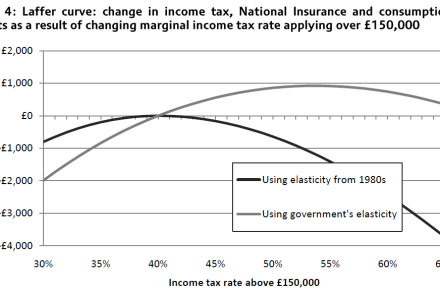
https://www.youtube.com/watch?v=qmHdqWPB_S8 Given that Vince Cable was once a lecturer in economics, it's odd to see him feign ignorance over its basic concepts. Listen to his speech today."There are politicians on both left and right who don’t [get it]. Some believe government is Father Christmas. They draw up lists of tax cuts and giveaways and assume that Santa will pop down the chimney and leave presents under the tree. This is childish fantasy. Some believe that if taxes on the wealthy are cut, new revenue will miraculously appear.” It’s perhaps worth quoting one such ‘childish’ politician who was articulating this long before Art Laffer doodled on a cocktail napkin.

Don’t mention education reform

A new rule seems to have been adopted at Lib Dem conference: don’t mention Academies. The coalition’s greatest single success story – something David Laws and Michael Gove agreed on before the election – is being airbrushed out. A favourable reference to Academies taking on kids from deprived backgrounds was proposed for a conference motion, but has been excised by the delegates. Lib Dem activists are heavily drawn from the ranks of local authority councilors, many of whom hate the way that schools have been given the power to break free from council control. Confronting them was a key part of Nick Clegg’s modernization programme. It seems that this has been aborted.

Clegg’s humdinger of a rally

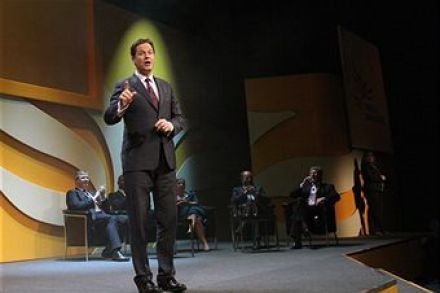
That was a great wee speech by Nick Clegg. “We have only five ministers in the Cabinet,” he said. “Well, six if you include Ken Clarke.” His mission was quite tough: to go meet the membership of a party that had just lost half of its popular support, was spanked in an AV referendum, seen its troops massacred in English councils and seen its support in Scotland shrink to staff members and blood relatives – all simply because Clegg joined the Tories in government. But he made the case brilliantly. The BBC estimates that the Lib Dems have implemented three quarters of their manifesto he said, more than the Tories. “Not bad for a party with just 8 per cent of the seats.” He handled criticisms of him rather well.

Clegg’s leadership conundrum

If Nick Clegg has decided that he won’t run for re-election, what are the implications? Today’s Daily Mail serializes a book by Jasper Gerard about the party, where he claims Clegg told his wife Miriam that he’ll only do one term as Deputy Prime Minister. That makes sense. The Lib Dems will want to separate from the Tories before the next election, and that’ll probably mean choosing a new leader who can more plausibly attack Tories during the campaign. Clegg will doubtless have post-Downing Street job offers involving various forms of European statesmanship, a political afterlife where he can speak Spanish from podiums without being given funny looks.

An afternoon to remember

  The strength of Coffee House lies in the quality of the arguments which follow our posts. Journalism today is about starting a conversation with readers, something we at The Spectator firmly believe in. So on Wednesday, we invited 250 subscribers around for a cup of tea. We have a wonderful garden here at 22 Old Queen St, overlooking St James' Park. We served up sandwiches and tea (courtesy of the East India Company) and listened to our readers' likes, loves and dislikes. A few questions kept recurring. Is Dear Mary a real person? Yes, Mary Killen is very real – as is her mailbag. She even organises writers' trips in exotic places now and again: when I grow up, I aspire to join her.

The randomness of al-Qaeda’s evil

After all the nerves and security in New York, Washington and London, the only attempted terror plot on the anniversary of 9/11 appears to have been foiled outside an arts centre in Gothenburg. The Swedish press says that the four people arrested on Saturday night are believed to belong to a cell linked to al-Qaeda. There are no more details yet, but it's a reminder that the al-Qaeda threat has not gone away. Its Arabian Peninsular division is still active, responsible for the underpants bomber and the bomb bound for Detroit, intercepted in London. This is also a reminder of how chillingly random its attacks are.

Time for the QE gamble, again

It's time to warm up the printing presses. When growth evaporates and governments feel politically unable to cut spending or raise taxes, there's only one tool left: printing more money. We can expect more of it soon. As James says today, Osborne believes he has created the conditions where the Bank of England can do some more Quantitative Easing and it could start as early as next month; an unusual move, given how high inflation is. But the Bank is (as ever) forecasting a return to the 2 per cent target soon – and may now claim that economic weakness makes an undershoot likely. And so (the logic will run) it’s time for more QE so as to keep inflation to target. The other arguments for QE are harder to make.

In New York, the whole world remembers

New York There's an eerie mood in New York right now, as the city prepares to commemorate the tenth anniversary of the September 11 attacks. Al-Qaeda, or what's left of it, likes anniversaries. The police have been on overdrive ever since a "credible" tip-off about an attempted truck bomb. Officers are everywhere. Armed guards patrol landmarks and cars from bridges and tunnels are being pulled over and checked. All this reinforces the sense of something alien to New Yorkers (and almost all Americans) until ten years ago: the threat of attack. A common threat has solicited a rather wonderful common response. Shop windows have displays of commemoration; companies take adverts in local newspapers. Exhibits and events have sprung up all over the city.

To catch a spy

When Tinker Tailor Soldier Spy opens next week, it is likely to have all the spooks in London flocking to the cinema. John Le Carré, who wrote the book and helped direct the film, created a wonderful, almost romantic world of British espionage — mental chess games played against deplorable, but often brilliant opponents in Moscow. How things have changed. Nowadays the spying game means analysing Islamists’ rants, befriending ghastly regimes, fighting ambulance-chasing lawyers and having embarrassing secrets sprayed all over the press. One almost feels sorry for Sir Mark Allen, who was MI6’s head of counter-intelligence when Tony Blair was sucking up to the Libyans seven years ago.