Francis Young

Dr Francis Young is an historian and folklorist specialising in the history of religion and belief.

The Easter tradition of women taking men hostage

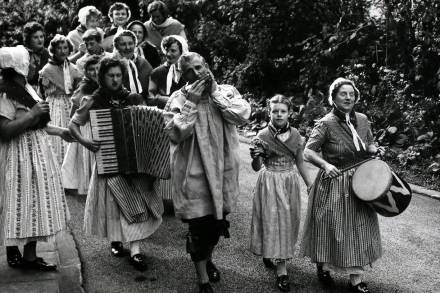
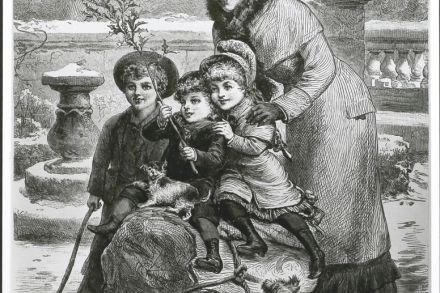
In a few communities in Victorian England, there was a custom of men tying women to chairs with ribbons on Easter Monday and lifting them up, all the while singing the hymn ‘Jesus Christ is risen today’. On Easter Tuesday the custom was repeated, only this time it was the women who ‘lifted’ the men. The Victorian practice of ‘lifting’ can be traced back to the 18th century, but in reality it was an echo of a much earlier and stranger practice that originally took place a week later – at ‘Hocktide’, the Monday and Tuesday following Low Sunday (the first Sunday after Easter).
Does King Charles’ Green Man make him a pagan?

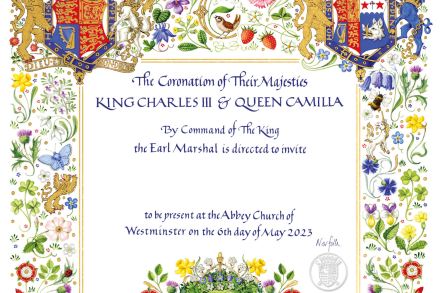
On 4 April the Royal Household revealed the design for invitations to the Coronation, the work of heraldic artist Andrew Jamieson. While the design is a riot of flora and garden fauna, heraldic and otherwise, one feature of the invitation has above all invited comment – the presence of an anthropomorphic green ‘foliate head’, wearing a crown of oak and hawthorn, with leaves of daffodils curling up almost like a pair of horns. Within minutes, the decorative face had been named. He was the ‘Green Man’, a vaguely defined figure found on plaques in gardens around the nation, who is in turn indelibly associated with another concept: paganism.

The ancient tradition of burning a Yule Log

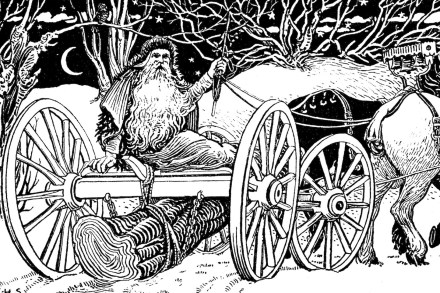
To most modern Britons the words ‘Yule Log’ probably bring to mind that masterstroke of marketing that has enabled supermarkets to sell an ordinary chocolate roulade (with the addition of a plastic sprig of holly) as a speciality item for the Christmas table. But the edible Yule Log of our own day – to an even greater extent than the meat-free mince pies of modern Christmas – is a mere shadow of what it once was. The original Yule Log was an actual log – in theory, an enormous one that was large enough to burn between Christmas Eve and Twelfth Night (5 January). Its evocative name preserved the pre-Christian Old English word for the midwinter festival, Geol.

How Santa came to recruit his elves

The Christmas elf is so familiar now that it could easily be the first character you think of when you hear the word ‘elf’ – outside of J. R. R. Tolkien’s works, that is.  The very recent Christmas custom of the ‘Elf on the Shelf’ has lately brought elves to particular prominence in the modern British Christmas. But how did Santa Claus – whose origin as a folkloric transmogrification of St Nicholas is well known – acquire elves as helpers, and who are they? The origins of the modern Christmas elf turn out to be both complex and surprising, simultaneously ancient and very modern.

The ancient roots of Christmas ghost stories

Charles Dickens’s A Christmas Carol is either, depending on your perspective, the ultimate Christmas ghost story or a complete subversion of the genre – since the tale is clearly not about the ghosts, who serve as mere ciphers in a morality tale.  Yet in spite of the popularity of the book and its multiple TV and film adaptations, many people today are oddly unaware that Christmas was once associated, more than any other season, with the telling of ghost stories. It is Christmas, traditionally, that is the spookiest time of the year.

What could be better than an English county show?

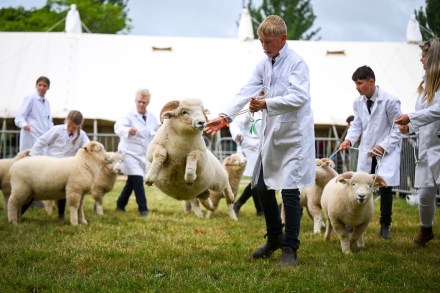
A smartly dressed, bowler-hatted man and a lady in a fascinator – both of whom would hardly look out of place at Royal Ascot – stride into the pigsty with clipboards, while a white-coated man (looking a little too much like a butcher) seeks the views of a small crowd of adults and children on the qualities of four physically impressive swine. This is the delightful eccentricity of the English county show – part agricultural competition, part funfair, part entertainment, part craft fair, part trade show, part society occasion, and part food and drink extravaganza – that provides an unrivalled insight into the complexity of modern Britain’s rural economy and culture.

Paul Wood, Matthew Parris, Ian Buruma, Hermione Eyre and Francis Young

34 min listen

On this week’s Spectator Out Loud: Paul Wood reads his letter from the Vatican (1:17); Matthew Parris warns Conservatives from embracing causes that could lose them as much support as they would gain (7:31); reviewing Richard Overy’s Rain of Ruin: Tokyo, Hiroshima and the Surrender of Japan, Ian Buruma argues that the atomic bombs were not only immoral, but ineffective (15:35); Hermione Eyre examines the life and work of the surrealist artist Ithell Colquhoun (23:03); and, Francis Young provides his notes on Shrove Tuesday (29:12). Produced and presented by Patrick Gibbons.

How Shrove Tuesday inspired the animal welfare movement

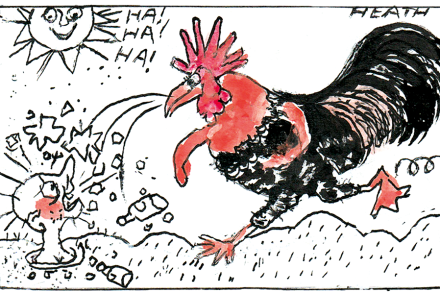
In some countries Shrove Tuesday (the day of merrymaking before the rigours of Lent) developed into a ‘carnival’ that lasted several days, but in England it was only ever a half-day holiday, since it was not an official Church feast day. Apprentices and schoolchildren claimed the right to an afternoon of ‘sport’, and from at least the 15th century the most popular Shrove Tuesday recreation was ‘throwing at cocks’. This was a cruel custom that involved immobilising a cockerel, either by tying its foot to a stake or half burying it in the ground, while bystanders took turns throwing stones, tools and bricks at the cockerel in an attempt to kill it.

The surprisingly recent invention of Friday the 13th

For anyone who is even a little superstitious (and superstition sometimes feels more like an unavoidable burden than a conscious choice) the arrival of yet another Friday the 13th sends a little chill down the spine. Yet whatever its psychological effects, Friday the 13th is not one of the ancient unlucky days. There used to be many days in the year, which varied according to region, when it was considered unlucky to do anything because it would inevitably end badly – Epiphany (6 January) in some parts of England, 29 December in others, and even St Martin’s Day (11 November). But these traditions were tied to a day in the calendar rather than a specific day of the week.

Philip Womack, Ian Thomson, Silkie Carlo, Francis Young and Rory Sutherland

28 min listen

On this week’s Spectator Out Loud: Philip Womack wonders why students can't tackle university reading lists (1:12); Ian Thomson contemplates how much Albania has changed since Enver Hoxta’s dictatorship (6:12); Silkie Carlo reveals the worrying rise of supermarket surveillance (13:33); Francis Young provides his notes on Hallowe’en fairies (20:21); and Rory Sutherland worries that Britain may soon face a different type of migrant crisis (24:08).  Produced and presented by Patrick Gibbons.

Halloween is the time for fairies

Among the many options available for Halloween costumes and decorations these days, from witches to zombies, from mummies to serial killers, there is one traditional Halloween character you are unlikely to see: fairies. But in Irish and Scottish folklore, which provides the basis for modern Halloween traditions, fairies were central to this festival. In Scotland, it was on Halloween night that the ‘fairy rade’ (procession) was said to be seen going through the countryside, bearing the souls of the unbaptised dead or those who were snatched away in life by the fairies. In the ballad of Tam Lin, Janet has to wait until the fairies ride at Halloween to rescue her otherworldly lover from the clutches of the Fairy Queen.

England’s forgotten Easter traditions

If you get up early enough on Easter morning, according to old English folklore, you might be lucky enough to see the sun dancing in the sky as it rises, rejoicing at the resurrection of Christ – although tradition also records that the devil usually manages to put a hill in front of the dancing sun to stop people seeing it. Easter is one of the richest periods of the calendar for traditional English folk customs. A few are still well known and even recognised by supermarkets, such as the eating of hot cross buns and simnel cake. But many other customs are either confined to one location or are long forgotten, replaced by the generic, confected ‘fakelore’ of the Easter Bunny and egg hunts.

Christmas traditions and the lost practice of ‘mumming’

Christmas, we are often told, is rich in traditions invented by the Victorians (or even later), and it was a rather austere affair before Charles Dickens. But while it is true that the Victorians gave us many of our Christmas traditions in their current form, English Christmas traditions before the Victorian era were simply different, not non-existent – and they were every bit as exuberant as what came after, if not more so. One of those long-lost pre-Victorian traditions of Christmas is mumming; something which was as synonymous with Christmas 200 years ago as a fat man in a red suit with a proclivity for housebreaking is today.

The Ministry of Justice is engaged in historical vandalism

This week, the Ministry of Justice launched a consultation on its plan to digitise its vast archive of wills. The only problem is that it also wants to destroy its original paper copies – which date from 1858.  This destruction is supposed to save the taxpayer £4.5 million per year, although wills that ‘belong to notable individuals or have significant historical interest’ will be retained. The proposal has been met with strong disapproval by historians and archivists – not because digitisation is inherently a bad idea, but because digitising an archive and then destroying the originals was never how it was meant to work.

The anarchy of bonfire night

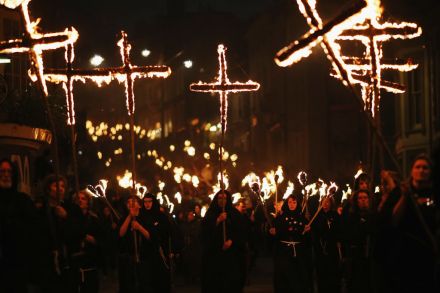
Bonfire night festivities in Britain today are increasingly highly choreographed events: council-sponsored firework displays mounted by professional companies, sponsored by local businesses and charities and monitored by health and safety professionals – all very worthy and respectable. It is difficult to believe that, just a few decades ago, bonfire night was a night of anarchy. Ironically for a festival celebrating the preservation of order and hierarchy, bonfire night became a time of disorder and chaos There is a long history of unrest on 5 November, which began life as a day of solemn thanksgiving for the deliverance of King and Parliament.

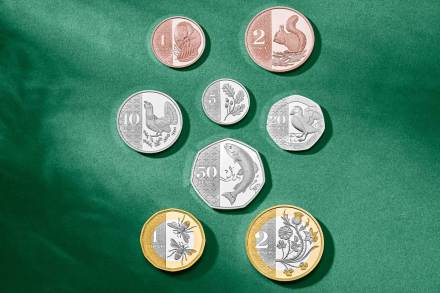
The message in the King’s new coins

Last week, the Royal Mint unveiled a new set of designs for British coins. They depart dramatically from tradition by featuring themes from nature rather than heraldic, royal, or national emblems. The last set of definitives, designed by Matthew Dent and released in 2008, featured enlarged details of the royal arms, and previous designs have featured emblems of the nations of the UK such as the lion, dragon, thistle, leek and flax plant – as well as the familiar designs introduced at decimalisation. Few of the wild animals are readily identifiable with a single nation or region of the UK The new coins include a dormouse (1p), a red squirrel (2p), oak leaves (5p), a capercaillie (10p), a puffin (20p), a salmon (50p), bees (£1) and combined national plants of the UK (£2).

We need an English folk revival

The cellist Sheku Kanneh-Mason recently expressed a preference for ‘folk tunes’ at the Last Night of the Proms over the singing of Rule Britannia! – and, whatever one may think of jettisoning Thomas Arne’s celebrated anthem of British liberty, Kanneh-Mason’s suggestion raises the question of what exactly English folk music is. England is not the first country that springs to mind when we think of a nation for whom traditional music is central to identity. The importance of folk music to the self-understanding of many countries in Eastern Europe is so prominent that we encounter their traditional melodies and instruments annually in more or less embarrassing entries to the Eurovision Song Contest.

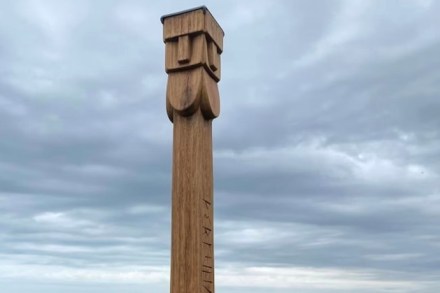
The mystery of the Baltic god in Kent

One of the stranger events of the summer of 2023 is the sudden and unexplained appearance, one night in early August, of an eight-foot tall carved wooden pole on a coastal path in Kent depicting the Baltic thunder god Perkūnas. The impressive sculpture is carved from a single piece of wood crowned by four stylised bearded faces, with an inscription in runic-style lettering up one side, ‘PERKUNAS 2023’. No permission was sought to erect the carving, and its creator is unknown – as is the purpose of the installation. Is it a gift from the artist? A pagan religious act? An image set up for protection?

How the ancient rites of the coronation survived

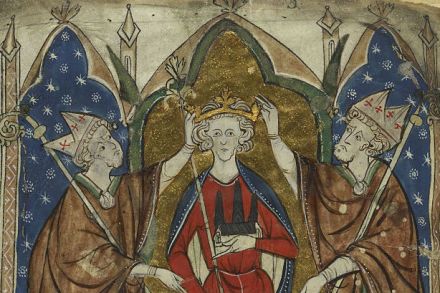
It is a cliché to say that Britain’s customs were invented by the Victorians. In the case of the coronation, it is also not true: the 1838 coronation of Queen Victoria was possibly the most underwhelming in British history, even if it did give us the Imperial State Crown and Coronation Ring. It is true that some of what we think of as ‘ancient’ in the coronation rite isn’t quite as old as you might expect. While St Edward’s Crown is from 1661, for example, it has only been used in modern times since the coronation of George V and lay abandoned, stripped of its jewels, throughout the 18th and 19th centuries.   But on the whole, an astounding amount of Britain’s coronation rite has survived from a truly remote period of history.

Is Christmas really a pagan festival?

It’s as much a part of the season now as baubles, tinsel and the Christmas Number One: those articles, blogs and memes that pop up during the festive season claiming that Christmas, in spite of the name, is actually a pagan festival. Certainly, the visitor to contemporary Britain would be forgiven for thinking that Christmas has little or nothing to do with the birth of Jesus Christ; and indeed there are many things we do at Christmas, and have done for centuries, that seem to have scant connection to any sort of religious celebration. What does decking the halls with boughs of holly have to do with Jesus? Or Christmas pudding? Or Christmas ghost stories? Or the older traditions of misrule, riotous mumming and reversing positions of authority?