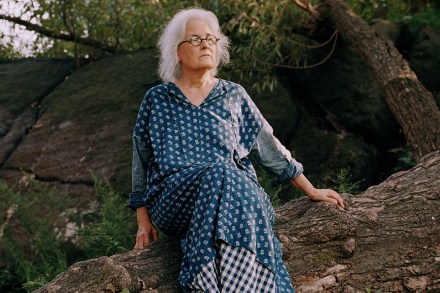
Francesca Peacock

The art of printmaking in all its glorious complexity

Do you know your aquatint from your drypoint? Your intaglio from your lithograph? The appearance of any one finished print can vary so much from another – the feathery delicacy of etching replaced by the bold forms of linocut or the carved sinews of a woodblock – that it can be difficult to believe they all derive from the same initial process. What image appears when an object – be it carved, chemically altered, or engraved – is covered in ink and pressed into a piece of paper? As Holly Black explains, it is difficult to know when this technique first originated. Was it with the work of monks carving woodblocks in the mid-9th century to print the lines of the Diamond Sutra (now held in the British Library)? Or does it have its origins centuries earlier?
A commentary on the grim present: Glyph, by Ali Smith, reviewed

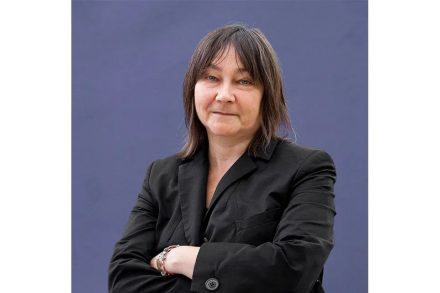
Glyph (whose sibling, Gliff, was published last year) is Ali Smith’s 14th novel and her fifth since 2016, when her ‘Seasonal Quartet’ saw the beginning of her project to use fiction to comment on contemporary events. It takes as its subject two sisters. Petra and Patricia (‘Patch’) negotiate their difficult childhood by retreating into a story world. Not that their escape is all unicorns and rainbows. The two stories they most often return to involve a horse blinded in the Great War and a man’s corpse flattened towards the end of the second world war. They call this flattened man ‘Glyph’: it’s ‘the sound he makes when he breathes out’. We soon skate from this grim past to the grim present.

My husband first and last – by Lalla Romano

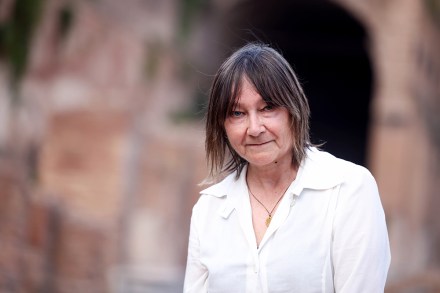
In 1984 Innocenzo Monti died after a short illness. He and the writer Lalla Romano had been married since 1932 and had met in the late 1920s in her native Piedmont. Romano – a poet, painter and the author of 19 novels – wrote the story of their life together in her 1987 book Nei mari estremi, rendered as In Farthest Seas by the translator Brian Robert Moore. The structure of the book – an auto-fictional memoir – is bifurcated. The opening, shorter, part deals with the first four years of the relationship, from the moment of their first encounter (he was ‘wearing hiking boots, we were in the mountains’), to their early sexual explorations. ‘Discomfort, effort, labour’ is luckily replaced by ‘bliss’ that was ‘beautiful, even a little exalting’.

No escaping mother: Lili is Crying, bv Hélène Bessette, reviewed

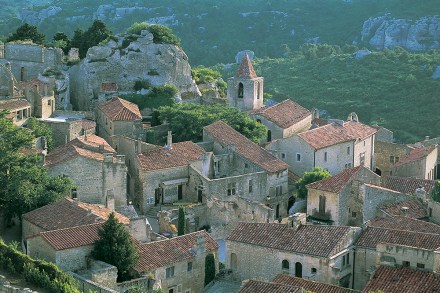
‘Everyone has a mother, but we don’t all smash up our lives for her sake,’ we hear in the first few pages of Lili is Crying. It’s a sensible message, but one which seems suited to an entirely different book. Hélène Bessette’s 1953 debut novel – translated into English for the first time – is a tale of bust-ups, mistakes and life-ruining decisions in a fiery, fickle relationship between a mother and daughter. Charlotte and her daughter Lili live in Provence, and the novel jumps between the 1930s and 1940s, from Lili’s ‘ribbons and Sunday dresses’ to her first freighted dalliances with boys.

The real Brexit betrayal, bite-sized history & is being a bridesmaid brutal?

44 min listen

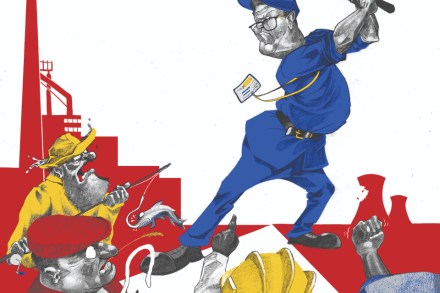
The real Brexit betrayal: Starmer vs the workers‘This week Starmer fell… into the embrace of Ursula von der Leyen’ writes Michael Gove in our cover article this week. He writes that this week’s agreement with the EU perpetuates the failure to understand Brexit’s opportunities, and that Labour ‘doesn’t, or at least shouldn’t exist to make the lives of the fortunate more favourable’. Michael makes the argument that ‘the real Brexit betrayal’ is Labour’s failure to understand how Brexit can protect British jobs and industries and save our manufacturing sector. Historian of the Labour Party Dr Richard Johnson, a politics lecturer at Queen Mary University writes an accompanying piece arguing that Labour ‘needs to learn to love Brexit’.

Three’s a crowd: The City Changes its Face, by Eimear McBride, reviewed

Nearly a decade after Eimear McBride published The Lesser Bohemians (her second novel after the success of A Girl is a Half-Formed Thing),the Irish writer has returned to the drab, smoke-filled world of 1990s London. The City Changes its Face is told from the perspective of 20-year-old Eily, two years after she has left Ireland to study drama in London and has met Stephen, an established actor 20 years her senior. In the interim period, the pair have moved from Kentish Town to Camden. Eily has taken time out of drama school, and Grace, Stephen’s daughter from a previous relationship, has made an appearance. The novel consists largely of a conversation that takes place over the course of one night, with flashbacks to the intervening years.

Ali Smith’s latest novel falls flat

From our US edition

"Gliff" is a word which can mean "a short moment," "a wallop," and "a post-ejaculatory sex act;" to "dispel snow," "to frighten," and to "escape something quickly." It’s "really excitingly polysemous," says one of Ali Smith’s characters. It’s certainly an apt title for a book which can’t seem to define itself. At its center are two children, Briar and Rose, who have been abandoned. Their mother is absent, caring for a sick sister, and their other responsible adult leaves to find her. The children exist in a stock dystopian world (people are surveilled by CCTV cameras and zombified by screens) with a twist: they repeatedly wake up to find that a red line has been painted around their house or camper van. They are on a list of "Unverifiables.

Gliff

The perils of Prague: Parasol Against the Axe, by Helen Oyeyemi, reviewed

An informal survey of friends, family, acquaintances and previous reviews suggests that the word most usually associated with Helen Oyeyemi’s fiction is ‘weird’. The author of eight novels has hardly shied away from unconventional storytelling, with books about everything from Brexit-through-biscuits (Gingerbread, 2019) to magical trains and a pet mongoose (Peaces, 2021). Her style is one of high and low: song lyrics jumbled up with references to medieval literature; nods to Shakespeare next to 1980s films. The result is either lauded – Oyeyemi was on the 2013 Granta list of best young novelists and her short story collection won a PEN award – or hated. In a TLS review, the novelist Claire Lowdon likened reading Peaces to ‘babysitting an over-indulged child’.

Outlandish epic: Lies and Sorcery, by Elsa Morante, reviewed

In 1948, Natalia Ginzburg, then an editor at the Italian publishing house Einaudi, received an 800-page brick of a manuscript from an acquaintance, Elsa Morante. Ginzburg read it in one sitting and declared Morante was going to be ‘the greatest writer of the century’. More recently, Elena Ferrante credited Morante with showing her ‘what literature can be’. The book that produced such praise – Italo Calvino called it ‘a serious novel, full of living human beings’ – has gone by different names in English: House of Liars or, in this new edition published by Penguin Classics and NYRB Books, Lies and Sorcery.

Waifs and strays: Gliff, by Ali Smith, reviewed

‘Gliff’ is a word which can mean ‘a short moment’, ‘a wallop’, and ‘a post-ejaculatory sex act’; to ‘dispel snow’, ‘to frighten’, and to ‘escape something quickly’. It’s ‘really excitingly polysemous’, says one of Ali Smith’s characters. It’s certainly an apt title for a book which can’t seem to define itself. At its centre are two children, Briar and Rose, who have been abandoned. Their mother is absent, caring for a sick sister, and their other responsible adult leaves to find her. The children exist in a stock dystopian world (people are surveilled by CCTV cameras and zombified by screens) with a twist: they repeatedly wake up to find that a red line has been painted around their house or camper van. They are on a list of ‘Unverifiables’.

Familiar scenarios: Our Evenings, by Alan Hollinghurst, reviewed

There’s a certain pattern to an Alan Hollinghurst novel. A young gay man goes to Oxford. He’s middle class and riddled with suburban self-consciousness – a kind of complicated awareness of his non-posh failings and resulting subtle superiority. He meets another young man – possibly gay – who is posh. An intricate dance ensues of social slip-ups and huge townhouses in Notting Hill, bags of money and country piles. It’s a formula which can be transposed between Edwardian drawing rooms and 1980s parties with only the slightest changes. Sometimes our protagonist is the aristocrat himself; sometimes he even went to Cambridge. He’s always cultured – interested in poetry, theatre and Henry James. Hollinghurst’s fiction was, for a period, radical.

Life’s little graces: Small Rain, by Garth Greenwell, reviewed

Garth Greenwell has made a name for himself as a chronicler of touch. In his previous novels, What Belongs to You (2016) and Cleanness (2020), the intimacy of a lover’s hand or the frisson of something much darker – the spit, the slap of a BDSM session – could expand to fill whole paragraphs: stories in themselves of layered sensation and reminiscence. Early in the opening sequence of Small Rain, the unnamed narrator spends close to two pages musing on the ‘shock’ of when a nurse ‘softly stroked or rubbed my ankle’. But now the touch is different. This is not a novel of sexual escapades, but pain – like ‘someone had plunged a hand into my gut and grabbed hold and yanked’.

Making the fur fly: Mary and the Rabbit Dream, by Noémi Kiss-Deáki

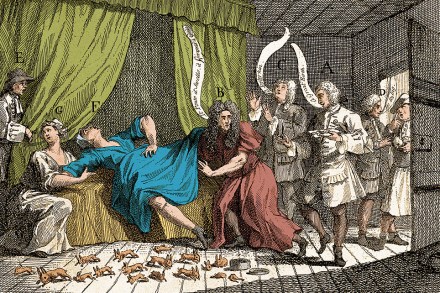
Mary Toft seems to be having something of a moment. The English 18th-century peasant who stunned society with her claim to have given birth to rabbits has been the focus of a suite of recent books, including Dexter Palmer’s Mary Toft, or the Rabbit Queen (2019) and Karen Harvey’s The Imposteress Rabbit Breeder (2020). There was even a nod to Toft in the 2018 film The Favourite. Queen Anne, played by Olivia Coleman, had 17 rabbits, one for every child she’d miscarried – a reference to Toft’s 17 ‘miraculous’ rabbit births. It’s not hard to see why Toft’s grotesque story still captivates us.

Gang warfare in the west of Ireland: Wild Houses, by Colin Barrett, reviewed

Until now, Colin Barrett has made his name as an artist of the short story. Both his debut collection, Young Skins (2014) and Homesickness (2022) won him acclaim for their depiction of rural Ireland. But his tales stretch beyond the constraints of their size, and his dispossessed drinkers, small-time crooks and depressed teenagers seem too large and real to have their stories end in a matter of pages. Barrett’s first novel, Wild Houses, is, then, a delight, with a wider space for his talent to spread and for his acutely observed characters to linger. In the first few pages he gives us a man whose tattoos appear like ‘the pages of a medieval manuscript’ and another whose face is ‘blue-tinged as raw milk in a bucket’.

Refugee lives: The Singularity, by Balsam Karam, reviewed

One Friday evening in a half-ruined, half-rebuilt city, where smart tourists dine out in restaurants next to refugees in makeshift shelters, a woman walks the streets. In torn clothes and slippers ‘worn ragged’, she hands out leaflets. On every piece of paper the same words are written: ‘Has anyone seen my daughter?’ On the same evening, in the same coastal city, which is ‘half obscured by skyscrapers’, another woman walks the streets with a different purpose, seeking to spend time away from her co-workers on a business trip. As she cradles her pregnant stomach, she watches as a female figure climbs over a clifftop railing and jumps, leaving behind a bag of leaflets. Later, the second woman has a miscarriage.

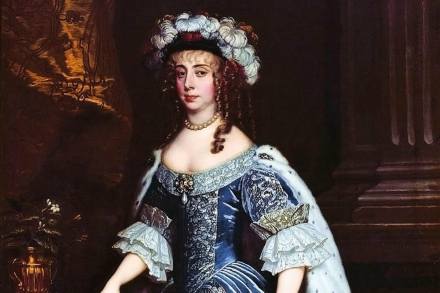
Meeting Margaret Cavendish

From our US edition

In the spring and summer of 1667, London began to see some odd goings-on. Seven years after the restoration of King Charles II to the throne — after England’s republican experiment under Oliver Cromwell ended in 1660 — and one year after the Great Fire had laid waste to the city, things were rather tense: the second Anglo-Dutch war was under way and, by the end of June, there would even be the fear of a Dutch invasion making its way up the Thames. But oddly, it wasn’t wars, invasion threats or geopolitical goings-on that caused the great and the good of London society to exchange frantic missives. At the beginning of April, a young man-about town wrote a rollickingly bizarre letter to his father.

Tea and treachery: Sheep’s Clothing, by Celia Dale, reviewed

‘It was a nice way of living,’ huffs Grace, the fiftysomething anti-heroine of Celia Dale’s devilishly dark 1988 novel Sheep’s Clothing, republished by Daunt Books. Recently released from Holloway prison, and using a demure headscarf and twin-set as cover, Grace teams up with Janice, a former fellow inmate, to rob elderly women. Disguised as social workers, and armed with an illicit supply of sleeping pills, they are after pension money stashed under mattresses, trinkets in shoeboxes and polished candlesticks on mantelpieces. The victims, invariably women (‘even an old man could be surprisingly strong’) often welcome the thieves, happy to have someone to ‘talk at’ and a cup of tea made for them.

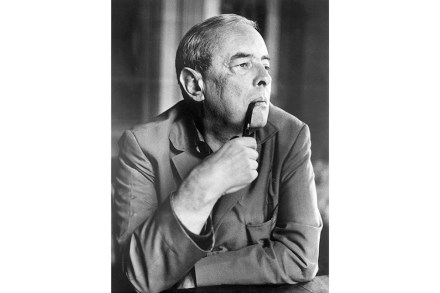
Satirical pulp: The Possessed, by Witold Gombrowicz, reviewed

On 1 September 1939 Germany invaded Poland. It’s hardly an event which needs its significance re-stating, but there was one outcome which has received rather less attention than the impending crisis in Europe. After the first instalments – serialised in newspapers in the summer of that year – a bizarre, flamboyant, mock-gothic novel by an unknown writer, ‘Z. Niewieski’, was forced to cease publication on 3 September. Witold Gombrowicz, the author of The Possessed and master of Polish modernism, had penned the work under a pseudonym, and, he claimed, only for money. If that distance from the book weren’t enough, he then put an ocean between himself and the manuscript.

Francesca Peacock: Pure Wit

45 min listen

In this week's Book Club podcast, I'm joined by Francesca Peacock to talk about the remarkable life and extraordinary work of Margaret Cavendish, the 17th-century Duchess of Newcastle. Famous in her own day for her bizarre public appearances and nicknamed 'Mad Madge', the author of The Blazing World has been marginalised by posterity as an eccentric dilettante. But in her new book Pure Wit, Francesca sets out to reclaim her as a serious feminist writer before feminism was generally thought of, and as a radical thinker in natural philosophy.

Bizarre images: I Hear You’re Rich, by Diane Williams, reviewed

‘What am I – I wonder, dear god – now best known for?’ It is a question asked at the end of ‘Gladly!’, one of the American author Diane Williams’s mercurial, light-footed short stories. The narrator in existential crisis has just bumped into a man she ‘once engaged with for years, amid scenes of nearly religious significance’; has found a discarded, brand new pair of ‘canvas All Star high tops’; and witnessed a boy picking up nuts that were ‘meant for squirrels’, and decided that in later life he will be renowned for either ‘gluttony’ or ‘enterprise’. The drama of these occurrences and the self-questioning take place over no more than two pages. The story, and the lives it tells, could be read in the time it takes to gulp some coffee.