Francesca Peacock

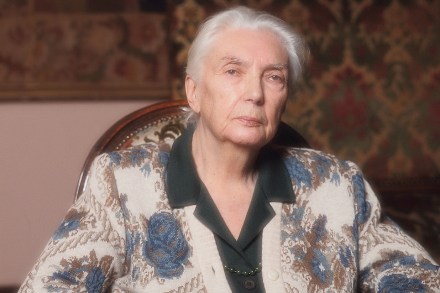
The brilliant, underappreciated work of Germaine Richier

From our US edition

In the spring of 1951, there was a commotion in Assy, a remote part of the Alps where France and Italy are only separated by mountains and valleys. In a town normally famed for its tuberculosis-healing properties and its winter sports, a debate about sacred art was beginning to make itself heard. After nine years of construction, the Église Notre-Dame de Toute Grâce du Plateau d’Assy was finally finished in 1946. A low, squat building, designed by architect Maurice Novarina and fashioned out of sandstone, it looked more like a chalet than a church.

Richier

The surreal life of Leonora Carrington

From our US edition

"It’s the belief that nothing is ordinary, that everything in life is extraordinary. And being old is no more, no less, extraordinary than being young.” When the artist and writer Leonora Carrington was asked in 2006 what “Surrealism” meant to her, this was her reply. It was a remarkably frank statement from an artist who had, at other points in her career, declared that she “was never a Surrealist,” even memorably asserting that the Surrealist link between women (the femme-enfant) and the muse was “bullshit.” Perhaps it owes its frankness to the interviewer: sitting across the kitchen in Carrington’s house in Mexico City was her cousin, the journalist and author Joanna Moorhead.

carrington

A deadly game of chance: The Story of a Forest, by Linda Grant, reviewed

‘Like a child in a fairy tale’, 14-year old Mina Mendel walks into a Latvian forest one day in 1913. With her basket and shawl, she looks like Little Red Riding Hood, but the wolves she meets – Bolsheviks, ‘agents of the coming revolution’ – are anything but mythical. Linda Grant begins her sweeping, ambitious ninth novel The Story of the Forest with this accidental encounter. From Latvia to Liverpool – and Soho to World’s End – she tells the story of one Jewish family in the 20th century as they live through plots to overthrow the tsar, the trenches of of the Great War, the racism of Liverpudlian suburbs and the horrors of the second world war It is a novel of chances: of lives changed by the ring of a phone, a meeting in a street, or the march of global history.

What makes Berthe Morisot’s nudes so unique?

From our US edition

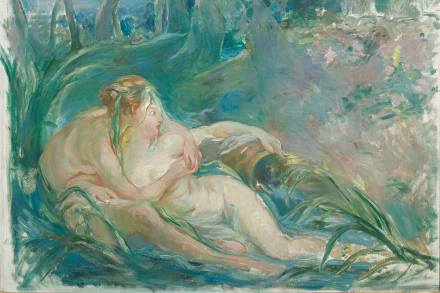
In the years before the French Revolution saw heads roll down the boulevards, revolutionaries murdered in the bath, and endless numbers of fluffy lap dogs forced to fend for themselves after their mamans met their untimely ends, one art critic made his name with his fearless criticism of Paris’s annual art exhibition, the “Salon.” The prominent style in mid- and late-eighteenth century France was Rococo — think impossibly ornate, gold-swirled furniture; paintings of pink, fluffy nymphs in gilt-edged, asymmetrical frames; and portraits of women in dresses so large, and so embellished, that they resemble iced wedding cakes more than human beings. In the face of endless walls of this style of art, the critic Denis Diderot was caustic.

Morisot

The language of love: Greek Lessons, by Han Kang, reviewed

In the wake of the death of her mother, divorce from her husband and the loss of custody of her son, a young writer and poet in Seoul turns her attentions to lessons in ancient Greek. She walks miles across the city to the classroom, dressed in a black jacket, black scarf and black shirt – a ‘sombre uniform, which makes it seem as if she’s just come from a funeral’ – and devotes herself to the unfamiliar alphabet, verbs and nouns. This delight in words – ‘the wondrous promise of the phonemes’ – has sustained her since childhood, when she first scratched Hangul, the Korean alphabet, into the dirt. There is only one barrier to her love of language. Not for the first time, she has completely lost the power of speech.

Lana Del Rey’s new record: samey, stale, sterile

From our US edition

The title song of Lana Del Rey’s ninth studio album, Did You Know That There’s a Tunnel Under Ocean Blvd, opens in a style now typical of the thirty-seven-year-old singer-songwriter. Amid the swelling string accompaniment and slow beat, the artist sings “fuck me to death, love me until I love myself.” So far, so in keeping with the musician who made her name with the dark, sensuous songs of 2012’s Born to Die (“my old man is a bad man, but I can’t deny the way he holds my hand”) and 2019’s Norman Fucking Rockwell! (“Goddamn man-child, you fucked me so good I almost said ‘I love you’”).

del rey

Painful memories: Deep Down, by Imogen West-Knights, reviewed

‘What are you like with enclosed spaces?’ Tom asks his sister Billie before they head into the maze of tunnels under Paris. Away from the ‘tourist bit’ of the catacombs – the part filled with bones moved from the city’s cemeteries – is an extensive network of claustrophobic pathways beneath the everyday, visible level of the city. As the setting for the climax of Imogen West-Knights’s subtle and compelling debut Deep Down, it is certainly fitting: in the wake of their father William’s death, the siblings begin to explore hidden and submerged memories from their childhood. The two are not close.

How to see two sides of Vermeer in the Netherlands

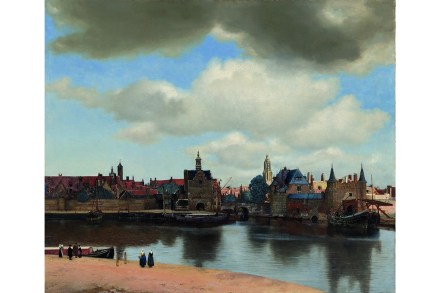
Why is it that the world of critics, gallery-goers and art-lovers is so overwhelmingly enthralled by Johannes Vermeer? His subjects – quiet interior scenes with women writing letters or playing music – are hardly the stuff of radical innovation or surprise. He wasn’t even that original: his works often have a similar focus to those by his contemporaries from the Dutch Golden Age, from Pieter de Hooch to Jan Verkolje. Nor is his biography the perfect fodder for endless books and feverish interest. So little is known about the man, and his way of painting, that the moniker he was given by the French art critic Théophile Thoré-Bürger in the 19th century – 'the sphinx of Delft' – is still used today to imply his inscrutability, his opacity and his ambiguity.

The truth about corsets

There’s a scene in the recent film Corsage in which Vicky Krieps, playing the melancholy anorexic Empress Elisabeth of Austria, has a strop with her maid. As part of the arduous process of getting dressed, she must be encased in an impossibly small corset (the real Empress reportedly had a waist of 16 inches). Krieps snaps at the maid who cannot lace her tightly enough and demands someone else pull the strings to impose such waspish proportions.  Watching the scene, you’d be forgiven for thinking that such restrictive undergarments were normal for high-class women in the 18th and 19th centuries – and therefore expected for any female actor in a period drama. The myths of women swooning from lack of oxygen have taken on a whole history of their own.

Avoiding the brash side of Amsterdam

From our US edition

More than forty cities have taken it upon themselves to claim the nickname “Venice of the North,” but only one can use it without any hint of irony. When leaving Amsterdam Centraal station — either fresh off the Eurostar or via a quick train connection from Schiphol airport — it is hard not to be momentarily dazzled by the spectacle of glassy-surfaced grey canals, all reflecting narrow, higgledy-piggledy gabled houses. I was in Amsterdam for the Rijksmuseum Vermeer exhibition, but took the opportunity to see more of the city than a quick day trip would have afforded.

A small house in Dublin: The Springs of Affection, by Maeve Brennan, reviewed

A man ignores his wedding anniversary and is so sickened by the bowl of flowers his wife has placed by his bed that he drops them and breaks the precious cut glass. Another man is so enraged by seeing his wife close the kitchen door when he comes in from work that he enters a state of fevered reverie where he concludes ‘nothing in his life made sense’. In a different story, the mess and argument caused by an improperly laid fire makes Mrs Derdon leave the house, sure that she ‘was not coming back’. The stories in Maeve Brennan’s The Springs of Affection (first published in the New Yorker, and, after her death in 1993, as a collected edition in 1997) are not about dramatic flights of fancy or the memorable red-letter days of a life.

Hiding out in wartime Italy: A Silence Shared, by Lalla Romano

The name Lalla Romano is not familiar to English readers. Despite being much acclaimed during her lifetime (and the recipient of Italy’s Strega Prize), works by the novelist, poet and painter have rarely made it out of her native language. Prior to A Silence Shared, masterfully translated by Brian Robert Moore, only one of Romano’s novels had been published in English: the quiet, eerie tale of a childhood revisited, The Penumbra. In A Silence Shared Romano demonstrates with understated economy why her work deserves to be read alongside other titans of 20th-century Italian literature such as Natalia Ginzburg, Cesare Pavese and Italo Calvino (all of whom knew and revered her). Her books are often heavily autobiographical and almost exclusively narrated in the first person.

The Soviets brought far from home

From our US edition

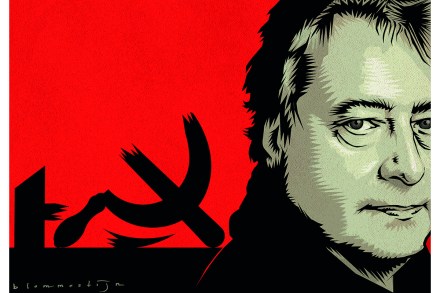
"It’s best not to talk politics with patients, but if a woman has an unusual mitral valve, it’s tempting to think that she herself must be interesting,” sighs the Russian doctor, essayist and short-story writer Maxim Osipov towards the end of his 2017 essay “The Children of Dzhankoy.” The temptation does not, alas, live up to expectations for Osipov. His mitral valve patient is “a thirty-six-year-old journalist and amateur pilot who misses the USSR.” “Now, that was strength” she claims. Osipov, with typical economy, comments, “nothing interesting.

Osipov

The great deception: The Book of Goose, by Yiyun Li, reviewed

As introductions go, ‘My name is Agnès, but that is not important’ does not have quite the same confidence as ‘Call me Ishmael’. But there’s a reason for this. Agnès Moreau, the narrator of Yiyun Li’s disconcerting, mesmerising fifth novel The Book of Goose, only became a storyteller by accident. Writing from Pennsylvania, where the ‘French bride’ Agnès raises geese, she remembers post-war rural France and her childhood in Saint Rémy. She and her friend Fabienne, avoiding other girls their age, spent their days lying among gravestones and minding cows – until Fabienne decides that they should write a book together.

Make art free, not digital

From our US edition

If you won the lottery tomorrow and suddenly had the money to invest in art, what would you prefer: a work from Picasso’s Cubist period (Guitar on a Table, 1919), or an NFT made from AI-based images and shapes? On the one hand, Picasso’s Guitar on a Table isn’t his most famous or even most interesting work — by 1919, the radicalism of Cubism had begun to wane. But on the other, NFTs are a relatively unproven market with dubious artistic merit, and have been linked to art crime, money laundering, and even allegations of human trafficking. If Picasso couldn’t persuade you to ditch the digital art, what about a painting by Renoir, a sculpture by Rodin, or a triptych of paintings by Francis Bacon?

Pre-Mussolini, most Italians couldn’t understand each other

Towards the end of Dandelions, Thea Lenarduzzi’s imaginative and deeply affecting memoir, the author quotes her grandmother’s remark that there are tante Italie – many Italys. ‘Mine is different to hers, which is different to my mother’s, which is different to my father’s, and so on down the queue,’ she writes. These Italys – of fascismo, of Garibaldi, of emigrants living in Sheffield and Manchester, of 31 dialects – are not far-flung historical oddities confined to documentaries or textbooks but are, in Lenarduzzi’s account, the patchwork story of one family.

A.M. Homes’s state of paranoia

From our US edition

When reading A.M. Homes’s fiction, you’re never quite sure what to expect. In 1996, she made waves with the publication of her “vile and perverted” novel The End of Alice: a none-too-edifying tale narrated from the perspective of an imprisoned pedophile and child-killer, who spends the book in correspondence with a nineteen-year-old girl about how to seduce a twelve-year-old boy. In a rare instance in which the UK was more prudish than the United States, a large chain of British booksellers refused to stock the work. More recently, her 2012 novel May We Be Forgiven — for which she won the 2013 Baileys Women’s Prize for Fiction — features a fatal car accident, a psychiatric hospital, an extramarital affair and a homicide. And that’s all within the first chapter.

The dynamic genius of Milton Avery

From our US edition

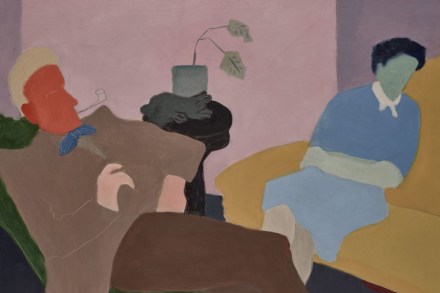
It’s hard not to feel slightly odd when standing in front of a Milton Avery painting. Take his 1943 work Hors d’Oeuvres as an example. The painting — currently on show at London’s Royal Academy’s exhibition, Milton Avery: American Colorist — is large, at nearly a meter across, and the background is what appears to be a coastal landscape, with a greenish sea and the curve of a bay appearing in the upper right-hand corner. In the foreground of the painting is a cream table and on it, a blue platter of food: the “hors d’oeuvres” of the work’s title. So far, it might be hard to understand what is so disconcerting about this painting.

Murder most foul: The Marriage Portrait, by Maggie O’Farrell, reviewed

There’s a moment near the end of Robert Browning’s dramatic monologue ‘My Last Duchess’ when it becomes clear that the duke, whatever he might claim, did kill his wife: ‘I gave commands;/ Then all smiles stopped’, he lets slip. In The Marriage Portrait, Maggie O’Farrell’s sombre, haunting novel based on the historical couple described in Browning’s poem, this revelation comes rather earlier. The young Lucrezia knows with ‘a peculiar clarity’ that her husband ‘intends to kill her’ right from the first page. After leaving Florence to begin her married life with Alfonso II, Duke of Ferrara, Lucrezia died within a year.

The unfortunate misogyny of Philip Larkin

From our US edition

Philip Larkin — whose centenary was this week — was a misogynist. A “casual, habitual racist and an easy misogynist,” according to the literary critic Lisa Jardine. Alan Bennet, Britain’s favorite playwright and supposedly a friend of Larkin’s, even described the poet as looking “like a rapist.” Not content with one insult, he even compared him to the necrophiliac serial killer John Christie. Tough review, that one. The sheer number of reviews, essays, and articles which decry Larkin’s character and attitudes — “a porn-addled, two-timing, racist misogynist” reads the headline for one — seem to suggest this is a settled judgment. And, indeed, the evidence is all but damning.

philip larkin