Francesca Peacock

Mary Gaitskill and the body electric

From our US edition

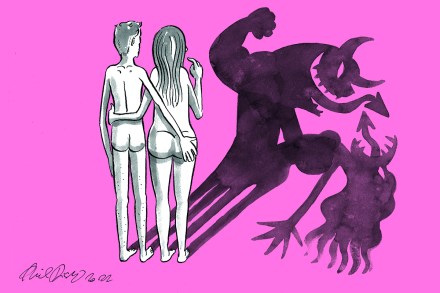
A man bites a woman’s breast with the aim of drawing blood, before taking a cigarette lighter to her stomach. The woman’s lack of arousal at this cruelty causes the man to enquire angrily why she lied when she told him she was “a masochist.” A young secretary is spanked by her boss for mistakes in her typing, before he masturbates over her naked behind. In a conversation between two young adulterous lovers, a woman casually admits to “flirting... like wild” with a man after she discovered he had “broke his girlfriend’s jaw.” These snapshots of masochism, warped desire and sexual depravity made Mary Gaitskill famous when her short story collection Bad Behavior first appeared in 1988.
Gaitskill sex pill sex

Literature reminds us that indolence is underrated

From our US edition

I put off writing this article for ages. Initially, I decided I would write it from bed, but the temptation of simply giving up and falling asleep again was too great. A change of tactic proved no less helpful: out of bed, it took every ounce of effort I had to avoid getting straight back in again. Not a jot was left over for the exertion of writing and typing. This isn’t the status quo for my productivity, I promise; it is more a reflection of the subject matter. It is absolutely impossible to write about indolence while running around busily ticking off a to-do list. You have to relax into it. Call it method article-writing, if you will. Indolence gets something of a bad rap these days.

Americans should be proud of their Poet Laureates

From our US edition

It isn’t often I’ll say this — and, in fact, I hope this is the only time — but as a Brit, I’m jealous of you Americans. It isn’t the fact that you have a notionally more functional government than us, or even that you have unrestrained access to things like Pop Tarts and peanut butter cups. No, the answer lies, as it always does, in poetry. Over on this side of the Atlantic, we’ve had a Poet Laureate since 1668 — when John Dryden was given a position in the royal household by Charles II. We could claim to have had one even earlier, given that the versifier, playwright, and scribbler Ben Jonson was given a pension by James I in England way back in 1616.

The unsolved mystery of Marilyn Monroe

From our US edition

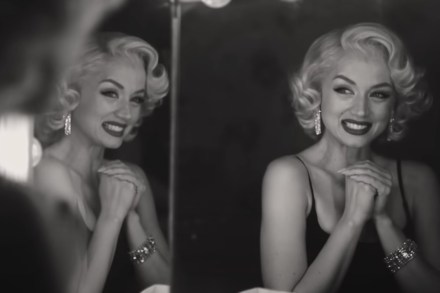
When Kim Kardashian wore Marilyn Monroe’s dress to the Met Ball back in May, the world was aghast. Many claimed the dress was damaged (something the owners deny), and the dress’s original designer, Bob Mackie, told the world it was a “big mistake," saying, “Nobody else should be seen in that dress.” Some of the concerns came from the fact that Kim Kardashian had had to lose a significant amount of weight to fit the blonde bombshell’s proportions — the dress was so tight on Monroe that she'd had to be sewn into it — and that it set a dangerous precedent for the preservation of historical costumes.

Lost in translation

From our US edition

Picture the scene: a twenty-something college student, desperately trying to impress a girl he’s met for a date. He's early, but that isn’t a problem as it gives him a chance to sit nonchalantly with his ever-so-artfully-battered paperback. It’s Rimbaud’s Collected Poems: intellectual, sensual, rebellious — everything he wants to be perceived as. He props the book up so that the poet’s name is visible and waits for his delicate intellectualism to be applauded. The only thing missing from this tableau is the name of the poems’ translator, assuming that the student isn’t pretentious enough to be carrying around the original French. A smaller name on the fragile paperback, the translator is generally unmentioned, forgotten, and obscured.

translation

Virginia Woolf’s very own Bloomsday

From our US edition

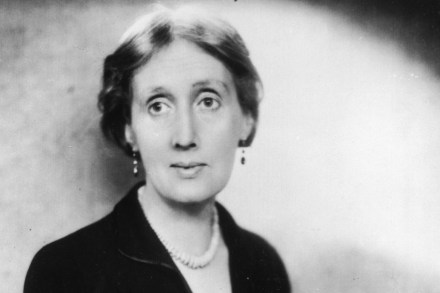
“Mrs. Dalloway said she would buy the flowers herself.” Nine words into her 1925 classic, Virginia Woolf has taken us to another world. London — Westminster to be precise — in mid-June 1913, a world in which it is unusual for a woman to buy the flowers for her own party. Clarissa Dalloway only steps out into the early morning air (“fresh as if issued to children on a beach”) because her maid, Lucy, “had her work cut out for her.” The Wednesday in the “middle of June” on which the action of Mrs. Dalloway takes place is debated. The year is 1923, which would make the 13th of June the most likely candidate. But as academics are wont to do, there has been some disagreement.

mrs. dalloway

Searching for the American summer novel

From our US edition

I am convinced that the sweet-smelling tycoons that run candle-making companies must have read too much Proust when they were younger. With scents like “Inspire,” “Bohemia,” and “Sunny Daydream,” they cannot be aiming for something as cheap and transitory as mere tawdry olfactory pleasure. They must have become all but obsessed by À la Recherche du Temps Perdu, and be aiming for something akin to his narrator’s nostalgic odyssey upon tasting a madeleine: “and at once the vicissitudes of life had become indifferent to me, its disasters innocuous, its brevity illusory.” Rather pretentious, oui — but what other excuse can there be for a candle that proclaims it can smell like a cool library at midnight, or the depths of some dreamy reverie?

A quiet delight

From our US edition

What would you do if you looked out of your window expecting to see the neighbor’s cat, and instead were presented with a groundhog in its place, “waddle-thieving” your tomatoes and “taking such/ pleasure in the watery bites”? Ada Limón’s speaker, in the opening poem of her new collection, The Hurting Kind, is not angry at this “all muscle and bristle” tomato-thief. The groundhog is an embodiment of all she cannot have: an animal, natural freedom that inspires her to ask, “Why am I not allowed/ delight?” ...A stranger writes to request my thoughts on suffering. Barbed wire pulled out of the mouth, as if demanding that I kneel to the trap of coiled spikes used in warfare and fencing.

limón

Why don’t men read novels?

From our US edition

It’s hard to move on the literary internet — or that nest of inky vipers, literary Twitter — without coming across a piece that expresses one of two opinions: the first, that men don’t read literary fiction and that this limits their understanding and experience of the world; and the second, that the figure of the heterosexual white man has been crudely and cruelly excluded from the literary debate. “Bring back our Roth, our Amis, our Updike,” these commentators cry, as if they hadn’t received enough acclaim and attention in the past few decades, and if reading them had become illegal rather than just moderately unfashionable.

Evelyn Statsinger’s otherwordly art

From our US edition

New York’s Upper East Side — 1018 Madison Avenue, to be exact — currently hosts another world at the Gray Gallery. It’s a universe with a near-scientific attention to detail. Plant stems are bisected and, in turn, bisect paintings like winding snakes; petals and branches are painted in such microscopic detail that they appear like the surface of some far-flung planet; and canvases are awash with such bright, clean lines they seem almost like subway maps of a particularly topsy-turvy city. The works — pastels, oil on canvas, and oil on linen — are those of Evelyn Statsinger (1927 – 2016), the deeply underappreciated artist who lived in New York, Chicago, and Michigan.

Bob Dylan’s and T.S. Eliot’s search for truth

From our US edition

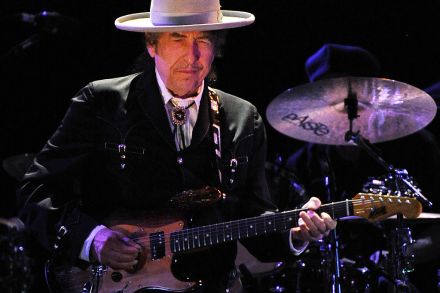
The fact that the master songwriter Bob Dylan is a fan of a literary allusion should come as no surprise. This is the man who, in his autobiography Chronicles Vol. 1, declared that reading the French symbolist poet Arthur Rimbaud made “bells [go] off.” (Incidentally, it was Suze Rotolo, his first love whom he so cruelly lambasted in “Ballad of Plain D,” who introduced him to the poet. One feels that Dylan should have paid her a little more retrospective credit than the all-but-bitter love songs on The Freewheelin’ Bob Dylan.

Ocean Vuong’s immature poetry

From our US edition

Time is a Mother — Ocean Vuong’s second poetry collection — should have been a scene-stealer, a much-awaited literary event of the type normally reserved for a J.K. Rowling. The collection has been talked about in the breathy, excited terms not normally associated with poetry — the least glitzy of the literary genres — and in a way not heard of since the blockbuster release of Ted Hughes’s Birthday Letters (1998). Vuong, rightly, won the T.S. Eliot prize in 2017 with Night Sky With Exit Wounds. The collection had flashes of brilliance and was a mark of a young poet making his way in the world. It also won the Forward Prize for best first collection, and, in 2019, Vuong was awarded a MacArthur “genius” grant.

Don’t cancel John Donne’s poetry

From our US edition

All the way across the Atlantic, the British literary world has been seized by John Donne fever. Katherine Rundell’s biography of the metaphysical priest-poet has led to excitable chattering about his life and work. The book, Super-Infinite: The Transformations of John Donne, will be released in the US in September — a significant enough delay as to make the Declaration of Independence look like a mistake. Aside from radically different publication dates (again: would you rather have lower taxes and freedom from George III, or a brilliant Donne biography?), the specter of the far-off American continent has long since loomed large in Donne studies.

The Stepford Wives and today’s empty feminism

From our US edition

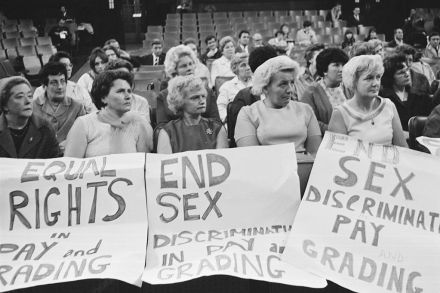
When you think of 1972, what comes to mind? Corduroy flares, President Nixon and the first installment of The Godfather? Or bra-burning, feminist “consciousness-raising” meetings and debates about abortion and birth control? America in the early 1970s was not just a nation of Vietnam War vets and oil crises, but one of significant feminist liberation. Betty Friedan published The Feminine Mystique in 1963 and helped found the National Organization for Women in 1966, and the decade after saw a whole host of similar organizations, such as the Women’s Radical Action Project (WRAP) and the catchily named Women’s International Terrorist Conspiracy from Hell (WITCH).

Time for Jack Kerouac to hit the road

From our US edition

I saw the best minds of my generation destroyed by madness, starving hysterical naked, dragging themselves through the last pages of Naked Lunch at dawn looking for an angry fix of good literature, angelheaded hipsters burning for the ancient heavenly connection between plot and prose, who poverty and tatters and hollow-eyed and high sat up reading Kaddish, who bared their brains to the delights of On the Road in the pursuit of just a fraction of the “angels staggering on tenement roofs illuminated.” Everyone knows the Beats: from Jack Kerouac to William Burroughs to Allen Ginsberg, their influence has been undeniable, if not always delightful. And on March 12, their lodestar, Jack Kerouac would have been 100 years old.

kerouac

Ilya Kaminsky’s poetry in a time of war

From our US edition

There is currently a poem going viral on Twitter. “We Lived Happily During the War” is by the Ukrainian-American poet Ilya Kaminsky, and it is the first poem of his prize-winning collection Deaf Republic (2019). It is easy to see why it feels particularly relevant: Kaminsky was born in the former Soviet city of Odessa, which is now under attack from Russia. The poem opens: “We Lived Happily During the War” And when they bombed other people’s houses, we protested but not enough, we opposed them but not enough. It is a heart-breaking meditation on the way normal life continues despite crises. The speaker describes how “I took a chair outside and watched the sun.” But he ends with a plea: “we (forgive us) / lived happily during the war.

llya Kaminsky

Writing poetry in East Germany

From our US edition

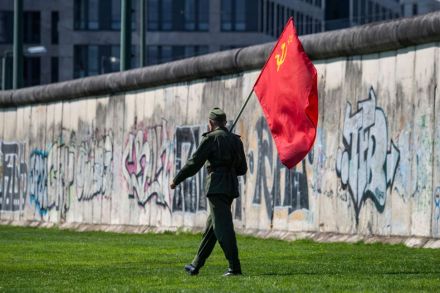
Readers of The Spectator World probably think they are quite au fait with the culture wars. J.K. Rowling, Joe Rogan, even Dr. Seuss — writers and celebrities who have been canceled quickly roll off the tongue. But what if “cancellation” had more dramatic implications than just a Twitter account bursting with notifications? In 1975, the unpublished poet Annegret Gollin encountered a rather different kind of culture war: she was arrested at a music festival and told that she could either spend two years in a prison cell or become an informant for the Stasi. Gollin chose to become an informant, but was a brilliantly ineffective one — she told over a hundred of her friends that she was supposed to be spying on them — and she ended up in prison seven years later.

Reading during a pandemic

From our US edition

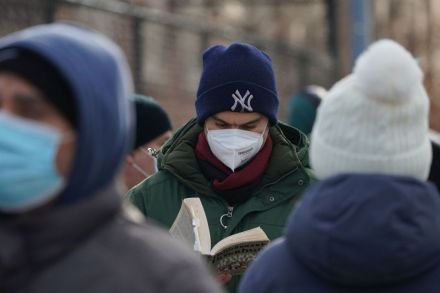
The experience of having Covid is, by now, well-documented. You spend seven to ten days in your room or house feeling ill and sorry for yourself. The world outside becomes a distant dream, and one of the few pleasures of spending twenty-four hours a day in bed is the time to read. This winter, the Omicron bell tolled for me — as it seemed to do for half of the global population. I was very lucky with the virus: after two days of unbelievable complaining and texting everyone I knew to tell them I was either like Beth in Little Women or a fevered Marianne in Sense and Sensibility, I recovered from my gothic heroine-like swoon and set about ploughing through novels. At the outset, there were endless articles and tweets about what one should read during a pandemic.

Siri Hustvedt and saving the personal essay

From our US edition

Siri Hustvedt, Mothers, Fathers, and Others (Simon and Schuster, 304 pages) An essay by Honor Jones for The Atlantic went viral last month. It was entitled “How I demolished my life” and was a how-divorce-altered-me piece, something of a bildungsroman for the fortysomething woman. One paragraph in particular caused enormous offense on social media: How much of my life — I mean the architecture of my life, but also its essence, my soul, my mind — had I built around my husband? Who could I be if I wasn’t his wife? Maybe I would microdose. Maybe I would have sex with women. Maybe I would write a book. Many found the essay galling because it intellectualizes a decision that many married couples go through.

Joan Didion got inside all of us

From our US edition

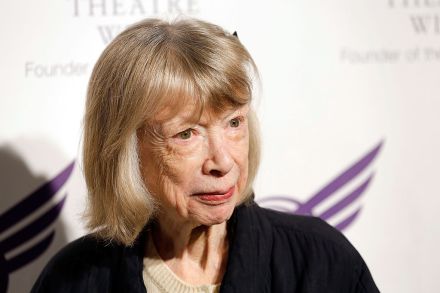
When asked what they knew about Joan Didion, a not insignificant number of people might mention her famous essay "Slouching Towards Bethlehem." It is the eponymous essay of Didion’s 1968 collection, the first non-fiction collection of her career. The essay ends with the oft-repeated description of Susan, a five-year-old in the Haight-Ashbury district of San Francisco. She wants a bicycle for Christmas, likes ice cream, Coca-Cola, and the beach — and gets high on acid. Didion describes the domestic setup, and her own discomfort: she "falter[s] at the key words" when asking her if she has other friends on drugs. Didion immortalized the scene of Sixties freedom gone wrong; there is no utopia here. Other Didion fans might be drawn to her essay "Goodbye to All That.