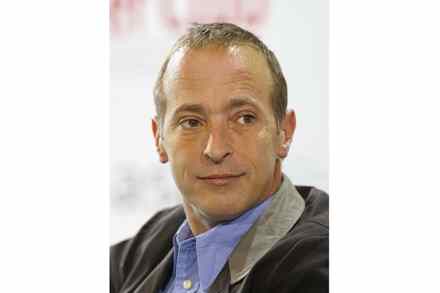
Frances Wilson

The last chapter: Departure(s), by Julian Barnes, reviewed

From our UK edition

Departure(s), whose publication co-incides with Julian Barnes’s 80th birthday, will be his last book, a thank you and goodbye to his readers. Barnes has blood cancer, but the condition is manageable and not terminal; when he dies, it will be with, and not of, the disease. Or rather, as he puts it: ‘I, in dying,

Margaret Atwood settles old scores

From our UK edition

In the introduction to Book of Lives, Margaret Atwood recalls her initial response to the suggestion that she write a memoir: ‘Who wants to read about someone sitting at a desk messing up blank sheets of paper?’ Her autobiography was hardly the stuff of high adventure: ‘I wrote a book, I wrote a second book,

What do Oscar Wilde, Gwen John and Evelyn Waugh have in common?

From our UK edition

Religious conversions do not, for the most part, make for good anecdotes. An exception can be found in Patricia Lockwood’s memoir Priestdaddy, which describes the author’s father Greg’s road to Damascus experience in a nuclear submarine off the coast of Norway, where he watched The Exorcist 72 times: That eerie, pea-soup light was pouring down,

‘My ghastly lonely life’ on the Costa Brava – Truman Capote

From our UK edition

‘I can’t write books drinking all day and going to every soiree in Manhattan,’ Truman Capote complained. In order to write In Cold Blood, his ‘non-fiction novel’ about the murder of the Clutter family in Holcomb, Kansas, Capote and his partner Jack Dunphy therefore went to Palamos, a fishing town on the Costa Brava. Leaving

Admirable in their awfulness – the siblings Gus and Gwen John

From our UK edition

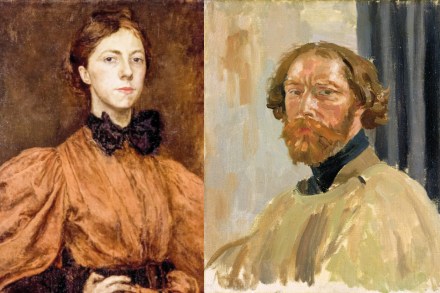
‘In 50 years’ time,’ Augustus John gloomily reflected following his sister’s death on 18 September 1939, ‘I will be known as the brother of Gwen John.’ He was right. In 2004, when the Tate mounted a joint retrospective of Augustus and Gwen John, it was Gwen who had become the major artist. The ‘variable strident

Richard Ellmann: the man and his masks

From our UK edition

Richard Ellmann’s acclaimed life of James Joyce was published in 1959, with a revised and expanded edition appearing in 1982. The first edition, the work of an ambitious young American academic, received what Ellmann’s editor at Oxford University Press described as ‘the most ecstatic reaction I have seen to any book I have known anything

Saint Joan and saucy Eve: a single woman split in two

From our UK edition

Fresh out of Hollywood High, Eve Babitz introduced herself to Joseph Heller: ‘Dear Joseph Heller, I am a stacked 18-year-old blonde on Sunset Boulevard. I am also a writer.’ It was 1960, and while her writing was the sheerest bliss, ‘Eve Bah-Bitz with the Great Big Tits’, as she was known, was herself a work

There’s nothing shameful about hypochondria

From our UK edition

The hypochondriac is the butt of jokes. Even his butt is the butt of jokes. A story doing the  rounds in the 16th and 17th centuries concerned a Parisian glassmaker who, believing himself to be also made of glass, fastened a cushion to his buttocks in case they broke when he sat down. His anxiety

The horrors of dining with a Roman emperor

From our UK edition

Emperor of Rome? Is there a typo in the title? Mary Beard’s latest book is about not one but 30 Roman emperors, from Julius Caesar (assassinated 44 BCE) to Alexander Severus (assassinated 235 CE), so why the singular? The answer is that Emperor of Rome is a study of autocracy and one autocrat, as Marcus

Triumph and disaster in the War of Jenkins’ Ear

From our UK edition

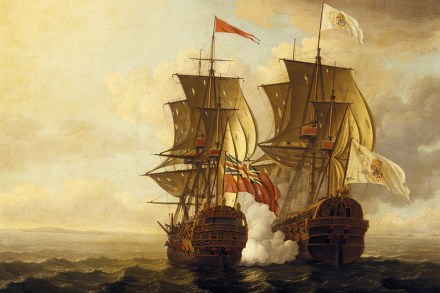
It all began in 1731 when Robert Jenkins, the captain of the Rebecca, had his ear sliced off by Juan de León Fandiño of the Spanish patrol boat La Isabela. Storming the British brig in the Caribbean, Fandiño accused Jenkins of smuggling sugar from Spanish colonies. He would cut King George’s ear off too, Fandiño

How the quarrelsome ‘Jena set’ paved the way for Hitler

From our UK edition

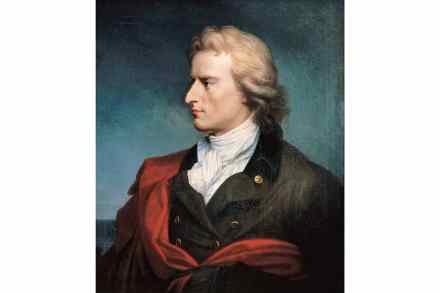
Today, the German city of Jena, 150 miles south-west of Berlin, is the world centre of the optical and precision industry; but in the 1790s it spawned an even more marketable commodity. It was then a small medieval town on the banks of the river Saale with crumbling walls, 800 half-timbered houses, a market square

Was Jane Morris a sphinx without a secret?

From our UK edition

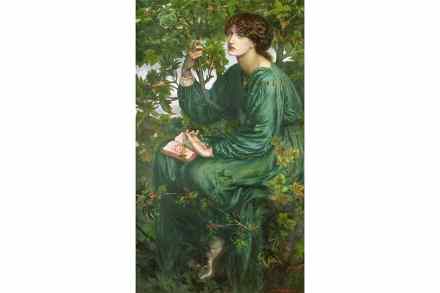
William Morris was the son of a stock-broker and Jane Burden was the daughter of a stablehand. He was raised in a mansion in Walthamstow (now the William Morris Gallery) and she grew up in a hovel in Oxford. Had she not been talent-spotted by Dante Gabriel Rossetti when she was leaving the theatre one

How does David Sedaris get away with saying the unsayable?

From our UK edition

These aren’t diaries in the sense that Chips Channon kept diaries, or Samuel Pepys. They aren’t diaries at all, beyond the fact that each entry records an event and has a date and place attached. If a diary is a conversation with yourself, A Carnival of Snackery is a conversation with a crowd, because the

Frances Wilson on the great and comedic life of D H Lawrence

From our UK edition

44 min listen

My guest in this week’s Book Club podcast is Frances Wilson, whose new book Burning Man: The Ascent of D H Lawrence sets out to take a fresh look at a now unfashionable figure. Frances tells me why we’re looking in the wrong places for Lawrence’s greatness, explains why the supposed prophet of sexual liberation