Frances Wilson

George and Martha Washington were an odd first First Couple

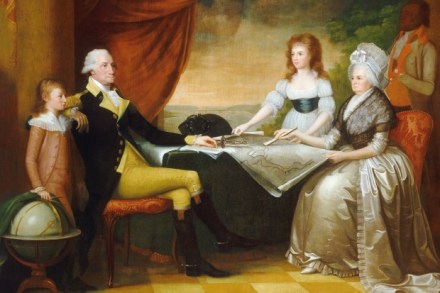
‘Would Washington have ever been commander of the revolutionary army, or President of the United States, if he had not married the rich widow of Mr Custis?’ asked John Adams. The answer, says Flora Fraser, is no. We like to see our ‘men of destiny’ as striding the world alone before stepping onto the customary plinth, so some might find it inconvenient to consider the role, in George Washington’s glorious career, of America’s first First Lady. But in her lifetime, no one put Martha in the corner. George and Martha Washington is a balanced and vivid account of a marriage which was both remarkable and strikingly down-to-earth.

What does it really mean to have a tyrannical father?

What was it like, asks Jay Nordlinger, to have Mao as your father, or Pol Pot, or Papa Doc? The answer is that while all happy families are alike, the children of monsters are unhappy in their own way. Some dictatorial offspring are fairly normal while others are psychos. Nicu Ceausescu, son of the rulers of Romania, was from the age of 14 a figure of ‘comic-book evil’ whose hobbies included raping women. His brother, Valentin, is bookish and quiet, has a close circle of decent friends and works at the Institute of Atomic Physics outside Bucharest. For Svetlana Alliluyeva, being Stalin’s daughter was like being, as she put it, ‘already dead’.

Come rain or shine

‘Pray don’t talk to me about the weather, Mr Worthing,’ pleads Gwendolen in The Importance of Being Earnest. ‘Whenever people talk to me about the weather, I always feel quite certain that they mean something else. And that makes me quite nervous.’ Weatherland would make Gwendolen very nervous indeed. Our observations of the sky, Alexandra Harris reveals in this extended outlook, have always meant something else. Weatherland is a literary biography of the climate. Beginning with the Fall (in the Biblical rather than the autumnal sense) and ending with Alice Oswald, Harris condenses 2,000 years of weather ‘as it is recreated in the human imagination’.

Lovely house of ill repute

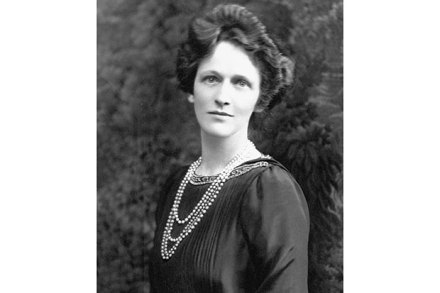
Well, you can’t say he wasn’t warned. Swimming pools, Nancy Astor told her son, Bill, were ‘disgustin’. I don’t trust people in pools.’ If he wanted to swim he should take a dip in the River Thames, which flowed through the grounds. But when his horse won the Oaks, Bill Astor built his long-desired pool, and before long Christine Keeler was emerging naked from the water and Cliveden was branded a den of iniquity. Scandal, it transpires, is in Cliveden’s DNA. The house was conceived by the second Duke of Buckingham, favourite of Charles II, who wanted a love nest for himself and his mistress, Anna Maria, Countess of Shrewsbury, whose husband he had killed in a duel in 1668.

Demonised Barber of Fleet Street

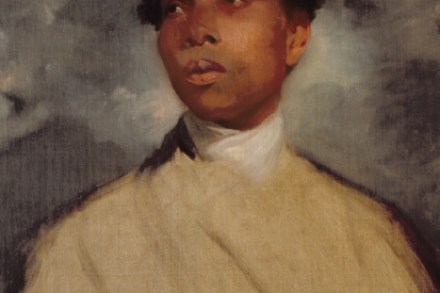
We know a great deal about Samuel Johnson and virtually nothing about his Jamaican servant, Francis Barber. The few facts of which we can be certain are these: born into slavery, Barber was aged about seven when his owner, Colonel Richard Bathhurst — who may, Michael Bundock suggests here, have been his father — brought him to England in 1750 and placed him in a Yorkshire school. Five years later, on his deathbed, Bathurst bequeathed Barber £12 and his freedom. It was Bathurst’s son who introduced Francis, now 12 years old, to Dr Johnson, whose wife had died two weeks earlier. Thus Barber spent his next 30 years in Gough Square, Bolt Court, and Johnson’s Court.

When Rex met Edith: a meeting of minds in interwar England

Rex Whistler — this book’s ‘bright young thing’ — was an artist of the 1920s and 1930s, and Edith Olivier, the ‘bluestocking’, was a novelist. They both deserve to be more famous than they are, and Anna Thomasson’s absorbing joint biography will doubtless make them so. They met through Stephen Tennant in 1924, when Olivier was 51 and Whistler was a 19-year-old student at what he called ‘the darling Slade’. She was snobbish and he was talented; liking one another from the start, they bonded over hair. Once Rex persuaded Edith to exchange her spinsterish bun for a ‘bingle’ — a daring combination of a shingle and a bob — she never looked back. Suitably attired, Olivier invited Whistler to her home, the Daye House in the grounds of Wilton.

Muriel and Nellie: two radical Christians build Jerusalem in London’s East End

This is the tale of Muriel Lester, once famous pacifist and social reformer, and Nellie Dowell, her invisible friend. Nellie Dowell is invisible in the sense that Claire Tomalin described Nelly Ternan in The Invisible Woman. While Ternan, the mistress of Charles Dickens, simply ‘vanished into thin air’, Nellie Dowell, who may or may not have been the mistress of Muriel, trod so lightly on the ground that she left barely a footprint behind her. Muriel Lester, the daughter of a Baptist shipbuilder with progressive ideas, has been the subject of several books already, including Vera Brittain’s The Rebel Passion: A Short History of Some Pioneer Peacemakers.