Frances Wilson

Mourning becomes Siri Hustvedt

At 6.58 p.m. on 30 April 2024, Siri Hustvedt’s husband of 43 years, the novelist Paul Auster, died of cancer in the library of their Brooklyn home. He was surrounded by family, including his adored daughter Sophie, who three months earlier had given birth to his first grandson, Miles. Hustvedt and Auster met at a poetry reading in 1981 and married later that year. It was she who proposed to him. Auster, aged 34, was not yet famous and Hustvedt, aged 26, was still a graduate student. By the 1990s, when she too became a novelist, they were New York literary royalty. In the 1970s, Auster had been married to the translator and short story writer Lydia Davis, with whom he had a son called Daniel. If Sophie was a summer’s day, Daniel was darkness.

All the gossip about Lady Chatterley’s Lover

Lady Chatterley’s Lover was written in a villa outside Florence during the winter of 1927-28, two years after D.H. Lawrence was diagnosed with TB. Described by him as ‘a phallic novel, but good and sun-wards, truly sun-wards’, the tale is set in his native Nottinghamshire, which he left in 1912 when he eloped with his aristocratic wife Frieda von Richthofen, who was then married to his tutor. Frieda, who valued her freedom, was enjoying an affair with the Italian officer Angelo Ravagli, who became her third husband after Lawrence’s death in 1930. It is believed that Lawrence was impotent for the last years of his life. In the evenings he would read aloud his finished pages, in which the Lawrentian philosophy is expressed by Oliver Mellors, gamekeeper to Sir Clifford Chatterley.

The last chapter: Departure(s), by Julian Barnes, reviewed

Departure(s), whose publication co-incides with Julian Barnes’s 80th birthday, will be his last book, a thank you and goodbye to his readers. Barnes has blood cancer, but the condition is manageable and not terminal; when he dies, it will be with, and not of, the disease. Or rather, as he puts it: ‘I, in dying, shall have killed my cancer! Barnes 1, Cancer 0 – result!’ Otherwise he is in good nick and still master and commander of his narratives. He is bowing out because his body of work is complete: his 18 novels and two memoirs – or, depending on how Departure(s) is categorised, his 17 novels and three memoirs – form a perfect whole. It is a canny move to write your own final chapter, and Barnes is a canny writer who has always had the sense of an ending.

Margaret Atwood settles old scores

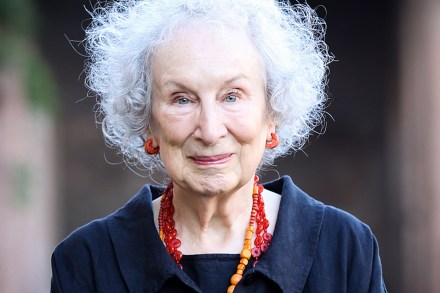
In the introduction to Book of Lives, Margaret Atwood recalls her initial response to the suggestion that she write a memoir: ‘Who wants to read about someone sitting at a desk messing up blank sheets of paper?’ Her autobiography was hardly the stuff of high adventure: ‘I wrote a book, I wrote a second book, I wrote another book, I wrote another book.’  This is not what they meant, her publishers replied: ‘We meant a memoir in, you know, a literary style.’ While Book of Lives is about a great deal more than Atwood churning out prize-winning novels, it is not written in a ‘literary style’. The style, if anything, is anti-literary. Atwood’s voice is casual, chatty, often catty.

What do Oscar Wilde, Gwen John and Evelyn Waugh have in common?

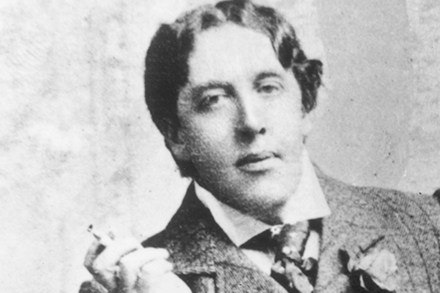
Religious conversions do not, for the most part, make for good anecdotes. An exception can be found in Patricia Lockwood’s memoir Priestdaddy, which describes the author’s father Greg’s road to Damascus experience in a nuclear submarine off the coast of Norway, where he watched The Exorcist 72 times: That eerie, pea-soup light was pouring down, and all around him men in sailor suits were getting the bejesus scared out of them, and the bejesus flew into my father like a dart into a bull’s eye. It was, Greg boasted, ‘the deepest conversion on record’.

‘My ghastly lonely life’ on the Costa Brava – Truman Capote

‘I can’t write books drinking all day and going to every soiree in Manhattan,’ Truman Capote complained. In order to write In Cold Blood, his ‘non-fiction novel’ about the murder of the Clutter family in Holcomb, Kansas, Capote and his partner Jack Dunphy therefore went to Palamos, a fishing town on the Costa Brava. Leaving New York in April 1960, they sailed to Le Havre, then drove across France with two dogs, one cat, ‘25 pieces of luggage’, and 4,000 pages of notes and transcripts. The killers, Dick Hickock and Perry Smith, were on death row. Their executions, Capote hoped, would take place later that year, at which point he would return to America and have his ending.

Admirable in their awfulness – the siblings Gus and Gwen John

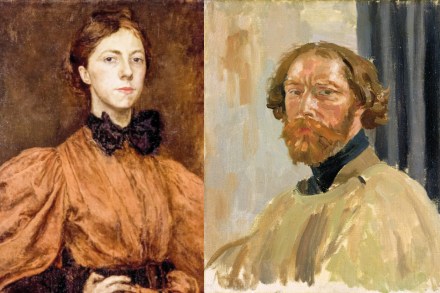
‘In 50 years’ time,’ Augustus John gloomily reflected following his sister’s death on 18 September 1939, ‘I will be known as the brother of Gwen John.’ He was right. In 2004, when the Tate mounted a joint retrospective of Augustus and Gwen John, it was Gwen who had become the major artist. The ‘variable strident chords’ of the self-styled Gypsy King, likened in his youth to Michelangelo, Rembrandt and Raphael, had been supplanted by the ‘sustained minor key’ of the nunlike recluse.

Richard Ellmann: the man and his masks

Richard Ellmann’s acclaimed life of James Joyce was published in 1959, with a revised and expanded edition appearing in 1982. The first edition, the work of an ambitious young American academic, received what Ellmann’s editor at Oxford University Press described as ‘the most ecstatic reaction I have seen to any book I have known anything about’. Ellmann’s work would ‘fix Joyce’s image for a generation’ wrote Frank Kermode in The Spectator, a prediction described by Zachary Leader as ‘if anything, too cautious’. By the time of the second edition, Ellmann had become a lionised Oxford don and the image of Joyce he had fixed was starting to chafe.

Saint Joan and saucy Eve: a single woman split in two

Fresh out of Hollywood High, Eve Babitz introduced herself to Joseph Heller: ‘Dear Joseph Heller, I am a stacked 18-year-old blonde on Sunset Boulevard. I am also a writer.’ It was 1960, and while her writing was the sheerest bliss, ‘Eve Bah-Bitz with the Great Big Tits’, as she was known, was herself a work of art. Beauty, she learned at school, was power and ‘the usual bastions of power are powerless when confronted by beauty’. So it was her stack (36 DD) that opened doors for her until, in 1972, her friend Joan Didion told Rolling Stone magazine to publish Eve’s first story, ‘The Sheik’. That same year, Didion also got Eve’s art into Vogue. As a result, Eve was ‘fucked up in the extreme’ about Joan. When, in 2016, Lili Anolik wrote about Didion’s L.A.

Christopher Caldwell, Gus Carter, Ruaridh Nicoll, Tanya Gold, and Books of the Year I

34 min listen

On this week’s Spectator Out Loud: Christopher Caldwell asks what a Trump victory could mean for Ukraine (1:07); Gus Carter argues that leaving the ECHR won’t fix Britain’s immigration system (8:29); Ruaridh Nicoll reads his letter from Havana (18:04); Tanya Gold provides her notes on toffee apples (23:51); and a selection of our books of the year from Jonathan Sumption, Hadley Freeman, Mark Mason, Christopher Howse, Sam Leith and Frances Wilson (27:08).  Produced and presented by Patrick Gibbons.

A GP diagnosed me with ‘acute anxiety’ – only to exacerbate it

In 2008, after his first child was born and before he was due to get married, Tom Lee began to unravel. It was as if, he explains in his fragile and unforgettable memoir, ‘some internal switch had been clicked or shorted, leaving my body and mind in a state of unrelenting and unsolvable emergency’. The breakdown began in his body: tight headache, nausea, a stiffness in his hands so extreme he couldn’t hold a pen. Welts erupted on the surface of his skin; he ate only bananas, one half at a time. The discarded halves blackened around the house. He was unable to work or sleep; but these early weeks were what he calls the ‘phoney war, the pre-tremors of a coming earthquake’.

There’s nothing shameful about hypochondria

The hypochondriac is the butt of jokes. Even his butt is the butt of jokes. A story doing the  rounds in the 16th and 17th centuries concerned a Parisian glassmaker who, believing himself to be also made of glass, fastened a cushion to his buttocks in case they broke when he sat down. His anxiety was mocked by a character in a play called Lingua, Or the Combat of the Tongue: ‘I am a Urinal, I dare not stirre,/ For fear of cracking in the Bottome.’ The aim of A Body Made of Glass is to take hypochondria, or ‘illness anxiety disorder’, seriously. But in a moment of levity, Caroline Crampton compares laughing about hypochondria to laughing about farts being made visible ‘like soap bubbles in the air’.

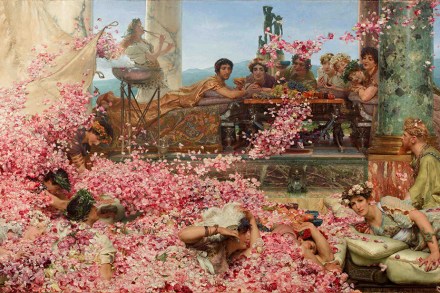
The horrors of dining with a Roman emperor

Emperor of Rome? Is there a typo in the title? Mary Beard’s latest book is about not one but 30 Roman emperors, from Julius Caesar (assassinated 44 BCE) to Alexander Severus (assassinated 235 CE), so why the singular? The answer is that Emperor of Rome is a study of autocracy and one autocrat, as Marcus Aurelius put it, is much the same as another: ‘Same play, different cast.’  Beard’s subject is emperors as a category, because it was the symbol of rule rather than the ruler himself that mattered to the 50 million imperial subjects between darkest Britannia and the Saharan desert in the first three centuries of the Christian era.

Ireland’s most notorious murderer still casts a disturbing spell

Mark O’Connell was three years old when Malcolm Macarthur – a silken-tongued toff in a bow tie – went on his killing rampage in 1982, and 33 when he was released from prison in 2012. Eight years later, when he began this book, O’Connell describes stalking Macarthur around Dublin in the hope of securing the kind of interview that would cause Ireland’s most famous murderer to ‘tremble in terror and awe at the moral magnitude of his iniquity. I wanted to witness the breaking down of his ego defences, the revelation of some terrible emotional truth within’.

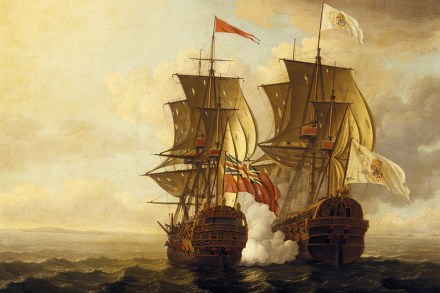
Triumph and disaster in the War of Jenkins’ Ear

It all began in 1731 when Robert Jenkins, the captain of the Rebecca, had his ear sliced off by Juan de León Fandiño of the Spanish patrol boat La Isabela. Storming the British brig in the Caribbean, Fandiño accused Jenkins of smuggling sugar from Spanish colonies. He would cut King George’s ear off too, Fandiño threatened, were he to be caught stealing from Spain. Testifying before parliament in 1738, Jenkins produced the severed ear (pickled in a jar), which is why the nine years of fighting that followed became known as the War of Jenkins’ Ear.

How the quarrelsome ‘Jena set’ paved the way for Hitler

Today, the German city of Jena, 150 miles south-west of Berlin, is the world centre of the optical and precision industry; but in the 1790s it spawned an even more marketable commodity. It was then a small medieval town on the banks of the river Saale with crumbling walls, 800 half-timbered houses, a market square and an unruly university. Here, in the philosophy department, Johann Gottlieb Fichte, a young professor inspired by Immanuel Kant and the French Revolution, proclaimed from the pulpit his theory of the ‘Ich’. ‘A person,’ he roared, ‘should be self-determined.’ In an age of absolute power and the divine right of kings, the idea of free will was an incendiary device and Fichte freewheeled his way through each lecture.

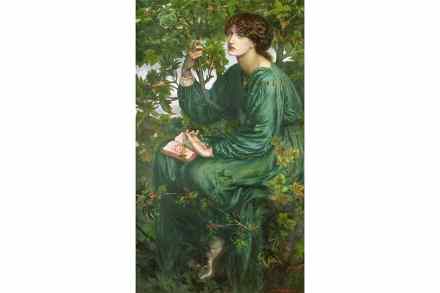
Was Jane Morris a sphinx without a secret?

William Morris was the son of a stock-broker and Jane Burden was the daughter of a stablehand. He was raised in a mansion in Walthamstow (now the William Morris Gallery) and she grew up in a hovel in Oxford. Had she not been talent-spotted by Dante Gabriel Rossetti when she was leaving the theatre one night, Jane would have become a college servant rather than an artist’s muse. She married Morris when she was 19, after he had reproduced her as ‘La Belle Iseult’, trapped in a room between a window and a bed, and put her through intensive elocution lessons as well as a crash course in music, art and literature.

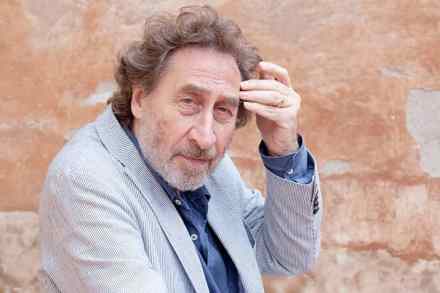
Howard Jacobson superbly captures the terrible cost of becoming a writer

Howard Jacobson, who turns 80 this year, published his first novel aged 40. Since then he has produced roughly a book every two years, including The Finkler Question, which won the Man Booker in 2010. Given that he was put on Earth to write, why the wait? This is the subject of Mother’s Boy, a tale of self-persecution in the form of a monologue which includes interjections from the ghosts of his parents and one chapter, recording a period in his twenties that he drifted through in a dream state, printed in a font resembling handwriting. ‘How’s the novel coming along?’ his father would routinely ask after Jacobson graduated from Cambridge with a ‘poor degree’ in English. He was taught by F.R.

Yours disgusted, H.G. Wells: the young writer finds marriage insufferable

The Young H.G. Wells is a biography that takes biology seriously. This is partly because H.G. Wells was a biologist before he became a writer of science fiction (his first publication was A Text Book on Biology, which he illustrated himself), but also because Claire Tomalin is alert to the life of the body as well as the mind. In her hands, Wells’s youth was less about his rise from the lower classes to become the wealthy socialist who predicted the aeroplane, the tank and the atomic bomb than about the rise of his weight. There is never a point in these pages when we are not told what numbers Wells saw when he stood on the bathroom scales, or reminded of the connection between his physical evolution and his evolution as a writer.

How does David Sedaris get away with saying the unsayable?

These aren’t diaries in the sense that Chips Channon kept diaries, or Samuel Pepys. They aren’t diaries at all, beyond the fact that each entry records an event and has a date and place attached. If a diary is a conversation with yourself, A Carnival of Snackery is a conversation with a crowd, because the observations it contains were written as material for David Sedaris’s shows. The entries, which begin in 2003 and continue to Christmas 2020, are therefore, as Sedaris admits, over-polished, and what we hear on the page is a spoken rather than a written voice.