Frances Wilson

We’ve embraced William Blake without having any idea of what he was on about

From our UK edition

Whose were those feet in ancient time that walked upon England’s mountains green? That William Blake assumed his readers were on his same wavelength is one of the things, according to John Higgs, ‘that makes his writing a glorious puzzle’. Equally puzzling, argues Higgs, is that the cockney visionary, unsung in his lifetime and buried in a pauper’s grave, has now been absorbed thoroughly into mainstream culture without our having the faintest idea of what he was on about.

Frances Wilson on the great and comedic life of D H Lawrence

From our UK edition

44 min listen

My guest in this week’s Book Club podcast is Frances Wilson, whose new book Burning Man: The Ascent of D H Lawrence sets out to take a fresh look at a now unfashionable figure. Frances tells me why we’re looking in the wrong places for Lawrence’s greatness, explains why the supposed prophet of sexual liberation wasn’t really interested in sex at all - and reveals that after his death Lawrence may have been eaten by his admirers.

Stealing the story: A Lonely Man, by Chris Power, reviewed

From our UK edition

Robert Prowe has writer’s block. An Englishman reaching middle age, he lives in Berlin with his Swedish wife and their two young daughters: two prams in the hall, two enemies of promise. Having enjoyed some success with a collection of short stories, Robert has been commissioned to write a novel; but the submission date was 18 months ago and he now spends his mornings deleting, letter by letter, the few words he produced the day before. His stories had once come easily: they grew out of his quotidian world in the form of anecdotes passed on to him by friends, family and strangers in bars. But nothing around him will feed his present fiction and he is fast fading out of his own life. ‘R U ALIVE?’ asks his agent.

What does ownership of land really mean?

From our UK edition

At the end of the last century, Simon Winchester bought 123 acres of wooded mountainside in the hamlet of Wassaic, the village of Armenia, the town of Dover, the country of Dutchess, the state of New York, the country of America. His land had originally been inhabited by the Mohicans, who grew corn and squash and beans until they were expelled by the Dutch. It was then owned, in the titular sense, by Charles II, James II, Mary II, William III and Georges I, II and III, and had passed through the hands of a series of farmers, charcoal-makers and Sicilian immigrants before Winchester became its custodian.

Euthanasia sitcom: What Are You Going Through, by Sigrid Nunez, reviewed

From our UK edition

What Are You Going Through is both brilliant and mercifully brief. Weighing in at 200-odd pages, it can be read in five hours flat and will leave you staring into endless night. ‘Make the audience suffer as much as possible,’ advised Alfred Hitchcock, and Sigrid Nunez, whose subject is emotional extremity, follows suit. The suffering begins at the start when the narrator, a woman of a certain age whose name we never learn, goes to a talk by a writer, whose name we also never learn. His lecture, given in a polished, emotionless voice, is about the death of the planet: It was over, he said. It was too late, we had dithered too long. Our society had become too fragmented and dysfunctional for us to fix, in time, the calamitous mistakes we had made.

A story without redemption: The Lying Life of Adults, by Elena Ferrante, reviewed

From our UK edition

‘I don’t at all hate lies,’ Elena Ferrante explained in Frantumaglia, her manifesto for authorial anonymity. ‘I find them useful and I resort to them when necessary to shield my person, feelings, pressures.’ Shortly after writing these words, Ferrante, who refuses all interviews and keeps her identity under wraps, was accused by an investigative journalist called Claudio Gatti of lying to her readers. She had allowed us to assume, Gatti revealed, that her hugely successful Neapolitan quartet — My Brilliant Friend, The Story of a New Name, Those Who Leave and Those Who Stay and The Story of the Lost Child — was autobiographical.

Good biographers make the best companions

From our UK edition

Strange, when your own life flatlines, the way in which other lives become suddenly more interesting. I have been retreating into biographies and memoirs as never before, scouring them for accounts of incarceration, illness, boredom, family meltdowns and sudden financial freefalls. One of the pleasures of the genre is the way in which the peaks and troughs of a lifetime are resolved by the author into a pattern as ordered as a heart rate on a hospital monitor: this year was a low point and this one a high point; this experience proved to be a turning point, while this one was no more than a blip in the chart. For a graph with a dramatic spike and a sudden plunge, I recommend Mark Bostridge’s Florence Nightingale: The Woman and her Legend.

Excess and incest were meat and drink to the Byrons

From our UK edition

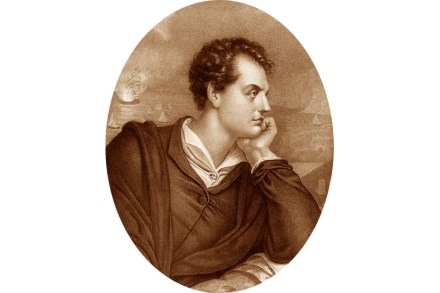
‘Some curse hangs over me and mine,’ wrote Lord Byron, and thanks to Emily Brand, who is a genealogist, it is now possible to see why Byron was so darned Byronic: excess, incest and marital misery flowed in the bloodstream. The gloom that looked like a Regency pose was entirely pre-programmed; George Gordon Byron’s script was handed to him at birth. Being mad, bad and dangerous to know was as instinctive to the Byrons as howling at the moon for a pack of wolves. When he compared his family to ‘whole woods of withered pines’, the poet was not exaggerating. Every branch was rotten.

Could Leslie Jamison please stop sitting on the fence?

From our UK edition

Leslie Jamison is creating quite a stir in America. Her first collection of essays, The Empathy Exams, went straight to the New York Times bestseller list, and this second collection comes crowned in laurels: ‘She’s an unstoppable force of nature,’ says her American editor. ‘This is the essay at its creative, philosophical best,’ says Eleanor Catton. Stephen King calls her ‘required reading’, and early reviewers on the website Goodreads describe this book as ‘genius’, ‘astounding’, ‘resplendent’ and ‘epiphanic’. Because she is a woman who writes essays, Jamison has been compared with Joan Didion, Janet Malcolm and Susan Sontag, but she is the antithesis of her predecessors.

The gifts of Gabo

From our UK edition

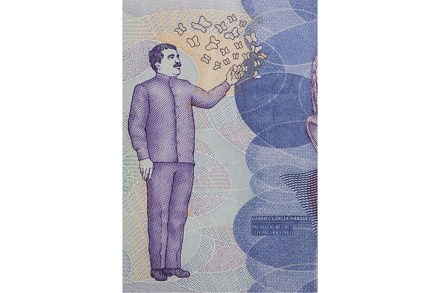
Gerald Martin’s titanic biography of 2010, Gabriel García Márquez: A Life, was the product of 17 years of research and 300 interviews, including one with Fidel Castro. So what does Solitude & Company add to the fairytale history of ‘Gabo’, as Latin America’s greatest teller of historical fairy tales is generally known? In the year 2000, when García Márquez was still alive, Silvana Paternostro began conducting her own interviews with Gabo’s family, his ‘first and last friends’, his agents, editors and fellow writers. She has now cut, spliced and transcribed the tapes in order to create the effect of a bar full of drunks interrupting one another. ‘Is that tape recorder off?

‘I don’t want to explain myself’

From our UK edition

There is an African bird called the ox-pecker with which Germaine Greer, conversant as she is with the natural world, will doubtless be familiar. Oxpeckers ride on the backs of large mammals — giraffes, buffalo, wildebeest and the like — feeding off their lice. Once thought an example of mutualism, the relationship between diner and host is now understood to be more complex than this. On the one hand oxpeckers reduce the larvae, and on the other they jab their beaks into any open wounds on the hide in order to keep the blood fresh. Elizabeth Kleinhenz is Germaine Greer’s ox- (or rather Oz-) pecker.

Simply divine

‘The Divine Comedy is a book that everyone ought to read,’ according to Jorge Luis Borges, and every Italian has read it. Dante’s midlife crisis in the dark wood, his journey down the circles of hell, up the ledges of Purgatory and into the arms of Beatrice is mother’s milk to Italian schoolchildren. Today lines from La divina commedia are printed on T-shirts; before the war, as Primo Levi recalled, there were ‘Dante tournaments’ on the streets of Turin, where one boy would recite the start of a canto and his rival would try to complete it. I had two Italian students in an English literature seminar last year who sniggered when I mentioned the once standard Penguin translation of the Comedy by Dorothy L.

Lessons from the Great Cham

From our UK edition

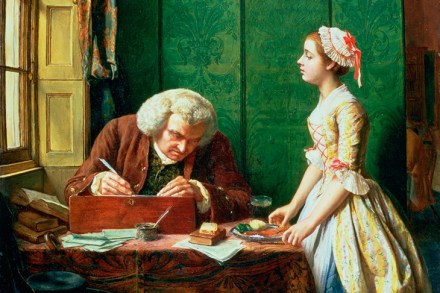
The most irritating of recent publishing trends must be the literary self-help guide, and Henry Hitchings’s contribution to the genre will join a shelf now groaning with accounts of how Proust can change your life, how Adam Smith can change your life, what W.H. Auden can do for you, what Montaigne can tell us about how to live, what Tolstoy can teach us in troubled times, and a whole heap of nonsense about what Jane Austen has to say on the subjects of friendships, dating and getting married. The formula is simple: the workings of a vast and complex mind (the mind of Dr Johnson, said Boswell, resembled ‘the Coliseum at Rome’) are boiled down and served up, in bite-sized chunks, for a public assumed to no longer understand the purpose of literature, or how to read.

The man who disappeared | 22 March 2018

From our UK edition

On a night in Paris in 1914, Gertrude Stein was walking with Picasso when the first camouflaged trucks passed by. ‘We had heard of camouflage,’ Stein recalled, ‘but we had not seen it, and Picasso, amazed, looked at it and then cried out, yes it is we who made it, that is Cubism.’ The art of blending into the background was indeed discovered by painters, but the roots of camouflage, Mary Horlock argues, lay in Impressionism. French camouflage manuals cited Corot rather than Picasso: ‘It is by variations of light and shadow, often very delicate, that one recognises how an object is solid and detached from its background.’ For Solomon J.

Two enquiring minds

From our UK edition

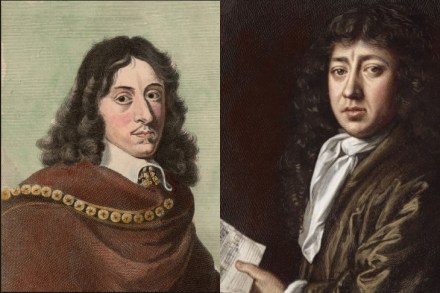
Samuel Pepys, wrote John Evelyn, was ‘universally beloved, hospitable, generous, learned in many things’ and ‘skilled in music’. John Evelyn, wrote Pepys, ‘must be allowed … for a little conceitedness; but he may well be so, being a man so much above others’. Pepys’s assessment of Evelyn was made early in their relationship, in 1665, and Evelyn’s assessment of Pepys was made on the day that his fellow diarist died, in 1703. So rest the reputations of our two great recorders of Restoration England: Pepys, the middle-class son of a tailor, was a man of the people; Evelyn, the heir of a country gentleman, was a notch or two above.

Back with a vengeance

From our UK edition

One hour in No. 5 Cheyne Row, Virginia Woolf observed, will tell you more about the Carlyles than all the biographies. The house lived in by Thomas and Jane Carlyle from 1834 until their respective deaths, and now owned by the National Trust, was one of the great battlegrounds of domestic history. Here Jane warred against bedbugs and coal dust and her husband’s obsession with the vast and unstoppable Lady Harriet Ashburton (there were three people in her marriage), and Carlyle warred against the intrusions of the outside world.

Spectator Books of the Year: The man who stole Captain Cook’s thunder

From our UK edition

Hot on the heels of his books about the Bible and the Queen comes A.N. Wilson’s witty, learned, utterly self-possessed novel Resolution (Atlantic, £16), about the turbulent life of George Forster. He was the Polish-born, Warrington-raised, multi-lingual Enlightenment scholar-scientist who, aged 18, was appointed botanist on board the Resolution. His popular account of the voyage pipped Captain Cook’s own book to the post. So Wilson’s Forster is a guilty man, a protégé who murdered his master: ‘It now amazes me that I had the gall, the sheer cheek, to write my Voyage book. I wrote it fast. We finished it before Cook. It sold well — only now do I see how justifiably angry the Captain must have been! I’d done more than jump the gun.

Rifling through a writer’s desk

From our UK edition

Frantumaglia isn’t strictly a book by Elena Ferrante. Frantumaglia isn’t strictly a book at all. It’s a celebration of the life of the novel and a manifesto for the death of the author, told in a collection of interviews, letters from journalists requesting interviews, letters within letters, stories within letters, and letters from Ferrante’s editor in which the idea of publishing all these letters, dating from 1991 to the present day, is initially proposed. The whole caboodle is a dizzying ‘jumble of fragments’, ‘a miscellaneous crowd of things’, a mass of ‘contradictory sensations’ which ‘make a noise in your head’.

Champagne all the way

From our UK edition

A more appropriate subtitle to this homage to the queen bees of the interwar years might have been ‘How to Suck Up in Society’, for the servility of these six stately galleons simply beggars belief. Each was a mistress of her art, but the oiliest of the lot has to be Mrs Ronnie Greville, the illegitimate spawn of a Scottish distiller who was described by Harold Nicolson as ‘a great fat slug filled with venom’. By offering to bequeath her house, Polesdon Lacey, to the stammering Prince Albert, Mrs Greville kept the monarchy buzzing around her hive for years to come. Queen Bees is a sticky blend of anecdote and social history, in which Sian Evans makes exaggerated claims for the historical significance of her salonnières.

An electrifying politician

From our UK edition

Just who was Benjamin Franklin? Apart, that is, from journalist, statesman, diplomat, founding father of the United States, inventor of the lightning rod, the Franklin Stove, the milometer, swimming flippers and the flexible catheter, the man who engineered the America postal system, who established the first lending library, who wrote one of the finest autobiographies in the language, and who schooled us in soundbites such as ‘Let all men know thee, but no man know thee thoroughly.’ Amen to that. Despite being the subject of a steady flow of worthy biographies, of which this is the latest, Franklin remains as cunning in heaven as he was on Earth. A master manipulator, people saw in Franklin what he wanted them to see.