Flora Watkins

Gus Carter, Paul Wood, Jonathan Aitken, Laura Gascoigne and Flora Watkins

35 min listen

This week: Gus Carter reports from Rotherham (01:10), Paul Wood asks whether anything can stop full-scale conflict in the Middle East (05:55), Jonathan Aitken takes us inside Nixon's resignation melodrama (16:55), Laura Gascoigne reviews Revealing Nature: The Art of Cedric Morris and Lett-Haines (26:08), and Flora Watkins reads her notes on ragwort (31:24).  Produced and presented by Oscar Edmondson.

Love it or loathe it, ragwort is winning 

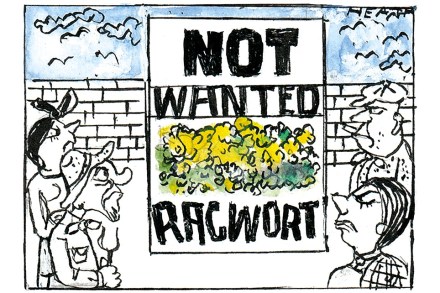
White, lacy cow parsley frothing along the roadside is a familiar sight during the British summer. But 2024 is the first year I can remember when it’s been superseded by the retina-scorching yellow of ragwort. Whether you consider common ragwort (Senecio jacobaea) the ‘yellow peril’ or a precious wildflower crucial to biodiversity depends on whether you’re in the horse owner/farmer camp or a conservationist. ‘It’s the worst I’ve ever seen,’ I keep hearing from farmers and fellow horse-owners. For the first time I’ve had to pull it up from our small acreage; enough to fill a feed sack. In Appleshaw in Hampshire, villagers organised a community ragwort pull, getting an entire trailer’s worth in just over an hour.

Freddy Gray, Angus Colwell, Matthew Parris, Flora Watkins and Rory Sutherland

30 min listen

On this week’s Spectator Out Loud: after President Biden’s debate disaster, Freddy Gray profiles the one woman who could persuade him to step down, his wife Jill (1:05); Angus Colwell reports from Israel, where escalation of war seems a very real possibility (9:02); Matthew Parris attempts to reappraise the past 14 years of Conservative government (14:16); Flora Watkins reveals the reasons why canned gin and tonics are so popular (21:24); and, Rory Sutherland asks who could possibly make a better Bond villain than Elon Musk? (25:00).  Presented by Patrick Gibbons.

Gins in tins – the Yummy Mummy’s ruin

I’m writing this in my car, laptop on knees and a delicious can of Tanqueray Flor de Sevilla gin and tonic in the drinks holder, while my sons are at cricket practice. It’s an inclement evening, but were it a sunny summer’s day, the Yummy Mummies would be sprawled around the boundary in their Veja trainers and prairie dresses, pastel-coloured tins in hand, cackling and catching up like some Gen X version of Hogarth’s ‘Gin Lane’. Gins in tins are the acceptable form of ‘mother’s ruin’. First came Gordon’s G&T in a tin, followed by its pink gin, and now the chiller aisle contains more temptation than the Haribo shelves do for my children. Bombay Sapphire, Tanqueray, Sipsmith and multiple artisan brands have got in on the act.

Didn’t have a Sky dish? You’re probably middle class too

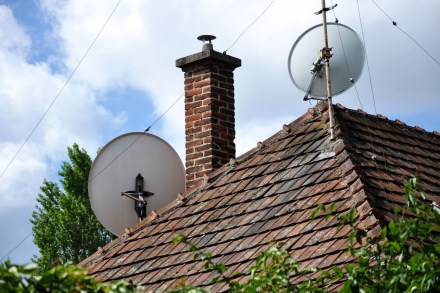
As any child of the 1980s could tell you, whether your house had a Sky dish had nothing to do with income. The launch of BSkyB in 1989 – when Rishi Sunak was eight and I was 10 – was greeted with horror by our middle-class professional parents, just as with their parent’s generation when that ghastly ITV began broadcasting. Crudely, Sky was common. It was council house – like single parents (still a rarity in my native Suffolk in the 1980s), fish fingers and the Sun. Our route to primary school took us through the council estate where satellite dishes sprouted as quickly as green wellies in the rain in the old part of the village.  None of the pretty period houses in the village were sullied by a Sky dish ‘Why can’t we get one?

What do we mean when we talk of ‘home’?

Given that I know the author, would I feel inhibited about reviewing her new book critically, I asked myself. But other than meeting her once at a party for two minutes, I realised that I know Clover Stroud only through her raw, ravishing memoirs and – like the rest of her 37,000 Instagram followers – the intimate and honest way in which she documents her life. Perhaps more than any other writer, Stroud has taken the elegant, elliptical memoir and forged it into the genre of life writing. She has lived a lot of life. The Wild Other documented her mother’s life-changing brain injury as a result of a riding accident when Stroud was 16.

Inside the chaotic Household Cavalry stables

Churchill had his black dog tailing him around. I used to have black horses galloping through my head. They careered around out of control, rendering me so anxious that I couldn’t sleep the night before I was due to heave myself into the saddle as a civilian support rider for the Household Cavalry. So the sight of blood-spattered horses from the Household Regiment bolting through London this week dredged up some unwelcome memories. Red London buses and black taxi cabs flashed by in a blur. I really thought I was going to die For six months, I was a member of the coveted, informal club of civilians who got to exercise the horses of this exclusive regiment in Hyde Park.

The Xi files: how China spies

38 min listen

This week: The Xi files: China’s global spy network. A Tory parliamentary aide and an academic were arrested this week for allegedly passing ‘prejudicial information’ to China. In his cover piece Nigel Inkster, MI6’s former director of operations and intelligence, explains the nature of this global spy network: hacking, bribery, manhunts for targets and more. To discuss, Ian Williams, author of Fire of the Dragon - China's New Cold War, and historian and Guardian columnist Simon Jenkins joined the podcast.. (02:05) Next: Lara and Gus take us through some of their favourite pieces in the magazine, including Douglas Murray’s column and Gus’s interview with the philosopher Daniel Dennett.

How the Jilly Cooper Book Club turned toxic

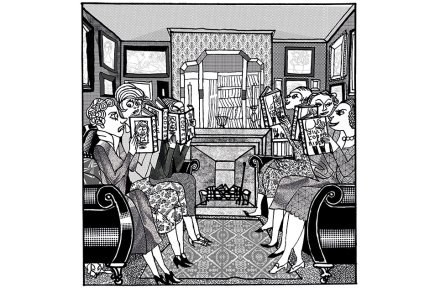
The Jilly Cooper Book Club was set up about a decade ago by two friends who’d had enough of book groups where someone would insist, ‘We really must do Dostoevsky this year.’ Members of the JCBC, in a co-founder’s words, just wanted to get together to ‘drink champagne and shriek about Jilly’. ‘Book clubs are basically Mean Girls for middle-class women’ For some time, I stalked key members on Twitter before managing to wangle an invitation. My first meeting was at a large townhouse in Clapham to discuss Rivals. There was a lot of champagne and a gaggle of smart, entertaining women. One was wearing a Vivienne Westwood corset dress; another had flown in from California. It was far more glamorous and fun than the usual cheap-wine-and-crisps affairs.

Give me back my codeine

It’s a long time since I took a powerful drug that wasn’t dispensed by a pharmacist. Last winter, during what has become the annual post-Christmas Covid collapse, I searched in vain for the codeine cough linctus I’d been prescribed when the virus first struck four years ago.  Why must we suffer because a few scrotes misuse it? ‘Keep it on the bedside table,’ said my GP at the time, ‘and when you wake up coughing in the night, take a swig and you’ll be able to go back to sleep.’ She was right: it provided blissful relief and precious, life-enhancing sleep. But when I asked my current GP (we’ve since moved out of London), she gazed into the middle distance and made gnomic pronouncements of the ilk, ‘We don’t really do that any more’.

Private school isn’t worth it

In the end, it was the sports kit that persuaded us to pull the plug: two technical training tops at a cost of £90. A directive had come down from the senior school that all pupils must be in new gear from Kukri (official supplier to county cricket clubs and Commonwealth Games England) by the start of the Michaelmas term. I replaced what our sons had outgrown in the school’s uniform shop (five items: £200), but baulked at spending another £100 when their old training tops still fitted. School fees are already unaffordable – and that’s before you factor in VAT at 20 per cent Our sons had been in prep school since we bolted from London after the lockdowns to a part of the country we barely knew.

The sad death of the pony ride

Pony rides were once a staple of every village, church and primary-school fête. A brusque, horsey mother would swing you up into the saddle, and the patient pony would trudge up and down while you clung to its mane, before it was the turn of the next child in the queue. No one ever plonked a hard hat on your head. There were certainly none of those restrictive body protectors that children are encased in now, bundled up like scarab beetles. These days, I am that horsey mother. When we moved to the country from London after the lockdowns, ponies were top of my shopping list – above a replacement for the wheezy boiler and a fancy range cooker. We now have a miniature Shetland pony called Ollie and a donkey called Mouse.

Never the doctor, always the nurse: the fate of women in post-war Britain

For fans of Ysenda Maxtone Graham’s unique blend of high comedy and shrewd social observation, a new book is cause to leap on to the nearest chair and emit several loud shrieks. Jobs for the Girls is the third in the author’s trilogy on ‘lost worlds of Britain’. These are recent, touchable lost worlds, she stresses in her introduction, ‘still in living memory’, as recalled vividly – and often hilariously – by people who were there in her earlier books, Terms and Conditions, about life in girls’ boarding schools, and British Summertime Begins, on what children from all walks of life got up to in the school holidays. Jobs for the Girls picks up where they left off, with Maxtone Graham’s antennae homing in on early adulthood.

How common is your garden?

As spring (finally) arrives, it’s time to turn our attention back to what’s outside the back door. Helpfully, garden designer Isabel Bannerman (Highgrove, Houghton Hall, Arundel Castle) has written a memoir, Husbandry, in which she declares there is no such thing as ‘U and non-U’ in gardening. She then undermines her argument by immediately setting out her shibboleths: variegated leaves, curvy paths, statues, fountains, tidiness. Anything, in effect, that is ‘suburban’ (bedding plants) or reminiscent of municipal planting schemes (ibid. those big, blowsy King Alfred daffodils you’ll see blaring from roundabouts at this time of year).

The tyranny of voice notes

Ping! My phone vibrates with a message from a new friend. A mild spike of dopamine dissipates on seeing she’s left me a WhatsApp voice note. However, it’s short and, hopefully, it’s a one-off.  I reply with a text message, hoping she’ll register the switch in communications. Ping! Oh no. She’s a voice-noter. She’s a bloody voice-noter. And this one is well over two minutes long and I don’t know her very well, so I’m going to have to listen to the whole thing without speeding it up. It’s an invitation to dinner, but this does nothing to quell my mounting frustration and irrational thoughts of disengaging myself from this nascent friendship.  ‘Yes great thanks,’ I reply by text, without – pointedly – an ‘X’.

Welcome to Herne Hell, Boris

When I lived in north London as a postgraduate student, my flatmates amused themselves by shouting abusive names at the then member for Henley as he cycled past on his way to the Commons from his house in Islington. But judging by the reaction from my old neighbours in Herne Hill, Boris Johnson is likely to receive an even less affable greeting there. The erstwhile prime minister and his wife have reportedly bought a five-bedroom home in Herne Hill, the leafy liberal, left-leaning pocket of south-east London where I lived for almost 20 years before moving to Norfolk last summer.

The scourge of the beach tent land grab

‘Ah,’ says my husband at the top of the cliff path at Overstrand, ‘it’s just like a Shirley Hughes illustration.’ There are sandcastles, wooden groynes, children and dogs running in and out of the waves. Then his eye falls on the first land grab of the day. Three generations of the same family are hard at work constructing their citadel: popping up polyester tents to form a wide arc, shovelling shingle into the flaps to secure them, unfurling windbreaks across either end to mark the outer limits of their encampment. We – like the family in a favourite Hughes picture book from my childhood, Lucy and Tom at the Seaside (1976) – have travelled with just ‘the picnic things and bathing bags and buckets and spades’.

The mystery and delight of English elderflower

There’s an old saying that English summertime begins when the frothy heads of elderflowers appear in hedgerows – and ends when the black elderberries have ripened. People have been picking these great white ‘plates’, as the flower heads are known, to make drinks since at least Tudor times. In Hannah Glasse’s The Art of Cookery Made Plain and Easy (1747) there’s a recipe for elderflower wine. But only in the past 20 years or so have elderflower cordial and pressé become ubiquitous as soft drinks. That expansion has largely been brought about by Peverel Manners of Belvoir Fruit Farms in Leicestershire. ‘Pev’, a cousin of the Duke of Rutland, still uses his mother’s recipe.

Blissfully crowd-free: now’s the time to visit London’s museums

What are the unexpected benefits to have come out of Covid? Letterbox cocktails? An irrefutable excuse for you to bail on a social occasion? An end to gouty Great-Uncle Matthew lunging for a slobbery kiss at Christmas? Like a booster shot, most of these will wear off over time, so we should make the most of them. Similarly, a recent trip to the National Gallery prompted a flurry of bookings as soon as we got home. For the first time, it was possible to appreciate favourite paintings unencumbered by a sea of iPads held aloft by un-seeing tourists. 'Just buy a postcard in the shop!' snapped no-one at all. It was bliss. Peaceful. Civilised. Of course, this isn’t sustainable.

The cult of the cockapoo

'Have you got any advice?' my friend calls to ask, ahead of going to pick up their pandemic puppy. 'Well, um, as first-time dog owners, I’d say steer clear of spaniels and poodles… but it’s a bit late for that, ha!' 'Ha,' she says, thinking I’m joking and off they go to fetch their cute, Disneyfied cockapoo. What could possibly go wrong? He’s a small dog — they were very clear that they needed a small dog to fit in with their family— he’s friendly, he’s a hypoallergenic little ball of floof. He even looks like a child’s teddy bear. A year on and Harvey the cockapoo is neither small nor cuddly, towering over both his spaniel and poodle parent.