Flora Watkins

The true villain of Netflix’s Adolescence

Even if you haven’t seen Adolescence, currently the most-watched show on Netflix, you’ll doubtless be aware – or think you’re aware – of its central themes: knife crime, social media, the manosphere and its pernicious influence on teenage boys. In other words, ‘the Andrew Tate shite’, as the show’s (female) detective sergeant sighs at one point.  Critics have gushed that this is ‘TV perfection’ (Times, Guardian) and a landmark series ‘so powerful it could save lives’ (Guardian again). Each of the four one-hour episodes is apparently shot in one take, which is the sort of thing that thrills male critics but for ordinary viewers can, at times, feel self-indulgent and contrived.

Do you have Dryrobophobia?

You first start to notice them in that desultory way you become aware of the floating specks across your vision that signify a migraine is on the way. Perhaps you saw a woman in Waitrose wearing a black one and wondered why she was sporting a giant version of the Umbro football manager’s coat from the 1990s. Then someone pointed out the hot pink camo combo on the sidelines at an under-12s rugby tournament and, looking across the pitches, you realised just how ubiquitous they have become. By the time you spot my own hate-favourite – the Dryrobe Advance Abstract, a limited edition now out of stock which looks like the old Channel 4 test card – you may be experiencing full-on throbbing temples.

Which school gate drop-off tribe are you in?

It wasn’t until I locked eyes with a Premiership rugby player as I got out of my car at 8 a.m. that I realised I might need to up my game for drop-offs at the children’s new school. I would need to start wearing eye make-up, for starters. I should also give a little more thought to an outfit than picking up yesterday’s T-shirt and cut-off jeans from the bedroom floor – although ‘outfit’ is one of those words that makes me wince, like ‘gift’ or a ‘pop’ of colour. Still, ‘outfits’ are what a certain type of woman around here goes in for. Among a sort of country-prep-miles-from-anywhere subset, you will find mothers trying their best to fit into what the Times has identified as the ‘Ganni Mum’ tribe.

Why Ukraine’s minerals matter, the NHS’s sterilisation problem & remembering the worst poet in history

42 min listen

This week: the carve-up of Ukraine’s natural resources From the success of Keir Starmer’s visit to Washington to the squabbling we saw in the Oval Office and the breakdown of security guarantees for Ukraine – we have seen the good, the bad and the ugly of geopolitics in the last week, say Niall Ferguson and Nicholas Kulish in this week’s cover piece. They argue that what Donald Trump is really concerned with when it comes to Ukraine is rare earth minerals – which Ukraine has in abundance under its soil. The conventional wisdom is that the US is desperately short of these crucial minerals and, as Niall and Nicholas point out, the dealmaking president is driven by a nagging sense of inferiority in comparison to rare earth minerals powerhouse China.

Why is the NHS pushing pregnant women towards sterilisation?

It was a routine antenatal appointment. I’d done it twice before and knew the format. The obstetrician runs through the risks of an elective caesarean (ELCS). We agree a date, I sign the forms, then make a plea for adequate pain relief after the surgery, which I know will be ignored. So I was blindsided by her opening gambit. ‘Why don’t we tie your tubes when we’ve got the baby out?’ she said, or something similar – I don’t recall the exact words, but I do remember the heat in my chest, the confusion and fear. ‘What?’ ‘It’s your third child, isn’t it, so why don’t we tie your tubes at the same time?’ She wouldn’t drop it, ignoring my every assertion that I did not want this done to me.

Nurses shouldn’t have tattoos

Of all the aspects of dating that make me grateful I came off the market when I did – ghosting, choking, sober socialising, facial hair like Brahms’s beard – it’s the spread of large-scale visible tattoos that makes me feel like I got the last chopper out of ’Nam. Neck tattoos and sleeves were once either indicators of prison gang allegiances or the preserve of thrash metal bands and their fans. Although perhaps the most heavily inked man in rock is Travis Barker, drummer of pop-punk crossover tarts Blink-182. His whole head is tattooed, as is Kerry King’s of Slayer, who also has ‘God Hates Us All’ down his left arm. Among Phil Anselmo of Pantera’s extensive body art is a portrait of himself as a demon with his now ex-wife riding an extending tongue.

Britain’s bureaucratic bloat, debating surrogacy & is smoking ‘sexy’?

40 min listen

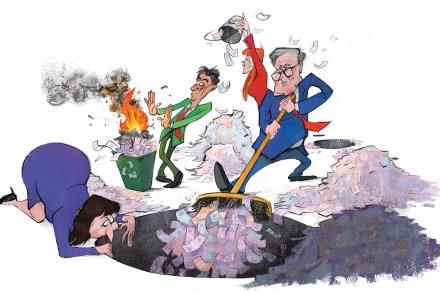
This week: The Spectator launches SPAFFThe civil service does one thing right, writes The Spectator’s data editor Michael Simmons: spaffing money away. The advent of Elon Musk’s DOGE in the US has inspired The Spectator to launch our own war on wasteful spending – the Spectator Project Against Frivolous Funding, or SPAFF. Examples of waste range from the comic to the tragic. The Department for Work and Pensions, Michael writes, ‘bought one Universal Credit claimant a £1,500 e-bike after he persuaded his MP it would help him find self-employment’. There’s money for a group trying to ‘decolonise’ pole dancing; for a ‘socially engaged’ practitioner to make a film about someone else getting an MBE; and for subscriptions to LinkedIn.

Smoking is sexy again

It’s a summer’s day in Suffolk, some time in 1992. My best friend Rebecca and I are both 14 and lying on our backs in a field. We have a packet of ten Silk Cut between us, and we are practising blowing smoke rings that will make us irresistible to boys. Everyone we fancy smokes: Slash, Kate Moss, half the Lower Sixth at the boys’ grammar school. It might be 40 years since Richard Doll and Austin Bradford-Hill made the link between smoking and lung cancer, but we don’t care. There’s Brad Pitt in Thelma and Louise with his cowboy hat and a Marlboro Red. Johnny Depp – smoking in every sense – in just about everything. It is, durrrr, a truth universally acknowledged that pretty much anyone looks hotter with a cigarette.

Does anyone actually fancy David Beckham?

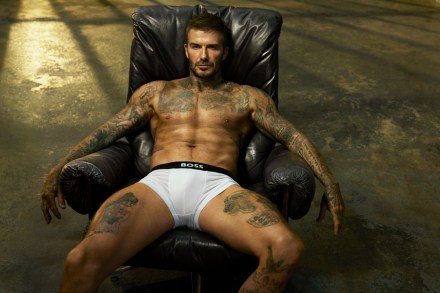
Unless your Wi-Fi has been down this week, you’ll be aware that David Beckham has got his kit off again. He’s back in his underwear for a ‘steamy’ (Daily Mail) ‘full frontal’ (Daily Mail again, though it really isn’t – and I had to watch it, dispassionately I stress, three times for the purposes of this article in order to be sure) campaign for Hugo Boss which, in that hackneyed and usually inaccurate phrase, ‘broke the internet’. Did you have problems putting your Ocado order through? Me neither.

How The Box of Delights became a Christmas cult classic

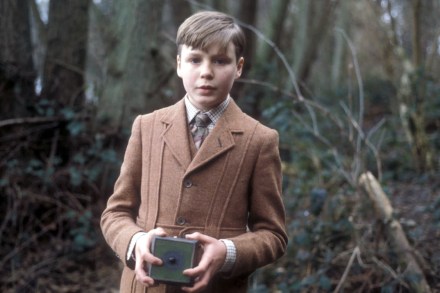
At this time of year, switching on the radio to hear the twinkling harp at the start of ‘The First Nowell’ from Hely-Hutchinson’s Carol Symphony has a profound Proustian effect on an entire generation. It takes us back to our childhood living rooms in 1984, sitting cross-legged in front of a boxy TV with a 14-inch screen, bewitched by the most exciting, terrifying and Christmassy programme we had ever seen. Part of the nostalgia comes from knowing that this wonderful series would probably never be made now As a bookish child who lived largely in my head, I thought the BBC had made The Box of Delights especially for me. So, it seems, did an awful lot of other people.

The horror of a Christmas jumper

Mark Darcy’s Christmas jumper has come a long way since it repelled the heroine of Bridget Jones’s Diary (2001) at her mother’s annual New Year’s Day turkey curry buffet. The green turtleneck, festooned with a red-nosed reindeer, sold for £5,670 at auction in November. Colin Firth has protested that he’s been ‘unfairly blamed for subsequent surges in Christmas sweater sales’. He might have a point. Arguably, Sarah Lund’s snowflake sweater in the 2007 Danish TV series The Killing did more to elevate the garment to high fashion. Because nothing quite marks the birth of God like a Nordic noir police procedural.

Who can afford to send Christmas cards any more?

At this time of year I’d usually be writing dozens of Christmas cards, with a Snowball to hand, heavy on the Advocaat. Many would be to people with whom I have no contact at any other time of year. It can be quietly meditative to write a note with an actual fountain pen to an old school friend or neighbour. But this time, in an abrupt break with tradition, I’ve bought just a couple of packets of cards. My list has been strimmed to include family, godchildren, a few very old people who’d miss receiving something in the post – and those to whom I can hand-deliver. The tradition of sending Christmas cards is under threat, not from e-cards or from Gen Z-ers who wouldn’t recognise an envelope if it gave them a paper cut – but from the price of a stamp.

Matthew Parris, Joanna Bell, Peter Frankopan, Mary Wakefield and Flora Watkins

38 min listen

On this week’s Spectator Out Loud: pondering AI, Matthew Parris wonders if he is alone in thinking (1:10); Joanna Bell meets the leader of the Independent Ireland party, Michael Collins, ahead of the Irish general election later this month (8:41); Professor Peter Frankopan argues that the world is facing a new race to rule the seas (17:31); Mary Wakefield reviews Rod Dreher’s new book Living in wonder: finding mystery and meaning in a secular age (28:47); and, Flora Watkins looks at the Christmas comeback of Babycham (34:10).  Produced and presented by Patrick Gibbons.

Babycham is back!

Babycham, the drink you perhaps last sipped while tapping the ash from a black Sobranie as Sade played on the jukebox, is coming back. Launched in 1953 by Francis Showering of the Somerset cider family, it was aimed at giving women something to drink in the pub other than a port and lemon. Demand for the ‘genuine champagne perry’ soared after it became the first alcoholic drink advertised on the new ITV in 1955 – to the extent that Babycham was once said to be stocked by all but two pubs in the country. It’s a ‘champagne’ rather than a ‘sparkling’ perry to this day – an attempt by Bollinger to sue for abuse of their trade name in the 1970s was dismissed by Lord Denning.

The debauched posh are back

‘The wines were too various: it was neither the quality nor the quantity that was at fault. It was the mixture.’ This is the meet-cute at the beginning of Brideshead Revisited. Lord Sebastian Flyte chunders through the window into the ground floor quarters of Charles Ryder. Seduced by these smart shenanigans, Charles proceeds to dump his dull middle-class muckers in order to ‘drown in honey’ (also champagne, Catholicism and plover’s eggs) with Sebastian and his rich Oxford set. By the time I arrived at university at the turn of the century, debauchery had long been democratised.

Private schools brought this tax hike on themselves

It’s the season to do the rounds of senior schools and my 10-year-old son and I have been jostling through the crowds to glimpse science labs and drama workshops for the past month. Open days for the top state schools have been heaving. At a state boarding school rated ‘outstanding’ by Ofsted (boarding fees aren’t subject to VAT), the head apologised for lengthy queues to register, get coffee, join a tour. Another 200 people had turned up in addition to the 600 booked in. Among them, I spotted several families whose children are currently at local prep schools. Labour starts charging VAT on school fees from January. But an estimated 10,000 children have already been taken out of independent schools, mine among them.

It’s time to banish binge-watching

It’s Wednesday, which means my evening is booked up for Slow Horses. The usual protracted regime of children’s tea-bath-bed will be compressed into about 10 minutes (packet of crisps, cursory going-over with a wet wipe, withholding of bedtime story on thoroughly spurious grounds) before my husband and I leap onto the sofa like The Simpsons in the opening credits with a bottle of Malbec and a Charlie Bigham’s curry to watch the new episode on Apple TV+. (Gen Z readers: at the risk of lowering the birth rate even further, this is what fun looks like in your forties after three kids.

Tory wars, the reality of trail hunting & is Sally Rooney-mania over?

43 min listen

This week: who’s on top in the Conservative leadership race? That’s the question Katy Balls asks in the magazine this week as she looks ahead to the Conservative Party conference. Each Tory hopeful will be pitching for the support of MPs and the party faithful ahead of the next round of voting. Who’s got the most to lose, and could there be some sneaky tactics behind the scenes? Katy joins the podcast to discuss, alongside Conservative peer Ruth Porter, who ran Liz Truss’s leadership campaign in 2022. We also include an excerpt from the hustings that Katy conducted with each of the candidates earlier this week. You can find the full interviews on The Spectator’s YouTube channel: https://www.youtube.

It may be too late to save trail hunting

There’s a grumble, often repeated among country folk, that ‘hunting people got hunting banned’. What they mean (I think) is that a combination of complacency, arrogance and the failure to get the public onside is what did for hunting. It’s not really fair: arguably, without the disaster of the Iraq war, Tony Blair may not have felt he needed to chuck a piece of legislation at his backbenchers, like a juicy bone to a pack of hungry hounds. The hunting ban never was about animal welfare, but class hatred, Dennis Skinner declaring that the bill was ‘for the miners’. The ban, Blair later admitted, was ‘one of the domestic legislative measures I most regret’.

Can school rugby survive safety concerns?

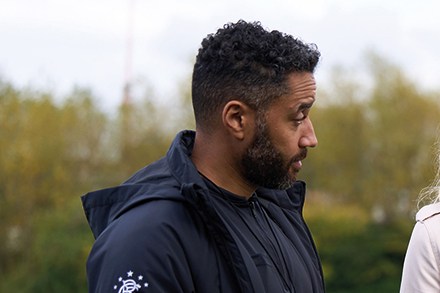
The look on the face of A&E staff was one of horror and disbelief. ‘He’s playing contact rugby – at eight?’ I nodded, my son Gus’s left arm hanging uselessly by his side, his face white and pinched with pain. Later, after we emerged from the X-ray and plaster rooms with a diagnosis of a micro-fracture to the elbow, one of the nurses from reception caught up with us. She was so concerned that she’d gone on to the RFU website, which confirmed that contact is indeed legal from Year 4. (Although the spear tackle that Gus’s friend had executed definitely isn’t.) ‘Striking a child outside of sport is abuse, but striking a child in sport is socially acceptable’ Our sons’ prep school, like many others, switches from tag to contact rugby at the start of Year 4.