Fleur Macdonald

Across the literary pages: Will Self special

The inclusion of Will Self on the Booker long list was like a flashing neon sign pointing towards 'Serious Literature' and away from last year's much criticised populism. In a recent interview in the Observer, the columnist, cultural pundit, professor of contemporary thought at Brunel University and novelist asserted 'I don't write for readers.

All-American heroes

Whatever Mitt might think, if there's one thing that makes us proud to be British, it's the fact we're not American. Alright, it's true we don't have a black president but we still think we're cooler: less brash, more sarcastic and ready to give Tim Berners-Lee a starring role in the Olympic show. The differences are particularly obvious when it comes to the holy trinity of American life: guns, god and portion sizes. And Ben Fountain's debut novel - at the age of 48, he's a honed late developer after the excellent short story collection Brief Encounters With Che Guevara (2006) - rips into all three over-indulgences.

Across the literary pages: Pankaj Mishra

An easy, sure-fire way of generating a bit of publicity is picking a fight with a provocative public intellectual. Rather than criticising Bernard-Henri Lévy's blow-dry, or kicking David Starkey in either of his legs, Pankaj Mishra memorably attacked Niall Ferguson in his review of Civilisation in the LRB last November. So the threat of a lawsuit from Ferguson now means we all vaguely know who Mishra is. (And that he's married to David Cameron's cousin.) His latest book From the Ruins of Empire - part biography of three prominent Eastern thinkers and part historical analysis - tackles the difficult relationship between East and West taking the Japanese destruction of the Russian warship in the battle of Tsushima in 1905 as its starting point.

Across the literary pages | 16 July 2012

Any idea what an Ouroboros is? It's not the name of the cloud hanging over London at the moment but, according to Will Wilkinson, in his review of Joseph Stiglitz's The Price of Inequality on the Economist blog, a perfect symbol for the ‘progressive master narrative’ championed by a new technocratic coterie (which also counts Paul Krugman among its members). An ancient image of a snake consuming its own extremity, the Ouroboros is a fitting symbol for ‘progressives dizzy from chasing their tails’.

Gray’s anatomy

Reading a new John Banville novel is like walking into a house you know but finding the dirty old armchair has moved. The shelf, still stacked with the same books, is now bathed in dusty light. The rug has shifted from right under your feet. Time and memory, ‘a fussy firm of interior decorators’, have rearranged the furniture. Whenever a Banville character peers into the recesses of their mind — and introspection is the norm — they experience a similar feeling of disorientation. We last met Alexander Cleave in Eclipse when the former thespian had retreated to wandering around his late mother's house in an attempt to gather his wits following a break down mid-performance.

Across the literary pages: Of life, love and death

John Banville's reputation as a master stylist and serious novelist wasn't done any harm by the weekend reviews for his latest book Ancient Light. Familiar riffs on his usual leitmotifs guaranteed the standard standing ovation. 'It is written in Banville's customary prose, rhythmic and allusive and dense with suggestive imagery,' Alex Clarke commended in the Guardian. While Patricia Craig in the Independent applauded that: 'Many of John Banville's customary concerns are present in this bedazzling new novel: memory and invention, questions of identity and make-believe, names and aliases, transgressions and transformations'. More unexpected however — given the rather dour face he sports for photo-ops - was his rather fun interview in the Guardian.

Repeat after me…

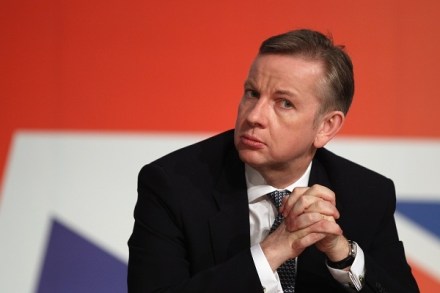
The fuss stirred up by the mere suggestion that poetry might be part of the school curriculum was extremely suspicious. Just as George Osborne quietly announced his u-turn on the charities tax during the less soporific sections of Leveson, the proposal that children should have to learn poetry off by heart smacked of a smoke screen.   What evil is lurking in the small print of Gove's national curriculum? Will school dinners get even smaller? Have all our schools been sold to Google?   But when it comes to poetry, there seem to be two main objections to Gove's plan.

Across the literary pages: reinventing ‘Bloomsday’

Although it's over seventy years since his death, the attitude quoted under the OED entry for 'Joycean' from Eric Partridge's World of Words still persists: 'Joyceans are artificial, but, except at the cost of a highly gymnastic cerebration, unintelligible'. This 'Bloomsday', an annual celebration on the day the novel is set, Radio 4 decided their listeners needed a gentle mental workout. First, a warm-up with Thursday's edition of In Our Time as Melvyn Bragg was on hand to help us decipher the playful complexity of an author who readily admitted: 'I've put in so many enigmas and puzzles that it will keep the professors busy for centuries arguing over what I meant, and that's the only way of insuring one's immortality.

Across the literary pages: Amis Asbo special

The promotional tour for Lionel Asbo: State of England has been suspiciously quiet. The fact that Martin Amis hasn't sworn, bitched or nominated the queen as guinea pig for euthanasia booths stirred the press into feverish levels of anticipation. Had the OAP (Old Age Provocateur) finally lost his teeth? Or was he simply biding his time before biting back? A satire on Lionel Asbo - Wayne Rooney look-alike and dedicated chav -  and his lottery win, it seems written to offend ... even without subplots involving teenage pregnancy (she &"was six months gone when she sat her Eleven Plus”), incest with a thirty-something year old granny, pit bulls and acid attacks. As a loyal Amis disciple, Nicola Barker in the Observer.

The art of fiction: Michael Morpurgo

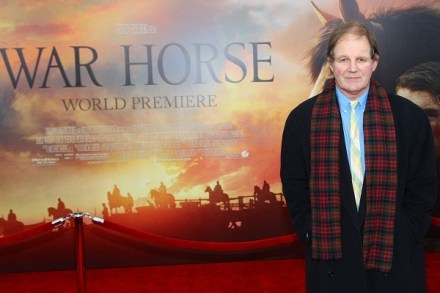
The rallying call to save libraries – about as unifying a topic as the monarchy at the moment – was taken up by Michael Morpurgo in his slot at cultural juggernaut, the Hay Festival, last week when he called the closures a form of child abuse and tantamount to inciting more riots.  During the Hay interview, timed to promote his memoirs and accompanying short story collection, the former children's laureate, in typically self-deprecating style, did not attribute his success to talent so much as to the joy his mother took in reading aloud to him. The reader rather than author is at the heart of Michael Morpurgo's art of fiction, which explains his enduring place on children's bookshelves.

We need to talk about Jacob, and his dad

No matter what anyone might say, no one ever really likes other people's children. Now, it seems, we’re not even sure if we like our own. Culturally, children became a cause for concern during the seventies. It seemed the fruits of the loins of baby boomers had been spoiled rotten. Spates of possessed brats wreaked havoc in books and on screens. But all that was needed back then was a visit from the local exorcist and a quick mop up of green bile. Nowadays, scary kids are harder to spot. They're usually apathetic, withdrawn and speak in monosyllables. In other words, you can never be sure whether you're living with a potential/practicing serial killer or a typical teenager.

The importance of sex

Last time I made an off the cuff comment calling a book chick lit, I realised the skill involved in making an apology sound genuine, rehabilitating an entire literary genre and standing one's ground in the space of 140 characters. Why do women bristle at the term chick lit? Why do they forget that a literary rendering of the search for Mr. Right isn't an affront to the feminist dream nor does it preclude sharp social commentary, a racy plot and some great lines? Jane Austen didn't look down her nose at it. So I didn’t roll my eyes on seeing The Book of Summers: the pastels, swirly font and the fey title. For her debut novel, Emylia Hall, who was raised in Devon by her English father and Hungarian mother, has sensibly decided to write about what she knows.

Funny women

The disappointment of second place at the Dionysiac festival might have been easier to bear had Sophocles known his Oedipus would eventually give credibility to a slew of neuroses and skew the literary canon forever. Even Hamlet, Othello, and Macbeth would be lined up for a session on the couch. But he could never have imagined, while twiddling his stylus, that his version of the tragic hero would become the template for modern man. Likewise, as she twizzled her olive pick in some uptown bar back in ‘97, Candace Bushnell probably had little idea she was about to unleash a myth just as potent, taxomizing female social relations for the next decade … and counting.

Shelf Life: Sue Townsend

A last minute cancellation by Adrian Mole meant that Sue Townsend had to step in to answer this week's Shelf Life questions. She tells us which books she read as a child and what she would title her own memoirs. Her latest book, The Woman who Went to Bed for a Year, is out now. 1) What are you reading at the moment? Nothing I am registered blind, I listen to plays and readings 2) As a child, what did you read under the covers? Comics, Mad Magazine, P.G. Wodehouse, The William books, Jane Eyre, Little Women... 3) Has a book ever made you cry, and if so which one? The Grapes of Wrath and A Day in the Life of Ivan Denisovich 4) You are about to be put into solitary confinement for a year and allowed to take two books. What would you choose?

Shelf Life: Alex James

More farm life than park life, the only cheese Alex James now produces is in his dairy. He lets us in on which books he's reading in his country house, what he'd get girls & boys to read for school and why he thinks literature is what a good camembert could never be: past its sell-by date. His latest book All Cheeses Great and Small: A Life Less Blurry is out now. Mark Mason has reviewed it for the current issue of the Spectator.   1) What are you reading at the moment? Treasure Island. I haven't stopped reading it for five years. It's a masterpiece.   2) As a child, what did you read under the covers?

A missable after-party

There's one problem with book reviewing these days. No, it's nothing to do with an industry that's cosier than Joseph Fritzl's cellar or columns that are dropping inches faster than Vanessa Feltz's waist (post gastric band). It's the books themselves. Novels that have the potential to be hugely irritating usually come equipped with two safety guards that make them impervious to attack. Debuts are particularly good examples. Any young modern novelist worth his salt sprinkles his work with a good pinch of irony. And then whacks on a glossy layer of self-reflexivity. These techniques ensure that one's too busy thinking about the production of the text (by the narrator, author, editor and reader) to pay any attention to the text itself.

Shelf Life: Wilbur Smith

Wilbur Smith is this week's Shelf Lifer. He tells us which books make him cry, describes the party he wishes he could have attended and lets us in on a 'highly rewarding but rather sticky experience.' Apparently, his agent Charles Pick once told him "Write for yourself, and write about what you know best." He seems to have taken this piece of advice to heart. Those in Peril by Wilbur Smith is out now. Visit his Facebook to find out more.  1) As a child, what did you read under the covers? The first book I ever read under the covers at boarding school was Forever Amber by Kathleen Winsor. It was a highly rewarding but rather sticky experience. 2) Has a book ever made you cry, and if so which one?

Bookbenchers: Alistair Darling MP

This week’s Bookbencher is Alistair Darling, the Labour MP for Edinburgh South West and the former Chancellor of the Exchequer. His memoir, Back from the Brink, is available in paperback in April. 1) Which book's on your bedside table at the moment? Lloyd George by Roy Hattersley. 2) Which book would you read to your children? To Kill a Mockingbird, Harper Lee. 3) Which literary character would you most like to be? Sherlock Holmes. 4) Which book do you think best sums up 'now'? Keynes Hayek: The Clash that Defined Modern Economics by Nicholas Wapshott. 5) What was the last novel you read? The Blackhouse by Peter May. 6) Which book would you most recommend? Charles Dickens: A Life by Clare Tomalin.

Shelf Life: Tara Palmer-Tompkinson

As well as being a keen pianist (she practices daily for 90 minutes), Tara Palmer-Tompkinson can also read. In this week's Shelf Life, T P-T tells us exactly what she'd do if she didn't find Sidney Sheldon on someone's bookshelf and why Santa Sebag Montefiore is a godsend for most men. Tara's latest novel Infidelity is out now. 1) As a child, what did you read under the covers? Beatrix Potter’s Squirrel Nutkin. And then later, Princess Daisy by Judith Krantz.   2) Has a book ever made you cry, and if so which one? Touching the Void by Joe Simpson because it was such a spiritual adventure of man and mountain.   3) You are about to be put into solitary confinement for a year and allowed to take three books. What would you choose?

Bookbenchers: Sir Peter Bottomley MP

This week's Bookbencher is Sir Peter Bottomley, MP for Worthing West. Not only does he have a magnificent eye for detail but he's given some truly original answers. He's managed to ignore Shakespeare, Chaucer and the Magna Carta in favour of da Vinci, and has also revealed a certain predilection for unpopular opinions and Dorothy L. Sayers. Which books are on your bedside table at the moment?