Fisher Investments UK

Don’t Fear Equity Heights

From our UK edition

Have you ever seen a headline saying equity markets are “too high”? Or that a market fall is right around the corner due to overvalued equities, or “dangerous” all-time highs? Some investors fear that equities reaching new heights means a downturn is right around the corner. Although acrophobia—the fear of heights—may have been a useful human behaviour in the past when it came to staying physically safe from falling off actual cliffs and the like, the intuition involved does not directly apply to equity markets and their heights. Before judging the effect of “too high” equity prices, first you must use an appropriate framework. Sometimes fears of market highs come from not scaling historical market performance correctly.


Look Beyond Interest and Dividends to Generate Cash Flow

From our UK edition

Many investors, whether retired or not, rely on cash from their investment portfolios at some point. This can be entirely appropriate and a great way to put your wealth to work. What is unfortunate, however, is that many investors assume that to generate this cash flow they need a portfolio full of dividend-paying equities or interest-bearing fixed interest investments. Whilst this sort of portfolio will produce regular cash flow, it may also leave you impoverished, if you’re not careful. Of course, realising regular income from dividends and fixed interest investments sounds great. And it can be an appropriate strategy for a portion of your portfolio.

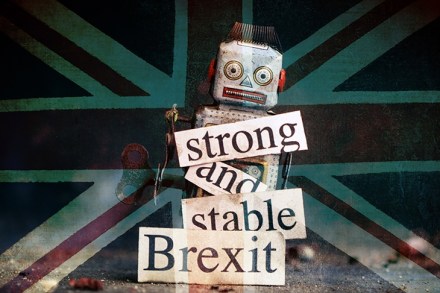
Why it is impossible to know whether Brexit really made every household £900 poorer

From our UK edition

In his recent testimony to MPs, Bank of England Governor Mark Carney made headlines by claiming the Brexit vote had made British households £900 poorer than they would have been if Remain had won. Most of the media coverage dwelled on the political implications, including an apparent backlash from prominent pro-Brexit politicians. While we remain politically agnostic, we also believe it is important for investors to understand some of the flaws inherent in Carney’s estimate. A closer look at his methodology, in our view, shows why his statement need not darken your view of the UK’s economic fundamentals – or its equity markets – in the post-referendum environment. First, consider Carney’s actual words.

Instincts and Investments

From our UK edition

Instincts are part of being human. Whether helpful or not, our instincts creep their way into our daily decision-making process. Unfortunately, investing decisions are no different. Why “unfortunate”? Our instincts often work against us in investing. You may hear your peers mention they just “knew” Equity X would fall 15%. We hear these stories all the time when instincts led us to make the right decision. Or we “knew” something bad would happen and we made a mistake by not listening to our instincts. At least that’s how we remember it. However, these beliefs are almost always tricks your brain is playing on you.

Who Can Invest Passively?

From our UK edition

At first glance, investing passively may seem easy. Pick a low-cost fund or funds  reflecting a broad market index then hold it forever and watch your money grow. The idea behind passive investing makes sense. As long as you don’t touch the money invested, your returns will mimic those of the index minus any fees—which tend to be small for these types of funds. Over long periods, market returns have been pretty good! Unfortunately, most people don’t actually achieve these types of market like returns because not touching the money is a lot harder psychologically than most folks appreciate. True passive investors—those that can sleep soundly at night despite all the ups and downs of the market—are rare. Why? We’re human!

Want to Invest Better? Own the World

From our UK edition

If you read magazines, watch the news or even just log on to social media, you may see a common theme: the world is more interconnected than ever before. However, this isn’t a new phenomenon. As every decade in modern history passes, the world continuously grows closer—economically speaking. Unfortunately, many investors are just beginning to understand the effects. And even though they acknowledge it, some still ignore investments outside of their home countries. This means many investors are missing out on some of the best investing opportunities in the world. One reason some investors fail to invest globally is they perceive foreign stocks are riskier than domestic stocks. There’s an inherent fear of the “unknown.

Some Retirement Investing Do’s and Don’ts

From our UK edition

No matter your level of sophistication, we think there is a common thread amongst investors: They are all fallible humans. Whilst no one can ensure they will make no retirement investing errors, there are some basic points we think investors should revisit from time to time—a few “do’s and don’ts.” Here we group some under three broad categories—budgeting, time horizon and diversification. Budgeting: Building a nest egg takes discipline. Do save. Telling would-be retirees they should save is perhaps the most basic financial advice in the world. But without saving, you won’t have anything to invest. The key is to start as early as possible and do as much as feasible. Starting early puts time on your side.

The Myth of Market Certainties

From our UK edition

“Equities seem so uncertain now. I’ll just wait until the market settles down—then I’ll make a move.” Many investors may think this statement makes sense at first—waiting until market volatility settles, or a correction or bear market recovers before putting your money into equities. But what exactly is the sign investors are waiting for? If you’re waiting for a clear sign that volatility in equities has subsided and will start appreciating in neat, steady steps, you may end up waiting forever. Equities are volatile by nature, and even their volatility can be volatile. It’s the volatility and risk that enables equity returns to grow the way they historically have.

Year-end reminder: You can’t buy past returns

From our UK edition

As the year winds down, we approach the season when some investors do an annual portfolio review. Checking in on your investments, whether annually or at some other interval of your choosing, can be quite helpful, in our view. However, we suspect doing so can lead to the temptation to rearrange investments based on the past year’s performance, which may not be a wise long-term move. We think investors are best served to approach an evaluation by assessing whether their overall strategy is in line with their long-term goals, cash flow needs, risk tolerance and time horizon (or the length of time your assets must be invested to keep working toward your goals) — not by dwelling on which categories of shares did best and worst.

Why the Eurozone Economy Shouldn’t Mind Draghi’s Departure

From our UK edition

Mario Draghi’s term as head of the European Central Bank (ECB) doesn’t end until next October, but we are already finding financial media fretting over who will replace him. Meanwhile, some investors wonder how Draghi’s replacement will manage eurozone monetary policy. Will the eurozone be weaker after the ECB chief who promised to do “whatever it takes” to save it saying goodbye? In a related story out of the UK, coverage recently seemed relieved after Bank of England (BoE) Governor Mark Carney agreed to stay on through January 2020, as many observers seemed to fear an earlier exit might imperil the economy during a potentially tumultuous Brexit process. In our view, neither of these events is as impactful as coverage frequently portrays.

Risks Aren’t Only for Equities

From our UK edition

In our experience, we find many investors approach choosing securities based on odd criteria—like perceptions of safety from risk. A common presumption we have encountered in this vein: Equities are risky because their prices tend to swing, sometimes a lot, in the short term. Investors often presume debt securities are safe because their prices tend to move less. Whilst equities are more volatile than some fixed-interest securities in the short run, we think conflating the terms volatility and risk is an error.[i] All investments carry risks—different securities merely emphasise different risk flavours. We think too many fixed-interest investors fixate on volatility and discount debt securities’ risks.

‘No-deal’ Brexit and equities: A Fisher Investments UK perspective

From our UK edition

All summer, financial media and UK policymakers have been preoccupied with the possibility of a ‘no-deal’ Brexit, in which the UK leaves the EU next year without a new trade deal in place. International Trade Minister Liam Fox and Bank of England Governor Mark Carney recently warned that the likelihood of this is rising. Industry trade groups like the National Farmers’ Union claim potentially dire consequences such as food shortages loom. A series of government whitepapers providing ‘guidance on how to prepare for Brexit if there is no deal’, published on 23 August, revealed the potential impact in 25 different areas, from humanitarian aid programmes to banking and taxes.

The death cross isn’t stocks’ Grim Reaper, according to Fisher Investments UK

From our UK edition

Here at Fisher Investments UK, we think that looking at the death cross has major flaws as a technical indicator and a poor history of predicting the future. A death cross occurs when a short-term downtrend (stocks’ 50-day moving average) falls below the longer 200-day moving average. According to the theory, when a death cross occurs stocks will lose momentum and struggle — or worse. Proponents point to global stocks’ death crosses in December 2000 and September 2007 — both near market peaks. Trouble is, there are more false reads than positive. According to the data we see here at Fisher Investments UK, global stocks flashed death crosses in 2004, 2006, 2011, 2015, 2016, 2017 and 2018 — all global bull market years.

Successful investing doesn’t require chasing the latest fad

From our UK edition

In our review of financial media, headlines tend to highlight areas of the market that are either doing very well or very poorly. The extremes, hot or cold. Investors seeking opportunities may be tempted to look into shares of companies in the former camp. Often, the media coverage showcases the immense growth potential of these businesses. These firms will allegedly revolutionise their industry and change the world — implying people should invest in them now, get in on the ground floor and reap the benefits. A popular example today: companies whose primary business is artificial intelligence (AI). We think investing based solely on this type of criteria is limited. In our opinion, investors should refrain from pursuing the investment fad of the day.

Why Oil’s Recovery May Not Be Rocket Fuel for the UK

From our UK edition

People respond to incentives. And in market economies, few incentives top profits. In the energy industry, oil prices are a crucial determinant of drillers’ profits — and therefore, their behaviour. When a supply glut crushed Brent crude oil prices by -77 per cent from June 2014 to January 2016, drillers focused on areas where they could reduce costs, shuttering rigs they couldn’t run profitably.[i] Yet now, with prices snapping back 194 per cent from their low, incentives have changed.[ii] And, accordingly, oil drillers are deploying assets globally, putting rigs back to work and expanding activity. Seeing that, you may wonder if UK production is due for an upturn, boosting the British economy with it.

Brexit fears create a bullish backdrop for the UK

From our UK edition

Nearly two years ago, the UK’s vote to leave the EU shook sentiment globally. In our coverage of UK media, we found many economists forecasting that Brexit would have major implications, including some claiming the vote would stoke uncertainty and harm Britain’s economy. We saw economists single out business investment, commercial property and finance jobs as being at high risk. But today, data measuring these allegedly at-risk areas suggests most of these worries may have been overblown. In our view, the persistent fears against a brighter reality suggest sentiment is too dour and underlying economic strength underappreciated, which creates an environment where equities often thrive.

Nine years a bull

From our UK edition

On 6 March, global equity markets marked the nine-year anniversary of the global financial crisis’s end and the beginning of the bull market that followed[i]. Because markets haven’t yet recaptured levels hit before a pullback began in mid-January, it is premature to say the bull market is more than nine years old — we won’t definitively know that without the benefit of more hindsight. We believe that uncertainty makes this an opportune time to discuss what typically does (and doesn’t) end bull markets — and why we believe the bull that began in March 2009 should have more life left. Since the MSCI World Index bottomed 6 March 2009, it has returned 274.

Brexit Isn’t Driving UK Business Stagnation

From our UK edition

For more than a year and a half now, the UK economy has defied fears of the Brexit vote causing a recession. But the worries haven’t stopped — instead they have morphed. The latest iteration, seen throughout the financial media, warns that the UK is entering a Japanese-style ‘lost decade’ where firms hoard cash, invest little and rely on currency translation for profits. So far, however, we see little evidence that this is happening. Rather, we believe the latest fear is evidence that feelings towards the UK economy remain overly sceptical, increasing the likelihood that reality will continue beating expectations — a potential tailwind for UK shares.

Why investors’ hopes for energy shares may be too high

From our UK edition

The FTSE 100 finished strong last year, gaining 5 per cent in December to bring full-year returns to 12 per cent — and cheering up UK investors in the process [i]. One big contributor was energy shares, which spent most of 2017 in the red before a strong fourth-quarter rally. In the UK and globally, investors seem enthusiastic over higher oil prices and are welcoming the arrival of a potential turnaround for energy shares. However, we see a few reasons why this optimism is likely to be premature. At $69 per barrel as of 11 January, Brent crude oil prices are at their highest since 2014 and more than double January 2016’s low [ii].

Budget noise and the real drivers of economic growth

From our UK edition

Ah, the Budget. The business world and financial media’s favourite annual event garners so much attention, you’d be forgiven for thinking Chancellor Philip Hammond was Santa and that red briefcase his bag of toys. Who was naughty? Who was nice? Who will get goodies, and who lumps of coal? Whether fearful or cheerful, headlines regularly tout the Budget’s supposed economic importance. This time around, some have called it a Suez moment for the UK economy, while others claim it might boost growth in certain areas. But regardless of their opinion, pundits tend to overstate the importance of the Budget to the economy. In a private sector-led economy, fiscal policy may pick winners and losers, but it generally doesn’t drive growth.