Euan McColm

Euan McColm

Euan McColm is a columnist for the Scottish Daily Mail, The Scotsman, and Scotland on Sunday.

Is Stephen Flynn’s seat really at risk from Labour?

From our UK edition

In public, Sir Keir Starmer's Labour party is all humility. Starmer might currently be heading towards a general election landslide victory but the line is consistent: The party’s taking nothing for granted. Privately? Well, one of two of the party’s candidates and strategists might concede they expect things to go rather well for them on July 4. Quite a few will admit they expect a landslide. In Scotland, confidence among the Labour lot is so strong that they have their eyes on a win that would have been unthinkable just a couple of years ago. The Times has reported today that Labour fancies its chances of unseating the SNP’s Westminster leader, Stephen Flynn in Aberdeen South.

How the SNP broke Holyrood

From our UK edition

Twenty-five years have passed since the opening of the Scottish parliament and the issue of just how well devolution is working is a rather awkward one for the current SNP-led government. This week, both the Scottish Conservative and Scottish Labour parties have made entirely clear that reform is needed. Labour believes that Scottish mayors might be the answer; some Conservatives want a complete overhaul of the way laws are scrutinised. The question is: would either solution work? The fact that the SNP broke the Scottish parliament is hardly new. It became clear in 2014, during a meeting of Holyrood’s European and External Affairs Committee.

The legacy of devolution – 25 years on

From our UK edition

Winnie Ewing, SNP royalty – Madame Écosse to those who had served alongside her in the European Parliament – opened proceedings with a song in her voice and a twinkle in her eye. 'The Scottish Parliament,' said the oldest of its new members, 'adjourned on 25th day of March in the year 1707, is hereby reconvened'. Applause rang out across the debating chamber. The sense of optimism, and possibility, was palpable on the morning of Wednesday, May 12, 1999. On the 25th anniversary of devolution, the mood is very different.  Holyrood was supposed to be home to a new kind of politics but, of course, there is no such thing. Today, Scotland’s politics is degraded and divided.

The vindication of Kate Forbes

From our UK edition

So much for Scotland being the home of ‘radical’ progressive politics.  After almost two decades of the Scottish National party saying that Scots are fundamentally different to their neighbours – wiser, more compassionate, just generally better – the party now reckons Scottish voters might just share the same priorities as those south of the border.  First, SNP members selected 60-year-old former deputy first minister John Swinney – a self-declared centrist – as leader to replace the hapless Humza Yousaf. Members clearly wanted to bring some calm to a party riven with splits over independence strategy and policy priorities.

Will John Swinney end the SNP’s war on business?

From our UK edition

Accepting the leadership of the SNP on Monday, John Swinney said his political priority as Scotland’s seventh First Minister would be the eradication of child poverty. If he is sincere in his desire to achieve this ambition, then Scotland’s economic growth – just 0.2 per cent last year – needs be a great deal better. As soon as Swinney gets his feet under the First Ministerial desk, he must throw open his doors to Scotland’s business leaders and show them the love his party has been withholding for the last decade. Shortly after the SNP won its first Scottish parliamentary election in 2007, new First Minister Alex Salmond fired off a chummy letter to a major player in Scottish business.

The SNP’s ‘operation stop Kate Forbes’ has succeeded – for now

From our UK edition

If you want to know how deep is the crisis in which the Scottish National Party currently finds itself, let this sink in: the next leader of the party will be a man who’s already had the job and made an absolute mess of it. In a remarkable turn of events following the resignation of Humza Yousaf on Monday, senior SNP figures quickly began urging John Swinney – who served as Nicola Sturgeon’s deputy when she was First Minister – to enter the contest to replace him. This morning, Swinney accepted their challenge and announced his candidacy to become SNP leader and, thus, Scotland’s seventh First Minister since the establishment of the Scottish parliament 25 years ago.

Humza Yousaf’s biggest mistake

From our UK edition

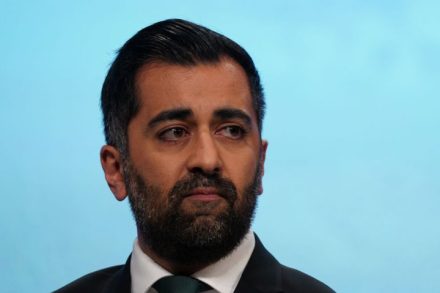
A word of advice for anyone with ambitions to hold high political office: if you think you might ever need the assistance of your opponents, don’t allow your party to repeatedly abuse them. This wisdom comes too late for it to be of use to Scotland’s First Minister, Humza Yousaf, who has accepted the inevitable and announced his resignation this afternoon. Yousaf’s attempts to build bridges failed Fighting for his career after his decision to tear up the Holyrood power-sharing deal between the SNP and the Scottish Greens blew up in his face, the First Minister spent the weekend reaching out across party lines. His aim was to see off a vote of no confidence, tabled by the Scottish Tories and loudly supported by opposition parties, including those Greens.

Humza Yousaf and his ridiculous, feigned outrage

From our UK edition

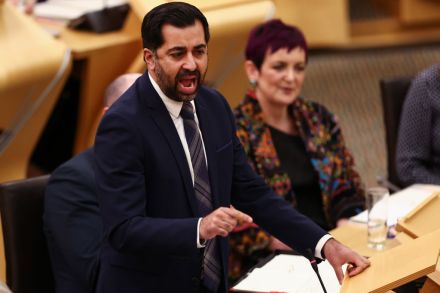
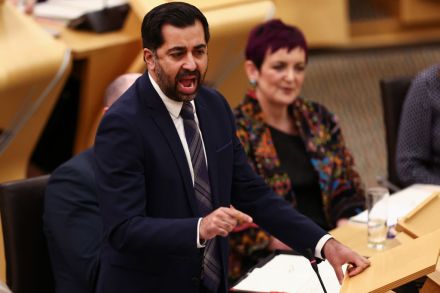
Scotland’s First Minister Humza Yousaf is a politician with two settings. If he’s being asked about a difficult issue – the Police Scotland investigation into SNP finances, for example, or his government’s failure to deliver its policies – he does a reasonable approximation of sincerity, all soft voice and sad eyes. You can see the parts moving but, credit to the man, he gives it a go. At all other times, Yousaf is in outrage mode, shuddering with fury at this or that decision of the UK Government. The First Minister maximises the opportunities for public displays of anger by - in common with all populist nationalists – absolving himself of any duty to be consistent.

Humza Yousaf owes Joanna Cherry an apology

From our UK edition

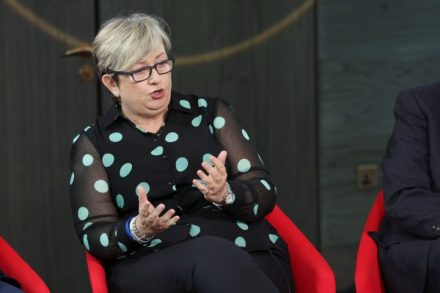
Following the publication last week of Dr Hilary Cass’s review of gender services provided by the NHS, politicians rushed to insert themselves on the right side of the debate. For many, this meant quite dizzying displays of reverse-ferreting. After years of dismissing the concerns of medical experts, parents and feminist campaigners about treatments such as the administration of 'puberty-blocking' drugs, a remarkable number of MPs found that, in fact, they actually felt the same way. Cass laid out in black and white the lack of understanding of the long-term effects of such medical interventions and politicians could no longer dismiss the concerns of those holding gender critical views. To do so would be to tacitly support medical experimentation on confused children.

Humza Yousaf is failing to further the independence cause

From our UK edition

When Nicola Sturgeon stepped down as leader of the SNP and First Minister of Scotland a year ago, she said she’d reached the conclusion that she could no further advance the cause of independence. It was time for a new leader with new ideas to energise the campaign to break up the United Kingdom. Responsibility for invigorating the separatist movement fell to Humza Yousaf, voted in as First Minister on 29 March 2023 with the promise that he’d lead the nation to new highs. If Sturgeon had become too divisive, playing a key role in the creation of a constitutional deadlock, Yousaf would encourage unionist voters to think again about the benefits of independence.

Humza Yousaf’s first year has been a disaster

From our UK edition

When Nicola Sturgeon stepped down as First Minister of Scotland a year ago, she said she’d reached the conclusion that she could no further advance the cause of independence. It was time for a new leader with new ideas to energise the campaign to break up the United Kingdom. Responsibility for invigorating the separatist movement fell to Humza Yousaf, voted in as First Minister on 29 March last year with the promise that he’d take the nationalist cause forwards. If Sturgeon had become too divisive, Yousaf would encourage Unionist voters to think again about the benefits of independence. Any politician looking to the new poll for a policy blueprint will be disappointed Twelve months on, it is safe to say that Yousaf hasn’t even come close to achieving that objective.

The undoing of Professor Jason Leitch

From our UK edition

Jason Leitch was a calm, reassuring presence in his almost daily TV appearances during the pandemic. But after an unedifying evidence session at the UK Covid Inquiry and revelations that Leitch deleted his Covid WhatsApps, the reputation of the national clinical director is in tatters. Now, he has announced his departure from his Scottish government role and will leave at the end of April. The former dental surgeon was widely regarded as affable and straightforward. His skills as a communicator were huge valuable at a time of great uncertainty. He regularly stood alongside former First Minister Nicola Sturgeon during her lunchtime broadcasts to the nation, offering the scientific rationale for the decisions made by politicians.

The SNP’s North Sea hypocrisy

From our UK edition

The Labour party has run into trouble in Scotland. It is planning to both raise and extend the windfall tax on the oil and gas sector, and industry chiefs aren't happy. It's an issue that is steadily gathering momentum and could prove damaging to the party's chances north of the border. Last week, the Press and Journal depicted Keir Starmer, Anas Sarwar, Ed Miliband and Rachel Reeves as hooded bad guys from the BBC's Traitors series, with one of its writers commenting that 'Labour – the party of workers and unions – is happy to cast tens of thousands of hard-working men and women on the scrapheap, and place a world class Scottish industry on death row.

Nicola Sturgeon is the SNP’s biggest liability

From our UK edition

A year ago today, Nicola Sturgeon announced her resignation as SNP leader and First Minister of Scotland. The consensus was that her departure from the political frontline would be a blow to both her party and the wider Scottish independence movement. After almost nine years as First Minister, Sturgeon left office as a dominant figure in Scottish politics, with positive approval ratings and revered by her followers and respected by opponents as a significant talent. Of course her sudden resignation was going to have repercussions. But nobody could have predicted just how chaotic things would become.  Twelve months after Sturgeon’s announcement sent shockwaves through the British political establishment, support for the SNP continues to fall.

Michael Matheson’s iPad scandal has tarnished the SNP

From our UK edition

When the Scottish health secretary's inevitable resignation came, there was no apology, no recognition that he had done anything wrong. Michael Matheson quit with all the arrogance we’ve come to expect from SNP politicians, jumping ship on Thursday morning before the findings of an investigation into his expenses claims were published. After it emerged last November that Matheson had claimed around £11,000 for roaming data charges run up during a family holiday in Morocco, the MSP insisted his expenses were entirely legitimate and had come about while he carried out essential constituency work.

What’s going on with Nicola Sturgeon’s memory?

From our UK edition

Nicola Sturgeon’s memory is a fascinating and frustrating thing. At times, the former First Minister of Scotland’s powers of recall are quite remarkable. No detail escapes Sturgeonian examination, no nuance goes unnoticed. On other occasions, it fails her completely. Take her appearance, in March 2021, before a committee of MSPs investigating the Scottish government’s handling of complaints of sexual assault levelled by a number of women against Alex Salmond. On that occasion, Sturgeon’s testimony was notable for its remarkable gaps. She simply didn’t remember details of a key meeting that had taken place just months previously. Even the extraordinary nature of the matters she was discussing could not help fill in the gaps in her recall.

Is the SNP changing its tune on free university places?

From our UK edition

The SNP’s much trumpeted policy of free university tuition allows 'radicals' to indulge their fantasies of Scotland as a fair and compassionate country. Nationalist politicians sell the scheme as a way of opening up higher education to those who might previously have been priced out of post-school study. The reality is that the wealthiest are the scheme's big winners: a higher proportion of children from better off backgrounds go on to university. Is the SNP now having a long overdue rethink? Appearing before Holyrood’s finance committee on Tuesday, deputy first minister and finance secretary Shona Robison said 1,200 spaces for Scottish students would not be funded next year. When Labour MSP Michael Marra pointed out that a proposed £28.

The SNP’s strange relationship with ‘full transparency’

From our UK edition

The SNP makes quite the fuss of its dedication to openness and transparency from political leaders. Voters deserve to know the truth, the whole truth, and nothing but the truth about those in power. And woe betide anyone who dares not to adhere to this principle. Take former prime minister, Boris Johnson, for example. During his time in office, the Scottish nationalists rarely stopped demanding he publish all manner of information. The SNP’s commitment to 'full transparency' and the public’s right to know is not, it turns out, absolute It was essential, claimed the SNP, that details of Johnson’s responses to a police questionnaire about lockdown-breaking parties be made public because voters had a right to 'full transparency'.

Why the Michael Matheson roaming scandal matters

From our UK edition

When it comes to pomposity, nobody in Scottish politics can compete with SNP president Mike Russell. A great comic archetype in the tradition of Captain Mainwairing or Hyacinth Bucket, Russell combines a thwocking great dollop of self regard with a devastating lack of self-awareness. As such, it was hardly surprising to see Russell clamber up on his high horse when it came to the matter of an expenses claim for £11,000 of mobile data lodged by Scottish Health Secretary, Michael Matheson. Isn’t the real damage caused by dishonest politicians?

The ugly truth about the SNP’s white roses

From our UK edition

Anyone paying close attention to television coverage of the King’s Speech on Tuesday may have noticed that SNP MPs in attendance looked as if their next appointment was a wedding reception, with white roses on their lapels. In fact, the Nats wear the rose in honour of poet Hugh MacDiarmid, a founder of the National Party of Scotland which merged with the Scottish party in 1934, creating the SNP. The nationalists’ boutonnière references MacDiarmid’s poem 'The Little White Rose', a drab little celebration of the sort of insularism the SNP insists doesn’t exist within its brand of nationalism. If you think my critique harsh, judge for yourself: 'The rose of all the world is not for me.